


Most people believe injuries happen when something goes obviously wrong. A fall, a dropped load, a visible mistake. In reality, manual handling injuries often happen when everything feels under control. The load is not too heavy. The movement feels familiar. The task has been done hundreds of times before.
That is exactly where the risk hides. Repetition builds confidence, but it can also hide poor technique. Over time, small errors in posture, grip, or movement place stress on the body. That stress builds silently until one day the body cannot compensate anymore. This is why technique matters more than strength. Safe manual handling is not about lifting harder. It is about lifting smarter, moving with control, and understanding how the body responds under load.
This guide breaks down the practical side of manual handling. You will learn how to move loads safely, apply proven methods, and avoid the small mistakes that lead to long-term injuries.
Table of Contents
Manual Handling Techniques: 7 Safety Tips, 5 Safe Methods, and Proper Lifting Guide
Manual handling techniques are essential for preventing workplace injuries and ensuring safe lifting practices. By following key safety tips, using proper lifting methods, and assessing risks before handling loads, employees can reduce the risk of strains and musculoskeletal injuries. Correct posture, careful planning, and the use of safe manual handling techniques help create a safer and healthier working environment.
What is Good Manual Handling Technique?
Understanding Movement Before Strength
Good manual handling starts with how the body moves, not how much force it can generate. The human body is designed to carry load efficiently when posture and alignment are correct. When those are ignored, even light loads can cause strain.
A stable base is the starting point. Feet should be positioned to provide balance, allowing the body to remain steady during movement. From there, the load should stay close to the body to reduce pressure on the spine. The further the load moves away, the greater the strain.
Lifting, Pushing, and Pulling in Real Tasks
Manual handling is not limited to lifting. Pushing and pulling can create equal or greater risk, especially when surfaces are uneven or resistance is high. For example, pushing a loaded trolley across a smooth floor requires less effort than pulling it across a rough surface.
In real workplaces, tasks often combine movements. A worker may lift a box, carry it, and then place it on a shelf. Each stage introduces different risks. Good technique means adjusting posture and movement at each stage rather than using a single approach.
Why Technique Fails in Everyday Work
Most technique failures come from rushing, fatigue, or overconfidence. Workers may skip proper positioning to save time or assume a load is safe based on past experience.
These shortcuts seem minor in the moment but create repeated strain. Over time, this leads to injuries that could have been avoided with consistent technique.
What are the 5 Safe Manual Handling Methods?
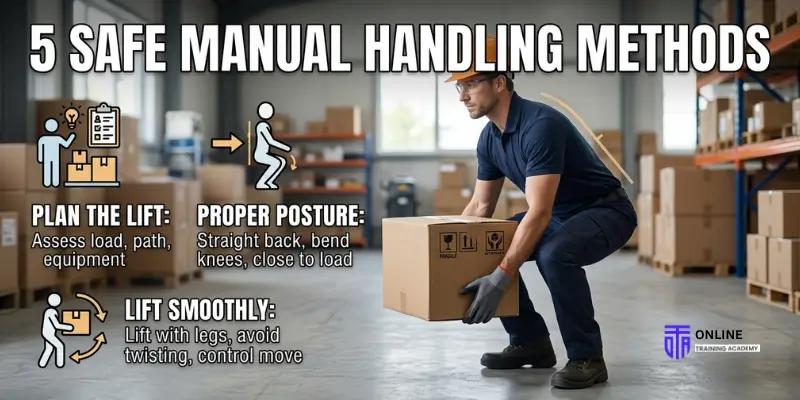
Lifting with Controlled Movement
A safe lift begins with planning. The worker positions themselves close to the load, bends the knees, and keeps the back in a neutral position. The lift is smooth and controlled, avoiding sudden movements. This method shifts the effort to the legs, which are stronger and better suited for lifting.
Team Lifting for Heavy or Awkward Loads
When a load is too heavy or difficult to handle alone, team lifting becomes essential. Coordination is key. Each person must understand their role and move together.
Without coordination, team lifting can increase risk rather than reduce it. Clear communication ensures balanced effort and stable movement.
Using Mechanical Aids Instead of Force
Safe manual handling does not always involve physical effort. Using tools such as trolleys, pallet trucks, or hoists reduces strain significantly.
This method aligns with best practice by removing unnecessary physical load from workers.
Breaking Down Loads into Smaller Parts
Large loads can often be divided into smaller, more manageable units. This reduces strain and allows safer handling. While it may take more time, the reduction in injury risk makes it a practical and effective method.
Adjusting the Work Environment
Sometimes the safest method is not about how the load is handled, but where. Adjusting work height, clearing pathways, and improving layout reduces awkward movements. A well-organised environment supports safe handling without requiring extra effort.
What are the 7 Essential Manual Handling Safety Tips?
1. Plan Every Movement Before You Start
Rushing into a task increases risk. Taking a few seconds to assess the load, route, and destination prevents unnecessary strain.
2. Keep the Load Close to the Body
Holding a load close reduces leverage on the spine. This simple adjustment can significantly lower injury risk.
3. Maintain a Stable and Balanced Posture
Feet should be positioned to provide support. A stable base allows controlled movement and prevents loss of balance.
4. Avoid Twisting While Carrying
Twisting places stress on the spine. Turning the whole body instead of twisting reduces this risk.
5. Use Smooth and Controlled Movements
Jerky or sudden movements increase strain. Controlled motion keeps the body aligned and stable.
6. Know Your Limits
Overestimating strength is a common cause of injury. Recognising limits and asking for help is a key safety habit.
7.Take Breaks to Prevent Fatigue
Fatigue reduces control and increases mistakes. Regular breaks help maintain proper technique over time.
Step-by-Step Proper Lifting Technique
Step 1: Assess the Load and Plan the Task
Before touching the load, check its weight, size, and stability. Identify where it needs to go and ensure the path is clear of obstacles. If the load looks too heavy or awkward, stop and consider using help or equipment.
Step 2: Position Your Feet for Stability
Stand close to the load with your feet shoulder-width apart. One foot can be slightly forward to improve balance. This stance gives you a stable base and prevents loss of control during the lift.
Step 3: Get Close to the Load
Move your body as close to the object as possible. The closer the load is to your centre of gravity, the less strain is placed on your back.
Step 4: Bend Your Knees, Not Your Back
Lower your body by bending your knees and hips, keeping your back in a neutral position. Avoid bending from the waist. This allows your legs to take most of the load.
Step 5: Secure a Firm Grip
Use both hands to get a strong and stable grip on the object. If the load is difficult to hold, adjust your position or use gloves or handling aids.
Step 6: Lift Smoothly Using Your Legs
Push through your legs to lift the load. Keep the movement slow and controlled. Avoid jerking or sudden motions, as these increase strain on the body.
Step 7: Keep the Load Close While Moving
Hold the load close to your body at waist level. Keep your back straight and your shoulders aligned. If you need to turn, move your feet instead of twisting your torso.
Step 8: Lower the Load with Control
When placing the load down, reverse the process. Bend your knees while keeping your back neutral. Lower the load slowly and carefully to its final position.
Step 9: Adjust Safely if Needed
Once the load is down, make any final adjustments by repositioning your feet and using controlled movements. Avoid sudden corrections or awkward reaches.
Common Manual Handling Mistakes to Avoid

Lifting with the Back Instead of the Legs
This mistake often happens without awareness. A worker bends forward from the waist instead of lowering the body through the knees and hips. The spine takes the full load, especially the lower back, which is not designed to handle heavy force in a bent position.
When the back is used instead of the legs, the load creates a lever effect. The further the weight is from the body, the greater the pressure on the spine. Even a moderate load can multiply into significant strain.
Over time, this leads to muscle fatigue, disc compression, and a higher risk of acute injury. In many cases, the injury does not occur instantly. It builds gradually through repeated poor lifts until the body reaches its limit.
Using the legs shifts the effort to stronger muscle groups. It allows the body to move as a unit, maintaining alignment and reducing stress on vulnerable areas.
Holding Loads Away from the Body
Holding a load away from the body is one of the most underestimated risks. It often happens when the object is bulky, awkward, or difficult to grip.
When the arms are extended, the body must work harder to stabilise the load. The spine experiences increased pressure because the weight is no longer supported efficiently. A small increase in distance can create a large increase in strain.
For example, holding a box close to the chest keeps the weight centred. Holding the same box at arm’s length can more than double the pressure on the lower back.
This mistake is common in packaging, warehousing, and retail environments where items are not designed for easy handling. The solution is not just strength, but positioning. Adjusting grip, repositioning the load, or using support tools can bring the weight closer and reduce risk.
Rushing Through Tasks
Speed is one of the biggest contributors to unsafe manual handling. Under time pressure, workers often skip essential steps such as planning the lift, checking the path, or positioning the body correctly.
Rushed movements lead to unstable posture. The feet may not be properly placed. The grip may be insecure. The lift may involve sudden or jerky motion. Each of these increases the chance of losing control.
There is also a mental aspect. When rushing, attention narrows. Hazards such as obstacles, uneven surfaces, or shifting loads may be overlooked.
In high-demand environments, this becomes a pattern. Tasks are completed quickly, but risk accumulates. Slowing down slightly improves control, reduces errors, and prevents injuries that could cause far greater delays.
Ignoring Early Signs of Strain
The body often gives warning signs before serious injury occurs. These include mild discomfort, stiffness, or fatigue in muscles and joints. These signals are easy to ignore, especially when the pain is not severe.
Ignoring these signs allows strain to build. Muscles become fatigued, reducing their ability to support movement. As fatigue increases, technique deteriorates, leading to further stress on the body.
This creates a cycle where small issues develop into larger problems. What starts as minor discomfort can lead to chronic pain or long-term injury.
Responding early is key. Adjusting technique, taking breaks, or reporting concerns can prevent escalation. In workplaces with strong safety culture, early reporting is encouraged, not ignored.
Recognising these signals is not a weakness. It is an essential part of maintaining long-term physical health and consistent work performance.
Conclusion
Manual handling is not defined by effort alone. It is defined by how that effort is applied. Most injuries do not come from extreme situations. They come from small, repeated actions done without enough control. A slight bend in posture, a rushed movement, or a load held too far away can build into serious strain over time.
The difference lies in awareness and consistency. Applying the right technique once is useful. Applying it every time is what prevents injury. Safe manual handling is not a one-time decision. It is a habit built through practice, attention, and discipline.
FAQs
The safest way is to plan the lift, keep the load close, bend the knees, and use controlled movement.
Proper posture reduces strain on the spine and helps distribute weight evenly across the body in Manual Handling.
Back injuries, muscle strains, and joint issues are the most common.
Whenever a load is heavy, awkward, or repetitive, mechanical aids should be considered.
By taking regular breaks and maintaining proper technique throughout tasks.
Training helps, but it must be combined with safe systems of work and proper equipment.
Overconfidence. Assuming a task is safe because it has been done before often leads to injury.
Learn More





Get a FREE Course
- Learn useful skills online free
- Get CPD accredited certificate
- Add it to your CV today!