
A worker follows every lifting rule correctly. The posture is right. The technique is clean. The movement is controlled. Yet by the end of the shift, fatigue sets in, strain builds, and performance drops.
This reveals a key limitation. Technique alone cannot eliminate risk. The human body has limits, and repeated manual handling pushes those limits quickly, even when done correctly. The real shift in modern workplaces is not just teaching people how to lift. It is reducing how much they need to lift in the first place. Manual handling equipment and structured training systems are what make that shift possible. They transform manual handling from a physical burden into a controlled process.
This guide breaks down the tools, equipment, and training systems that reduce risk, improve efficiency, and help workplaces meet safety expectations in a practical way.
Table of Contents
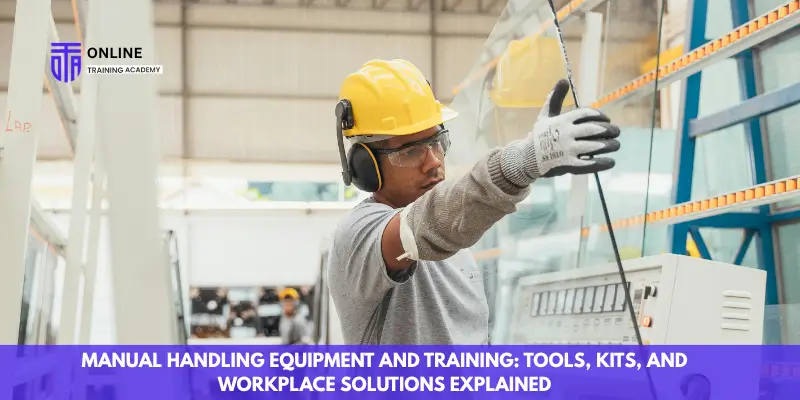
Manual Handling Equipment and Training: Tools, Kits, and Workplace Solutions Explained
Manual handling equipment and training play a vital role in improving workplace safety and reducing the risk of injuries. By using the right tools, lifting aids, and proper handling techniques, employers and employees can move loads more safely and efficiently while meeting health and safety responsibilities.
What is Manual Handling Equipment?
Manual handling equipment refers to any tool, device, or system used to reduce or eliminate the need for physical effort when moving loads. Its purpose is not convenience. It is a risk reduction.
Instead of relying on strength, equipment changes how force is applied. It redistributes weight, improves control, and removes strain from vulnerable parts of the body such as the lower back and shoulders.
In many workplaces, the presence or absence of proper equipment directly determines injury rates. A task that causes repeated strain without equipment can become safe and sustainable with the right tools in place.
Why Equipment is Essential in Modern Workplaces
Work environments today demand speed, consistency, and volume. Manual handling tasks are rarely isolated. They are repeated dozens or hundreds of times each day.
Without equipment, even safe techniques become difficult to maintain over time. Fatigue increases, posture weakens, and errors become more likely.
Equipment acts as a stabiliser. It reduces reliance on physical endurance and ensures tasks can be performed consistently without degrading safety.
Types of Manual Handling Equipment
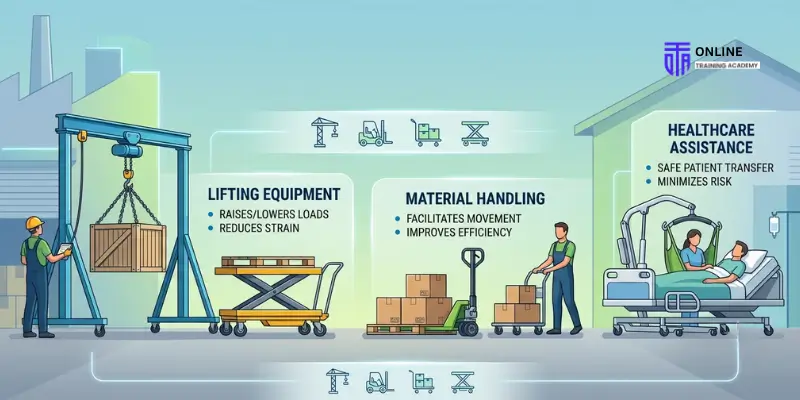
Lifting Equipment
Lifting equipment is designed to raise or lower loads without placing strain on the worker. This includes hoists, lift tables, cranes, and scissor lifts.
These tools are essential in environments where loads are heavy, fragile, or need precise positioning. In healthcare, hoists are used to move patients safely. In warehouses, lift tables reduce the need for bending and reaching.
The key benefit is control. Instead of forcing the body to adapt to the load, the equipment adapts the load to the task.
Moving Equipment
Moving equipment focuses on transporting loads across distances. This includes trolleys, pallet trucks, dollies, and conveyor systems.
Carrying loads is one of the most physically demanding tasks. Replacing carrying with rolling movement reduces strain significantly.
For example, a pallet truck allows a worker to move hundreds of kilograms with minimal effort. Without it, the same task would require multiple lifts and increased risk.
Positioning and Support Equipment
Support equipment helps maintain proper posture and positioning during tasks. This includes adjustable workbenches, tilt tables, turntables, and height-adjustable platforms.
These tools are often overlooked but play a critical role in reducing awkward movements. Bending, reaching, and twisting are major causes of injury. Adjusting the working position removes these risks.
In packaging environments, for instance, a height-adjustable table ensures that workers operate within a safe range, reducing strain over long periods.
Manual Handling Tools Used in Workplaces
Manual handling tools are smaller, task-specific solutions that improve grip, stability, and control. Examples include lifting straps, suction lifters, clamp devices, and drum handlers. These tools are particularly useful when dealing with awkward or unstable loads. A worker handling a large sheet of glass may struggle with grip alone. A suction lifter provides control, reduces effort, and improves safety. The advantage of these tools lies in precision. They address specific handling challenges that general equipment cannot solve.
When Tools Become More Effective Than Strength
There is a common misconception that strength can replace tools. In reality, tools often outperform physical effort. A well-designed tool reduces effort, improves balance, and minimises risk. It allows tasks to be completed with consistency rather than force. This is especially important in repetitive tasks where even small inefficiencies can lead to cumulative strain.
Manual Handling Training Kits
Training kits provide structured learning for manual handling. They combine theory, demonstration, and practical application.
A strong training kit includes visual guides, demonstration equipment, and scenario-based learning. Workers do not just learn what to do. They understand why it matters and how to apply it in real situations. This practical approach improves retention and builds confidence.
What Makes Training Effective
Effective training is not a one-time session. It is continuous and relevant to actual tasks. Workers should practice real movements, not just watch demonstrations. Training should reflect the specific environment, equipment, and risks they face daily. When training is generic, it loses impact. When it is tailored, it becomes a powerful safety tool.
The Role of Training in Risk Awareness
Training does more than teach technique. It builds awareness. Workers learn to recognise hazardous situations, assess risk quickly, and make safer decisions. This awareness is critical in dynamic environments where conditions can change.
What Tools Help Employers Stay Compliant?
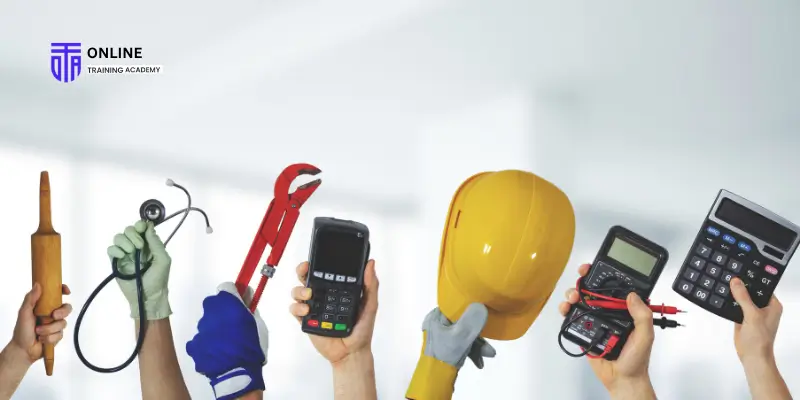
Employers are required to manage manual handling risks effectively. Equipment and training tools play a key role in meeting this requirement.
Risk assessment templates help identify hazards. Training programmes ensure workers understand safe practices. Equipment demonstrates that effort has been made to reduce physical strain. Compliance is not achieved through paperwork alone. It is demonstrated through action.
Monitoring and Continuous Improvement
Workplaces must track how manual handling tasks are performed. This includes reviewing incident reports, observing tasks, and updating control measures. Equipment and training should evolve with the workplace. As tasks change, solutions must adapt.
Choosing the Right Equipment for Your Workplace
Selecting equipment requires understanding the task in detail. The weight, size, and shape of the load must be considered. The working environment also plays a role.
For example, a narrow workspace may require compact equipment. A high-frequency task may require automated solutions. Choosing the wrong equipment can create new risks. Equipment must fit the task, not the other way around.
Key Factors to Consider
- Frequency of the task
- Weight and shape of loads
- Available space
- Worker capability
- Workflow efficiency
Each factor influences the effectiveness of the solution.
Benefits of Using Equipment and Training Together
Using equipment without training can lead to misuse. Providing training without equipment leaves workers exposed to unnecessary strain. The combination creates balance. Equipment reduces physical demand. Training ensures correct use. Together, they create a system where safety is built into the process.
Impact on Productivity and Performance
Reducing strain does more than improve safety. It improves performance.
Workers can maintain consistency over longer periods. Fatigue decreases. Errors reduce. Efficiency increases. This makes manual handling improvements not just a safety investment, but a productivity gain.
Common Mistakes When Using Equipment and Training
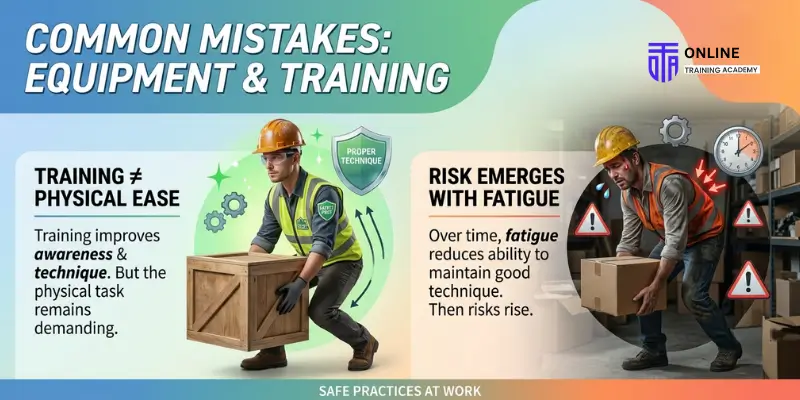
Relying Only on Training
Training improves awareness and technique, but it does not remove the physical demand of a task. Workers may know the correct way to lift, yet still face strain if the task itself is too demanding or repetitive.
Over time, fatigue reduces the ability to maintain proper technique. This is where risk returns. Without equipment to support the task, even well-trained workers remain exposed to injury. Training should guide behaviour, but equipment should reduce the load itself.
Providing Equipment Without Proper Instruction
Introducing equipment without clear instruction often leads to misuse. Workers may use tools incorrectly, skip safety steps, or avoid using them altogether if they seem complicated or slow. This creates a false sense of safety. The equipment is present, but the risk remains. In some cases, misuse can increase danger, especially with lifting devices or moving equipment. Proper instruction ensures workers understand when to use the equipment, how to use it, and why it matters. This builds confidence and encourages consistent use.
Choosing Equipment Based on Cost Instead of Fit
Selecting equipment based only on price often leads to poor outcomes. A tool that does not match the task can be difficult to use, inefficient, or even unsafe. For example, equipment that is too large for the workspace may restrict movement. Equipment that cannot handle the load properly may fail under pressure. The right approach is to match the equipment to the task. This includes considering load type, frequency, environment, and user capability. A well-fitted solution improves both safety and productivity.
Ignoring Maintenance of Equipment
Equipment is only effective when it is in good condition. Over time, wear and tear can reduce performance and create new hazards. Faulty wheels on a trolley can increase resistance. A damaged hoist can fail under load. Even small defects can lead to loss of control during handling. Regular inspection and maintenance ensure equipment remains reliable. This includes checking for damage, ensuring smooth operation, and replacing worn parts when needed.
Treating Equipment as a One-Time Solution
A common oversight is assuming that once equipment is introduced, the problem is solved. In reality, tasks evolve, workloads change, and environments shift.
Equipment must be reviewed regularly to ensure it still fits the task. What worked initially may become ineffective as demands increase or processes change. Continuous evaluation keeps solutions relevant and prevents gaps in safety from developing over time.
Conclusion
Manual handling becomes dangerous when it relies only on effort. It becomes sustainable when systems support the worker. The most effective workplaces do not expect workers to carry risk alone. They redesign tasks, introduce equipment, and reinforce training.
This shift changes everything.Work becomes safer. Performance improves. Injuries decrease. The goal is not to lift better. The goal is to need less lifting at all. You have not enough Humanizer words left. Upgrade your Surfer plan.
FAQs
Manual handling includes tools and systems that reduce the need for physical effort when moving loads.
It reduces strain, improves control, and lowers injury risk.
Trolleys, hoists, pallet trucks, lifting straps, and adjustable workstations.
A structured set of materials used to teach safe handling techniques and risk awareness.
No. Training supports safe practice, but equipment reduces physical demand.
By analysing tasks, loads, and environment to find the most effective solution.
It creates a safer, more efficient system by addressing both behaviour and physical risk.
Learn More





Get a FREE Course
- Learn useful skills online free
- Get CPD accredited certificate
- Add it to your CV today!