


Many people describe the SEN Teaching Assistant role as rewarding. That word gets used often, but it rarely explains what the job actually demands on a daily basis.
In a UK classroom, you may support a child who cannot communicate their needs, another who experiences sensory overload within minutes, and another who understands the lesson but cannot regulate their behaviour long enough to complete it. Your role is not just to assist learning. It is to remove barriers that most people never see.
That is where the real difference lies. Some individuals thrive in this environment because they understand how to combine structure, empathy, and strategy. Others struggle because they underestimate the complexity of the role.
This guide goes deeper than surface-level advice. It breaks down what actually makes a strong SEN Teaching Assistant, the full advantages and limitations of the role in the UK, and how to decide whether this career aligns with your strengths and long-term direction.
Table of Contents
Pros and Cons of Being a SEN Teaching Assistant: What Makes a Great SEN TA?
SEN Teaching Assistant vs Teaching Assistant: Key Differences You Must Know explores the differences between these two important education support roles. A Teaching Assistant typically supports the whole classroom and assists the teacher with general learning activities, while an SEN Teaching Assistant provides specialised support to students with special educational needs. Understanding these roles helps aspiring education professionals choose the career path that best matches their skills, interests, and desired impact on students' learning and development.
What Makes a Good SEN Teaching Assistant?
A strong SEN Teaching Assistant is not defined by being “kind” or “helpful.” Those are baseline traits. What matters is how effectively you apply specific behaviours and strategies in complex situations.
Adaptive Communication as a Core Skill
Communication in SEN settings is rarely linear. Many students process language differently, struggle with expressive communication, or rely on alternative systems altogether. A good SEN TA understands that communication is not about delivering instructions clearly. It is about ensuring the student can access meaning.
This may involve using visual supports, breaking instructions into sequenced steps, modelling tasks physically, or using systems such as Makaton or PECS. The key principle is that the adult adjusts first, not the child.
Over time, this approach reduces frustration, increases engagement, and builds trust, which directly improves learning outcomes.
Strategic Patience Rather Than Passive Patience
Patience is often misunderstood in this role. It is not simply the ability to wait or tolerate slow progress. Strategic patience means maintaining consistent expectations while adjusting the method of support.
For example, if a student cannot complete a task independently, a weak response is to complete it for them. A strong response is to scaffold the task by reducing complexity, providing prompts, and gradually removing support as the student improves. This approach builds independence rather than dependency, which is one of the core objectives of SEN support.
Behaviour Interpretation, Not Behaviour Reaction
One of the most critical competencies in SEN work is the ability to interpret behaviour as communication. Many behaviours that appear disruptive are responses to unmet needs such as confusion, anxiety, sensory overload, or lack of control.
A skilled SEN TA identifies patterns over time. They notice what happens before a behaviour, what triggers it, and what response either escalates or reduces it. This allows them to intervene early, often preventing incidents rather than reacting after they occur.
This shift from reaction to interpretation is what separates inexperienced support from professional practice.
Consistency and Structure as Stability Tools
Many students with SEN rely heavily on predictable routines. Sudden changes, unclear expectations, or inconsistent responses can lead to confusion and distress.
A good SEN Teaching Assistant maintains structure across interactions. Instructions are delivered in a consistent format. Expectations remain stable. Transitions are supported rather than rushed. This consistency creates a sense of safety, which is a prerequisite for learning in many SEN contexts.
What Are Other Requirements for SEN Teaching Assistants?
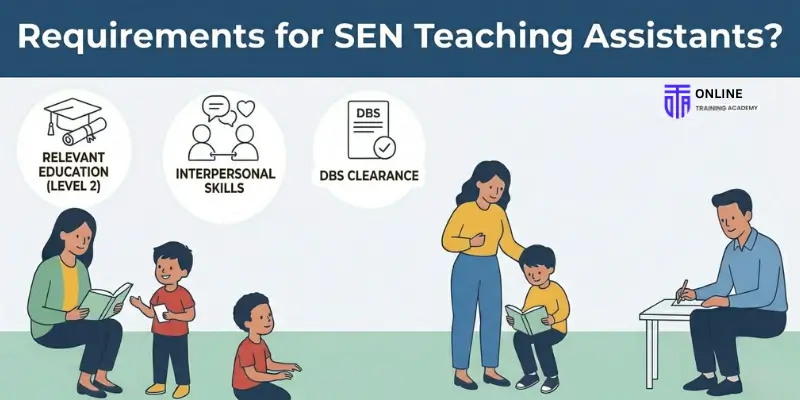
Beyond behavioural and interpersonal skills, there are practical requirements that shape both employability and effectiveness in the UK education system.
Formal Qualifications and Ongoing Training
Most schools expect at least a Level 2 or Level 3 Teaching Assistant qualification. However, in SEN roles, this is often supplemented with targeted training in areas such as autism spectrum conditions, ADHD, speech and language development, and behaviour management frameworks.
Safeguarding training is non-negotiable. It ensures that you understand how to identify risks, report concerns, and maintain professional responsibility when working with vulnerable children.
Continuous professional development is also important. SEN practices evolve, and effective Teaching Assistants stay updated with new strategies and frameworks.
Experience in Real SEN Environments
Theoretical knowledge has limited value without practical exposure. Experience in classrooms, specialist provisions, or support settings allows you to understand how strategies work under pressure.
For example, behaviour management techniques often look straightforward in training but require adjustment in real situations where multiple factors interact at once. Experience helps you develop judgement, which cannot be learned from theory alone.
Understanding UK SEN Structures and Processes
SEN support in the UK operates within a structured framework. This includes Individual Education Plans and Education, Health and Care Plans, which outline specific goals and interventions for each student.
A competent SEN TA understands how to follow these plans, track progress, and contribute observations that inform future decisions. This ensures that support is not random but aligned with measurable outcomes.
Professional Boundaries and Team Integration
SEN Teaching Assistants work closely with teachers, SENCOs, therapists, and sometimes external agencies. Maintaining clear professional boundaries while collaborating effectively is essential.
You are part of a system, not operating independently. The ability to communicate clearly with other professionals and align your support with broader objectives is a key requirement.
Pros of Being a SEN Teaching Assistant in the UK
The advantages of this role become clear when you understand the level of impact it offers.
High-Impact, Individual-Level Influence
Unlike many roles in education, SEN Teaching Assistants often see the direct results of their work at an individual level. Supporting a student to communicate, engage, or regulate their behaviour can significantly change their long-term educational experience.
This level of impact is both measurable and meaningful, which contributes to long-term job satisfaction.
Growing Demand Across the Education Sector
There is a sustained increase in demand for SEN support across UK schools. This is driven by greater awareness of additional needs and legal requirements to provide appropriate support.
As a result, SEN Teaching Assistants often have more stable job opportunities compared to general classroom support roles.
Clear Pathways for Specialisation and Progression
The role provides a strong foundation for career progression. Many SEN TAs move into specialist roles focusing on autism, behaviour, or communication support. Others progress into Higher Level Teaching Assistant positions or pursue teaching qualifications.
This flexibility allows you to shape your career based on your interests and strengths.
Dynamic and Engaging Work Environment
The role requires constant problem-solving and adaptation. While this can be challenging, it also prevents the work from becoming repetitive.
Each student presents a different set of needs, which keeps the role intellectually and practically engaging.
Cons of Being a SEN Teaching Assistant in the UK

A realistic evaluation of this role must include its limitations and challenges.
Emotional Intensity and Cognitive Load
Working with students who have complex needs requires sustained emotional regulation and attention. You may need to remain calm during behavioural incidents, manage multiple demands simultaneously, and maintain focus throughout the day.
This creates a high cognitive load, which can lead to fatigue if not managed properly.
Slow, Non-Linear Progress
Progress in SEN settings often does not follow a clear or immediate pattern. A student may improve in one area while regressing in another.
This requires a long-term perspective. Without it, the role can feel frustrating or discouraging, especially for those expecting quick results.
Behavioural and Physical Challenges
Some roles involve managing physically or emotionally challenging behaviour. This may include de-escalation, ensuring safety, and maintaining control of the environment.
Proper training reduces risk, but the challenge remains a core part of the job.
Compensation Relative to Responsibility
SEN Teaching Assistants carry significant responsibility, yet salaries in the UK remain relatively modest compared to the demands of the role.
Progression is possible, but it often requires additional qualifications or moving into higher-level positions.
Is Becoming an SEN Teaching Assistant the Right Path for You?
This decision should be based on alignment between the role’s demands and your personal strengths.
Strong Fit for Structured, Adaptive Thinkers
If you are comfortable working in environments that require constant adjustment, structured thinking, and close attention to individual needs, this role offers strong alignment.
You are likely to succeed if you can remain consistent under pressure and focus on long-term outcomes rather than immediate results.
Challenging for Those Seeking Predictability
If you prefer predictable routines, clear short-term outcomes, and minimal emotional intensity, the role may feel demanding. SEN environments require flexibility, patience, and the ability to manage uncertainty.
Strategic Value for Long-Term Career Goals
For those planning careers in education, therapy, or support services, SEN Teaching Assistant experience provides practical, high-value exposure. It develops skills that are directly transferable to a wide range of professional pathways.
The Work That Builds Invisible Progress
In many cases, the most important progress in an SEN classroom is not immediately visible. A reduction in anxiety, a small increase in engagement, or a moment of independent action may not stand out to others.
Over time, those small changes compound. A successful SEN Teaching Assistant understands that impact is built through consistent, strategic support rather than isolated achievements. The role demands more than intention. It requires applied skill, resilience, and a long-term perspective. For those prepared to meet that standard, it offers a level of professional and personal impact that few roles in education can match.
Conclusion
The impact of an SEN Teaching Assistant is often measured through small but meaningful changes that develop over time. Improvements in confidence, engagement, independence, and emotional wellbeing may not always be immediately visible, yet they can have a lasting effect on a student’s educational journey. Success in this role requires patience, resilience, and a commitment to consistent support. For those willing to embrace these challenges, becoming an SEN Teaching Assistant offers a deeply rewarding career with the opportunity to make a genuine and lasting difference in the lives of children with special educational needs.
FAQs
SAN is not simply more difficult. It requires a different level of specialisation, emotional awareness, and behavioural understanding.
While not always mandatory, additional SEN-specific training significantly improves both job prospects and effectiveness.
By identifying triggers, applying consistent strategies, and intervening early rather than reacting after escalation.
Yes. It offers clear pathways into specialised roles, advanced teaching support, and further professional development.
Individuals who combine structured thinking, adaptability, and emotional awareness tend to perform well.
Learn More





Get a FREE Course
- Learn useful skills online free
- Get CPD accredited certificate
- Add it to your CV today!