
Ever wake up with a puffy face, swollen ankles, or that heavy, sluggish feeling in your body?
Your lymphatic system might be asking for help.
The lymphatic system acts as the body’s internal drainage network. It moves excess fluid, toxins, and cellular waste away from tissues and toward lymph nodes where the body can filter and eliminate them. Unlike the circulatory system, however, the lymphatic system does not have a pump like the heart. Instead, it depends on body movement, breathing, and manual stimulation.
This is where lymphatic system drainage massage becomes valuable.
A lymphatic drainage massage therapy technique uses gentle, rhythmic movements to stimulate lymph flow. When done correctly, it can help reduce swelling, improve circulation, and support immune function.
In this beginner’s guide, you will learn:
- What lymphatic drainage massage is
- How it benefits your body
- The professional techniques used by therapists
- A step-by-step method you can try at home
- The best time to perform lymphatic massage—even if you are not a morning person
Lymphatic System Basics: Why Your Body Needs Drainage
Think of your lymphatic system as the body’s natural cleanup crew.
It collects waste products, toxins, and excess fluid that accumulate in tissues and transports them to lymph nodes where they are filtered. Afterward, the waste leaves the body through normal elimination processes.
However, lymph flow can slow down due to several factors, including:

- Sedentary lifestyles
- Stress
- Dehydration
- Poor circulation
- Surgery or injury
When lymph circulation slows, the body may experience symptoms such as:
- Fluid retention or swelling in the legs and arms
- Facial puffiness
- Fatigue or sluggishness
- Reduced immune efficiency
- A feeling of heaviness in the body
A drainage lymphatic system massage gently stimulates the vessels responsible for carrying lymph fluid. By encouraging movement toward lymph nodes, the massage helps the body process and eliminate waste more efficiently.
This is why lymphatic drainage massage therapy training is often included in advanced wellness and rehabilitation programs.
What Is Lymphatic Drainage Massage?
A lymphatic drainage massage is a specialized technique designed to stimulate the movement of lymph fluid throughout the body.
Unlike traditional massage therapy that focuses on muscles and deep pressure, lymphatic massage uses very light, slow strokes that stretch the skin gently. These movements encourage the lymph vessels just beneath the skin to transport fluid toward the lymph nodes.
The key characteristics of lymphatic drainage massage include:
- Light pressure – similar to brushing the skin
- Slow rhythmic movements
- Specific direction of strokes toward lymph nodes
- Focus on circulation and detoxification rather than muscle relief
This therapy is widely used for:
- Reducing swelling after surgery
- Managing lymphedema
- Supporting immune function
- Decreasing fluid retention
- Improving skin health
Because of these benefits, many wellness professionals pursue lymphatic drainage massage therapy certification to add this skill to their practice.
Professional Lymphatic Drainage Techniques Used by Therapists
Massage therapists trained in lymphatic drainage massage therapy typically learn several established techniques. Each method focuses on improving lymph flow but uses slightly different approaches.
Here are the most recognized professional methods:
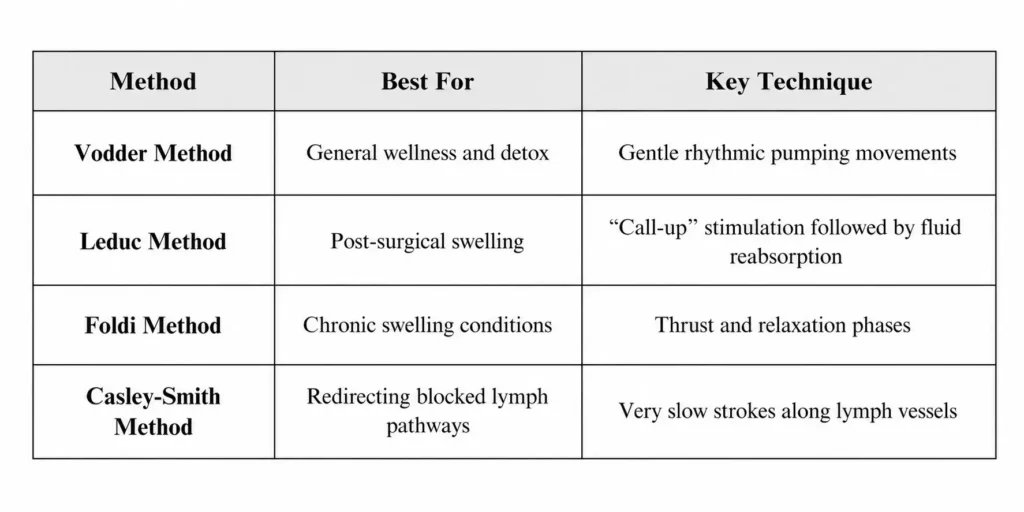
These methods are taught in specialized lymphatic drainage massage therapy training programs, which is why certified therapists can perform the technique with precision and safety.
However, simple versions of the massage can also be practiced at home when done carefully.
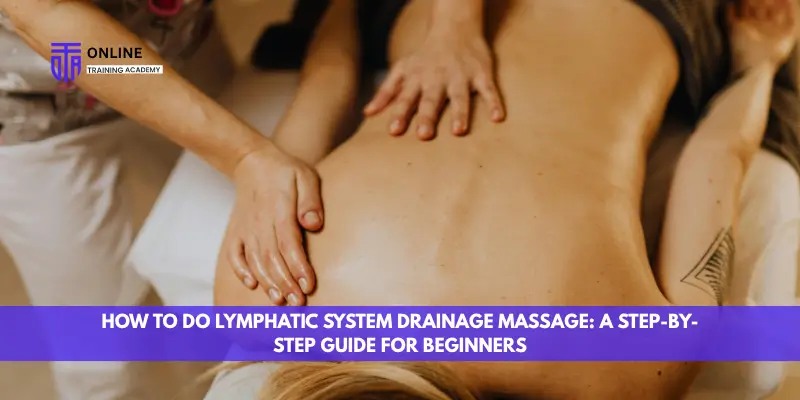
How to Do Lymphatic System Drainage Massage: A Step-by-Step Guide for Beginners
The “How to Do Lymphatic System Drainage Massage: A Step-by-Step Guide for Beginners” article is designed to help readers understand the basics of lymphatic drainage massage, including simple techniques, benefits, and step-by-step methods to support relaxation, circulation, and overall wellness.
How to Do Lymphatic System Drainage Massage at Home
Before beginning, remember the golden rule:
Lymphatic massage should always feel gentle.
Pressing too hard can collapse lymph vessels and actually stop the flow.
Follow this simple step-by-step routine.
Step 1: Prepare Your Body
Preparation helps improve lymph flow before the massage even begins.
Start with these steps:
- Drink 8–12 ounces of water
- Sit or lie in a comfortable position
- Relax your shoulders and neck
- Take a few slow breaths to calm the body
Hydration is important because lymph fluid is primarily made of water. Drinking water supports smoother circulation.
Step 2: Open the Main Drainage Point (The Terminus)
Before moving lymph from other areas, you need to clear the main drainage area near the collarbone.
To do this:
- Place your fingertips in the hollow above your collarbones.
- Gently stretch the skin inward toward the neck
- Release and repeat
Perform this movement 10–15 times.
This step “opens the sink,” allowing lymph fluid from other parts of the body to drain properly.
Step 3: Stimulate the Neck
The neck contains major lymphatic pathways that drain fluid from the head and face.
To stimulate this area:
- Place your palms gently on the sides of your neck
- Use slow strokes moving downward toward the collarbone
- Repeat the motion 8–10 times
This helps prepare the pathway for techniques such as face lymphatic drainage.
Step 4: Massage the Arms
The lymph nodes under the arms help drain fluid from the upper body.
Use these steps:
- Start near the armpit area
- Use gentle upward strokes toward the shoulder
- Slowly move down the arm toward the elbow
- Continue toward the wrist
Always guide strokes back toward the armpit lymph nodes.
Repeat each movement 5–10 times.
Step 5: Perform Lymphatic Massage on the Legs
The legs often retain fluid due to gravity and long periods of standing or sitting.
To stimulate lymph flow in the legs:
- Start at the upper thigh near the groin.
- Use gentle upward strokes toward the hip.
- Move to the back of the knee, where lymph nodes are located.
- Apply light pumping movements behind the knee.
- Continue down to the calf and ankle using slow upward strokes.
The key rule is simple:
Always move fluid toward the nearest lymph nodes.
Face Lymphatic Drainage: A Quick Technique
Facial lymphatic drainage has become popular because it helps reduce puffiness and improve skin appearance.
To perform a basic facial drainage massage:
- Start at the center of the forehead and move outward toward the temples
- Glide fingers from the sides of the nose toward the ears
- Sweep gently from the jawline down toward the neck
- Finish by draining toward the collarbone
Benefits of face lymphatic drainage may include:
- Reduced facial puffiness
- Improved skin tone
- Better circulation
- A more sculpted appearance
Many skincare professionals incorporate this technique into facial treatments.
When Is the Best Time for Lymphatic Drainage Massage?
Timing can influence how effective and relaxing the massage feels.
Different times of day offer different benefits.
Morning Massage
Morning lymphatic massage can help:
- Reduce overnight facial swelling
- Improve energy levels
- Stimulate circulation
- Support daily detox processes
This is why many people perform face lymphatic drainage in the morning.
Evening Massage
Evening sessions are ideal for:
- Relaxation
- Reducing swelling from standing or sitting all day
- Preparing the body for sleep
It also helps relieve the heavy feeling that can occur after a long day.
What If You’re Not a Morning Person?
Not everyone enjoys waking up early to perform wellness routines—and that is completely fine.
The truth is that consistency matters far more than timing.
If mornings are not ideal for you, consider these alternatives:
- Perform the massage after your evening shower
- Add it to your nighttime skincare routine
- Try it after light exercise or stretching
- Support daily detox processes
What matters most is maintaining a regular routine. Even 10 minutes a few times per week can support lymph circulation and improve overall wellness.
What Happens to Your Body After a Lymphatic Drainage Massage?
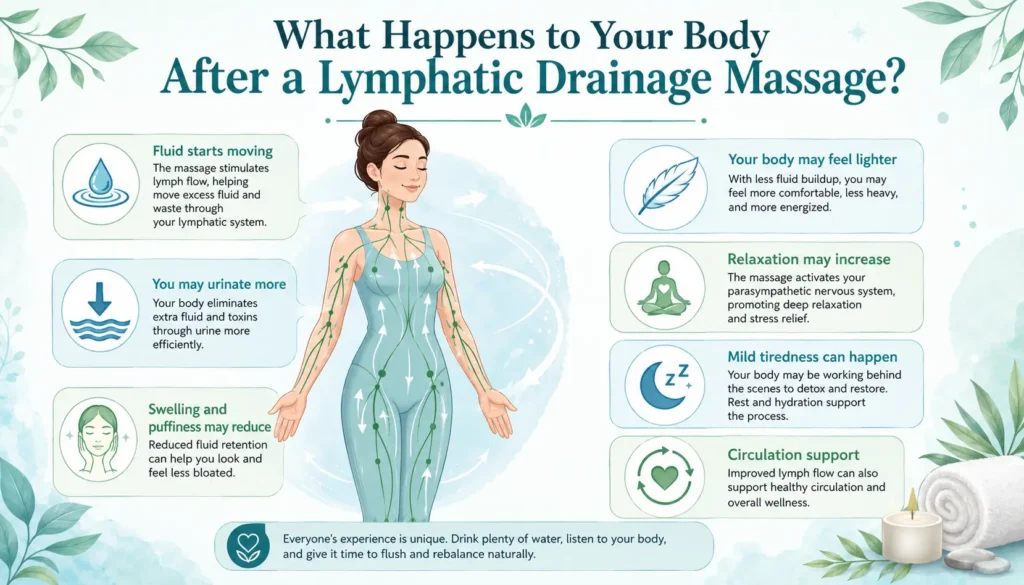
After performing lymphatic massage, many people notice immediate changes.
Common responses include:
- Increased urination
- Reduced swelling
- A feeling of lightness
- Improved relaxation
This happens because the body begins processing and eliminating the excess fluid that has been mobilized during the massage.
You may also feel slightly tired afterward. This is normal as the body adjusts to the increased lymph movement.
Drinking water after the massage helps support the detoxification process.
Does Lymphatic Drainage Massage Really Work?
Research and clinical practice both support the effectiveness of lymphatic drainage techniques.
It is commonly used for:
- Lymphedema management
- Post-surgical swelling
- Injury recovery
- Circulation improvement
While it is not a miracle cure for every health issue, it can be a powerful tool for supporting the body’s natural healing processes.
This is one reason lymphatic drainage massage therapy jobs continue to grow in the wellness and rehabilitation industries.
Bringing It All Together: Mastering Lymphatic Drainage Massage
Learning how to perform lymphatic system drainage massage can be a valuable addition to your wellness routine.
By using gentle, rhythmic movements and following the natural pathways of the lymphatic system, this technique helps the body remove excess fluid, improve circulation, and support immune health.
Whether practiced at home or performed by a professional therapist, lymphatic massage offers several potential benefits:
- Reduced swelling and fluid retention
- Improved detoxification
- Enhanced relaxation
- Better circulation
- Healthier skin and reduced facial puffiness
Consistency is the key to experiencing these benefits. A simple routine performed regularly can help keep the lymphatic system active and functioning smoothly.
Over time, this small self-care habit can contribute to better overall wellness and a lighter, more energized feeling throughout the body.
Interested in Learning Lymphatic Drainage Professionally?
If you found this guide helpful, you might enjoy learning the technique in greater depth through a professional training course. Certified lymphatic drainage programs teach detailed anatomy, hands-on massage techniques, and safety guidelines used by therapists worldwide. Whether you’re a massage therapist, skincare professional, or simply passionate about wellness, structured training can help you perform lymphatic drainage safely and effectively.
FAQs
This is done by stimulating contractions of lymphatic vessels. Use a light pressure and keep your hands soft and relaxed. Use just enough pressure to gently stretch the skin as far as it naturally goes and then release the pressure. Let your skin come back as it was.
MLD is a light, skin-stretching massage that helps promote the movement of lymphatic fluid out of the swollen limb. It should not be confused with a traditional massage. MLD is specifically focused on the lymph vessels to help the flow of lymphatic fluid.
Alcohol & Caffeine – Note on Stimulants: We recommend avoiding alcohol and heavy caffeine 24 hours before your session. Alcohol can dehydrate the tissues, making lymph more viscous (thick) and harder to move, which reduces the efficacy of the treatment.
Learn More





Get a FREE Course
- Learn useful skills online free
- Get CPD accredited certificate
- Add it to your CV today!