


Safeguarding children is not just a professional duty—it is a legal requirement in the United Kingdom. Protecting children from abuse, neglect, exploitation, and other forms of harm is considered a fundamental responsibility across all sectors that work with young people. To support this responsibility, the UK government has established a comprehensive framework of legislation and statutory guidance designed to ensure that children’s safety and wellbeing remain a top priority.
These legal frameworks provide clear expectations for organisations and professionals, outlining how they should prevent harm, recognise safeguarding concerns, and respond appropriately when a child may be at risk. They also ensure accountability, requiring institutions to have safeguarding policies, trained staff, and clear reporting procedures in place.
From schools and nurseries to healthcare services, sports clubs, charities, and community organisations, safeguarding legislation influences how environments are structured to protect children. It requires organisations to implement safe recruitment practices, appoint designated safeguarding leads, and establish procedures for identifying and reporting abuse or neglect. By doing so, the legislation helps create safer environments where children can learn, develop, and participate in activities without fear of harm.
Understanding safeguarding legislation is therefore essential for anyone who works directly or indirectly with children. Professionals, volunteers, and organisations must be aware of their legal duties and responsibilities to ensure that safeguarding practices are applied consistently and effectively. When these laws are properly understood and implemented, they form a strong protective framework that helps safeguard children and promote their overall wellbeing.
Why Legislation Is Important for Safeguarding Children
Safeguarding legislation plays a crucial role in protecting children and ensuring that their safety and wellbeing are prioritised across all sectors. In the United Kingdom, laws and statutory guidance provide the framework that organisations must follow to prevent harm, respond to safeguarding concerns, and support vulnerable children. These legal structures ensure that safeguarding is not left to individual judgment alone but is guided by clear responsibilities and procedures.
One of the key reasons legislation is important is that it establishes legal duties for organisations and professionals who work with children. Schools, childcare providers, healthcare services, and community organisations must comply with safeguarding laws and policies designed to protect children from abuse, neglect, and exploitation. These duties ensure that safeguarding becomes a core part of organisational practice rather than an optional responsibility.
Legislation also provides clear procedures for recognising and responding to safeguarding concerns. When professionals understand the legal requirements, they are better equipped to identify warning signs of harm and follow the correct steps to report and address those concerns. This structured approach helps ensure that potential risks are dealt with quickly and appropriately.
Another important aspect of safeguarding legislation is that it encourages cooperation between different agencies. Protecting children often requires collaboration between schools, healthcare providers, social services, and law enforcement. Legislation supports this multi-agency approach by setting out how these organisations should work together, share information, and coordinate their efforts to protect children.
Safeguarding laws also help to promote the overall welfare and wellbeing of children. By focusing not only on preventing harm but also on supporting healthy development, legislation encourages organisations to create environments where children feel safe, supported, and valued.
Finally, legislation ensures accountability. Organisations that fail to meet safeguarding standards can be investigated and held responsible for their actions. This accountability reinforces the importance of safeguarding policies and encourages institutions to maintain high standards of care and protection.
Without these legal frameworks, safeguarding practices could vary significantly between organisations, leading to gaps in protection. Legislation ensures consistency, clarity, and responsibility, helping to create a structured system that prioritises the safety and wellbeing of every child.
Table of Contents
Which Legislation Is Relevant to Safeguarding Children in the UK?
Several key laws in the UK support the safeguarding of children by defining the responsibilities of organisations, professionals, and individuals. These laws establish frameworks for protecting children from abuse, neglect, and exploitation, ensuring that their safety, wellbeing, and rights are prioritised in schools, healthcare, social care, and other settings.
Who Is Responsible for Safeguarding and Child Protection?
Safeguarding children is a shared responsibility that requires cooperation across multiple organisations, professionals, and families. No single person or group can ensure child safety alone; it takes a coordinated approach to protect children effectively.
Local Authorities
Local authorities have a statutory duty to safeguard and promote the welfare of children in their area. They oversee child protection investigations, provide support services for vulnerable families, and coordinate multi-agency safeguarding efforts to ensure children are protected.
Schools and Educational Institutions
Schools play a pivotal role in safeguarding. They must implement clear safeguarding policies, appoint a trained Designated Safeguarding Lead (DSL), and ensure that all staff are capable of recognising and reporting signs of abuse or neglect. Educational settings are often the first place children disclose concerns, making school vigilance critical.
Healthcare Services
Doctors, nurses, and other healthcare professionals are frontline observers of children’s wellbeing. They identify signs of physical, emotional, or sexual abuse, neglect, or health-related concerns, and report them through established safeguarding procedures.
Police
The police intervene when children face immediate danger or when criminal offences—such as abuse, exploitation, or trafficking—are suspected. Their role is to protect children while supporting investigations and legal processes.
Charities and Community Organisations
Youth clubs, sports organisations, and charities working with children must comply with safeguarding legislation. Staff and volunteers must be trained to understand their responsibilities and follow procedures to keep children safe in all activities.
Parents and Caregivers
Parents and guardians have a legal and moral obligation to provide safe and nurturing environments. They play a vital role in monitoring children’s wellbeing, teaching safety, and supporting open communication so children feel comfortable reporting concerns.
When these groups work together in a coordinated, multi-agency system, children are more effectively protected. Collaboration ensures that risks are identified early, responses are timely, and children receive the support they need to thrive safely.
Key Legislation for Safeguarding Children in the UK
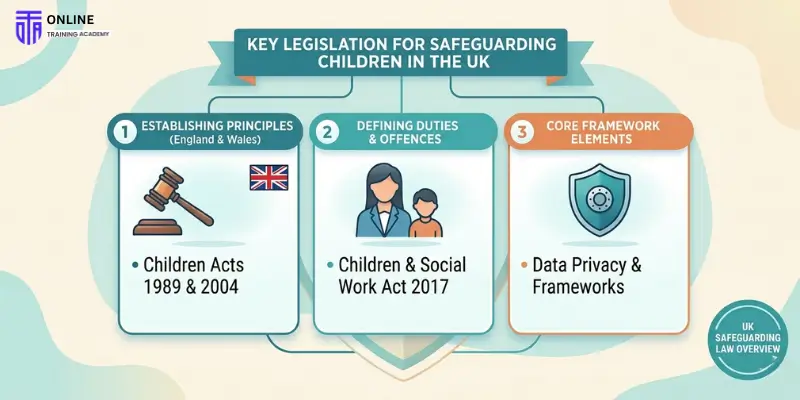
There are several important laws that form the foundation of child safeguarding in England and the wider UK. These laws define the responsibilities of organisations and establish procedures for protecting children.
Children Act 1989
The Children Act 1989 is one of the most significant pieces of legislation relating to child protection in the UK. It established the principle that the welfare of the child must always be the paramount consideration.
Key aspects of the Act include:
- Defining the concept of “significant harm”, which triggers child protection interventions
- Placing a duty on local authorities to safeguard and promote the welfare of children
- Providing support for children in need and their families
- Allowing courts to issue care orders or supervision orders when a child is at risk
Under Section 17 of the Act, local authorities must provide services to children whose health or development may be affected without support. Section 47 also requires local authorities to investigate situations where there is reasonable cause to suspect that a child is suffering or likely to suffer significant harm.
This Act remains the cornerstone of the UK child protection system.
Children Act 2004
The Children Act 2004 strengthened safeguarding arrangements following several high-profile child protection cases.
The Act focuses on improving cooperation between organisations responsible for protecting children.
Key provisions include:
- Requiring organisations to work together to safeguard children
- Introducing multi-agency safeguarding arrangements
- Establishing duties for public bodies to consider child welfare in their work
- Creating structures for reviewing serious child safeguarding cases
Sections 10 and 11 of the Act require organisations such as schools, health services, and police to collaborate and ensure their services support the safeguarding and wellbeing of children.
Children and Social Work Act 2017
The Children and Social Work Act 2017 further strengthened safeguarding systems in England.
This Act introduced new safeguarding arrangements and improved support for vulnerable children.
Key features include:
- Establishing the Child Safeguarding Practice Review Panel to review serious safeguarding cases
- Introducing new local safeguarding partnerships involving local authorities, police, and health services
- Promoting corporate parenting responsibilities for children in care
- Improving outcomes for looked-after children and care leavers
The Act also replaced the previous Local Safeguarding Children Boards with modern safeguarding partnership structures to improve collaboration between agencies.
Education Act 2002
The Education Act 2002 places a duty on schools and educational institutions to safeguard and promote the welfare of children.
Under Section 175, schools must:
- Implement safeguarding policies
- Ensure staff are trained to recognise child protection concerns
- Take steps to protect pupils from harm
This legislation ensures that schools play an active role in protecting children within the education system.
Childcare Act 2006
The Childcare Act 2006 focuses on safeguarding children in early years settings such as nurseries and childcare providers.
The Act requires providers registered on the Early Years Register to follow safeguarding and welfare requirements within the Early Years Foundation Stage (EYFS) framework.
These requirements ensure that young children are cared for in safe, supportive environments.
Statutory Guidance: Working Together to Safeguard Children (2023)

Although not an Act of Parliament, Working Together to Safeguard Children is essential statutory guidance that organisations must follow.
It explains how different agencies should collaborate to protect children and outlines safeguarding responsibilities for professionals across education, health, and social care sectors.
The guidance promotes a multi-agency approach to safeguarding, ensuring that professionals share information and coordinate responses effectively.
Conclusion
Safeguarding children in the UK is supported by a comprehensive framework of legislation designed to protect young people from harm and promote their wellbeing. Laws such as the Children Act 1989, Children Act 2004, and Children and Social Work Act 2017 establish clear responsibilities for organisations and professionals working with children.
These laws ensure that safeguarding is approached through cooperation between agencies, clear procedures for reporting concerns, and a strong focus on children’s welfare.
For anyone working with children, understanding safeguarding legislation is essential. By following these legal frameworks and maintaining strong safeguarding practices, organisations can help ensure that every child grows up in a safe, supportive environment.
Frequently Asked Questions (FAQs)
What are the three main legislations related to safeguarding children in the UK?
The three main legislations are the Children Act 1989, Children Act 2004, and Children and Social Work Act 2017, which together establish the legal framework for child protection.
Why is safeguarding legislation important?
Safeguarding legislation ensures that organisations follow clear procedures to protect children, promotes cooperation between agencies, and holds institutions accountable for child protection.
Who must follow safeguarding legislation?
Anyone working with children—including teachers, healthcare professionals, social workers, childcare providers, volunteers, and community organisations—must follow safeguarding legislation and policies.
What does the Children Act 1989 focus on?
The Children Act 1989 focuses on protecting children’s welfare, supporting families, and giving local authorities the power to intervene when a child is at risk of significant harm.
Learn More





FAQs
The three main legislations are the Children Act 1989, Children Act 2004, and Children and Social Work Act 2017, which together establish the legal framework for child protection.
Safeguarding legislation ensures that organisations follow clear procedures to protect children, promotes cooperation between agencies, and holds institutions accountable for child protection.
Anyone working with children—including teachers, healthcare professionals, social workers, childcare providers, volunteers, and community organisations—must follow safeguarding legislation and policies.
The Children Act 1989 focuses on protecting children’s welfare, supporting families, and giving local authorities the power to intervene when a child is at risk of significant harm.
Get a FREE Course
- Learn useful skills online free
- Get CPD accredited certificate
- Add it to your CV today!