

Introduction
A security incident can change the direction of an organisation within minutes. A workplace safety failure, unauthorised access event, data exposure, or operational disruption can affect employees, customers, finances, and an organisation’s reputation. In today’s environment, businesses are facing more complex risks than ever before, making effective security planning and risk control essential.
Security management has developed far beyond traditional approaches that focused only on protecting buildings, people, and physical assets. Modern organisations need professionals who can identify potential threats, analyse vulnerabilities, develop preventive strategies, and support responses when unexpected situations occur. This shift has increased the importance of structured security knowledge and risk management skills.
A Security Management Diploma helps learners understand how organisations approach modern security challenges through risk assessment, security planning, incident management, and protective strategies. By developing knowledge of how threats are identified and controlled, learners can support organisations in creating safer, more resilient environments.
Table of Contents
Security Management Diploma
Develop essential skills in security management, risk assessment, emergency planning, threat prevention, and incident response. This course provides practical knowledge for managing security operations, protecting people and assets, and supporting safer organisational environments.
How Does a Security Management Diploma Support Modern Risk Control?
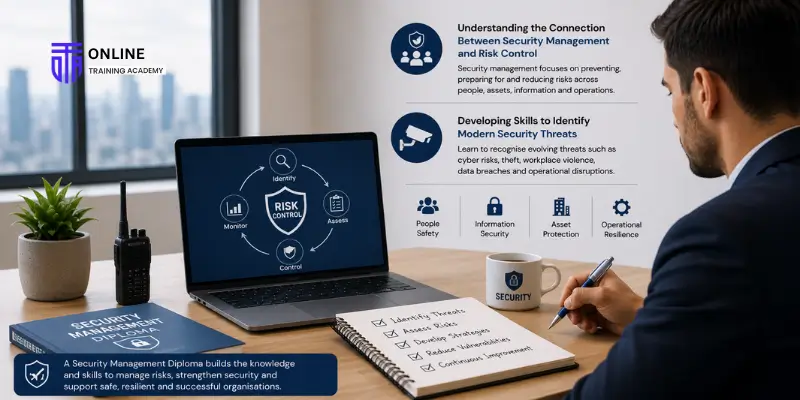
A Security Management Diploma supports modern risk control by teaching learners how to recognise security threats, assess potential risks, and develop strategies that help organisations reduce vulnerabilities. Instead of focusing only on responding to incidents, modern security management emphasises prevention, preparation, and continuous improvement.
Risk control is a key part of organisational security because every business faces potential threats. These may include workplace incidents, theft, information security concerns, emergency situations, or operational disruptions. Security professionals help organisations understand these risks and introduce suitable measures to minimise their impact.
Through security management education, learners gain knowledge of:
- Identifying potential threats and vulnerabilities
- Assessing the impact of security risks
- Creating security policies and procedures
- Planning incident responses
- Supporting business continuity strategies
These areas help organisations move from reactive security practices towards proactive risk management.
Understanding the Connection Between Security Management and Risk Control
Security management and risk control are closely connected because both focus on protecting valuable resources while reducing potential harm. Effective security management begins with understanding what could go wrong, why it may happen, and how organisations can prepare.
For example, a company operating a large office building may face risks such as unauthorised entry, workplace violence, fire emergencies, or data protection issues. A security management professional assesses these risks and helps develop controls such as access systems, emergency procedures, employee awareness programmes, and response plans.
A Security Management Diploma introduces learners to these principles by showing how security decisions are linked with wider organisational goals.
Developing Skills to Identify Modern Security Threats
Modern organisations face a wider range of risks compared with the past. Security professionals must understand both traditional and emerging threats to create effective protection strategies.
Common security challenges include:
- Physical security risks
- Cyber-related threats
- Employee safety concerns
- Fraud and internal risks
- Supply chain vulnerabilities
- Business interruptions
A Security Management Diploma helps learners understand how different risks can affect organisations and why early identification is important.
For instance, a retail organisation may need to manage risks related to customer safety, theft prevention, staff security, and digital payment systems. By identifying possible weaknesses before an incident occurs, security teams can introduce better control measures.
Why Do Modern Organisations Need Stronger Security Risk Control Strategies?
Organisations today operate in environments where a single security failure can have significant consequences. Customers expect businesses to protect their information, employees expect safe workplaces, and organisations must maintain reliable operations.
Strong security risk control strategies help businesses prepare for possible threats instead of waiting until problems occur. This approach reduces disruption and allows organisations to respond more effectively.
A Security Management Diploma provides learners with knowledge that supports this proactive approach by covering areas such as risk assessment, security planning, and incident management.
The Growing Complexity of Security Risks in Modern Businesses
Security risks have become more complex because organisations now depend on interconnected systems, technology, and global operations.
Some modern challenges include:
Digital Transformation Risks
Security risks have become more complex because organisations now depend on interconnected systems, technology, and global operations.
Some modern challenges include:
Workplace Safety Challenges
Organisations must consider employee wellbeing, emergency planning, and safe working environments.
Information Protection Concerns
Sensitive business and customer information must be protected from unauthorised access and misuse.
Operational Disruption
Unexpected incidents can interrupt services, affect customers, and create financial losses.
Security professionals play an important role in helping organisations understand these challenges and create suitable controls.
How Security Management Supports Business Continuity
Business continuity means ensuring that an organisation can continue operating during and after unexpected events.
Security management contributes to business continuity through:
- Emergency response planning
- Crisis management procedures
- Backup security measures
- Incident reporting systems
- Recovery strategies
For example, if a company experiences a security breach or workplace emergency, a prepared security team can help limit damage and support a quicker recovery.
A Security Management Diploma helps learners understand how preparation and planning contribute to organisational resilience.
The Role of Security Professionals in Reducing Organisational Vulnerabilities
Security professionals do more than monitor risks. They help organisations identify weaknesses and improve their overall protection strategies.
Their responsibilities may include:
- Reviewing existing security procedures
- Conducting risk assessments
- Recommending improvements
- Supporting compliance requirements
- Training employees on security awareness
These responsibilities require a combination of analytical thinking, communication skills, and knowledge of security principles.
What Risk Control Skills Can You Gain from a Security Management Diploma?
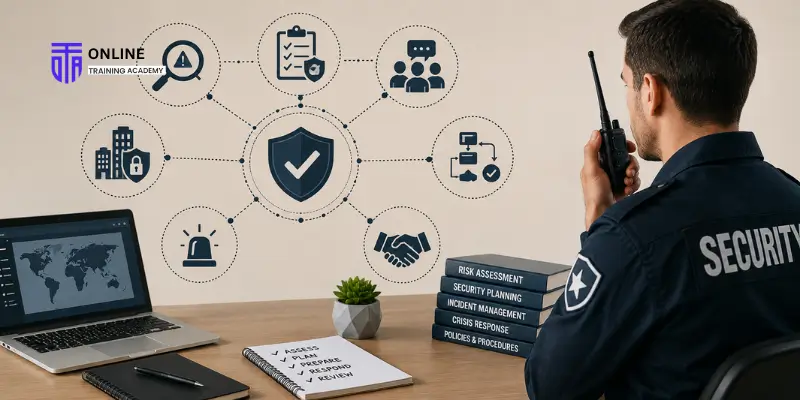
A Security Management Diploma develops a range of skills that support effective risk control. These skills are valuable because organisations need professionals who can understand threats and contribute to practical security solutions.
Risk Assessment and Threat Identification Skills
Risk assessment is one of the most important areas within security management. It involves identifying possible threats, analysing their likelihood, and understanding their potential impact.
Learners can develop knowledge of:
- Threat identification methods
- Vulnerability analysis
- Risk evaluation techniques
- Preventive security measures
For example, a security professional working in a healthcare setting may assess risks related to restricted areas, patient safety, emergency situations, and information protection.
By identifying risks early, organisations can introduce controls before problems occur.
Security Planning and Policy Development
Organisations require clear security policies to ensure employees understand procedures and responsibilities.
Security management knowledge supports the development of:
- Access control procedures
- Workplace security policies
- Emergency response guidelines
- Incident reporting processes
Effective policies create consistency and help employees respond appropriately during security situations.
Incident Management and Crisis Response Knowledge
Even with strong prevention strategies, incidents can still occur. Security professionals need the ability to manage situations effectively.
A Security Management Diploma can introduce learners to areas such as:
- Incident response planning
- Crisis communication
- Emergency procedures
- Recovery approaches
Good incident management helps reduce confusion, limit damage, and support organisational recovery.
Communication and Decision-Making Skills
Security professionals often work with managers, employees, emergency services, and external organisations.
Strong communication skills help professionals:
- Explain security risks clearly
- Report findings effectively
- Recommend suitable solutions
- Coordinate responses during incidents
Security decisions can affect an entire organisation, making clear communication an important part of risk control.
How Does a Security Management Diploma Apply Across Different Industries?
Security management principles apply across a wide range of industries because every organisation faces risks that can affect safety, operations, and valuable resources. From healthcare facilities to corporate offices, businesses require structured approaches to identify threats, improve protection measures, and maintain continuity.
A Security Management Diploma helps learners develop knowledge that can be adapted to different workplace environments. The skills gained can support roles involving risk assessment, security planning, incident response, and organisational protection across multiple sectors.
Security Management in Healthcare Organisations
Healthcare organisations manage sensitive information, valuable equipment, and vulnerable individuals.
Security management supports healthcare environments through:
- Patient and staff safety measures
- Controlled access systems
- Emergency response planning
- Information protection strategies
Hospitals and care facilities require structured security approaches because incidents can affect both safety and service delivery.
Security Management in Corporate Environments
Businesses need security professionals to manage workplace risks and protect organisational resources.
Security management responsibilities may include:
- Office security planning
- Employee safety procedures
- Asset protection
- Emergency preparedness
A strong security approach helps organisations maintain a safe and productive workplace.
Security Management in Retail and Public-Facing Organisations
Retail businesses often face challenges such as theft prevention, customer safety, and high-volume public interaction.
Security management can support:
- Loss prevention strategies
- Surveillance planning
- Customer protection measures
- Staff safety procedures
These skills help businesses reduce risks while maintaining positive customer experiences.
Security Management in Technology-Driven Organisations
Technology companies face security challenges involving information, systems, and digital operations.
Modern security professionals need awareness of:
- Data protection risks
- Access management
- Digital security concerns
- Technology-related vulnerabilities
This demonstrates why modern security management often requires knowledge beyond traditional physical protection.
How Has Security Management Evolved Beyond Traditional Security Roles?
Traditional security roles often focused on protecting physical locations and responding to incidents. Modern security management takes a broader approach by combining prevention, analysis, planning, and organisational resilience.
Traditional Security vs Modern Security Management
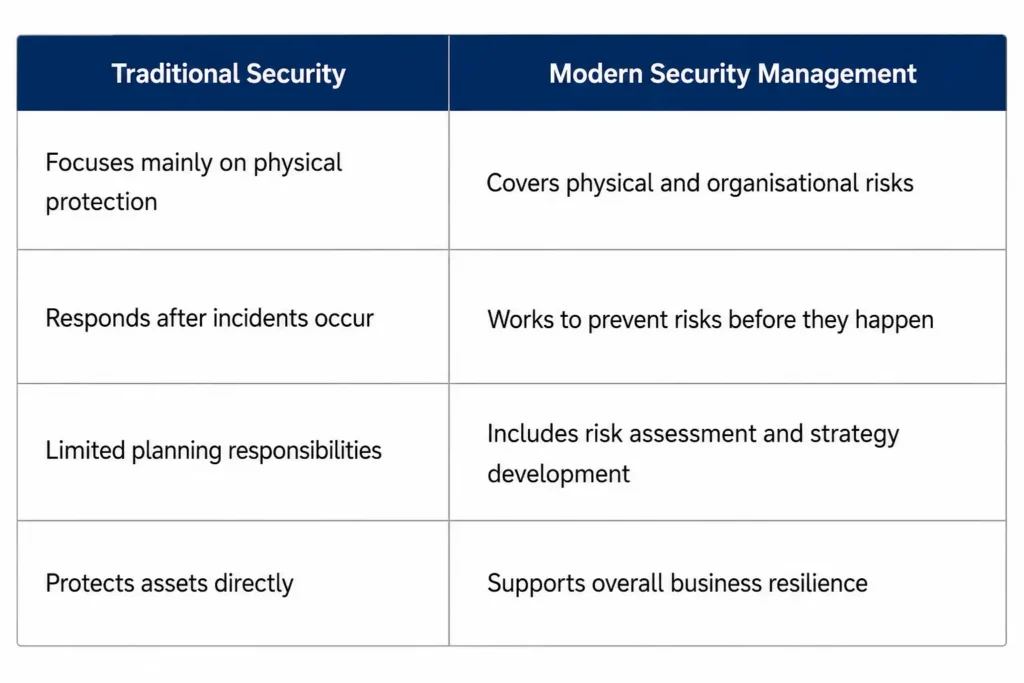
Modern security professionals are increasingly involved in decision-making because security risks can influence business performance.
The Importance of Integrated Security Approaches
Organisations today need security strategies that connect different areas, including:
- Physical protection
- Information security awareness
- Employee training
- Emergency planning
- Risk monitoring
An integrated approach helps organisations create stronger protection systems.
Future Trends Influencing Security Management
Security management continues to change as technology and business environments develop.
Future trends include:
- Artificial intelligence in security monitoring
- Smart surveillance solutions
- Data-based risk assessment
- Greater focus on organisational resilience
- Increased demand for security specialists
Professionals with updated security knowledge can help organisations adapt to these changing challenges.
Career Opportunities Supported by Security Management Skills
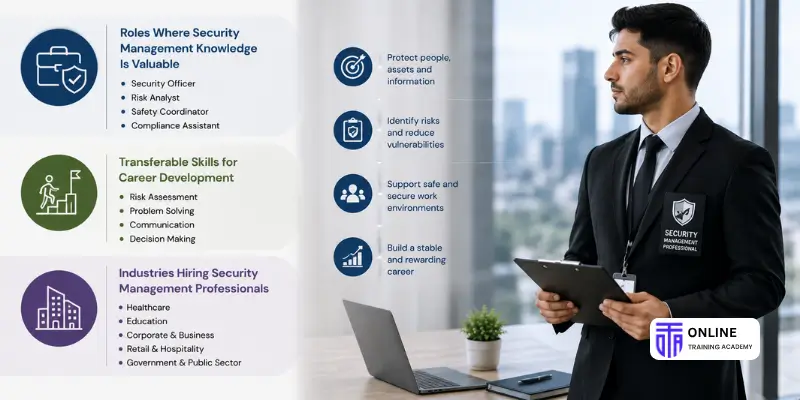
A Security Management Diploma can support individuals interested in careers involving security, risk, safety, and organisational protection.
Security knowledge is valuable across many industries because businesses require professionals who can identify and manage risks.
Roles Where Security Management Knowledge Is Valuable
Career opportunities may include:
- Security Manager
- Security Coordinator
- Risk Analyst
- Corporate Security Officer
- Safety Coordinator
- Emergency Planning Specialist
These roles involve responsibilities such as assessing risks, developing procedures, monitoring security measures, and supporting organisational safety.
Transferable Skills for Career Development
Beyond security-specific knowledge, learners can develop valuable workplace skills, including:
- Problem-solving
- Risk evaluation
- Communication
- Planning
- Decision-making
- Leadership
These skills can support progression into wider security and management positions.
Industries Hiring Security Management Professionals
Security professionals can work across sectors such as:
- Healthcare
- Finance
- Government
- Retail
- Education
- Technology
- Corporate organisations
As organisations continue to prioritise risk control, security management knowledge remains valuable in many workplaces.
Conclusion
Modern security management is no longer only about responding to incidents after they happen. It is about recognising risks early, creating effective controls, and helping organisations remain prepared in uncertain situations.
A Security Management Diploma provides learners with knowledge of risk assessment, security planning, incident response, and organisational protection strategies. These skills are valuable because businesses across industries need professionals who can help manage modern security challenges.
The strongest organisations are not those that react quickly after problems occur — they are those that prepare before risks become reality. Security management professionals play an important role in building that preparedness.
FAQs
A Security Management Diploma is a qualification that focuses on security principles, risk assessment, threat management, incident response, and strategies used to protect organisations and their resources.
It helps learners understand how to identify threats, assess vulnerabilities, and create security strategies that reduce potential risks.
Yes. It can provide foundational knowledge for individuals who want to start learning about security management and related career areas.
Learners can develop skills related to risk assessment, security planning, incident management, threat identification, and communication.
Yes. Security management knowledge is useful in sectors such as healthcare, technology, finance, retail, and corporate environments.
Risk control helps organisations protect people, information, assets, and operations by reducing the impact of possible threats.
Learn More



Get a FREE Course
- Learn useful skills online free
- Get CPD accredited certificate
- Add it to your CV today!