Introduction
Starting a career in security management can feel challenging for beginners. Many people are interested in the field but are unsure about the first steps to take. Questions such as “Do I need previous security experience?”, “What skills are required?”, and “Can I build a career in this area?” are common among those exploring security-related opportunities.
Modern security management is no longer limited to monitoring buildings or responding to incidents. Organisations today need professionals who can identify risks, support safety procedures, manage emergencies, protect valuable resources, and contribute to wider risk control strategies. This has created demand for individuals who understand both traditional security principles and modern organisational challenges.
A Security Management Diploma can provide beginners with a structured introduction to the field. It helps learners develop knowledge of security planning, risk assessment, threat identification, incident management, and organisational protection. Whether you are starting a new career, progressing from a security role, or exploring a different professional direction, understanding where to begin is an important first step.
Table of Contents
Security Management Diploma
Develop essential skills in security management, risk assessment, emergency planning, threat prevention, and incident response. This course provides practical knowledge for managing security operations, protecting people and assets, and supporting safer organisational environments.
What Is a Security Management Diploma and Why Is It Suitable for Beginners?
A Security Management Diploma is a qualification designed to introduce learners to the key principles involved in protecting people, assets, information, and business operations. It covers areas such as security planning, risk management, threat assessment, and incident response.
For beginners, this type of qualification provides a clear learning pathway by introducing essential concepts before moving into more advanced responsibilities. It helps learners understand how security decisions are made and how organisations develop strategies to reduce potential risks.
Security management is suitable for beginners because the field requires a combination of knowledge, awareness, and professional skills that can be developed through structured learning. Many successful security professionals begin by building foundational knowledge before gaining further experience.
Understanding the Role of Security Management
Security management focuses on identifying possible threats and creating strategies to reduce their impact. While traditional security roles often involve monitoring and responding to immediate situations, security management takes a broader approach.
Security managers may be responsible for:
- Assessing potential risks
- Developing security procedures
- Reviewing vulnerabilities
- Supporting emergency planning
- Improving organisational safety measures
For example, a company may need to protect employees, customer information, equipment, and daily operations. A security management professional helps identify possible weaknesses and recommends suitable controls.
Why Beginners Can Start a Security Management Diploma
Many people assume security management is only suitable for individuals who already work in security. However, beginners can also develop the knowledge needed to understand the industry.
A Security Management Diploma can help new learners:
- Understand basic security principles
- Learn how organisations manage risks
- Develop awareness of workplace security challenges
- Explore possible career pathways
The qualification provides a starting point for individuals who want to understand the responsibilities involved in security management.
Common Backgrounds of Security Management Learners
People enter security management from different educational and professional backgrounds.
A beginner may include:
- Someone starting their first career in security
- A security officer looking to progress into management
- A workplace supervisor responsible for safety
- A professional moving into risk-related roles
The skills gained through security management learning can support different career journeys.
How to Start a Career in Security Management: A Beginner’s Roadmap
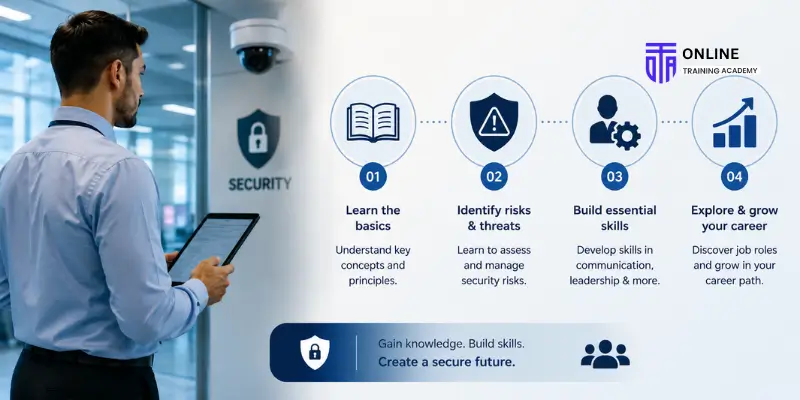
eginning a career in security management requires understanding the field, developing relevant skills, and gaining knowledge that can be applied in real workplaces.
A clear learning journey can help beginners understand what steps to take.
Step 1 – Understand Security Management Fundamentals
The first step is learning what security management involves and why it matters.
Security management is focused on:
- Protecting people and resources
- Reducing organisational risks
- Creating safer environments
- Preparing for unexpected situations
Beginners should understand that security is not only about preventing incidents. It also involves planning, analysis, communication, and continuous improvement.
Step 2 – Learn About Security Risks and Threat Assessment
Risk assessment is one of the foundations of security management. It involves identifying possible threats and understanding how they may affect an organisation.
For example, a business may identify risks such as:
- Unauthorised access
- Workplace accidents
- Data protection concerns
- Emergency situations
Security professionals assess these risks and help organisations introduce suitable controls.
A Security Management Diploma introduces learners to the principles behind identifying vulnerabilities and reducing potential harm.
Step 3 – Develop Security Management Skills
Knowledge alone is not enough for success in security management. Professionals also require skills that help them analyse situations and make informed decisions.
Important skills include:
- Communication
- Problem-solving
- Decision-making
- Planning
- Observation
These abilities help security professionals work effectively with employees, managers, and external organisations.
Step 4 – Explore Career Opportunities and Progression Routes
Security management offers different career pathways depending on experience, interests, and additional learning.
Beginners may explore roles such as:
- Security Assistant
- Security Officer
- Security Coordinator
With experience and further development, individuals may progress into roles such as:
- Security Manager
- Risk Analyst
- Corporate Security Specialist
What Will You Learn in a Security Management Diploma as a Beginner?
A Security Management Diploma introduces learners to important areas that support security responsibilities across different industries.
Rather than focusing only on one type of security work, the qualification helps learners understand how organisations identify, manage, and reduce risks.
Security Principles and Organisational Protection
Beginners learn the importance of protecting:
- People
- Physical assets
- Information
- Business operations
Understanding security principles helps learners recognise why organisations need structured approaches instead of relying only on immediate responses.
Risk Assessment and Security Planning
Risk assessment is an essential part of modern security management.
Learners develop knowledge of:
- Identifying potential threats
- Evaluating vulnerabilities
- Understanding risk impact
- Creating suitable control measures
For example, a security professional working in an office environment may assess access points, emergency procedures, and workplace safety concerns to improve protection.
Incident Management and Emergency Response
Security professionals need to know how to respond when unexpected events occur.
A Security Management Diploma can introduce concepts such as:
- Incident reporting
- Emergency procedures
- Crisis response planning
- Recovery strategies
Effective incident management helps organisations reduce disruption and recover more efficiently.
Workplace Safety and Security Awareness
Security management also involves creating awareness among employees.
This may include:
- Following workplace procedures
- Reporting security concerns
- Understanding emergency responsibilities
- Supporting safer working environments
Employee awareness is an important part of reducing preventable risks.
What Skills Do Beginners Need to Succeed in Security Management?
While security knowledge is important, successful security professionals also rely on personal and workplace skills. These skills help individuals manage responsibilities and communicate effectively.
Communication and Reporting Skills
Security professionals often need to explain risks and provide recommendations to different teams.
Strong communication skills help with:
- Preparing reports
- Sharing security information
- Explaining procedures
- Coordinating responses
Clear communication ensures that security concerns are understood and addressed.
Analytical Thinking and Risk Evaluation
Security management requires professionals to review information and make decisions based on potential risks.
Analytical skills help individuals:
- Identify patterns
- Evaluate threats
- Compare possible solutions
- Support better decision-making
These abilities are valuable when managing complex security challenges.
Leadership and Decision-Making Skills
Security managers often coordinate teams and make decisions during important situations.
Leadership skills support:
- Managing security activities
- Guiding teams
- Responding during incidents
- Improving security procedures
Organisation and Attention to Detail
Security professionals need to manage information, procedures, and reports carefully.
Attention to detail helps with:
- Reviewing security systems
- Maintaining records
- Identifying weaknesses
- Monitoring improvements
Security Officer vs Security Manager: Understanding Career Progression
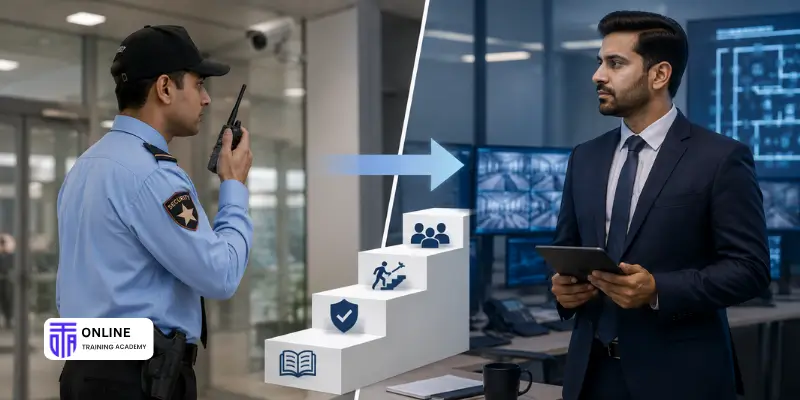
Many beginners are unsure about the difference between security officer roles and security management positions. Understanding this difference can help learners plan their career development.
Responsibilities of a Security Officer
Security officers often focus on daily security operations.
Their responsibilities may include:
- Monitoring premises
- Checking access points
- Reporting incidents
- Following established procedures
They play an important role in maintaining everyday security.
Responsibilities of a Security Manager
Security managers have wider responsibilities focused on planning and strategy.
They may:
- Develop security policies
- Assess organisational risks
- Manage security teams
- Improve protection strategies
Their role involves making decisions that support long-term security goals.
How a Security Management Diploma Supports Career Progression
A Security Management Diploma can help learners develop knowledge needed for higher-level responsibilities.
It introduces areas such as:
- Risk management
- Security planning
- Incident control
- Organisational protection
This knowledge can support individuals looking to move from operational roles into management-focused positions.
Where Can Beginners Apply Security Management Knowledge?
Security management skills are valuable across many industries because every organisation faces risks that require effective control strategies.
Security Management in Healthcare
Healthcare organisations must protect patients, staff, facilities, and sensitive information.
Security management supports healthcare environments through:
- Access control procedures
- Emergency planning
- Patient safety measures
- Protection of confidential information
Security Management in Corporate Organisations
Businesses require security professionals to protect employees, assets, and operations.
Security management may support:
- Workplace safety
- Risk assessment
- Business continuity planning
- Security procedures
Security Management in Retail and Public Environments
Retail organisations manage risks involving customers, employees, and valuable assets.
Security knowledge can support:
- Loss prevention
- Customer safety
- Incident reporting
- Store security planning
Security Management in Technology-Based Organisations
Technology-driven businesses face risks involving information and digital systems.
Security management knowledge can support:
- Access management
- Information protection
- Security awareness
- Risk reduction strategies
Is a Security Management Diploma the Right Starting Point for You?
Choosing the right learning path depends on your interests, goals, and career plans.
A Security Management Diploma may be suitable for individuals who want to understand how organisations protect themselves from security risks.
Suitable for Individuals Starting a Security Career
Beginners can use the qualification to develop foundational knowledge before entering security-related roles.
It can help them understand:
- Industry responsibilities
- Security principles
- Risk management approaches
Suitable for Existing Security Professionals
Current security workers may use additional learning to expand their knowledge and prepare for progression opportunities.
The qualification can support movement into roles involving:
- Planning
- Risk assessment
- Team coordination
Suitable for Career Changers
Security management can also appeal to individuals moving from other industries.
Transferable skills from areas such as administration, management, compliance, or safety can support a transition into security-related roles.
Why Security Management Skills Are Becoming More Important
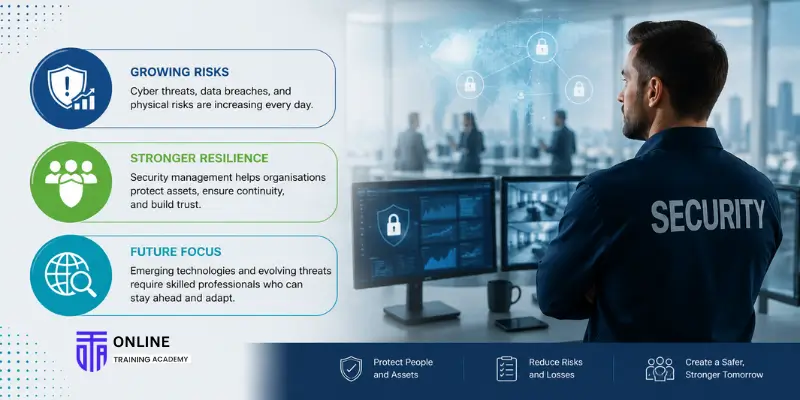
Modern organisations face changing risks, making security knowledge increasingly valuable.
Businesses need professionals who can understand threats, improve protection measures, and support organisational resilience.
Growing Workplace and Organisational Risks
Organisations must manage challenges such as:
- Workplace safety concerns
- Information protection risks
- Operational disruptions
- Security vulnerabilities
Security management helps businesses prepare for these challenges.
The Connection Between Security Management and Business Resilience
Effective security planning helps organisations continue operating during difficult situations.
Security professionals contribute by:
- Preparing response plans
- Reducing vulnerabilities
- Supporting recovery efforts
Future Trends in Security Management
The security sector continues to evolve with new technology and changing organisational needs.
Future developments include:
- Technology-supported monitoring
- Data-based risk assessment
- Integrated security systems
- Greater focus on prevention
Conclusion
Beginning a career in security management does not require knowing everything from the start. Building the right foundation through structured learning can help beginners understand security principles, develop valuable skills, and explore different career directions.
A Security Management Diploma provides an introduction to important areas such as risk assessment, security planning, incident response, and organisational protection. These skills are valuable because modern organisations need professionals who can identify risks before they become serious challenges.
Every strong security strategy begins with knowledge, awareness, and preparation. For beginners looking to enter the field, learning the fundamentals can be the first step towards building a future in security management.
FAQs
Yes. A Security Management Diploma can provide beginners with foundational knowledge of security principles, risk assessment, and organisational protection strategies.
Previous experience can be helpful, but many beginners start learning security management to build their knowledge and explore career opportunities.
Learners can develop skills in risk assessment, security planning, incident management, communication, and decision-making.
Potential roles include security coordinator, security officer, risk analyst, security manager, and corporate security specialist.
Security management can be a suitable career area for individuals interested in protecting people, assets, and organisations through structured risk control approaches.
A security officer usually focuses on daily security activities, while a security manager focuses on planning, risk assessment, procedures, and security strategies.
Security professionals are needed across healthcare, technology, retail, finance, education, government, and corporate sectors.
Learn More



Get a FREE Course
- Learn useful skills online free
- Get CPD accredited certificate
- Add it to your CV today!