


Introduction
Choosing to seek emotional support can be an important decision, but finding the right type of help is not always easy. Many people know they are struggling with stress, emotional challenges, relationship difficulties, or major life changes, yet they may feel uncertain about whether they need psychotherapy, counselling, or another form of support.
Finding the right therapist is about more than simply searching for a professional nearby. The approach used, the therapist’s experience, communication style, and the level of comfort you feel can all influence your therapy experience. A suitable therapeutic relationship can help individuals feel understood, supported, and more confident throughout the process.
Psychotherapy and counselling can provide valuable support by helping individuals explore thoughts, emotions, behaviours, and personal challenges. This checklist will guide you through the key factors to consider when choosing support, including understanding different therapy options, preparing for your first session, evaluating a therapist’s suitability, and knowing what to do if therapy does not feel right.
Table of Contents
Psychotherapy and Counselling
Explore mental health, psychiatric disorders, psychotherapy approaches, CBT, client assessment, therapeutic techniques, and crisis intervention. This course develops foundational knowledge for understanding mental health challenges and supporting clients through various therapeutic situations.
How Do You Know If Psychotherapy and Counselling May Help You?
Many people assume therapy is only for serious mental health concerns, but psychotherapy and counselling can support individuals facing a wide range of emotional and personal challenges. People may seek therapy during difficult periods, times of change, or simply because they want to develop greater self-awareness.
Therapy may be helpful if you are experiencing:
- Ongoing stress or emotional pressure
- Difficulty managing thoughts or feelings
- Relationship challenges
- Major life transitions
- Low confidence or self-doubt
- Repeated patterns that affect your wellbeing
- A desire for personal growth
Seeking support does not mean that someone has failed to manage their life. Many people use therapy as a way to better understand themselves, improve coping strategies, and develop healthier ways of responding to challenges.
Identifying Your Reasons for Seeking Support
Before choosing a therapist, it can help to reflect on why you are considering therapy.
Ask yourself:
➽ What challenges am I currently experiencing?
➽ What changes would I like to make?
➽ Am I looking for emotional support, personal development, or help with a specific concern?
➽ What would a positive therapy experience look like for me?
Having some clarity about your goals can make it easier to choose the right type of support.
Psychotherapy vs Counselling: Understanding Your Options
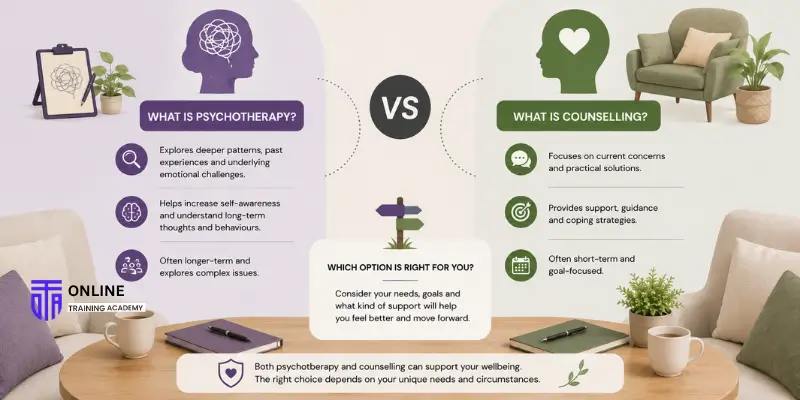
One of the first steps in finding the right support is understanding the difference between psychotherapy and counselling. While both involve professional conversations designed to support individuals, they may differ in focus and approach.
What Is Psychotherapy?
Psychotherapy often focuses on exploring deeper emotional patterns, thoughts, behaviours, and experiences that influence a person’s current life.
It may involve:
- Understanding long-term emotional patterns
- Exploring beliefs and behaviours
- Developing new perspectives
- Addressing ongoing emotional difficulties
Psychotherapy can be useful for individuals who want to explore the underlying factors affecting their thoughts, emotions, and relationships.
What Is Counselling?
Counselling often focuses on helping individuals manage current challenges, make decisions, and develop coping strategies.
It may support people experiencing:
- Personal difficulties
- Relationship concerns
- Stressful situations
- Life changes
- Emotional uncertainty
Counselling provides a structured space where individuals can discuss concerns and explore possible ways forward.
Which Option Is Right for You?
There is no single approach that works for everyone. The most suitable option depends on your goals, concerns, preferences, and the type of support you are seeking.
When choosing between psychotherapy and counselling, consider:
- What type of challenge you want support with
- Whether you want to explore past experiences or focus on current concerns
- Your preferred therapy style
- The approach used by the therapist
Understanding these differences can help you make a more informed choice.
Finding and Choosing a Psychotherapist: A Complete Checklist
Choosing a therapist is an important step because the relationship between therapist and client can influence how comfortable and engaged someone feels during sessions.
Use this checklist when searching for the right support.
Check Qualifications and Professional Background
A therapist’s education, training, and professional experience are important factors to consider.
Look for information about:
- Relevant qualifications
- Professional training
- Experience supporting similar concerns
- Areas of special interest
A therapist with suitable experience may better understand your situation and provide more appropriate guidance.
Consider Their Therapy Approach
Different therapists may use different methods depending on their training and philosophy.
Some approaches include:
- Cognitive Behavioural Therapy (CBT)
- Person-centred therapy
- Psychodynamic approaches
- Solution-focused methods
- Mindfulness-based techniques
Understanding the therapist’s approach can help you decide whether it matches your needs.
Evaluate Communication Style and Comfort
Feeling comfortable with your therapist is an important part of the process.
Consider:
- Do you feel listened to?
- Do you feel respected?
- Are you comfortable discussing personal experiences?
- Does the therapist communicate clearly?
A strong therapeutic relationship is built on trust, understanding, and open communication.
Questions to Ask Before Choosing a Therapist
Before starting therapy, asking questions can help you understand whether a therapist is the right fit.
Consider asking:
What Therapy Approaches Do You Use?
Understanding their methods can help you decide whether their approach matches your goals.
What Experience Do You Have With Similar Concerns?
A therapist who has worked with similar challenges may have relevant knowledge and experience.
What Can I Expect During Sessions?
Understanding the structure of therapy can reduce uncertainty, especially for first-time clients.
How Do We Measure Progress?
Progress may look different for each person. Discussing goals can help create realistic expectations.
How Often Should Sessions Take Place?
The frequency of sessions may depend on your needs, goals, and circumstances.
What Is It Like to Have Psychotherapy or Counselling?
For many people, starting therapy can feel unfamiliar. Knowing what to expect can make the process easier and help you feel more prepared.
Your First Therapy Session
The first session often focuses on understanding your concerns, goals, and reasons for seeking support.
Your therapist may discuss:
- What brought you to therapy
- Your current challenges
- Your expectations
- How future sessions may work
This session helps establish the foundation for the therapeutic relationship.
Exploring Thoughts, Feelings and Experiences
During therapy, individuals are encouraged to discuss their thoughts, emotions, and experiences openly.
Therapists may use different techniques to help clients:
- Recognise emotional patterns
- Understand behaviours
- Develop coping strategies
- Explore possible changes
Therapy is a collaborative process where both the therapist and client work together.
Building Progress Over Time
Therapy progress usually develops gradually. Some people notice changes quickly, while others may need more time to explore complex challenges.
Progress may involve:
- Improved self-awareness
- Better emotional management
- Healthier communication
- Increased confidence
Does Psychotherapy Work and Is Talk Therapy Effective?

A common question people ask before starting therapy is: Does psychotherapy work?
Research shows that psychotherapy and talking therapies can support many individuals experiencing emotional difficulties. However, the effectiveness of therapy depends on several factors, including the approach used, the client’s goals, and the quality of the therapeutic relationship.
Therapy is not designed to provide an instant solution. Instead, it helps individuals develop awareness, explore challenges, and build skills that can support long-term improvement.
How Talk Therapy Supports Positive Change
Talk therapy can help individuals:
- Express emotions in a safe environment
- Understand personal experiences
- Identify unhelpful patterns
- Develop healthier coping strategies
By discussing thoughts and feelings with a trained professional, individuals may gain new perspectives on challenges they are facing.
Why Finding the Right Therapist Matters
Even effective therapy approaches may not feel suitable if the relationship between therapist and client does not feel comfortable.
Factors that can influence the experience include:
- Trust
- Communication
- Feeling understood
- Confidence in the approach
Finding the right support can make the therapy journey more meaningful.
What If Therapy Does Not Work for Me?
Sometimes people begin therapy and feel that progress is slower than expected or that the approach does not feel suitable. This does not necessarily mean therapy cannot help.
Consider Whether the Approach Matches Your Needs
Different people respond differently to therapy methods. A technique that works well for one person may not be the best option for another.
You may need to consider:
- Whether your goals are clear
- Whether the approach suits your concerns
- Whether another method may be more appropriate
Discuss Concerns With Your Therapist
Open communication is important. If something does not feel right, discussing your concerns with your therapist may help improve the experience.
You can talk about:
- Your expectations
- Your progress
- Difficulties during sessions
- Changes you would like to make
Finding Another Therapist Is Sometimes Appropriate
A good therapeutic relationship matters. If you do not feel comfortable or supported, it may be reasonable to explore another professional who better matches your needs.
Choosing Between Online and In-Person Therapy
Another important decision is choosing the format that works best for you.
Online Therapy
Online therapy may provide:
- Greater flexibility
- Easier access
- Convenience for busy schedules
It can be a suitable option for people who prefer receiving support from their own environment.
In-Person Therapy
In-person sessions provide:
- Face-to-face communication
- A dedicated therapy environment
- Traditional interaction with a therapist
The best option depends on your personal preference, availability, and comfort.
How to Maximise the Benefits of Psychotherapy and Counselling

Choosing the right therapist is an important first step, but active participation can also influence the therapy experience.
Be Open During Sessions
Honest communication helps therapists understand your experiences and provide more suitable support.
Set Clear Goals
Knowing what you want to achieve can help create direction and make progress easier to recognise.
Apply Strategies Outside Sessions
Many therapy techniques become more effective when individuals practise new approaches in everyday situations.
This may include:
- Reflecting on thoughts and emotions
- Practising communication skills
- Using coping strategies
For those interested in developing a deeper understanding of therapeutic approaches, counselling methods, and professional practices, exploring structured learning resources can provide additional knowledge about the field of psychotherapy and counselling.
Your Final Psychotherapy and Counselling Checklist
Before choosing support, consider the following:
- Have I identified why I want therapy?
- Do I understand whether psychotherapy or counselling suits my needs?
- Have I researched the therapist’s qualifications and approach?
- Do I feel comfortable communicating with this professional?
- Have I asked questions about sessions and progress?
- Does the therapy format fit my lifestyle?
- Am I prepared to participate actively in the process?
Taking time to consider these points can help you make a more confident decision.
Conclusion: Choosing Support That Matches Your Journey
Finding the right psychotherapy or counselling support is a personal decision that requires careful consideration. The best choice is not always about finding the most popular approach or the closest therapist; it is about finding support that aligns with your needs, goals, and comfort level.
Psychotherapy and counselling can provide valuable opportunities to understand emotions, manage challenges, and develop healthier ways of responding to life experiences. By researching options, asking the right questions, and choosing a therapist who creates a supportive environment, individuals can take a meaningful step towards personal growth.
The first conversation may feel like a small step, but finding the right support can become the beginning of a much larger journey towards greater self-awareness and emotional wellbeing.
FAQs
Start by considering your goals, researching therapist qualifications, understanding their approach, and choosing someone whose communication style feels comfortable.
Psychotherapy often explores deeper emotional patterns, while counselling usually focuses on current challenges, coping strategies, and personal development.
Talk therapy can help many people understand emotions, develop coping strategies, and manage personal challenges more effectively.
The first session usually involves discussing your concerns, goals, expectations, and how the therapy process will work.
A suitable therapist should make you feel respected, comfortable, and able to communicate openly about your experiences.
You can discuss your concerns with your therapist, review your goals, or consider whether another approach or professional may better suit your needs.
Learn More





Get a FREE Course
- Learn useful skills online free
- Get CPD accredited certificate
- Add it to your CV today!