


Two businesses sell the same product at the same price. One struggles to retain customers. The other builds a loyal following without heavy marketing. The difference is not the product. It is how customers are treated.
Good customer service is often underestimated because it does not always show immediate results. Yet over time, it becomes one of the strongest drivers of customer loyalty, repeat business, and reputation. Customers do not just evaluate what they buy. They evaluate the entire experience around it. When service feels smooth, respectful, and reliable, it creates confidence. When it fails, even a strong product cannot compensate.
This article breaks down what good customer service really means, the qualities that define it, practical examples from real situations, and strategies businesses use to improve it consistently.
What Defines Good Customer Service and How It Stands Apart
Good customer service goes beyond solving problems. It focuses on creating a positive and consistent experience across every interaction. It is not defined by a single moment but by how well a business meets expectations over time.
The Difference Between Basic and Excellent Service
Basic service completes the task. Excellent service improves the experience. A basic interaction may answer a question. A strong interaction ensures the customer understands the answer, feels supported, and leaves with confidence.
Why Perception Matters More Than Process
Customers do not judge internal processes. They judge outcomes and how those outcomes are delivered. Two businesses can follow the same steps, but the one that communicates clearly and respectfully will be perceived as better.
The Role of Consistency in Good Service
Consistency builds trust. Customers expect the same level of service every time they interact with a business. Inconsistent experiences create uncertainty and reduce confidence.
Good Customer Service Explained: 7 Qualities, Real Examples and Proven Strategies
"Good customer service involves understanding customer needs, communicating clearly, and resolving issues effectively. This blog explores seven essential qualities of excellent customer service, supported by real examples and practical strategies. By developing skills such as empathy, active listening, and problem-solving, businesses and individuals can create positive customer experiences and build stronger customer relationships.
"
Table of Contents
The 7 Qualities of Good Customer Service
High-quality customer service consistently reflects a set of core qualities that shape how interactions are experienced. These qualities influence not just how problems are solved, but how customers feel during the process.
Responsiveness
Customers expect timely replies, especially when they are facing an issue or making a decision. Delays create frustration and often lead to repeated contact, which increases pressure on both the customer and the business. Quick responses signal reliability and show that the business values the customer’s time.
Clarity
Clear communication reduces confusion and prevents unnecessary back-and-forth. Customers should not need to ask the same question multiple times to understand a solution. Clarity includes simple language, structured responses, and avoiding unnecessary jargon that can complicate the interaction.
Empathy
Customers want to feel understood, not just answered. Acknowledging their situation, especially during problems, helps reduce tension and builds trust. Even when the solution is not immediate, empathy can improve how the interaction is perceived.
Professionalism
A calm and respectful tone ensures that interactions remain productive, even in difficult situations. Professionalism is reflected in how issues are handled, how language is used, and how consistent the behaviour is across different interactions.
Consistency
Customers expect the same quality of service every time they interact with a business, regardless of the channel or the person handling the request. Consistency strengthens reliability and reduces uncertainty, which is key to building long-term trust.
Accountability
Taking ownership of issues builds credibility. Customers want to know that their concern is being handled by someone responsible. Passing responsibility between departments or avoiding ownership weakens trust and delays resolution.
Proactive Support
Anticipating customer needs and addressing potential issues before they arise improves the overall experience. This could include providing updates before a delay occurs or offering guidance before a customer asks. Proactive support reduces friction and shows attention to detail.
Real Examples of Good Customer Service
Understanding theory is useful, but real examples show how these qualities work in practice.
Example 1: Resolving a Complaint Effectively
A customer receives the wrong item. Instead of asking multiple questions or delaying the response, the company quickly acknowledges the mistake, offers a replacement, and explains the next steps clearly. The problem is resolved efficiently, and the customer feels valued.
Example 2: Going Beyond Expectations
A service provider follows up after a purchase to ensure everything is working as expected. This action is not required, but it creates a positive impression and strengthens the relationship.
Example 3: Consistency Across Channels
A customer contacts a business through live chat and later follows up by email. The responses are aligned, clear, and consistent. This continuity builds confidence in the business.
Essential Customer Service Skills That Drive Results
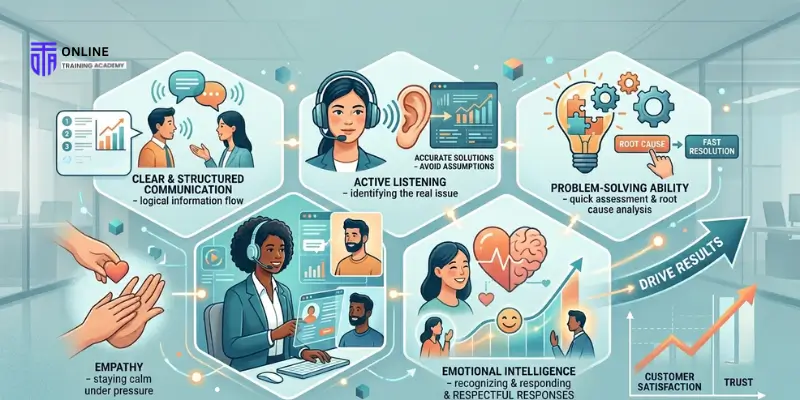
Good customer service is shaped by the skills of the people delivering it. Systems and processes can support interactions, but the outcome often depends on how well service agents communicate, interpret, and respond in real time.
Effective Communication
Clear and structured communication ensures that customers understand what is happening at every stage. It reduces confusion, prevents repeated queries, and builds confidence in the service being provided. This includes choosing the right words, organising information logically, and adapting tone based on the situation.
Active Listening
Listening carefully allows service agents to identify the real issue rather than just the visible problem. Customers do not always explain things clearly, so attention to detail is essential. Active listening helps avoid assumptions and leads to more accurate and efficient solutions.
Problem-Solving Ability
Customers expect solutions, not lengthy explanations. Strong problem-solving skills allow agents to assess situations quickly, identify the root cause, and take appropriate action. This reduces resolution time and improves overall satisfaction.
Emotional Intelligence
Recognising and responding to customer emotions helps maintain a positive interaction, even in challenging situations. Emotional intelligence allows service agents to stay calm, manage pressure, and respond in a way that feels respectful and understanding, which often shapes how the entire experience is remembered.
Strategies for Improving Customer Service
Improving customer service requires more than training. It depends on how well systems, processes, and culture work together to support consistent, high-quality interactions.
Developing Clear Service Standards
Defined service standards create a consistent experience across all interactions. They set expectations for tone, response time, and resolution quality, helping teams deliver a uniform level of service regardless of channel or situation.
Using Customer Feedback for Continuous Improvement
Customer feedback reveals patterns that are not always visible internally. Complaints, reviews, and surveys highlight recurring issues and unmet expectations. Businesses that analyse and act on this feedback can refine their service approach and address problems before they escalate.
Investing in Training and Skill Development
Regular training ensures that service teams stay aligned with evolving customer expectations. It helps refine communication, problem-solving, and emotional intelligence skills, which are critical for handling diverse situations effectively.
Aligning Processes with Customer Needs
Service processes should be designed to reduce effort for the customer. Complicated procedures, unnecessary steps, or unclear instructions create friction. Streamlined processes improve efficiency and make interactions smoother and more intuitive.
Leveraging Technology and Automation
Technology can support faster and more consistent service delivery. Tools such as live chat systems, CRM platforms, and automated responses help manage high volumes of requests while maintaining accuracy. The key is to use technology to enhance service, not replace the human element.
Building a Customer-Centric Culture
Sustainable improvement happens when customer focus becomes part of the organisation’s culture. This means aligning teams, decisions, and priorities around delivering value to the customer, rather than treating service as a separate function.
Common Customer Service Mistakes to Avoid
Many customer service failures are not caused by complex problems but by simple, avoidable mistakes. These issues often build up over time and directly affect how customers perceive a business.
Slow or Delayed Responses
Delays create frustration and signal a lack of urgency. Customers expect timely updates, especially when they are dealing with a problem. Slow responses often lead to repeated follow-ups, increasing dissatisfaction and workload at the same time.
Unclear Communication
Vague or incomplete responses increase confusion and reduce trust. When customers do not fully understand the solution, they are likely to return with the same issue. Clear, structured communication helps avoid unnecessary back-and-forth and improves overall efficiency.

Over-Reliance on Scripts
Scripts can help maintain consistency, but relying on them too heavily can make interactions feel impersonal. Customers expect responses that address their specific situation. Flexible communication that adapts to context leads to better outcomes.
Failure to Take Ownership
Customers expect accountability when something goes wrong. Passing responsibility between teams or avoiding ownership delays resolution and weakens credibility. Taking clear ownership reassures the customer that their issue is being handled properly.
Ignoring Customer Feedback
Feedback provides direct insight into customer expectations and recurring issues. Ignoring it means missing opportunities to improve. Businesses that actively listen and respond to feedback are better positioned to refine their service over time.
Customer Service in the Hospitality Industry
The hospitality industry offers one of the clearest examples of how customer service shapes the entire experience. In this sector, the service itself is often as important as the product being offered. Guests do not just evaluate what they receive, they evaluate how it is delivered from the moment they arrive to the moment they leave.
First Impressions Matter
The initial interaction sets the tone for everything that follows. A warm and attentive welcome creates a sense of comfort and trust, while a delayed or indifferent response can immediately lower expectations. In hospitality, customers often form a strong opinion within the first few minutes, which then influences how they perceive the rest of their experience.
Attention to Detail
Small details play a significant role in customer satisfaction. Tone of voice, response time, cleanliness, and even body language contribute to the overall impression. These details may seem minor in isolation, but together they shape how customers evaluate the quality of service. Consistency in these details helps create a reliable and positive experience.
Handling Complaints Effectively
Complaints are inevitable in any service-based environment, but how they are handled makes the difference. Quick acknowledgement, clear communication, and respectful interaction can turn a negative situation into a positive one. In many cases, customers who experience well-handled issues become more loyal than those who never faced a problem.
Consistency Across the Guest Journey
From check-in to check-out, customers expect the same level of service throughout their stay. A strong start followed by inconsistent service can weaken the overall experience. Maintaining consistency ensures that trust built at the beginning is not lost later.
Personalisation in Service Delivery
Remembering preferences, addressing guests by name, and adapting service based on individual needs creates a more meaningful experience. Personalisation shows attention and care, which often leads to stronger customer relationships and positive reviews.
Conclusion
Good customer service is not defined by one action. It is built through consistent, thoughtful interactions that shape how customers feel over time.
Businesses often focus on improving products or reducing costs. Those efforts matter, but they rarely determine whether a customer returns. What determines that decision is the experience.
Customers remember how easy it was to get help, how clearly issues were handled, and how they were treated when something went wrong. That memory becomes the reason they come back or choose a different option next time.
FAQs
Good customer service provides clear, timely, and helpful support while creating a positive experience for the customer.
Responsiveness, clarity, empathy, professionalism, consistency, accountability, and proactive support.
It builds trust, improves retention, and strengthens brand reputation.
Quick problem resolution, personalised follow-ups, and consistent support across channels.
By training staff, using feedback, simplifying processes, and maintaining clear standards.
Slow responses, unclear communication, lack of empathy, and failure to take ownership.
Learn More





Get a FREE Course
- Learn useful skills online free
- Get CPD accredited certificate
- Add it to your CV today!