

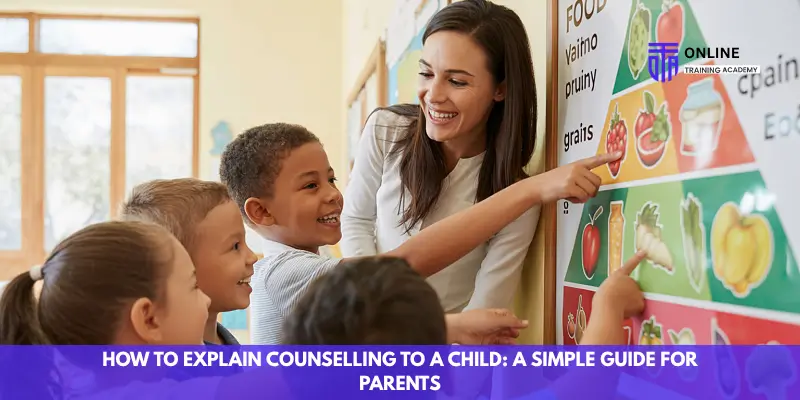
Explaining counselling to a child can feel daunting for many parents. Children often associate counselling with something “wrong” or scary, and without clear guidance, they may resist attending sessions. Yet, understanding therapy early can help children develop emotional resilience, improve communication skills, and feel supported during difficult moments. For parents, approaching the conversation thoughtfully is the first step in ensuring counselling is effective and a positive experience. This guide provides practical strategies for talking to children about counselling, preparing them for their sessions, and supporting them throughout the process.
Table of Contents
How to Explain Counselling to a Child: A Simple Guide for Parents
"Talking to a child about counselling can feel challenging, but the right approach can help them feel safe and understood. This blog provides parents with simple and practical ways to explain counselling, ease concerns, and help children understand that counselling is a supportive space where they can express their feelings and receive guidance."
How to Explain Counselling to a Child
Counselling is, at its core, a safe space where children can explore their thoughts and emotions, learn coping strategies, and get guidance from a trained professional. For children, the idea of “talking to a stranger about feelings” can be intimidating, so it is crucial that parents frame counselling in a way that feels approachable, trustworthy, and supportive.
When explaining counselling, honesty and simplicity are key. Young children benefit from concrete explanations and comparisons to experiences they already know. For instance, describing a therapist as someone who “helps children understand feelings and teaches ways to feel better” provides clarity without overwhelming them. Parents should avoid over-promising or using euphemisms that may confuse the child, such as calling the therapist a “new friend.” Instead, using developmentally appropriate language helps the child build realistic expectations while reducing anxiety about the unknown.
Using Age-Appropriate Language
Children of different ages understand the world in very different ways. Tailoring your explanation of counselling to your child’s developmental stage is critical.
- Toddlers and preschoolers: Keep explanations extremely simple. A phrase like “We’re going to see someone who helps kids talk about feelings” conveys the purpose without overloading them with abstract concepts. Repetition and reminders leading up to the session can help young children internalize this understanding.
- School-age children: Children in elementary school may understand more complex comparisons. Relating counselling to familiar figures, such as a school counselor, can make the concept less intimidating. You might say, “You know how your school counselor helps kids talk about feelings? We’re going to see someone like that who works in their own office.”
- Tweens and teens: Older children have a stronger sense of autonomy and may be more resistant to therapy. Emphasize the benefits of counselling as a tool for learning how to process emotions, communicate effectively, and manage stress. Avoid framing it as punishment or correction. You might explain, “This is someone who can teach you ways to handle stress and feel more in control when things are difficult.”
Emphasizing Safety and Choice
Safety is the cornerstone of effective counselling, especially for children. Unlike adults, children are still learning to regulate emotions, trust new people, and navigate social situations. Entering a therapy session can feel unpredictable or intimidating, particularly if they’ve never spoken to a therapist before. Parents play a vital role in framing this experience as safe and empowering.
One practical approach is to give children control over their participation. For example, you can explain:
“You can talk about whatever you want, or you can just play or draw if you’re not ready to talk yet.”
This communicates that the child’s feelings and boundaries are respected. It helps reduce anticipatory anxiety, because children know they are not being forced into uncomfortable situations. Even small gestures of choice—such as letting them decide where to sit in the therapy room or whether a parent stays during the first session—can reinforce this sense of control.
For older children and teenagers, clarifying confidentiality becomes crucial. Many teens worry that anything they say will be shared with parents, teachers, or friends. By explaining that therapy is a private space, except when someone’s safety is at risk, parents can foster trust and openness. You might say:
“The therapist won’t tell me what you share unless you or someone else could be in danger. This way, you can be honest and get the help you need.”
Emphasizing choice and safety is not just about words; it’s about creating an emotional framework where children feel secure, respected, and in control. When children perceive counselling as a safe environment, they are more likely to engage meaningfully, share their thoughts and feelings, and ultimately benefit from the process.
Normalizing Counselling
Many children approach counselling with fear or shame, believing that needing help signals weakness or “something is wrong with me.” Normalizing counselling involves reframing it as a natural and positive resource for learning and growth, rather than a response to failure or misbehavior.
A useful analogy is to compare therapy to familiar experiences of guided learning:
- Just as a coach teaches skills in sports, a music teacher helps you master an instrument, or a teacher helps with math, a therapist teaches skills to manage feelings and solve problems.
- Emphasizing this perspective shifts therapy from a punitive or corrective context into one of personal development and empowerment.
Parents can also normalize counselling by modeling openness about emotions at home. Simple statements like:
“Sometimes grown-ups also talk to someone to help process feelings—it helps us manage stress and make better choices.”
signal that seeking support is a normal and healthy part of life. Additionally, reinforcing the idea that everyone can benefit from guidance, not just children with problems, removes the stigma. Children learn that seeking help is a proactive step, not a sign of weakness.
Normalizing counselling also includes integrating it into everyday conversation. Instead of presenting therapy as an isolated event, parents can talk about coping skills learned in therapy in daily life: managing frustration, handling conflicts, or dealing with disappointment. This approach shows children that counselling is not an abstract, scary concept but a practical tool that enhances everyday life.
By combining safety, choice, and normalization, parents can transform the idea of counselling from something intimidating into an empowering opportunity for children to understand their emotions, build resilience, and develop healthy coping strategies.
Signs Your Child May Benefit from Counselling
Parents may wonder whether their child truly needs counselling. While every child experiences ups and downs, certain emotional and behavioral patterns may indicate that professional support would be beneficial. Emotional signs can include persistent sadness, anxiety, withdrawal, or mood swings. Behavioral cues may involve aggression, acting out, or avoidance of school or social situations. Developmental indicators include difficulty expressing feelings, trouble coping with change, or reacting strongly to stressful situations.
Early intervention is often the most effective approach. Counselling at the first signs of struggle can prevent issues from escalating and help children develop healthy coping mechanisms. Family involvement is also essential, as children who feel supported by their caregivers are more likely to engage positively with therapy.
Preparing Your Child Before Their First Session
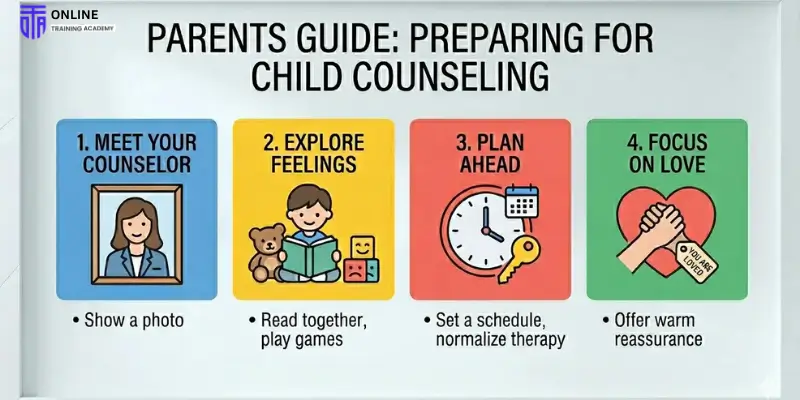
Preparation can make the first counselling session less intimidating. Introduce your child to the therapist in simple terms, using photos or videos if available, so the child feels familiar with the person before the first meeting. Pre-session activities, such as completing questionnaires or engaging in playful discussions about feelings, can help the child understand what to expect.
Parents should also focus on reducing anticipatory anxiety. Gentle reminders and conversations in the days leading up to the session help normalize the experience. For example, you might say, “Remember, on Wednesday we’re going to see the person who helps kids talk about feelings. You can share as much or as little as you want.” Consistent reassurance and preparation foster confidence and reduce fear of the unknown.
Strategies to Help Children Engage During Counselling
Getting children to open up in therapy can be challenging, particularly if they are hesitant or have had negative experiences in the past. Encouraging open conversation at home is a foundational step. Modeling discussion of your own feelings shows children that it is safe and normal to talk about emotions.
For reluctant children, offering choices about session format or allowing the parent to stay for the first part of a session (if permitted by the therapist) can ease the transition. Respecting the child’s pace is crucial; pressuring them to share before they are ready can create resistance. It is often helpful to remind children that it may take several sessions to feel comfortable and that finding the right therapist is a process.
Talking to Different Age Groups About Counselling
Different age groups require tailored approaches to discussing therapy:
- Young children benefit from simple explanations, repetition, and concrete examples. Visual aids, role-play, or storybooks about emotions can help.
- School-age children can understand more detailed explanations. Relating counselling to familiar figures like school counselors or trusted adults helps contextualize the experience. Reassuring them about the parent’s support and presence can reduce anxiety.
- Tweens and teens need honesty and respect for their autonomy. Therapy should be framed as a tool for growth, not correction. Emphasize skills like stress management, communication, and problem-solving. Being transparent about confidentiality helps establish trust.
Overcoming Common Challenges
Parents may face challenges in encouraging children to attend therapy. Resistance is normal, and gentle guidance often works better than force. If a child has had negative therapy experiences previously, it may be helpful to reassure them that the previous therapist was not the right match and to encourage a few trial sessions with a new professional. Parents also need to manage their own anxieties; modeling a calm and positive attitude toward therapy sets a constructive tone.
Conclusion
Explaining counselling to a child is more than a conversation—it is a chance to teach emotional intelligence, resilience, and self-awareness. By using clear language, providing reassurance, respecting your child’s autonomy, and modeling openness about feelings, parents can help children approach therapy with confidence rather than fear. Each child’s journey is unique, but with careful preparation and support, counselling can become a powerful tool for growth, understanding, and lifelong emotional health.
FAQs
Counselling is a supportive process where children explore feelings, learn coping strategies, and receive guidance from trained professionals.
Therapy can be beneficial even for toddlers, but approaches differ by age. Developmentally appropriate strategies ensure that sessions are meaningful and effective.
No. Encouragement, normalization, and gentle preparation are usually more effective than coercion.
Reassure children that what they share stays private, except when safety is at risk. This builds trust and encourages honesty.
Therapist-child compatibility matters. Encourage patience, trial sessions, and open discussion to find a good match.
Maintain open communication, model healthy emotional expression, and reinforce skills learned in therapy.
No. They are relevant in all settings where children are present, including healthcare, sports clubs, community centres, and online environments.
Learn More



Get a FREE Course
- Learn useful skills online free
- Get CPD accredited certificate
- Add it to your CV today!