

Introduction
“AI is replacing data entry jobs.” It’s a common claim, leaving many people wondering whether Data Entry Administrator Training is still worth pursuing. While AI is changing how businesses process information, it hasn’t replaced the need for skilled professionals—it has simply changed the skills employers value most.
Today’s workplaces use AI to automate repetitive tasks, but people are still needed to verify information, resolve discrepancies, protect sensitive data, and ensure records remain accurate. AI can speed up processes, but it cannot replace human judgment when accuracy and accountability matter.
That’s why Data Entry Administrator Training remains relevant. Modern training prepares learners to work alongside AI by developing the technical, organizational, and critical-thinking skills needed in today’s digital workplace. As administrative roles continue to evolve, those who combine these skills with adaptability will be better positioned for long-term career success.
Table of Contents
Data Entry Administrator Training
Data Entry Administrator Training equips you with the essential skills to manage data accurately, use office software efficiently, maintain organised records, and follow professional administrative practices, helping you build confidence for a wide range of data entry and office support roles.
Is Data Entry Administrator Training Still Worth It in the AI Era?
The short answer is yes. While AI has transformed how businesses process information, it hasn’t eliminated the need for skilled Data Entry Administrators. Instead, it has shifted the focus from manual data entry to managing accurate, reliable, and secure information.
AI can quickly scan documents, extract data, and automate repetitive tasks, but it isn’t always accurate. Unclear documents, inconsistent formats, or missing information still require human review. Trained administrators verify AI-generated data, correct errors, and ensure records meet business standards before they’re used.
That’s why Data Entry Administrator Training remains valuable. It prepares learners to work alongside AI by developing the technical, organizational, and critical-thinking skills needed to maintain data quality, support efficient operations, and meet the evolving demands of today’s digital workplace.
Why Foundational Administrative Skills Still Matter
Technology continues to evolve, but the fundamentals of good administration remain unchanged.
Businesses still need employees who can:
- Maintain accurate records.
- Organize large volumes of information.
- Protect confidential data.
- Communicate with colleagues to resolve discrepancies.
- Adapt to new workplace technologies.
- Support informed business decisions through reliable data.
Without these core skills, even the most advanced AI tools can produce inaccurate or incomplete results.
Think of AI as a highly capable assistant rather than a replacement for skilled professionals. It can accelerate repetitive processes, but it still relies on people to provide oversight, context, and accountability.
How AI Is Changing the Role of a Data Entry Administrator
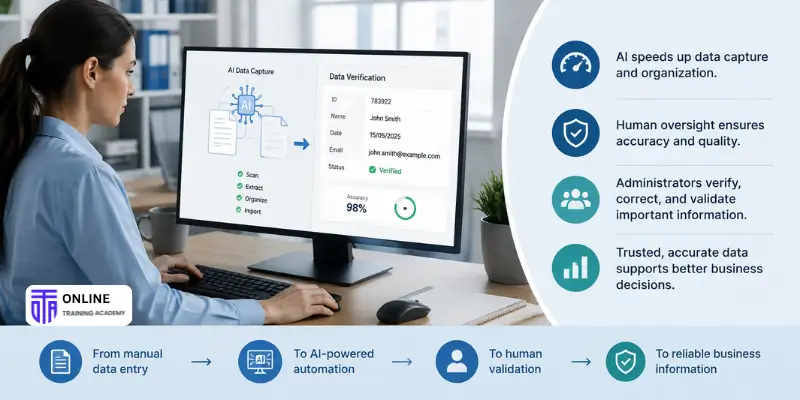
Artificial intelligence has undoubtedly transformed administrative work, but it has not eliminated the profession. Instead, it has shifted the focus from manual data entry to data quality management.
In the past, much of a Data Entry Administrator’s day involved entering information from paper documents into digital systems. Today, AI-powered tools can scan forms, import information automatically, and organize records much faster than a person working manually.
However, speed alone does not guarantee accuracy.
Businesses still depend on trained administrators to verify AI-generated information, resolve discrepancies, and ensure records meet organizational standards before they are used by other departments.
The role has become less about entering every piece of information and more about ensuring that the information entering a business system is complete, accurate, and trustworthy.
AI Can Process Data—People Ensure It Can Be Trusted
One of AI’s greatest strengths is processing large amounts of information quickly. But AI lacks the contextual understanding needed to make informed decisions when information is incomplete, inconsistent, or unexpected.
For example:
➽ An AI system may import duplicate customer records because names are spelled slightly differently.
➽ It may incorrectly read handwritten information on a scanned document.
➽ It may misclassify invoices that don’t follow standard formats.
➽ It may extract outdated information from archived files.
A trained Data Entry Administrator can recognize these issues, investigate them, and make the appropriate corrections before they affect business operations.
This human oversight helps organizations reduce costly errors, improve efficiency, and maintain confidence in their data.
AI and Human Responsibilities Compared
Instead of viewing AI as a replacement for administrative professionals, it’s more accurate to see it as a tool that changes how work is completed.
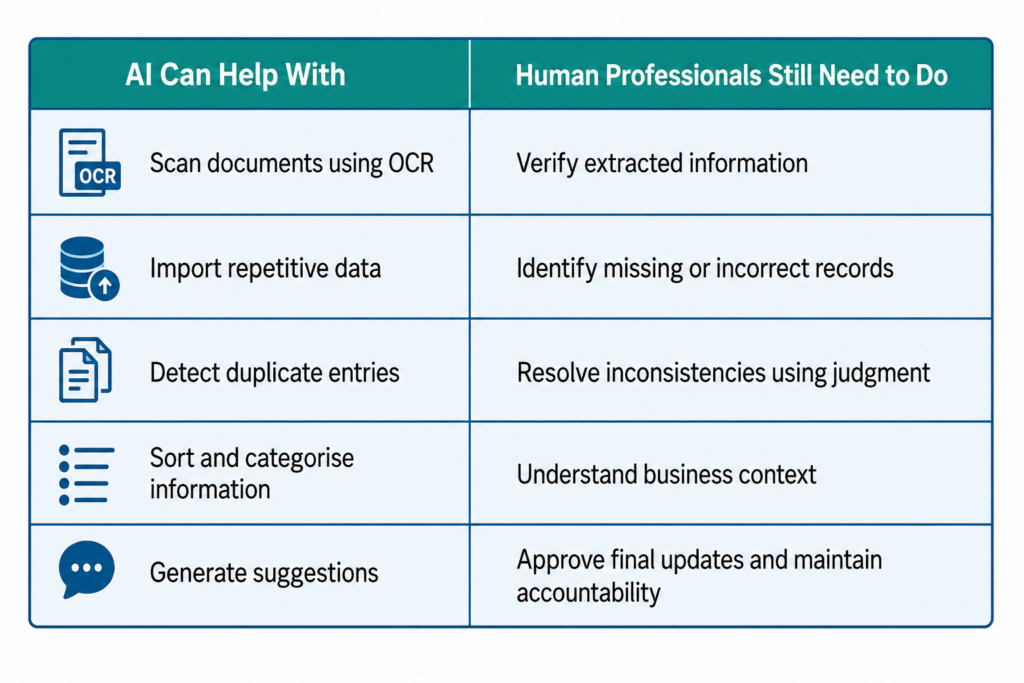
The table highlights an important point: AI can automate tasks, but responsibility for data quality still rests with people.
Why Human Judgment Has Become More Valuable
As AI becomes more advanced, human judgment becomes even more valuable. Businesses don’t just need information processed quickly—they need confidence that it’s accurate, complete, and reliable. AI can automate tasks, but it can’t always understand context or recognize every error.
For example, a healthcare clinic may use AI to digitize patient registration forms. If the system incorrectly records a patient’s allergy information, the mistake could have serious consequences. A trained Data Entry Administrator reviews and verifies the data before it’s finalized, helping protect both the organization and the people it serves.
The same applies across industries, from finance and payroll to retail and logistics. Employers still rely on professionals who can spot inconsistencies, make informed decisions, and maintain data quality. That’s why Data Entry Administrator Training remains relevant—it develops the technical skills and critical thinking needed to work confidently alongside AI in today’s digital workplace.
Why Human Skills Matter More Than Ever

As AI becomes a standard tool in administrative work, technical knowledge alone isn’t enough. Employers increasingly value professionals who can think critically, adapt to new technologies, and make informed decisions when automated systems reach their limits. These human skills help ensure data remains accurate, secure, and useful.
For example, AI might flag duplicate records or extract information from documents, but it can’t always determine which record is correct or whether the extracted information makes sense in a specific business context. A trained Data Entry Administrator can investigate discrepancies, communicate with colleagues when clarification is needed, and make decisions based on organizational procedures.
This combination of technical ability and human judgment is what makes administrative professionals valuable in AI-assisted workplaces. Rather than replacing people, AI allows them to focus on higher-value responsibilities that require accuracy, accountability, and problem-solving.
The New Skills Data Entry Professionals Need in the AI Era
Traditional skills like typing accuracy and organization remain essential, but today’s workplaces also expect administrators to feel comfortable working with digital technologies and adapting to change.
AI Literacy
You don’t need to be an AI developer, but understanding how AI tools support administrative work is becoming increasingly valuable. Knowing what AI can and cannot do helps you use these tools more effectively while recognizing when human review is necessary.
Data Verification and Quality Control
One of the most important responsibilities in modern administration is ensuring information is correct before it’s stored or shared. Reviewing AI-generated data, checking for inconsistencies, and maintaining data quality are becoming everyday tasks.
Digital Adaptability
Office software and digital platforms continue to evolve. Employers appreciate professionals who can quickly learn new systems, adjust to updated workflows, and confidently use cloud-based collaboration tools.
Information Security Awareness
Organizations manage sensitive customer, employee, and business information every day. Understanding secure data handling practices, recognizing potential security risks, and following company policies help protect valuable information and maintain trust.
Continuous Learning
Technology will continue to change throughout your career. Professionals who regularly update their skills, explore new digital tools, and embrace learning opportunities are better prepared to grow alongside workplace innovations.
How Modern Data Entry Administrator Training Has Evolved
Effective Data Entry Administrator Training is no longer limited to keyboard skills and basic office software. Modern training reflects how businesses work today by combining technical knowledge with the practical skills needed to manage information in digital environments.
Many training programmes now introduce learners to cloud-based collaboration tools, digital document management, spreadsheet applications, database systems, and AI-assisted administrative workflows. Alongside these technical topics, learners also develop problem-solving, organization, communication, and data verification skills that employers increasingly value.
Instead of preparing learners for yesterday’s workplace, modern training equips them for today’s technology-driven offices. It provides a strong foundation that helps graduates adapt to new software, work confidently alongside AI, and contribute to efficient, accurate, and secure business operations from day one.
AI in Action: How Data Entry Administrators Add Value in Real Workplaces
The impact of AI looks different across industries, but one thing remains consistent: technology performs best when skilled professionals oversee the process. Data Entry Administrators help ensure AI-generated information is accurate, complete, and ready for use.
Healthcare
AI can extract information from patient registration forms and medical documents, but administrators verify patient details, correct inconsistencies, and ensure records are updated accurately before they’re used by healthcare teams.
Finance
Financial departments often use AI to process invoices and organize transaction data. Data Entry Administrators review the information, identify discrepancies, and confirm records before payments or reports are finalized.
Retail and Logistics
AI helps manage inventory, process online orders, and update stock levels. Administrators monitor these systems, resolve duplicate entries, and keep product and shipping information accurate to support smooth operations.
Human Resources
Recruitment software can organize candidate information and digitize application records, but administrators review employee data, update personnel files, and ensure documentation is complete and compliant with company procedures.
Across every industry, AI improves efficiency, while trained professionals maintain the accuracy and reliability businesses depend on.
Why Employers Continue to Invest in Data Entry Administrator Training
If AI could completely replace administrative professionals, organizations would no longer invest in training. Instead, many continue developing their teams because technology still requires knowledgeable people to manage information effectively.
Training helps employees understand how to work with modern digital systems while developing the judgment needed to review AI-generated information, maintain data quality, and protect confidential records. These capabilities reduce errors, improve productivity, and support better business decisions.
For employers, investing in training isn’t simply about keeping up with technology—it’s about ensuring employees can use technology responsibly and efficiently. Professionals who combine strong administrative skills with digital confidence remain valuable in almost every industry.
Career Opportunities in an AI-Assisted Workplace
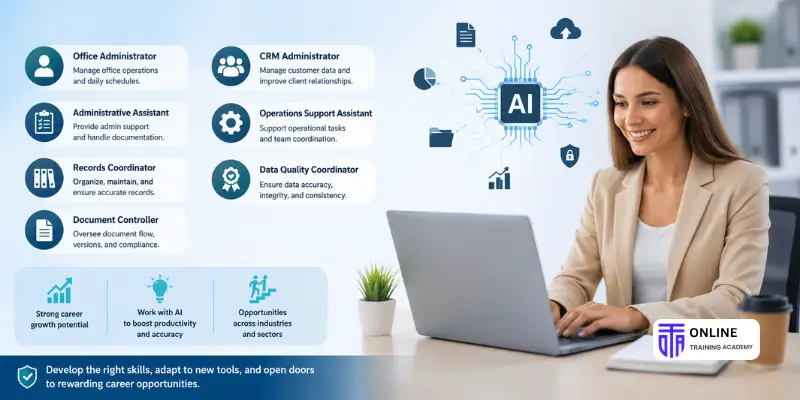
As administrative work evolves, so do career opportunities. Professionals who understand both traditional office procedures and modern digital tools are well positioned for a variety of roles beyond entry-level data entry.
Career pathways may include:
- Office Administrator
- Administrative Assistant
- Records Coordinator
- Document Controller
- CRM Administrator
- Operations Support Assistant
- Data Quality Coordinator
With experience and continued learning, these roles can also lead to supervisory or team leadership opportunities. Rather than limiting career growth, AI is encouraging organizations to seek adaptable professionals who can manage information, support digital workflows, and contribute to continuous improvement.
Conclusion
Artificial intelligence is reshaping administrative work, but it hasn’t reduced the need for skilled professionals. Instead, it has increased the value of people who can verify information, adapt to new technologies, and ensure business data remains accurate and reliable.
That’s why Data Entry Administrator Training continues to matter. It equips learners with the technical knowledge, digital confidence, and critical-thinking skills needed to work alongside AI and meet the changing demands of today’s workplace.
If you’re considering a career in administration or looking to strengthen your existing skills, now is an excellent time to invest in your development. By combining a strong administrative foundation with an understanding of modern technology, you’ll be better prepared for the opportunities emerging in an increasingly AI-assisted workplace.
FAQs
AI is automating many repetitive administrative tasks, but organizations still rely on trained professionals to verify information, resolve inconsistencies, and maintain data quality. The role is evolving rather than disappearing.
Yes. Modern training prepares learners for today’s digital workplace by developing technical, organizational, and problem-solving skills that remain valuable even as AI becomes more common.
In addition to typing accuracy and organization, employers increasingly value digital adaptability, data verification, information security awareness, cloud collaboration, and the ability to work effectively with AI-assisted tools.
Absolutely. Many employers hire entry-level candidates who have completed relevant training and can demonstrate strong attention to detail, digital literacy, and a willingness to learn.
Healthcare, finance, retail, logistics, education, legal services, government, and many other sectors continue to employ Data Entry Administrators to manage and maintain accurate business information.
Learn More





Get a FREE Course
- Learn useful skills online free
- Get CPD accredited certificate
- Add it to your CV today!