
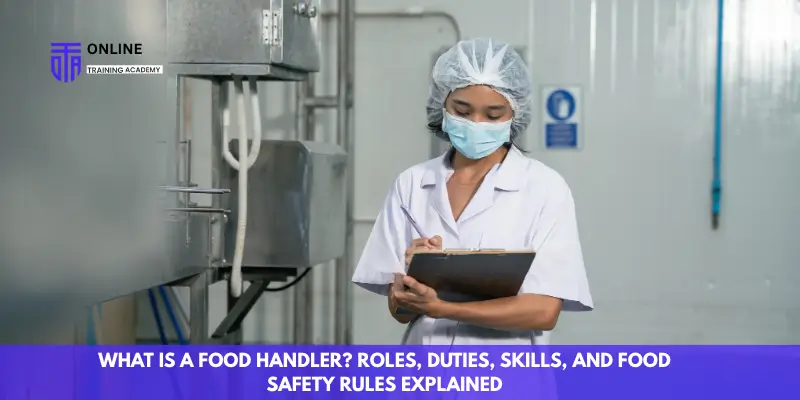
A plate of food can look perfect—fresh ingredients, proper cooking, great presentation. Yet, foodborne illness often begins long before the meal reaches the table. It starts with how the food is handled.
In most cases, the problem isn’t the recipe. It’s a missed step. Unwashed hands. Improper storage. A small mistake that goes unnoticed but carries real consequences.
This is where the role of a food handler becomes critical. Whether in a busy restaurant, a street food stall, or a large food production facility, food handlers shape the safety of every meal served. Understanding what they do—and how they do it—can prevent illness, protect businesses, and save lives.
Table of Contents
What Is a Food Handler? Roles, Duties, Skills, and Food Safety Rules Explained
A food handler is anyone who prepares, cooks, serves, stores, or handles food as part of their job. Their responsibilities include maintaining high hygiene standards, preventing contamination, following food safety regulations, and ensuring food is safe for consumption. Understanding the key roles, essential skills, and legal food safety requirements helps businesses protect public health and maintain compliance with industry standards.
What Is a Food Handler?
A food handler is anyone who comes into contact with food or food-related surfaces during any stage of food preparation and service. This includes not only cooking but also storing, transporting, packaging, and serving food.
In simple terms, if your work involves touching food or the tools used to prepare it, you are a food handler.
This role extends across multiple environments. A chef in a restaurant, a vendor selling street food, a worker packaging snacks in a factory, and even a catering assistant serving meals at an event all fall under this category. The scope is wider than most people assume.
The importance of this role lies in its direct connection to public health. Food handlers act as the first barrier against contamination. When they follow proper procedures, they reduce the risk of harmful bacteria, viruses, and toxins entering the food chain. When they don’t, the impact can spread quickly, affecting many people at once.
What Do Food Handlers Actually Do? (Roles and Responsibilities Explained)
At a basic level, food handlers prepare, cook, store, and serve food. But their real responsibility goes beyond these visible tasks. Their role is to maintain control over food safety at every step.
On a typical day, a food handler may wash and cut ingredients, cook meals to specific temperatures, store food in refrigerators or freezers, and clean work surfaces. These tasks seem routine, but each one carries risk if not done correctly.
There are also responsibilities that are less obvious but equally important. A food handler must constantly watch for signs of contamination. This includes checking whether raw and cooked foods are kept separate, ensuring utensils are clean, and maintaining personal hygiene even during busy hours.
Consider a simple scenario. A worker handles raw chicken and then uses the same gloves to prepare a salad. The food looks fine, but bacteria from the raw meat may now be on the ready-to-eat food. This is how cross-contamination happens—and it’s one of the most common causes of foodborne illness.
The role of a food handler is not just about completing tasks. It is about maintaining control in an environment where small mistakes can have serious consequences.
What Are a Food Handler’s Duties in Food Safety? (Critical Rules That Prevent Illness)
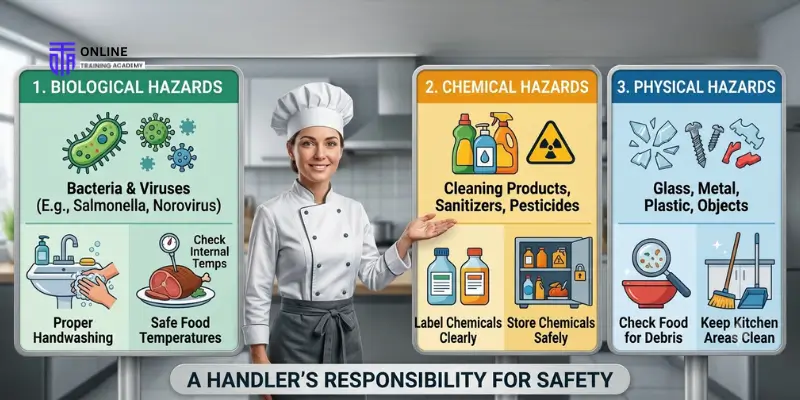
Food safety revolves around controlling three main types of hazards: biological, chemical, and physical.
Biological hazards include bacteria and viruses that can cause illness. These are the most common and often the most dangerous. Chemical hazards come from cleaning products or unsafe substances entering food. Physical hazards involve foreign objects such as glass, metal, or plastic.
One of the most critical duties of a food handler is temperature control. Harmful bacteria grow quickly in what is known as the “danger zone,” which ranges between 5°C and 60°C. Keeping food outside this range—either hot enough or cold enough—is essential to prevent bacterial growth.
Another key duty is preventing cross-contamination. This means keeping raw and cooked foods separate at all times. Using different cutting boards, storing raw meat below ready-to-eat food, and cleaning tools between tasks are all part of this process.
Personal hygiene is equally important. Proper handwashing is not optional—it is one of the most effective ways to stop the spread of contamination. Clean clothing, trimmed nails, and avoiding unnecessary contact with food all contribute to maintaining safety. Food safety is not a single action. It is a system of habits that must be followed consistently.
What Skills Do You Need to Be a Food Handler? (Beyond Basic Kitchen Work)
Being a food handler requires more than basic kitchen knowledge. It demands a mix of technical and behavioral skills that ensure both efficiency and safety.
Technical skills include understanding how to prepare food safely, knowing correct storage methods, and using equipment properly. A food handler must know how long food can be kept, at what temperature it should be stored, and how to avoid contamination during preparation.
Behavioral skills often make the biggest difference. Attention to detail is critical. Missing a small step—like failing to sanitize a surface—can lead to major problems. Consistency is also important. Food safety rules must be followed every time, not just when it is convenient.
Accountability plays a key role as well. Mistakes can happen, but ignoring them or hiding them increases risk. A skilled food handler recognizes errors and takes immediate action to correct them.
As experience grows, more advanced skills develop. These include identifying risks before they become problems and improving processes to make food handling safer and more efficient.
When Should a Food Handler Not Work? (Health Rules Most People Overlook)
One of the most overlooked aspects of food safety is knowing when not to work.
Food handlers must avoid handling food when they are sick, especially if they have symptoms like diarrhea, vomiting, or fever. These conditions can spread harmful pathogens quickly, even if the person feels capable of working.
Respiratory illnesses also pose risks. Coughing and sneezing can transfer bacteria or viruses onto food or surfaces. Even mild symptoms can become a problem in a food handling environment.
Open wounds or skin infections are another concern. If not properly covered, they can introduce contaminants into food.
Working while sick may seem like a way to avoid missing a shift, but it creates a much larger risk. A single sick worker can cause an outbreak that affects many customers and damages a business. Staying away from work in these situations is not a weakness—it is a critical safety measure.
Food Handler Training and Certification (What You Actually Need)

Training is essential for anyone working with food. It provides the knowledge needed to handle food safely and understand the risks involved.
Most training programs cover basic hygiene, contamination prevention, safe food storage, and cleaning procedures. These are the core principles that every food handler must understand.
In many regions, certification is required by law. This ensures that workers meet a minimum standard of knowledge before handling food. Certification programs may be offered by local health authorities or through recognized international systems.
The process is usually straightforward. A worker completes a training course, passes an assessment, and receives a certificate. The time required can range from a single day to several days, depending on the program.
Training does more than meet legal requirements. It improves job opportunities and builds trust with employers. A trained food handler is seen as more reliable and capable of maintaining safety standards.
What Happens When Food Handlers Make Mistakes? (And How to Handle Them)
Mistakes in food handling are not rare. What matters is how they are managed. Common errors include storing food at the wrong temperature, failing to maintain hygiene, or using contaminated equipment. These mistakes can lead to unsafe food if not addressed quickly.
When a mistake occurs, the first step is to stop the process. Any food that may be contaminated should be isolated and, if necessary, discarded. The issue should then be reported to a supervisor so that proper action can be taken.
The next step is correction. This may involve cleaning equipment, adjusting storage conditions, or retraining staff.
The most effective approach goes beyond fixing the immediate problem. It involves understanding why the mistake happened. This is known as root cause analysis. By identifying the underlying issue, future mistakes can be prevented. A strong food safety system does not ignore errors. It uses them as opportunities to improve.
Conclusion
Food safety rarely fails because of one major error. It fails because of small decisions made in routine moments—when a step is skipped, a rule is ignored, or a shortcut is taken.
A food handler stands at the center of these moments. Every action, no matter how simple, carries weight. The difference between safe food and harmful food is often invisible. It comes down to habits, discipline, and awareness. In the end, the role of a food handler is not just about handling food—it is about protecting the people who eat it.
FAQs
Anyone who handles food or food-contact surfaces as part of their job is considered a food handler.
In most areas, yes. Certification ensures that workers understand basic food safety practices.
Gloves should be changed after handling raw food, touching the body, handling waste, or switching tasks.
No. Illnesses such as diarrhea or vomiting can spread harmful pathogens and contaminate food.
Preventing contamination and ensuring food is safe for consumption.
It is the transfer of harmful bacteria or substances from one surface or food item to another.
No. It includes preparation, storage, cleaning, and serving food safely.
Learn More




Get a FREE Course
- Learn useful skills online free
- Get CPD accredited certificate
- Add it to your CV today!