



Pet sitting and dog walking may sound straightforward, but good care involves far more than feeding a dog or taking it outside. Whether you are hiring a professional, becoming a pet sitter yourself, or simply trying to understand proper standards of care, it helps to know the rules, responsibilities, safety practices, and behavior knowledge that support good pet care.
Done well, pet sitting and dog walking help keep dogs healthy, safe, emotionally secure, and well cared for when owners are unavailable. Done poorly, gaps in knowledge or preparation can create avoidable risks.
This guide covers the essentials, from responsibilities and safety rules to dog behavior, emergency planning, and practical care checklists.
What Is Pet Sitting?
Pet sitting involves caring for a dog while the owner is away, often in the dog’s home. Services may include feeding, water, exercise, companionship, medication, bathroom breaks, and sometimes overnight care.
Beyond the basics, a high-quality pet sitter provides “environmental enrichment.” This means ensuring the dog stays mentally stimulated through games, puzzle toys, and calm companionship. Some pet sitters also provide house-related tasks such as bringing in mail, rotating lights, or basic home monitoring during travel, which adds an extra layer of home security.
One major benefit of pet sitting is that many dogs can remain in a familiar environment, which often reduces stress compared with boarding. The scope of pet sitting can vary, which is why clear expectations between owner and sitter matter.
Advanced Pet Sitting and Dog Walking
Learn the essential knowledge and practical techniques for professional pet sitting and dog walking, including animal behaviour, safe handling, routine care, and responsible pet management. This course helps learners build confidence in providing safe and effective care for pets."
Table of Contents
What Is a Professional Dog Walker?
A professional dog walker focuses mainly on exercise, bathroom breaks, and supporting a dog’s daily routine.
This may include solo walks, group walks, structured exercise, and in some cases support for leash manners or routine reinforcement. Unlike a hobbyist, a professional walker understands dog-to-dog dynamics, proper equipment fitting, and how to manage the environment to prevent negative encounters.
Professional dog walkers often do more than provide exercise. They monitor behavior, assess risks during walks, and help maintain consistency for dogs left alone during the day. For many owners, dog walking is an important part of maintaining both physical exercise and mental stimulation, especially for high-energy breeds that may become destructive if left unexercised for long periods.
Rules and Responsibilities in Pet Sitting
Good pet sitting depends on clear responsibilities. A pet sitter is expected to act as a temporary guardian, not just a service provider.
A sitter must follow the owner’s instructions to the letter, maintain the dog’s routine, provide safe care, monitor well-being, and communicate if concerns arise. Responsibilities often include feeding correctly, administering medication if agreed, ensuring secure handling, preventing escape risks, and responding appropriately if something unusual happens.
Professional sitters should also respect boundaries related to home access, scheduling, confidentiality, and emergency procedures. Clear communication and written care instructions often help prevent misunderstandings, ensuring that the transition from owner to sitter is as seamless as possible for the dog.
Canadian Legal Considerations and Insurance
In Canada, while there are no federal laws specifically governing the pet sitting industry, professional caregivers must operate within provincial and municipal regulations. This includes Animal Welfare Acts (which vary by province) that dictate standards of care.
➽ Business Licensing: Depending on your municipality, you may need a specific business license to operate as a professional dog walker or pet sitter.
➽ Insurance: Crucial. Professional liability insurance (often called “Pet Sitter Insurance”) is essential. It covers damage to property, theft, and—most importantly—vet bills or liability if a dog in your care is injured or causes injury. Without this, a sitter could be held personally liable for significant costs.
➽ Contracts: Always use a written service agreement outlining duties, emergency protocols, and payment terms. This is a binding document that protects the interests of both the pet parent and the care provider.
Health and Hygiene Rules
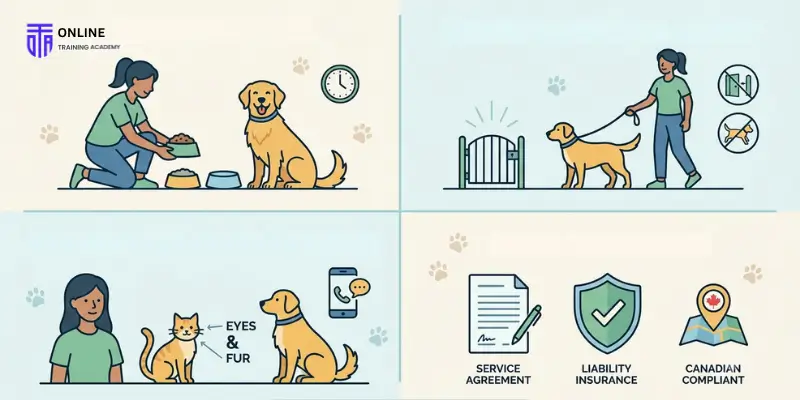
Health and hygiene are basic but essential parts of proper pet care. Good hygiene protects your dog’s health, helps prevent illness, and supports a safer environment for both pets and caregivers.
Key health and hygiene rules inc
➽ Bowl Maintenance: Keep food and water bowls clean and wash them daily with hot, soapy water to prevent biofilm and bacteria buildup.
➽ Waste Disposal: Handle and dispose of waste properly to reduce bacteria, odor, and parasite risks. In urban settings, always use biodegradable bags and dispose of them in designated bins.
➽ Medication Protocols: Follow medication instructions carefully, including exact dosage, timing, and storage requirements. Never adjust dosages without veterinary approval.
➽ Sanitation: Keep leashes, collars, bedding, crates, and feeding areas clean and in sanitary condition. Wash hands thoroughly before and after handling food, medication, or waste.
➽ Physical Monitoring: Check for signs of fleas, ticks, skin irritation, or other health concerns during routine care. Early detection is key to preventing major health issues.
➽ Accident Cleanup: Clean up accidents promptly and disinfect affected areas when needed using pet-safe, enzymatic cleaners.
➽ Food Storage: Store pet food in airtight containers to prevent spoilage, pest infestation, or contamination.
Professionals often treat hygiene as part of routine care, not as something handled only when a problem appears. This proactive approach is what differentiates a high-quality service from an average one.
Safety Tips for Walking Dogs in Public
Public walks involve more risks than many people realize. Safe dog walking means using secure equipment, maintaining awareness of surroundings, avoiding uncontrolled dog interactions, and managing environmental risks.
➽ Seasonal Hazards: Pavement heat—especially during Canadian summers—can severely burn paw pads. A simple test: if the pavement is too hot for your hand, it is too hot for a dog’s paws. In winter, salt and chemical ice melters can be toxic and painful. Always rinse paws after walks in winter.
➽ Environmental Awareness: Traffic, loose dogs, wildlife (like coyotes or porcupines), and crowded environments all require attention.
➽ Equipment: Always ensure collars and harnesses are fitted properly. A “martingale” collar or a well-fitted chest-clip harness is often safer than a standard collar for dogs prone to slipping out.
A good walker does not simply react to problems. They work to prevent them. Calm handling, distance management, and situational awareness often make public walks safer and less stressful.
Dog Walking Checklist
A practical dog walking checklist often includes:
- Secure leash (non-retractable is generally safer for control)
- Properly fitted harness or flat collar
- Waste bags (carry at least double what you think you need)
- Water and a portable collapsible bowl
- Emergency contact information (on the dog's tag)
- Awareness of weather and current pavement temperature
- A "hazard map" of the route (avoiding areas with aggressive dogs or toxic debris)
Simple preparation often prevents avoidable problems.
Dog Communication Basics
Dogs communicate constantly through body language, movement, vocalization, and behavior. Understanding these signals is a major part of safe handling.
➽ Stress signals: May include lip licking, yawning when not tired, “whale eye” (showing the whites of the eyes), freezing, avoidance (turning the head away), or changes in posture (cowering or stiffness). These are often “calming signals” meant to diffuse tension.
➽ Relaxed behavior: Often looks different—loose, wiggly body, mouth slightly open with a “soft” expression, and eyes that aren’t wide or staring.
Learning to read these signals can help prevent misunderstandings, reduce stress, and improve interactions. Good handlers pay attention to what the dog is communicating before behavior escalates into growling or snapping.
Understanding Breed Temperaments
Breed does not determine everything about a dog, but it can influence tendencies that matter in care.
- Herding Breeds: Often require more mental stimulation and "jobs" to prevent anxiety.
- Scent Hounds: May become "nose-blind" to their handler if they catch a scent, requiring extra caution in unfenced areas.
- Companion Breeds: Often thrive on proximity and may experience more separation anxiety.
- Senior Dogs: Require gentle exercise and may have lower heat/cold tolerance.
Good care often depends on understanding the dog in front of you, not using one approach for every dog. Tailoring your approach shows professionalism and care.
What Information to Leave a Pet Sitter

Owners should provide clear written instructions that cover feeding, medications, exercise, bathroom routines, behavior concerns, and emergency contacts.
Information about triggers (e.g., reactivity to other dogs, cyclists, or loud noises), escape habits, or medical concerns is equally important. Emergency details should include your veterinarian, the nearest 24-hour emergency animal hospital, a backup contact, and instructions for urgent situations. Many owners benefit from keeping this information in a pet care binder or digital care sheet that is easily accessible.
Pet Sitting Checklist
- Feeding: Specific brand, quantity, and prohibited human foods.
- Medication: Frequency, dosage, and preferred method of administration (e.g., in a treat or pill pocket).
- Emergency Info: Full contact details for the owner, the primary vet, and the closest 24-hour animal ER.
- Behavioral Notes: Specific fears, known triggers, and how to reward good behavior.
- Home Access: Keys, alarm codes, and gate security.
- Supplies: Clear locations for food, cleaning supplies, leash, and favorite toys.
House Sitting Mistakes to Avoid
Some problems in pet sitting come from avoidable mistakes, often stemming from over-confidence.
➽ Assuming Routines: Never guess feeding schedules, medication timing, or exercise needs. Small deviations can create massive stress for a dog.
➽ Missing Subtle Signs: Changes in appetite, lethargy, or anxiety (pacing, panting, or hiding) should never be ignored.
➽ Poor Communication: Owners should receive regular updates. Failing to report concerns creates unnecessary anxiety for the owner.
➽ Weak Security: Forgetting to secure gates or leaving doors open too long is the #1 way dogs go missing.
➽ Ignoring Environmental Hazards: In Canada, this includes being mindful of seasonal dangers like antifreeze spills (highly toxic to pets), toxic plants like lilies, or extreme temperature drops.
➽ Forcing Interaction: Never force a shy dog to be held or petted. Let the dog dictate the pace of interaction.
Good house sitting comes down to attention to detail, consistency, and taking responsibilities seriously.
Emergency Preparedness for Pet Sitters
Emergencies are part of why preparation matters. A professional sitter should know what to do if a dog becomes ill, escapes, is injured, or faces a sudden crisis.
➽ Emergency Protocol: Know exactly which vet to call. If the owner cannot be reached, the sitter should have pre-authorized permission to seek care up to a certain financial limit.
➽ Pet First Aid: Basic knowledge can save a life. This includes knowing how to perform the Heimlich maneuver on a dog, how to bandage a cut, and how to identify signs of bloat (a life-threatening condition in many breeds).
First aid does not replace veterinary treatment, but it provides the critical bridge until the dog reaches the clinic.
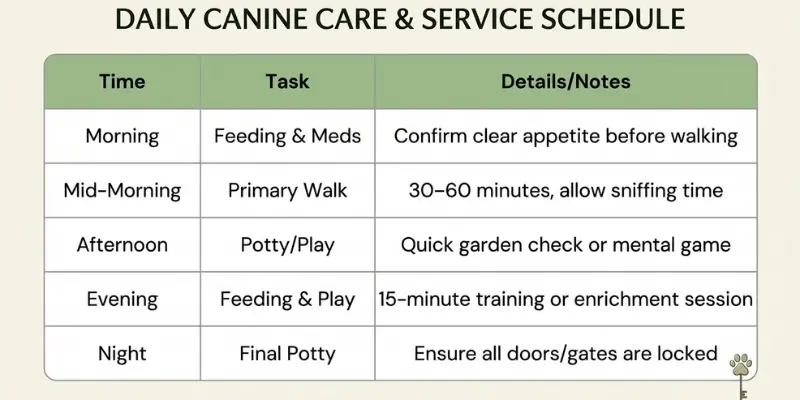
Daily Care Routine Templates
Consistency helps dogs feel secure.
Conclusion: A New Standard of Guardianship
Good pet sitting and dog walking involve much more than completing tasks. They require responsibility, safety awareness, behavior knowledge, preparation, and sound judgment. Whether you are hiring a caregiver or providing care yourself, understanding these standards helps protect dogs and improve the quality of care they receive.
The strongest pet care is built on simple things done well: clear communication, good preparation, careful observation, and consistent routines. Those basics may seem small, but in practice, they are what make the biggest difference in a dog’s happiness and health.
FAQs
Look for certifications (like those from Pet Sitters International or local equivalent associations), verified reviews, and a clear understanding of your dog’s specific needs. A professional should always be willing to provide references and proof of current, comprehensive insurance.
Include a high-visibility harness or collar (as it gets dark early), a protective paw balm (to protect against salt and ice), a dog sweater or insulated coat for short-haired breeds, and a absorbent towel to wipe off salt/chemicals immediately upon returning indoors.
This depends on local municipal bylaws. In most Canadian cities, dogs must be on a leash in public areas unless in a designated, fully fenced off-leash park. Always verify with your walker that they strictly follow local leash laws. Walking off-leash in restricted areas is a significant liability risk.
They should immediately contact you (the owner) and your designated emergency vet. They should have a pre-authorized plan for veterinary transport and an agreed-upon financial limit for immediate emergency treatment.
Tipping is not mandatory but is certainly appreciated for exceptional, reliable service. Generally, 10–15% of the total service cost or a small “per visit” tip is standard for those who consistently go above and beyond your expectations.
Yes, always. A contract protects both you and the walker by clarifying service expectations, cancellation policies, veterinary authorization, and liability. Never rely on verbal agreements alone.
Learn More





Get a FREE Course
- Learn useful skills online free
- Get CPD accredited certificate
- Add it to your CV today!