

Success at school isn’t determined by reading ability alone. Before children can confidently read, write, or participate in classroom discussions, they first need strong communication skills. Every conversation, story, question, and shared experience helps build the language foundation that supports learning throughout childhood.
Speech and Language Therapy (Literacy and Language Development) plays an important role in developing these essential skills. By strengthening speech, language, and communication, therapy helps children build the confidence they need to understand lessons, express their ideas, develop literacy skills, and engage more fully in school and everyday life.
Whether you’re a parent supporting your child’s learning at home or an educator helping students reach their potential, understanding how speech and language therapy contributes to children’s success can make a lasting difference.
Table of Contents
Speech and Language Therapy (Literacy and Language Development)
Speech and Language Therapy (Literacy and Language Development) explores essential strategies for supporting communication, language, reading, and writing skills, helping learners understand language development and promote effective literacy and communication outcomes.
How Does Speech and Language Therapy (Literacy and Language Development) Support Children's Success?
Speech and language therapy supports children’s success by developing the communication skills that underpin learning, literacy, and social interaction. Rather than focusing only on speech clarity, therapy helps children strengthen vocabulary, language comprehension, listening skills, and expressive communication, enabling them to participate more confidently both inside and outside the classroom.
Every child has different strengths and challenges. Speech and language therapists assess each child’s individual needs and provide targeted support to help them communicate effectively, develop literacy skills, and build confidence throughout their learning journey.
Why Communication Is the Foundation of Learning
Communication is one of the first skills children develop, and it influences nearly every aspect of learning. Before children can understand written words, they learn by listening, asking questions, following instructions, and interacting with the people around them.
Strong communication skills help children:
- Understand new ideas and vocabulary
- Follow classroom instructions
- Ask questions when they need support
- Share their thoughts confidently
- Participate in discussions and group activities
- Build positive relationships with teachers and peers
These everyday interactions create the foundation for successful learning and literacy development.
How Therapy Supports Literacy and Academic Development
Reading and writing rely on a wide range of language skills, not simply recognising letters or sounding out words. Children need to understand vocabulary, recognise speech sounds, follow sentence structures, and make meaning from what they read.
Speech and language therapy strengthens these underlying skills by supporting:
- Phonological awareness
- Vocabulary development
- Listening comprehension
- Grammar and sentence structure
- Storytelling and narrative skills
- Expressive and receptive language
As these skills improve, children are often better prepared to develop reading fluency, understand written texts, and express their ideas clearly in both speech and writing.
Success Means More Than Better Reading
Although literacy is an important goal, children’s success extends far beyond reading scores.
When communication skills improve, children often become more willing to:
- Participate in classroom discussions
- Read aloud with greater confidence
- Work collaboratively with classmates
- Solve problems independently
- Express their thoughts and emotions clearly
- Engage in new learning experiences
These improvements can positively influence both academic achievement and overall wellbeing.
Speech and language therapy supports children in developing the communication skills they need not only to become stronger readers but also to grow into confident learners who are prepared to take part in school, build meaningful relationships, and continue learning throughout life.
Why Are Speech, Language, and Literacy Closely Connected?
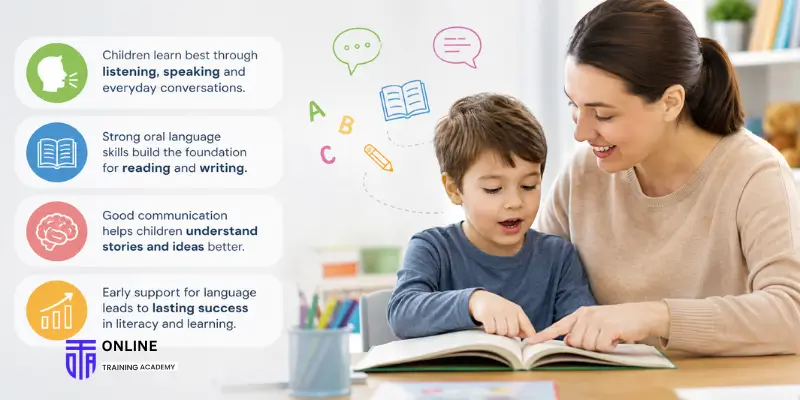
Speech, language, and literacy develop together throughout childhood. Long before children recognise letters or begin reading books, they are learning through listening, speaking, asking questions, and interacting with the people around them. These early communication experiences provide the foundation for literacy and influence how easily children develop reading and writing skills.
Understanding this connection helps parents and educators recognise why supporting language development is just as important as teaching phonics or reading strategies.
From First Words to First Books
A child’s literacy journey begins well before they enter the classroom. As they hear conversations, learn new words, and express their ideas, they gradually build the skills needed for reading and writing.
This progression often follows a natural path:
Listening → Speaking → Vocabulary → Storytelling → Reading → Writing
Each stage builds on the one before it. Children who develop strong oral language skills are generally better prepared to recognise words, understand stories, and communicate their ideas through writing.
Why Oral Language Comes Before Literacy
Children first learn language through everyday experiences. Conversations during meals, bedtime stories, songs, and play all introduce new vocabulary, sentence structures, and ways of expressing ideas.
These interactions help children develop skills such as:
- Understanding and following instructions
- Recognising speech sounds
- Building vocabulary
- Organising thoughts into sentences
- Listening and responding during conversations
As these abilities grow, children are better equipped to connect spoken language with written words and understand what they read.
How Communication Skills Shape Reading Comprehension
Reading is about more than recognising words on a page. Children also need to understand vocabulary, interpret sentences, make connections between ideas, and remember important information.
Strong communication skills support reading comprehension by helping children:
- Understand unfamiliar words through context
- Predict what might happen in a story
- Retell events in the correct order
- Identify key ideas and supporting details
- Explain their understanding using their own words
These skills not only improve literacy but also help children succeed across subjects where reading plays an important role.
Why Early Support Makes a Lasting Difference
Children develop communication skills most rapidly during their early years, making this an important time to provide support if challenges arise. Identifying communication difficulties early allows children to strengthen the skills that underpin literacy before academic demands become more complex.
Early support can improve vocabulary, listening comprehension, sound awareness, and expressive language while also increasing confidence in learning. Rather than waiting for reading difficulties to emerge, early intervention helps build the communication foundation that supports long-term academic success.
How Does Speech and Language Therapy Help Children Thrive at School?
School requires children to do much more than read and write. Every day, they are expected to follow instructions, understand new concepts, participate in discussions, and work with others. Strong communication skills make these tasks easier and help children engage more confidently in learning.
Speech and language therapy supports school success by strengthening the language skills children use across every subject.
Following Instructions and Classroom Learning
From the first day of school, children are expected to listen carefully, process information, and complete tasks independently. Difficulties with language comprehension can make even simple classroom routines challenging.
Speech and language therapy helps children improve their ability to:
- Follow single and multi-step instructions
- Understand classroom discussions
- Process spoken information more effectively
- Ask questions when they need clarification
These skills enable children to participate more actively and confidently in everyday learning.
Building Vocabulary Across Different Subjects
As children move through school, they encounter increasingly specialised vocabulary in subjects such as science, mathematics, and social studies. Understanding these new words is essential for reading comprehension and academic success.
Therapy supports vocabulary development by helping children learn, understand, and use new words in meaningful contexts. A stronger vocabulary also makes it easier to understand textbooks, participate in discussions, and communicate ideas clearly.
Developing Reading, Writing, and Critical Thinking
Strong language skills support more than basic literacy. They help children analyse information, organise ideas, and explain their thinking across different learning activities.
Speech and language therapy can strengthen skills that contribute to:
- Reading comprehension
- Written expression
- Story organisation
- Problem-solving
- Critical thinking
As these abilities improve, children often become more confident when completing assignments and participating in classroom activities.
Encouraging Participation and Independent Learning
Confidence plays an important role in children’s success at school. When children feel comfortable communicating, they are more likely to ask questions, contribute to group discussions, and take on new learning challenges.
Speech and language therapy helps children develop the confidence to express themselves clearly and participate more independently in the classroom. These communication skills not only support academic achievement but also encourage children to become active, engaged learners who are prepared for future educational success.
How Can Parents and Educators Support Children's Success Every Day?

Speech and language therapy is most effective when communication skills are reinforced in everyday life. Parents, caregivers, and educators all contribute to a child’s language development through simple, consistent interactions. These everyday experiences help children practise the skills they need for literacy, learning, and confident communication.
Create a Language-Rich Environment
Children learn language by hearing and using it regularly. Everyday routines provide valuable opportunities to introduce new vocabulary, encourage conversation, and develop listening skills.
Simple ways to build a language-rich environment include:
- Talking about everyday activities
- Reading books together every day
- Encouraging children to ask questions
- Introducing new words during conversations
- Giving children time to express their thoughts
These regular interactions strengthen the communication skills that support reading and writing.
Use Everyday Activities to Build Literacy Skills
Learning doesn’t only happen in the classroom. Everyday activities can naturally strengthen speech, language, and literacy.
Parents and educators can encourage development by:
- Reading stories and discussing the characters
- Singing songs and nursery rhymes
- Playing word and rhyming games
- Encouraging children to retell stories
- Reading signs, labels, and menus together
These activities make language learning enjoyable while helping children develop vocabulary, comprehension, and storytelling skills.
Encourage Confidence Through Conversation
Children become more confident communicators when they know their ideas are valued. Giving them opportunities to speak, explain their thinking, and share experiences encourages stronger language development.
Simple strategies include:
- Asking open-ended questions
- Listening without interrupting
- Encouraging children to explain their reasoning
- Celebrating effort as well as progress
Positive conversations help children develop communication skills while building confidence that carries into reading, writing, and classroom participation.
Work Together with Speech and Language Therapists
Supporting a child’s communication development is most effective when parents, educators, and speech and language therapists work as a team. Sharing observations, reinforcing therapy goals, and using consistent strategies across home and school create more opportunities for children to practise new skills.
This collaborative approach helps children apply what they learn in different settings, making communication more natural and supporting long-term literacy development.
What Does Children's Success Look Like Beyond Literacy?
Learning to read is an important milestone, but children’s success extends far beyond literacy. Strong communication skills influence how children learn, build relationships, solve problems, and participate in everyday life. As these skills grow, children often become more confident, independent, and engaged in their learning.
Building Confidence Through Communication
Being able to express thoughts, ask questions, and participate in conversations helps children feel more confident both inside and outside the classroom.
As communication skills improve, children are often more willing to:
- Share ideas during lessons
- Read aloud with confidence
- Join classroom discussions
- Try new learning activities
- Communicate with peers and adults
This growing confidence can have a positive impact on both academic achievement and emotional wellbeing.
Developing Stronger Social Relationships
Communication is essential for building friendships and working with others. Children who can understand conversations, take turns speaking, and express their ideas clearly are often better equipped to develop positive relationships.
Speech and language therapy supports these social communication skills, helping children interact more effectively in classrooms, playgrounds, and community settings.
Preparing for Lifelong Learning
The communication skills developed during childhood continue to support learning well beyond the early school years. As children progress through their education, they rely on language to understand complex information, solve problems, complete assignments, and work collaboratively with others.
Strong speech and language skills provide a foundation that supports continued learning, adaptability, and effective communication throughout life.
Supporting Independence Inside and Outside the Classroom
As children become more confident communicators, they also become more independent learners. They are better able to ask for help, explain their thinking, make decisions, and participate actively in everyday activities.
While every child’s journey is unique, developing strong communication skills gives them the tools to approach new experiences with greater confidence. Success is not measured only by academic achievement but also by a child’s ability to communicate, learn, build relationships, and navigate the world with confidence.
Why Early Intervention Can Change a Child's Learning Journey

Early childhood is a critical time for speech, language, and literacy development. During these years, children rapidly build the communication skills they will use throughout school and everyday life. Identifying challenges early allows them to receive support before they begin affecting confidence, learning, or classroom participation.
Rather than waiting for difficulties to become more noticeable, early intervention focuses on strengthening the skills that form the foundation for future success.
Recognising Communication Challenges Early
Every child develops differently, but persistent difficulties with speaking, understanding language, following instructions, or interacting with others should not be overlooked.
Early assessment can help identify areas where additional support may be beneficial, allowing children to develop stronger communication and literacy skills before academic expectations increase.
The Benefits of Individualised Support
No two children have the same communication strengths or challenges. Speech and language therapy is tailored to each child’s needs, ensuring that support focuses on the skills most important for their development.
Depending on individual goals, therapy may help children:
- Build vocabulary
- Improve listening comprehension
- Strengthen phonological awareness
- Develop clearer sentence structure
- Increase confidence when communicating
A personalised approach allows children to progress at a pace that suits their individual learning needs.
Why Progress Looks Different for Every Child
Children do not all reach communication milestones at the same time, and progress in therapy is rarely linear. Some children make noticeable improvements quickly, while others develop gradually through consistent practice and support.
Celebrating small achievements—such as learning a new word, confidently answering a question, or understanding a story more independently—helps recognise meaningful progress and encourages continued learning.
Supporting Success Through Consistent Encouragement
The greatest progress often happens when children receive consistent encouragement across home, school, and therapy sessions. Parents, educators, and speech and language therapists each play an important role in reinforcing communication skills through everyday conversations, reading activities, and positive interactions.
When children feel supported, they are more willing to practise new skills, participate in learning, and develop confidence in their abilities.
Conclusion
Children’s success begins with strong communication. Long before they become confident readers and writers, they develop the speech and language skills that help them understand ideas, express themselves, solve problems, and build meaningful relationships.
Speech and Language Therapy (Literacy and Language Development) supports this journey by strengthening the communication skills that underpin literacy, classroom learning, and everyday interactions. With personalised support and encouragement from parents, educators, and therapists, children can build the confidence they need to participate fully in school and beyond.
Every conversation, shared story, and new word learned helps shape a child’s future. By investing in speech and language development today, we give children the opportunity to grow into confident communicators, capable learners, and lifelong readers.
FAQs
Speech and language therapy strengthens the communication skills that reading and writing depend on, including vocabulary, listening comprehension, phonological awareness, grammar, and expressive language. These skills help children become more confident readers and learners.
Yes. As children develop stronger communication skills, they often feel more comfortable asking questions, sharing ideas, participating in classroom discussions, and interacting with others, which can improve their confidence over time.
Support can be beneficial whenever communication difficulties are identified. Early intervention is often encouraged because it helps strengthen foundational skills during an important stage of language and literacy development.
Parents can support communication by reading together, having regular conversations, introducing new vocabulary, asking open-ended questions, and encouraging storytelling during everyday activities.
Not necessarily. However, because speech, language, and literacy are closely connected, some children with ongoing communication difficulties may also experience challenges with reading or writing. Early support can help reduce this risk.
Educators reinforce communication goals by creating language-rich classrooms, encouraging participation, adapting learning activities when appropriate, and working collaboratively with families and speech and language therapists.
Learn More





Get a FREE Course
- Learn useful skills online free
- Get CPD accredited certificate
- Add it to your CV today!