



Safeguarding is one of the most important responsibilities within Canada’s healthcare, education, social services, and community sectors. While many people associate safeguarding with healthcare professionals, teachers, or social workers, protecting vulnerable individuals is a shared responsibility that extends to families, employers, volunteers, caregivers, and the wider community.
Every year, safeguarding measures help prevent cases of abuse, neglect, exploitation, violence, and discrimination involving children, older adults, people with disabilities, and other vulnerable individuals. Unfortunately, when safeguarding systems fail or warning signs are overlooked, the consequences can be severe and long-lasting for those affected.
Safeguarding is about much more than responding after harm has occurred. It involves recognising risks early, promoting safe environments, respecting individual rights, and taking appropriate action before situations escalate. Whether in hospitals, schools, long-term care homes, childcare centres, community organisations, or workplaces, effective safeguarding helps ensure that everyone can live, learn, and receive care free from abuse and neglect.
This guide provides a comprehensive overview of safeguarding in Canada, including its definition, guiding principles, organisational policies, legal framework, and why safeguarding plays such a vital role in protecting individuals across all stages of life.
Safeguarding Level 4
Develop a clear understanding of safeguarding principles, legal responsibilities, and best practices to help recognise concerns, support child wellbeing, and promote safer environments for children.
Explore practical approaches to identifying risks, responding appropriately to concerns, and supporting a child-centred approach to safeguarding.
Table of Contents
What Does Safeguarding Mean in Canada?
Safeguarding refers to the policies, practices, and actions designed to protect individuals from abuse, neglect, exploitation, violence, discrimination, and other forms of harm while promoting their health, wellbeing, dignity, and human rights.
In Canada, safeguarding applies to a wide range of people, including:
- Children and youth
- Older adults and seniors
- Individuals with physical or intellectual disabilities
- People living with mental health conditions
- Patients receiving healthcare services
- Individuals experiencing family violence or abuse
- Other adults who may be vulnerable because of illness, dependency, or social circumstances
Safeguarding is not limited to preventing physical harm. It also includes protecting individuals from emotional, psychological, financial, sexual, and digital abuse, while ensuring they are treated with respect and have equal access to safe services and support.
At its core, safeguarding has three key objectives:
- Prevent harm before it occurs through awareness, education, and risk management.
- Protect individuals when concerns about abuse or neglect arise.
- Respond appropriately by reporting concerns, providing support, and working with the appropriate authorities when intervention is required.
In everyday practice, safeguarding may involve recognising behavioural changes, identifying signs of abuse, reporting concerns, maintaining safe environments, completing risk assessments, or following organisational safeguarding procedures.
Rather than being a single action, safeguarding is an ongoing commitment to creating environments where vulnerable individuals are protected, respected, and empowered.
The Purpose and Aims of Safeguarding
The primary purpose of safeguarding is to ensure that every individual can live safely, exercise their rights, and receive appropriate protection from abuse, neglect, and exploitation.
However, safeguarding extends well beyond responding to emergencies. It is designed to create environments where people feel secure, respected, and supported throughout every stage of life.
The key aims of safeguarding include:
- Protecting children and vulnerable adults from abuse and neglect
- Promoting health, wellbeing, dignity, and independence
- Preventing harm before it occurs through education and early intervention
- Supporting individuals to make informed decisions wherever possible
- Respecting human rights, equality, and diversity
- Reducing the long-term physical and emotional effects of abuse
- Encouraging early reporting of safeguarding concerns
- Ensuring organisations meet their legal and ethical responsibilities
- Promoting collaborative working between healthcare providers, educators, social services, law enforcement, and community organisations
Effective safeguarding recognises that prevention is often the best form of protection. Identifying concerns early allows organisations to provide support before situations become more serious.
Safeguarding Principles in Canada
Although safeguarding legislation differs across Canada’s provinces and territories, several fundamental principles guide safeguarding practice nationwide.
Person-Centred Care
Safeguarding places the individual at the centre of every decision. Wherever possible, people should be involved in decisions affecting their safety, wellbeing, and future care while respecting their dignity, preferences, and cultural background.
Prevention
Preventing abuse is more effective than responding after harm has occurred. Organisations aim to identify potential risks early through education, staff training, supervision, risk assessments, and safe working practices.
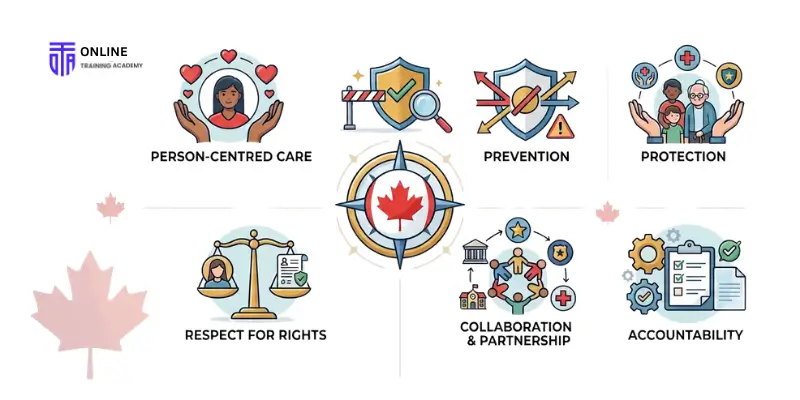
Protection
Individuals who are unable to protect themselves must receive appropriate support and intervention. This may involve referrals to healthcare professionals, child protection agencies, adult protective services, or law enforcement.
Respect for Rights
Safeguarding must balance individual autonomy with the need to protect people from harm. Decisions should respect legal rights, privacy, confidentiality, and informed consent wherever appropriate.
Collaboration and Partnership
Safeguarding is most effective when organisations work together. Healthcare providers, schools, child welfare agencies, police services, community organisations, and families all play important roles in identifying risks and protecting vulnerable individuals.
Accountability
Every organisation and professional has a responsibility to follow safeguarding policies, maintain accurate records, report concerns promptly, and ensure decisions are transparent and evidence-based.
Together, these principles help create a safeguarding culture that promotes both safety and respect for individual rights.
Safeguarding Policies and Procedures in Practice
Safeguarding policies provide organisations with a structured framework for protecting children, vulnerable adults, patients, clients, and service users from abuse and neglect.
In Canada, safeguarding policies are commonly found in:
- Hospitals
- Long-term care homes
- Schools and colleges
- Childcare centres
- Community organisations
- Disability support services
- Home care agencies
- Indigenous community services
- Non-profit organisations
- Government agencies
A safeguarding policy typically outlines:
- The organisation's commitment to safeguarding
- Definitions of abuse, neglect, and exploitation
- Roles and responsibilities of staff and volunteers
- Reporting procedures for safeguarding concerns
- Confidentiality and information-sharing requirements
- Record-keeping procedures
- Risk assessment processes
- Staff training requirements
- Procedures for responding to emergencies
Safeguarding procedures provide practical guidance on what employees should do if they suspect someone is at risk.
For example:
➽ A teacher who notices unexplained injuries or concerning behavioural changes in a student must report concerns according to school board policies and provincial child protection legislation.
➽ A nurse working in a long-term care home who suspects elder abuse must document observations, report concerns through organisational procedures, and notify appropriate supervisory staff.
➽ A home care worker who identifies financial exploitation of an older client may be required to report concerns to supervisors, adult protection services, or relevant provincial authorities.
These procedures help ensure safeguarding concerns are identified consistently, investigated appropriately, and addressed without unnecessary delay. They also promote accountability by providing clear guidance for staff, reducing uncertainty, and ensuring vulnerable individuals receive timely protection and support.
Ultimately, effective safeguarding policies and procedures help create safer organisations, strengthen public trust, and ensure everyone understands their role in protecting those who may be at risk.
Safeguarding Responsibilities in Canadian Organisations
Safeguarding is not the responsibility of a single person or department—it is a shared responsibility across everyone working with children, older adults, patients, clients, and other vulnerable individuals. Whether in healthcare, education, childcare, social services, or community organisations, every employee has a role to play in recognising concerns and helping to keep people safe.
Most organisations appoint designated safeguarding personnel or managers who oversee safeguarding practices, provide guidance to staff, and coordinate responses when concerns arise. Depending on the organisation, these responsibilities may be carried out by managers, child protection coordinators, patient safety officers, social workers, or safeguarding committees.
However, safeguarding does not begin and end with these designated professionals. Every staff member is expected to:
- Recognise signs of abuse, neglect, or exploitation.
- Follow organisational safeguarding policies and procedures.
- Report concerns promptly to the appropriate supervisor or safeguarding lead.
- Record observations accurately and objectively.
- Maintain professional boundaries and act ethically.
- Participate in mandatory safeguarding and abuse prevention training.
Employers also have important responsibilities. They must develop clear safeguarding policies, provide regular staff training, conduct appropriate background screening where required, create safe reporting procedures, and promote a workplace culture where safeguarding concerns are taken seriously and acted upon without delay.
Embedding safeguarding into everyday practice helps organisations identify risks earlier, respond consistently, and build safer environments for everyone they serve.
Safeguarding Legislation in Canada

Unlike the UK, Canada does not have a single national safeguarding law. Instead, safeguarding is governed through a combination of federal, provincial, and territorial legislation, with each province and territory establishing its own child protection and adult protection laws.
Although legislation varies across jurisdictions, the overall objective remains the same: protecting individuals from abuse, neglect, exploitation, and harm while promoting their rights, safety, and wellbeing.
Some of the key legal frameworks that support safeguarding in Canada include:
Child Protection Legislation
Every province and territory has legislation requiring the protection of children from abuse and neglect. These laws outline when concerns must be reported, how child protection investigations are conducted, and the responsibilities of professionals working with children.
Many provinces impose a legal duty to report suspected child abuse or neglect, even if there is only reasonable suspicion rather than proof.
Adult Protection Legislation
Several provinces have legislation protecting vulnerable adults, particularly older adults and individuals living with disabilities who may be unable to protect themselves from abuse or neglect.
Adult protection laws may apply in settings such as:
- Long-term care homes
- Assisted living facilities
- Community care programmes
- Healthcare institutions
- Residential support services
Criminal Code of Canada
Serious forms of abuse—including assault, sexual offences, criminal negligence, human trafficking, financial fraud, and child exploitation—are criminal offences investigated by law enforcement under the Criminal Code of Canada.
Privacy and Information-Sharing Legislation
Canadian privacy legislation protects personal information while allowing information to be shared when necessary to protect someone from significant harm. Healthcare providers and other professionals must balance confidentiality with their legal and ethical duty to safeguard individuals at risk.
Together, these legal frameworks ensure safeguarding is not simply considered good practice but forms part of an organisation’s legal, ethical, and professional responsibilities.
Types of Abuse Safeguarding Aims to Prevent
Safeguarding seeks to protect individuals from many different forms of abuse and neglect. While some types of abuse are immediately visible, others can remain hidden for long periods, making early recognition especially important.
Common forms of abuse include:
Physical Abuse
The intentional use of force causing injury, pain, or physical harm. Examples include hitting, pushing, burning, inappropriate restraint, or misuse of medication.
Emotional or Psychological Abuse
Behaviour that damages a person’s emotional wellbeing or self-esteem through threats, intimidation, humiliation, bullying, manipulation, isolation, or controlling behaviour.
Sexual Abuse
Any unwanted or non-consensual sexual activity, exploitation, inappropriate touching, harassment, or coercion involving children or vulnerable adults.
Financial Abuse
Together, these legal frameworks ensure safeguarding is not simply considered good practice but forms part of an organisation’s legal, ethical, and professional responsibilities.
Neglect
Failing to provide necessary care, supervision, food, shelter, healthcare, hygiene, or emotional support, placing an individual’s health or wellbeing at risk.
Digital and Online Abuse
Harassment, cyberbullying, online grooming, identity theft, image-based abuse, financial scams, and online exploitation have become increasingly significant safeguarding concerns in today’s digital world.
Discriminatory Abuse
Unfair treatment based on age, disability, race, religion, gender, sexual orientation, or other protected characteristics.
Safeguarding aims to identify these forms of abuse as early as possible, reducing the likelihood of long-term physical, emotional, and psychological harm.
Recognising Safeguarding Risks in Real Life
One of the most important aspects of safeguarding is recognising when someone may be at risk. Abuse is not always obvious, and individuals experiencing harm may be unable or unwilling to speak openly about what is happening.
Common safeguarding warning signs may include:
- Unexplained injuries or repeated accidents
- Sudden changes in behaviour or personality
- Withdrawal from family, friends, or normal activities
- Fearfulness around particular individuals
- Poor hygiene or signs of neglect
- Malnutrition or dehydration
- Frequent absences from school or appointments
- Financial difficulties that cannot be easily explained
- Anxiety, depression, or emotional distress
- Reluctance to discuss home or living situations
Children may demonstrate behavioural changes, declining school performance, aggression, excessive fear, or developmental regression.
Older adults may show confusion, social isolation, unexplained weight loss, poor personal care, or signs of financial exploitation.
Recognising these warning signs does not necessarily confirm abuse, but they should never be ignored. Prompt reporting allows trained professionals to assess the situation and provide appropriate support where needed.
Why Safeguarding Is Important in Canadian Society

Safeguarding plays a fundamental role in protecting individuals and strengthening communities across Canada.
Effective safeguarding:
- Protects children and vulnerable adults from abuse and neglect.
- Promotes dignity, equality, and respect.
- Supports physical, emotional, and psychological wellbeing.
- Encourages early intervention before situations become more serious.
- Strengthens public confidence in healthcare, education, and social services.
- Helps organisations meet legal and professional responsibilities.
- Reduces long-term trauma and improves quality of life.
- Promotes safer workplaces, schools, healthcare facilities, and communities.
Without effective safeguarding systems, many individuals would remain vulnerable to ongoing abuse, exploitation, and neglect. Early identification and intervention not only protect individuals but also reduce wider social and healthcare impacts over the long term.
Safeguarding therefore benefits not only those at immediate risk but society as a whole by creating safer, more inclusive communities.
Challenges in Safeguarding Practice
Although Canada has strong safeguarding systems, professionals continue to face a number of practical challenges.
These may include:
- Abuse that goes unreported because victims fear retaliation or are unable to communicate.
- Limited awareness of safeguarding responsibilities among staff or the public.
- Communication barriers caused by language differences, disability, or cognitive impairment.
- Difficulty identifying less obvious forms of emotional, financial, or psychological abuse.
- Balancing confidentiality with the need to protect individuals from harm.
- Delays in information sharing between organisations and agencies.
- Staff shortages or limited access to specialised safeguarding resources in some communities, particularly rural or remote areas.
Addressing these challenges requires ongoing staff education, clear organisational policies, effective leadership, multi-agency collaboration, and a culture where safeguarding concerns are encouraged, taken seriously, and acted upon promptly.
Conclusion
Safeguarding in Canada is a shared responsibility supported by legislation, professional standards, and organisational policies designed to protect children, older adults, people with disabilities, patients, and other vulnerable individuals from abuse, neglect, exploitation, and harm.
Effective safeguarding goes beyond responding to incidents after they occur. It focuses on prevention, early identification of risks, timely reporting, and coordinated intervention through collaboration between healthcare providers, educators, social workers, law enforcement, community organisations, and families.
Every individual working with vulnerable people has a role to play in recognising concerns, following safeguarding procedures, and helping to create safe, respectful, and inclusive environments. By promoting awareness, accountability, and person-centred care, safeguarding not only protects individuals but also strengthens public trust in Canada’s healthcare, education, and social service systems.
Ultimately, safeguarding is about preserving dignity, protecting human rights, and ensuring that every person has the opportunity to live free from abuse, neglect, and unnecessary harm.
FAQs
Safeguarding is the process of protecting children, vulnerable adults, and other individuals from abuse, neglect, exploitation, violence, and harm while promoting their safety, wellbeing, dignity, and human rights.
Safeguarding is everyone’s responsibility. Employers, healthcare professionals, teachers, childcare workers, social workers, volunteers, caregivers, and community members all have an important role in recognising concerns and reporting suspected abuse or neglect.
Safeguarding aims to prevent physical abuse, emotional abuse, sexual abuse, financial exploitation, neglect, discriminatory abuse, domestic violence, online abuse, and other forms of harm affecting vulnerable individuals.
A safeguarding concern should be reported immediately whenever there is reasonable suspicion that someone may be experiencing abuse, neglect, or exploitation. You do not need definitive proof before raising a concern through the appropriate reporting procedures.
Canada’s safeguarding framework is supported by provincial and territorial child protection legislation, adult protection laws, the Criminal Code of Canada, privacy legislation, occupational health and safety requirements, and sector-specific regulations governing healthcare, education, and social services.
Yes. Personal information may be shared with appropriate professionals or authorities when necessary to protect an individual from serious harm. Information sharing should always follow applicable privacy legislation and organisational safeguarding policies.
Regularly, at least annually, or whenever new guidance or incidents reveal areas for improvement.
Learn More





Get a FREE Course
- Learn useful skills online free
- Get CPD accredited certificate
- Add it to your CV today!