

What makes someone genuinely ready for an office-based career? It is rarely just one qualification or one computer program. Employers need people who can communicate clearly, stay organized, manage information, work with office technology and remain composed when priorities change.
These abilities are especially relevant in reception and administrative roles, where everyday responsibilities can involve appointments, emails, telephone calls, visitors, records and customer enquiries. In Canada, receptionist work combines people skills with clerical and coordination tasks, making a broad office skill set valuable.
An Office Skills & Receptionist Course can provide a structured way to develop these abilities and understand how they apply in real workplace situations. For beginners, career changers or anyone looking to strengthen their office skills, the right training can provide a useful foundation for building a career in reception and administration.
Table of Contents
Office Skills & Receptionist Course
Develop essential office and receptionist skills, including communication, customer service, administration, organisation, telephone handling, appointment scheduling, and professional workplace practices to support efficient daily office operations.
What Is an Office Skills & Receptionist Course?
An Office Skills & Receptionist Course combines front-desk knowledge with broader administrative and workplace skills. It should not be limited to teaching learners how to answer a telephone or greet visitors. A useful course should help learners understand how communication, organization, technology, customer service and time management come together in an office environment.
Canadian Job Bank describes receptionist work as including duties such as greeting visitors, answering and forwarding calls, taking messages, scheduling appointments and carrying out clerical tasks. Requirements can vary by employer and workplace.
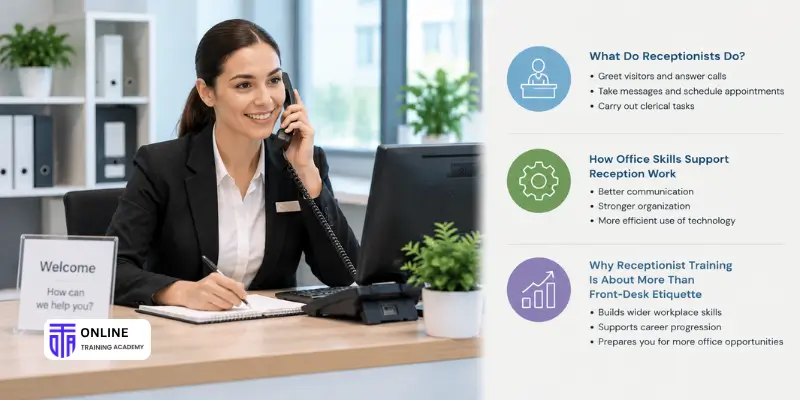
What Do Receptionists Do?
Receptionist responsibilities can include:
- Greeting and directing visitors
- Answering and transferring calls
- Taking and forwarding messages
- Scheduling appointments
- Responding to general enquiries
- Managing correspondence
- Maintaining records
- Supporting routine administrative work
The balance between these duties depends on the organization. A receptionist in a medical office may spend much of the day managing appointments, while someone in a corporate setting may deal more with visitors, calls, meeting rooms and administrative support.
How Office Skills Support Reception Work
The role depends on several skills working together.
Communication helps a receptionist understand and respond to people clearly.
Organization keeps appointments, messages and documents under control.
Digital skills support email, calendars, documents and workplace systems.
Time management helps when several requests arrive at once.
Customer service affects how visitors and callers experience the organization.
Attention to detail helps prevent errors in information and records.
These skills also have value beyond reception, which is one reason office skills can provide a useful foundation for broader administrative work.
Why Receptionist Training Is About More Than Front-Desk Etiquette
A welcoming attitude is helpful, but it is only part of the picture.
A receptionist may need to decide which request needs attention first, locate information quickly, update a calendar, deal with an unhappy caller or ask a colleague for assistance.
That means good training should develop both people skills and office skills.
What Skills Should You Learn in an Office Skills & Receptionist Course?
A well-rounded course should cover the abilities used repeatedly in everyday office work rather than concentrating on one narrow responsibility.
Communication and Active Listening
Communication is one of the foundations of reception work.
Receptionists need to understand questions, provide information, take accurate messages and communicate with colleagues. Active listening is particularly important because information received at the front desk may need to be passed to someone else.
Useful communication skills include:
- Active listening
- Clear speaking
- Telephone communication
- Professional email writing
- Accurate message-taking
- Asking clarification questions
Canadian occupational information identifies active listening, oral comprehension and oral expression among competencies associated with receptionist work.
Organization, Time Management and Prioritization
Office work rarely arrives in a neat order.
An email may need attention while a visitor is waiting and a colleague is asking for an appointment to be changed.
Strong organization helps prevent competing demands from becoming overwhelming.
Useful skills include:
- Managing calendars
- Recording messages
- Tracking follow-ups
- Organizing documents
- Maintaining task lists
- Prioritizing urgent work
The goal is not to complete everything simultaneously. It is to recognize what needs attention now and what can safely wait.
Customer Service and Professional Interaction
Customer service at reception is about understanding and responding to people’s needs appropriately.
A receptionist may need to answer a straightforward question, direct a visitor, explain the next step or refer a complaint to another employee.
Good customer service involves:
- Listening carefully
- Speaking respectfully
- Staying calm
- Providing accurate information
- Understanding workplace boundaries
- Knowing when to escalate an issue
Accuracy, Adaptability and Problem-Solving
Office situations can change quickly.
An appointment may need to be moved. A visitor may arrive unexpectedly. A software system may be unfamiliar. A caller may ask something that requires another employee’s input.
A capable receptionist needs to adapt without allowing accuracy to disappear.
Canada’s Skills for Success framework includes communication, digital skills, problem solving, collaboration and adaptability among the skills that support success in the workplace.
How Do Office Skills Connect to Real Receptionist Duties?
One of the best ways to understand the value of receptionist training is to connect each skill with a real workplace task.
Communication → Calls, Visitors and Messages
Imagine a caller provides their name, telephone number and preferred appointment time.
If the receptionist records one detail incorrectly, the person may not receive the expected callback or could arrive at the wrong time.
Active listening and confirmation can reduce this risk.
For example:
“Just to confirm, you’d like the appointment moved to Thursday at 2 p.m.?”
A few seconds of confirmation can prevent a much longer problem later.
Organization → Scheduling and Follow-Ups
Suppose three appointments need to be changed and two messages require follow-up.
Without a consistent system, it would be easy to forget one.
Using the workplace calendar, recording messages immediately and tracking outstanding tasks gives the receptionist a clearer picture of what still needs to be done.
Good organization is not about keeping a perfect desk. It is about making information easy to find when it is needed.
Digital Skills → Everyday Office Systems
Office technology is now part of many administrative environments.
A receptionist may use email, calendars, word-processing tools, spreadsheets, appointment systems or databases depending on the employer.
The important skill is not memorizing one particular software program. It is becoming comfortable with digital systems and being able to learn unfamiliar tools.
Customer Service → Difficult or Unhappy Clients
Consider a visitor who is frustrated because an appointment has been delayed.
A receptionist cannot necessarily solve the underlying issue, but they can control how they respond.
Listening without interrupting, acknowledging the concern, checking what information is available and involving the appropriate person can help keep the interaction constructive.
What Software Tools Should a Receptionist Be Proficient In?
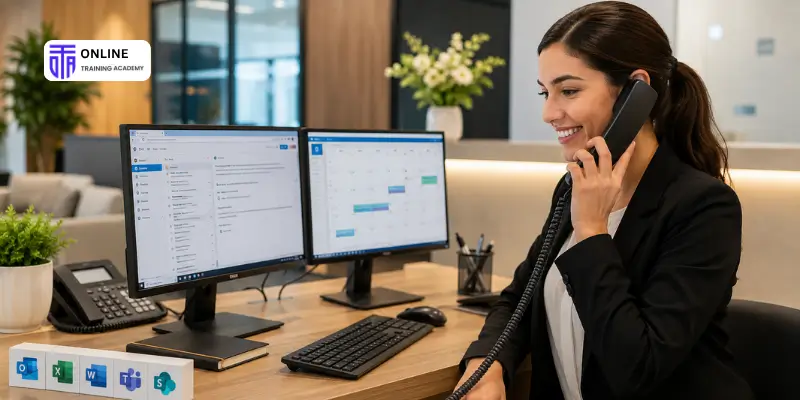
Digital confidence is an increasingly useful part of office work. The specific programs vary between employers, so training should focus on transferable skills rather than one brand of software.
Email and Written Communication Tools
Receptionists may use email throughout the day to communicate with clients, colleagues and external contacts.
Useful abilities include:
- Writing clear messages
- Organizing emails
- Attaching documents
- Responding appropriately
- Checking recipients before sending
- Managing routine correspondence
A small error in an email can create confusion, so digital communication also requires attention to detail.
Calendars and Appointment Systems
Scheduling tools are particularly relevant to reception work.
A receptionist may need to:
- Create appointments
- Change bookings
- Check availability
- Identify scheduling conflicts
- Record cancellations
- Confirm appointment details
The system used will depend on the workplace, but the underlying skill—accurate scheduling—remains transferable.
Word Processing, Spreadsheets and Documents
Office roles can involve preparing letters, updating documents, entering information or working with basic spreadsheets.
Learners should become comfortable with common functions such as:
- Creating and editing documents
- Formatting information
- Entering data
- Organizing files
- Working with basic tables or spreadsheets
Databases, Document Systems and Online Meeting Tools
Some workplaces use databases or specialized systems for records and information management. Others may rely on digital document systems and online meeting platforms.
A good office worker does not need to know every system in advance.
Instead, they need the confidence to learn new tools and follow workplace procedures carefully.
How Should a Receptionist Handle Difficult or Angry Clients?
A difficult interaction can test almost every skill a receptionist has developed.
The aim is not to “win” an argument or make every unhappy person happy. The aim is to respond calmly, understand the issue and follow the appropriate workplace process.
Listen Before Trying to Fix the Problem
Interrupting an angry person can make the situation worse.
Allow them to explain the concern where appropriate, then clarify what they actually need.
A receptionist might say:
“I understand you’d like an update. Let me check what information I can provide.”
This acknowledges the concern without making a promise that may not be possible to keep.
Avoid Defensive Responses
Some reactions can quickly escalate a situation:
- Arguing
- Matching an angry tone
- Taking criticism personally
- Interrupting
- Making promises outside your authority
- Dismissing the concern
Staying calm does not mean accepting inappropriate behaviour. It means keeping the response controlled and following workplace procedures.
Know When to Escalate
Not every problem belongs with the receptionist.
A complaint may need a supervisor. A specialized question may need another employee. A decision outside the receptionist’s authority may need management involvement.
Knowing when to refer an issue is part of good workplace judgement.
A Simple Response Framework
A useful approach is:
Listen → acknowledge → clarify → explain → act or escalate.
The exact response will depend on the workplace, but this framework helps keep difficult interactions focused rather than emotional.
What Are the Qualities of a Good Receptionist?
Technical abilities matter, but personal qualities also influence how consistently those skills are used.
Reliability and Organization
A reliable receptionist follows through on tasks, records information properly and keeps track of responsibilities.
Colleagues should be able to trust that an important message or appointment will not simply disappear.
Calmness and Good Judgement
Busy periods are part of office life.
A calm approach makes it easier to decide what needs attention first rather than reacting to every request as though it is equally urgent.
Good judgement also means recognizing when to ask for help.
Adaptability and Willingness to Learn
No two workplaces operate exactly the same way.
One employer may use one appointment system while another uses something completely different. Procedures can also change. Being willing to learn makes it easier to adjust.
Respectful Communication and Service Orientation
A good receptionist understands that different people may need different types of communication. Some enquiries are quick and straightforward. Others require more explanation.
Being respectful, patient and attentive helps create a more positive experience without losing sight of workplace boundaries.
What Do Employers Look for in Receptionists in Canada?
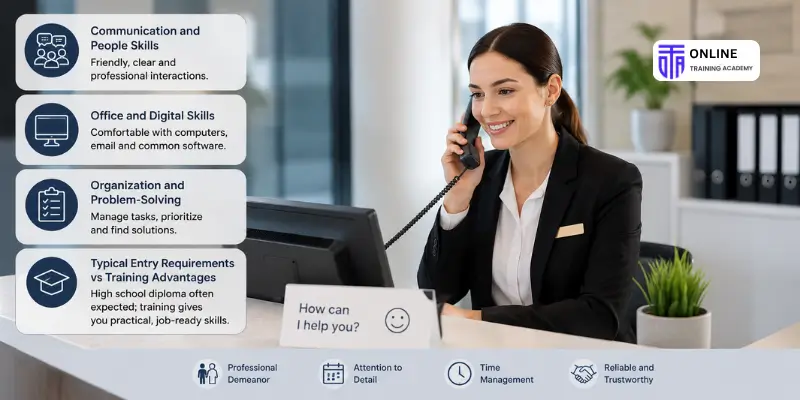
Employers can have different expectations, but several skill areas commonly matter in receptionist and office work.
Communication and People Skills
Employers may value:
- Clear speaking
- Active listening
- Writing
- Customer service
- Social awareness
- Professional communication
These skills matter because receptionists regularly interact with people inside and outside the organization.
Office and Digital Skills
Modern office environments may expect familiarity with:
- Word processing
- Spreadsheets
- Digital calendars
- Appointment systems
- Data entry
- Document management
The exact software depends on the employer.
Organization and Problem-Solving
A receptionist may need to coordinate several small tasks throughout the day.
Time management, attention to detail, prioritization and problem-solving can help keep routine work moving when unexpected requests appear.
Typical Entry Requirements vs Training Advantages
It is useful to distinguish between what is required for a particular job and what can make someone better prepared to apply.
Canadian Job Bank states that secondary school completion is usually required for office receptionists and that on-the-job training may be provided. Receptionists are also not regulated in Canada.
That means an Office Skills & Receptionist Course should not be presented as a mandatory requirement for every receptionist position.
Instead, training can help learners develop familiarity with office responsibilities and build confidence before entering or progressing within an office environment.
Who Can Benefit From an Office Skills & Receptionist Course?
The course can suit people at different stages of their working life.
People Starting Their First Office Role
If you have limited office experience, training can introduce common responsibilities before you encounter them at work. Learning how scheduling, communication, customer service and office technology fit together can make the transition easier.
Aspiring Receptionists
For someone specifically interested in reception work, a course can provide a structured overview of the skills used at the front desk. It can also help identify areas that need more practice.
Career Changers and Returning Workers
People moving into office work from another field may already have useful transferable skills but need to refresh their digital or administrative knowledge.
Training can help bridge that gap.
Existing Administrative Workers
A course does not have to be only for beginners.
Someone already working in administration may use additional training to strengthen communication, organization, customer service or office technology skills.
How Can Receptionist Skills Support a Broader Office Career?
Reception work can develop skills that are useful in other office-based positions.
Administrative Assistant Skills
Receptionists often develop experience with:
- Scheduling
- Communication
- Document handling
- Organization
- Office software
- Customer enquiries
These skills can be relevant to administrative assistant roles, depending on the employer’s requirements.
Office Coordination and Clerical Work
Experience managing information, coordinating appointments and supporting everyday office activities can provide a foundation for other clerical and coordination responsibilities.
Customer Service and Client-Facing Roles
Reception experience can also strengthen skills such as:
- Service orientation
- Communication
- Problem-solving
- Handling enquiries
- Managing difficult interactions
These abilities can be useful in a range of customer-facing environments.
Developing Skills for Future Opportunities
Career progression is never automatic.
Experience, additional training, employer requirements and the specific role all matter. However, building strong office skills gives workers more capabilities to draw on when considering future opportunities.
WorkBC notes that receptionists may progress toward roles such as administrative assistant, office manager or executive assistant with experience and additional development.
How to Choose an Office Skills & Receptionist Course
Not every course will have the same structure or depth. If you are comparing training options, look beyond the title.
Look for Both Reception and Office Skills
A useful course should cover more than front-desk greetings.
Look for topics such as:
- Reception responsibilities
- Telephone communication
- Customer service
- Appointment scheduling
- Office administration
- Organization
- Time management
- Digital office skills
Look for Realistic Workplace Applications
The strongest learning becomes easier to understand when it connects with realistic situations.
Look for examples involving:
- Taking messages
- Managing appointments
- Handling enquiries
- Communicating with visitors
- Organizing office information
- Responding to competing priorities
These examples help learners understand not only what to do, but why the skill matters.
Check the Learning Format and Flexibility
For people balancing work, family or other commitments, online and self-paced learning can make training easier to fit into a routine.
Check how course materials are delivered, how long access is provided and whether the learning format suits your schedule.
Consider What You Want to Do With the Skills
Before enrolling, ask yourself:
- Am I preparing for my first office role?
- Am I specifically interested in reception?
- Am I changing careers?
- Do I need to refresh my office skills?
- Do I want broader administrative knowledge?
Knowing your goal makes it easier to judge whether a course is suitable.
How to Build Confidence After Completing Receptionist Training
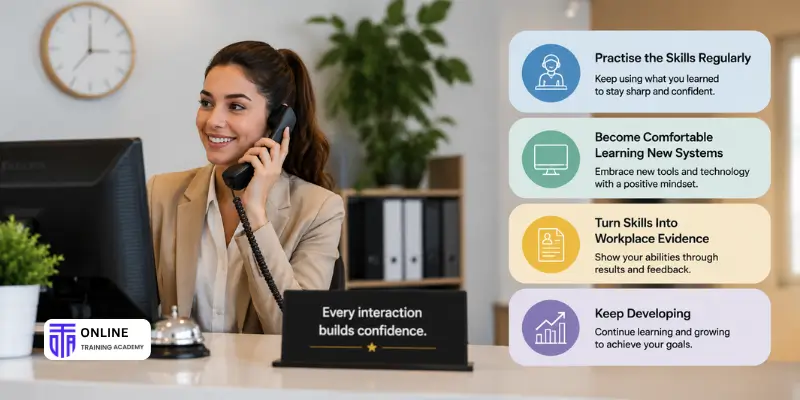
Finishing a course is a useful step, but skills become stronger when you continue using them.
Practise the Skills Regularly
You can reinforce learning through everyday activities such as:
- Writing professional emails
- Practising telephone communication
- Organizing digital files
- Using calendars
- Creating simple documents
- Working with spreadsheets
- Practising accurate message-taking
The more familiar these tasks become, the less mental effort they require.
Become Comfortable Learning New Systems
You may not use the same software in every workplace.
Instead of trying to memorize one program forever, focus on understanding the basic logic behind digital office tasks.
Once you understand calendars, documents, email, data entry and file management, learning another system can become easier.
Turn Skills Into Workplace Evidence
When preparing a CV or interview, do more than list “good communication” or “computer skills.”
Explain how you have used a skill.
For example:
Skill: Organization
Example: Managed multiple appointments and tracked follow-up tasks using a structured calendar and task system.
Specific examples are more meaningful than unsupported claims.
Keep Developing
Office expectations change over time. Continue strengthening communication, digital skills, organization, customer service and problem-solving rather than treating training as the final step.
Conclusion
An Office Skills & Receptionist Course can help learners build the communication, organization, digital and customer service skills needed in modern office environments. Reception work involves much more than greeting visitors and answering calls.
Learners can develop skills in telephone communication, appointment scheduling, email, office software, record keeping, time management and customer service. These abilities can be useful across reception, administration and other office-based roles in Canada.
Whether you are starting your first office role, changing careers or refreshing your existing skills, structured training can provide a useful foundation. Build the right office skills today and take a confident step towards your next career opportunity.
FAQs
An Office Skills & Receptionist Course combines receptionist responsibilities with broader office skills such as communication, customer service, scheduling, organization, time management and digital office tools.
Important skills include clear communication, active listening, organization, time management, customer service, digital confidence, attention to detail, adaptability and problem-solving.
Good receptionists are generally reliable, organized, respectful, adaptable and able to remain calm when priorities change. Good judgement and willingness to learn are also valuable.
Depending on the workplace, receptionists may use email platforms, word-processing software, spreadsheets, digital calendars, appointment systems, databases, document management systems and online meeting tools.
Receptionists commonly greet visitors, answer and forward calls, take messages, schedule appointments and perform clerical or administrative duties. Responsibilities vary by employer and workplace.
Not necessarily. Requirements vary between employers. Canadian Job Bank states that secondary school completion is usually required for office receptionists and that on-the-job training may be provided.
Yes. Skills such as communication, scheduling, organization, customer service, document handling and digital office skills can also be relevant to administrative, clerical, coordination and other office-based roles.
Learn More



Get a FREE Course
- Learn useful skills online free
- Get CPD accredited certificate
- Add it to your CV today!