

A worker walks through the same path every day. Nothing looks unusual. The floor seems clean, the equipment appears fine, and the routine feels familiar. Then, in a single moment, they slip on a small wet patch that no one noticed—or no one acted on.
This is how most workplace incidents actually happen. Not through major failures, but through common hazards that become normal over time.
Occupational Health and Safety (OHS) exists to interrupt that pattern. It is not just about rules or inspections. It is about recognising everyday risks early and acting before they turn into injuries, illnesses, or long-term problems.
This guide explores the meaning of OHS, the types of occupational health issues, and the most common workplace hazards, along with clear, practical ways to stay safe.
Table of Contents
Occupational Health and Safety: Common Hazards and How to Stay Safe
Occupational health and safety focuses on identifying common workplace hazards such as slips, falls, manual handling injuries, hazardous substances, fire risks, and stress-related issues. By following safety procedures, using protective equipment, receiving proper training, and reporting hazards promptly, employees and employers can create a safer work environment and reduce the risk of accidents and injuries.
Occupational Health and Safety Meaning
Occupational Health and Safety refers to the structured approach used to protect workers from physical and mental harm in the workplace.
It combines two key areas. Safety focuses on preventing immediate injuries, such as accidents involving machinery or falls. Health focuses on long-term wellbeing, including exposure to harmful substances, stress, and fatigue.
In practice, OHS works through a continuous cycle. Hazards are identified, risks are assessed, and controls are applied. This cycle does not end. It adapts as workplaces, tools, and working conditions change.
A useful way to understand this is through contrast. A reactive workplace waits for an incident to occur before acting. A proactive workplace uses OHS to prevent that incident from happening in the first place.
Types of Occupational Health Issues
Workplace health issues often develop gradually. They are easy to ignore at first, which is why they become serious over time.
One of the most common categories is physical injury, particularly musculoskeletal disorders. These include back pain, joint strain, and repetitive stress injuries. They often come from lifting, repetitive tasks, or poor posture. The risk is not always immediate, but repeated exposure builds damage over time.
Another major category is mental health. Work-related stress, anxiety, and burnout are now among the most reported occupational health problems. High workload, lack of control, and poor communication are common triggers. What makes this critical is its effect on behaviour. A stressed employee is more likely to make mistakes, overlook hazards, or react slowly in risky situations.
There are also exposure-related health issues. These come from contact with harmful substances such as chemicals, dust, or fumes. The danger here is long-term. The effects may not appear immediately but can develop into serious conditions after prolonged exposure.
Fatigue is another overlooked issue. Long hours, night shifts, or physically demanding roles reduce alertness and reaction time. This increases the likelihood of accidents even in otherwise controlled environments.
Finally, environmental factors such as noise, poor lighting, and ventilation contribute to both health and safety risks. These conditions may seem minor, but they affect concentration, comfort, and long-term wellbeing.
Most Common Risks in the Workplace
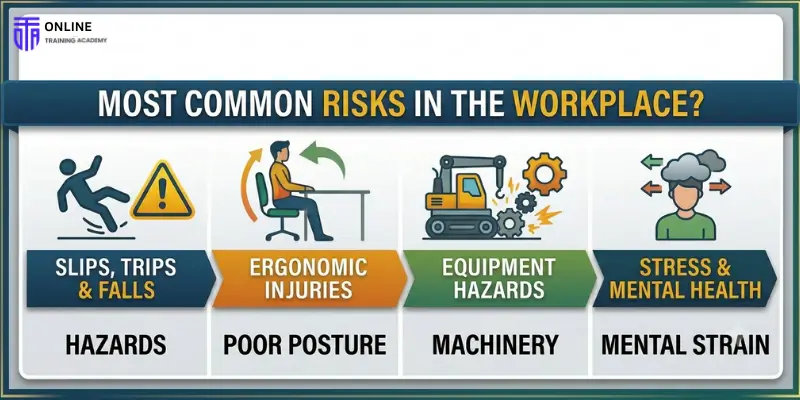
Across industries, workplace risks tend to repeat in predictable ways. They are not rare or unusual. They are part of everyday operations, often built into routine tasks and environments.
The most common risks include:
- Slips, trips, and falls: Often caused by wet floors, uneven surfaces, or cluttered walkways. These incidents happen quickly and are one of the leading causes of workplace injuries.
- Manual handling injuries: Lifting, carrying, or moving loads incorrectly can lead to back injuries, muscle strain, and long-term physical damage.
- Machinery-related accidents: Contact with moving parts, lack of guarding, or improper use of equipment can result in serious injuries, especially in industrial settings.
- Fire hazards: Electrical faults, overloaded circuits, or poor storage of flammable materials increase the risk of fire, which can escalate rapidly if not controlled.
- Work-related stress and fatigue: High workload, long hours, and lack of rest reduce concentration and reaction time, increasing the likelihood of mistakes and accidents.
Among these, slips and trips stand out because they are simple, frequent, and highly preventable. A small spill, a loose cable, or poor lighting may seem minor, but these conditions create immediate risk.
What makes these risks important is not just how often they occur, but how easily they can be controlled. When organisations focus on identifying and addressing these everyday hazards, they significantly reduce the chances of serious incidents.
Prevent Slips and Trips in the Workplace
Slips and trips are rarely caused by complex failures. They usually come from everyday conditions that are left unaddressed.
A wet floor without a warning sign, a loose cable across a walkway, or poor lighting in a corridor can all create immediate risk. These hazards are easy to fix, yet often ignored because they seem minor.
Preventing them requires attention to routine details. Floors should be kept clean and dry, and hazards should be addressed as soon as they appear. Walkways need to remain clear, and lighting should allow people to see where they are going without difficulty.
A few simple practices make a measurable difference:
- Regular inspection of high-traffic areas
- Immediate reporting and cleaning of spills
- Proper storage to avoid clutter
- Use of signage where hazards cannot be removed immediately
The key is consistency. When small hazards are dealt with quickly, larger incidents are prevented.
What Are the 5 Steps to Safety?
Workplace safety becomes more effective when it follows a clear structure. The five-step approach provides a simple and reliable framework.
It begins with identifying hazards. This involves observing the workplace and recognising anything that could cause harm. Once hazards are identified, the next step is to assess the risks. This means understanding how likely the hazard is to cause harm and how severe that harm could be.
The third step is to control the risk. This may involve removing the hazard entirely or reducing its impact through protective measures. After this, findings should be recorded and implemented so that actions are clear and consistent.
Finally, safety measures must be reviewed regularly. Workplaces change, and new risks appear. Without review, even effective systems become outdated.
This process turns safety into a continuous cycle rather than a one-time effort.
What Are 10 Safety Rules?

Safety rules guide behaviour in everyday situations. They are simple, but their value comes from consistent use.
In most workplaces, effective safety behaviour includes following procedures, using protective equipment correctly, and reporting hazards without delay. Employees are expected to stay alert, avoid unnecessary risks, and communicate clearly with others.
Some of the most important rules include:
- Follow established safety procedures at all times
- Use PPE where required
- Report hazards and near-misses immediately
- Keep work areas clean and organised
- Never bypass safety systems or controls
- Use equipment only as trained
- Stay focused and avoid distractions
- Apply safe lifting techniques
- Take breaks to manage fatigue
- Communicate risks clearly with team members
These rules may appear basic, but they form the foundation of safe behaviour in any work environment.
What Are the 5 Most Common Types of Unsafe Conditions?
Unsafe conditions are situations where hazards are not properly controlled. They often develop slowly and become accepted as normal, especially in busy or routine work environments.
The most common types include:
- Poor housekeeping Cluttered work areas, spills, and disorganised spaces create immediate risks such as slips, trips, and falls. When cleanliness is not maintained, hazards build up quickly.
- Faulty or poorly maintained equipment Damaged tools, worn-out machinery, or lack of maintenance increases the likelihood of malfunction, leading to injuries or unexpected failures during operation.
- Inadequate safety guards or missing barriers Protective systems such as machine guards or railings are designed to prevent direct exposure to danger. When they are missing or damaged, workers are left vulnerable.
- Poor lighting or ventilation Low visibility makes it harder to identify hazards, while poor air quality can affect both health and concentration. Over time, this reduces overall safety and performance.
- Improper storage of materials Items stored unsafely can fall, block pathways, or create instability. This increases the risk of injury and can also interfere with emergency access routes.
These conditions share a common pattern. They are usually visible but often ignored because they do not cause immediate harm. Over time, however, they significantly increase the likelihood of accidents and incidents.
Which Is Considered an Unsafe Condition?
An unsafe condition is any workplace situation that increases the likelihood of harm.
This could include a wet floor without signage, exposed wiring, damaged equipment, or blocked emergency exits. These conditions do not cause harm on their own, but they create the environment where harm becomes likely.
It is important to distinguish between a hazard and an unsafe condition. A hazard is the source of potential harm. An unsafe condition occurs when that hazard is not properly managed.
For example, electricity is a hazard. Exposed electrical wires represent an unsafe condition.
Recognising this difference helps organisations act more effectively. It shifts focus from simply identifying risks to actively controlling them.
How to Stay Safe in Real Work Environments
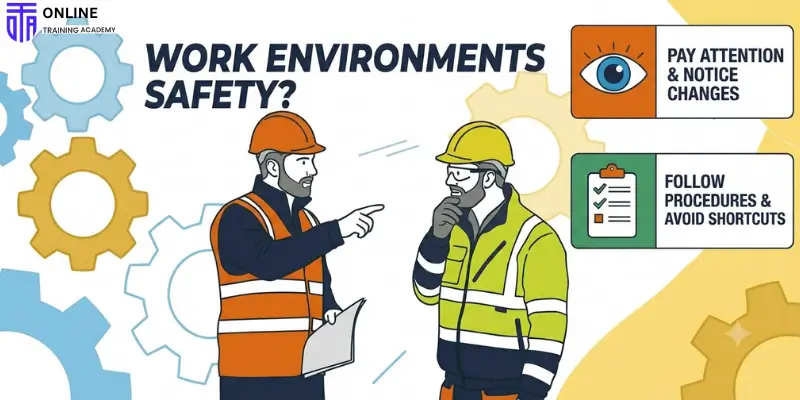
Staying safe at work is not about memorising rules or completing checklists. It is about awareness, judgement, and consistent behaviour in real situations where conditions can change quickly.
A safe worker pays attention to their surroundings at all times. They notice when something feels different—a new hazard, a change in workflow, or a piece of equipment not working as expected. They follow established procedures, even when under pressure to move faster. Most importantly, they speak up. Reporting a small issue early often prevents a much larger problem later.
Safe behaviour also means resisting routine shortcuts. Repetition can create a false sense of confidence. Tasks feel familiar, and risks seem less important. This is where many incidents begin. A safe worker treats each task with the same level of attention, regardless of how often it has been done before.
At the organisational level, safety depends on the environment that is created. A safe organisation does not rely on rules alone. It builds a culture where communication is open, and employees feel comfortable raising concerns without fear of blame. When someone reports a hazard, the response is immediate and constructive, not dismissive.
Training also plays a role, but it must be practical. Employees need to understand how safety applies to their actual work, not just theoretical situations. Real examples, regular reminders, and visible leadership behaviour reinforce this understanding.
There are also a few practical habits that strengthen everyday safety:
- Pause briefly before starting a task to assess risks
- Keep work areas organised to reduce unnecessary hazards
- Use equipment exactly as intended, without modification
- Stay physically and mentally alert, especially during long or demanding shifts
Over time, these small habits build a strong safety mindset.
Ultimately, safety becomes effective when it is part of how people think and act, not something they switch on only during inspections or training sessions. It is not about perfection or avoiding every mistake. It is about making better decisions consistently, especially in routine moments where risks are easy to overlook.
Conclusion
Workplace hazards are rarely dramatic. They exist in small details, repeated actions, and everyday routines.
A loose cable. A missed warning sign. A task done too quickly.
Each one seems minor. Together, they create risk.
The difference between a safe workplace and an unsafe one is not the absence of hazards. It is how consistently those hazards are recognised and controlled.
Safety is built through attention, awareness, and action—one decision at a time.
FAQs
It is the system used to protect workers from harm by identifying and controlling workplace risks.
Slips, trips, falls, manual handling injuries, machinery risks, and stress-related issues.
Because they often result from small, preventable hazards such as wet floors or clutter.
Situations where hazards are not properly controlled, increasing the risk of injury.
Identify hazards, assess risks, control risks, implement actions, and review regularly.
Because it affects focus, judgement, and overall Health and Safety behaviour.
By staying aware, following procedures, and reporting hazards immediately.
Learn More





Get a FREE Course
- Learn useful skills online free
- Get CPD accredited certificate
- Add it to your CV today!