



In healthcare, many job titles sound similar, but their responsibilities can be very different. Nursing assistants, nurses, and carers all work closely with patients, yet each role has its own level of training, authority, and duties.
This confusion often leads people to ask: Who does what in a healthcare setting? or Which role is right for my career path?
Understanding these differences is important whether you are planning to enter healthcare or simply trying to make sense of how patient care systems work. This guide breaks down each role clearly so you can see how they compare in real-world settings.
What Is a Nursing Assistant?
A nursing assistant is a healthcare support professional who provides essential hands-on care to patients under the supervision of registered nurses, licensed practical nurses (LPNs), or other healthcare professionals. Their primary role is to help patients with daily activities while ensuring they remain comfortable, safe, and treated with dignity throughout their care.
Typical responsibilities include assisting patients with personal hygiene, bathing, dressing, eating, mobility, and repositioning. Nursing assistants also monitor basic vital signs such as temperature, pulse, blood pressure, and respiration, reporting any changes in a patient’s condition to the nursing team. While they do not diagnose illnesses, prescribe medications, or make clinical decisions, they play a crucial role in supporting patient recovery and wellbeing through continuous observation and care.
Nursing assistants work in a variety of healthcare settings, including hospitals, long-term care homes, rehabilitation centres, retirement residences, and community healthcare facilities. Because they spend significant time with patients during each shift, they often develop strong relationships with those in their care and are among the first to notice changes that may require medical attention. Their contribution is essential to the smooth operation of healthcare teams and the delivery of high-quality patient care.
Nursing Assistant Diploma (Online)
Learn the fundamental knowledge and practical principles of nursing assistance, including patient care, communication, infection prevention, and supporting health and wellbeing in a variety of care settings.
Explore the responsibilities of a nursing assistant and develop an understanding of safe, compassionate, and person-centred care practices.
Table of Contents
Nursing Assistant vs Nurse: Key Differences
Although nursing assistants and nurses work side by side in healthcare settings, their education, responsibilities, and level of clinical authority differ significantly. Both roles are essential, but they contribute to patient care in different ways.
A nurse has completed more advanced education and clinical training and holds greater responsibility for patient assessment, treatment, and care planning. Registered Nurses (RNs) and Licensed Practical Nurses (LPNs) assess patients, develop care plans, administer medications, perform clinical procedures, educate patients and families, and make important decisions based on a patient’s medical condition. They are accountable for coordinating patient care and ensuring treatments are delivered safely and effectively.
A nursing assistant, by comparison, focuses on providing direct personal care and supporting nurses with day-to-day patient needs. Their responsibilities include helping patients with bathing, dressing, eating, mobility, toileting, and monitoring basic vital signs. They also observe patients closely and report any physical or emotional changes to the nursing staff, allowing nurses to respond promptly when medical attention is needed.
Another key difference is decision-making authority. Nurses are licensed healthcare professionals who can perform clinical assessments and make informed medical decisions within their scope of practice. Nursing assistants work under supervision and follow established care plans rather than creating or modifying them.
In simple terms, nurses are responsible for planning, managing, and delivering clinical care, while nursing assistants provide the practical, hands-on support that helps patients remain comfortable, safe, and well cared for. Together, they form a collaborative team that ensures patients receive both expert medical treatment and compassionate daily care.
Nursing Assistant vs Carer: What's the Difference?
Although nursing assistants and carers both provide valuable support to people who need assistance, their roles, work environments, and responsibilities are not the same.
A carer (also known as a caregiver or support worker) primarily helps individuals with everyday living activities, often in their own homes, residential care settings, or community environments. Their responsibilities may include assisting with personal hygiene, dressing, meal preparation, medication reminders, mobility support, companionship, shopping, and light household tasks. The main goal of a carer is to help people maintain their independence, dignity, and quality of life, particularly older adults or individuals living with disabilities or long-term health conditions.
A nursing assistant, on the other hand, works mainly in clinical healthcare settings such as hospitals, long-term care homes, rehabilitation centres, and nursing facilities. While they also assist with personal care and mobility, their responsibilities are more closely connected to patient care within a medical environment. They monitor vital signs, observe changes in patients’ conditions, assist with clinical routines under supervision, and work directly alongside nurses and other healthcare professionals.
The working environment is another important distinction. Carers often provide one-to-one support independently in a client’s home or community setting, whereas nursing assistants are part of a multidisciplinary healthcare team and follow established clinical procedures under the supervision of licensed nursing staff.
Training requirements can also differ. Nursing assistants usually complete formal healthcare training that includes clinical placements and patient care skills, while carers may complete specialised care courses depending on employer or provincial requirements.
Despite these differences, both professions are equally valuable. Carers help individuals live safely and independently in their everyday environments, while nursing assistants provide essential support within healthcare facilities. Together, they ensure people receive the appropriate level of care throughout different stages of illness, recovery, ageing, and long-term support.
Skills Required Across All Roles
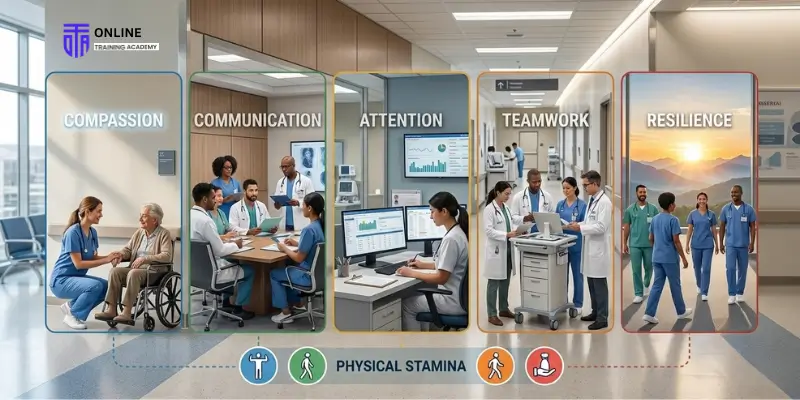
Although nursing assistants, nurses, and carers have different responsibilities and levels of training, they all share a number of essential skills that are fundamental to delivering safe, compassionate, and effective care. These core skills help ensure patients receive the physical, emotional, and practical support they need, regardless of the healthcare setting.
Compassion and Empathy
Compassion is at the heart of every caring profession. Nursing assistants, nurses, and carers regularly work with individuals who may be elderly, recovering from illness, living with disabilities, or facing challenging medical conditions. Showing empathy, patience, and respect helps build trust, reduces patient anxiety, and improves the overall care experience.
Communication Skills
Strong communication is essential for maintaining high standards of patient care. Healthcare professionals must communicate clearly with patients, family members, colleagues, and other members of the multidisciplinary healthcare team. Accurate reporting of symptoms, changes in condition, and care provided helps prevent misunderstandings and supports better clinical decision-making.
Attention to Detail
In healthcare, even small changes can have significant consequences. Whether it is noticing a change in a patient’s behaviour, mobility, appetite, or vital signs, being observant allows healthcare professionals to raise concerns quickly and contribute to timely medical intervention.
Teamwork and Collaboration
Patient care is rarely delivered by one person alone. Nursing assistants, nurses, carers, doctors, therapists, and other healthcare professionals work together to provide coordinated care. Being able to collaborate effectively ensures patients receive consistent treatment, reduces the risk of errors, and creates a more efficient healthcare environment.
Physical Stamina
Many caring roles involve standing for long periods, assisting patients with mobility, lifting equipment, and responding quickly to patient needs. Good physical fitness helps professionals perform their duties safely while reducing the risk of workplace injuries.
Professionalism and Emotional Resilience
Healthcare can be emotionally demanding. Professionals may care for seriously ill patients, support families during difficult times, or work in fast-paced environments. Maintaining professionalism, staying calm under pressure, and demonstrating emotional resilience are valuable qualities across all three roles.
Career Progression and Opportunities
Healthcare offers excellent long-term career prospects, and nursing assistants, nurses, and carers all have opportunities to develop professionally as they gain experience and additional qualifications.
For many people, becoming a nursing assistant is the ideal starting point. It provides practical clinical experience, develops essential patient care skills, and offers valuable insight into how hospitals, long-term care facilities, and community healthcare services operate. This experience is highly regarded by employers and educational institutions alike.
Many nursing assistants continue their education to progress into roles such as:
- Licensed Practical Nurse (LPN)
- Registered Practical Nurse (RPN) (in provinces such as Ontario)
- Registered Nurse (RN)
- Clinical support worker
- Healthcare supervisor or team leader
With further education and specialised training, they may also work in areas such as emergency care, rehabilitation, mental health, paediatrics, palliative care, or intensive care.
Carers also have opportunities to expand their careers. Depending on provincial requirements and their professional goals, they may complete additional healthcare training to become health care assistants, nursing assistants, or eventually pursue nursing qualifications. Many also specialise in dementia care, disability support, home healthcare, or end-of-life care.
Nurses enjoy some of the broadest career progression opportunities within healthcare. After gaining clinical experience, they may specialise in areas such as critical care, oncology, surgery, mental health, paediatrics, public health, education, or healthcare management. Some continue into advanced practice roles such as Nurse Practitioners (NPs) or healthcare administrators.
Regardless of the starting point, every role provides valuable experience that can support lifelong career development within Canada’s growing healthcare sector.
Which Role Should You Choose?
Choosing between becoming a nursing assistant, nurse, or carer depends largely on your interests, educational goals, preferred working environment, and the type of impact you want to make.
If you enjoy practical, hands-on patient care and want to enter healthcare relatively quickly, becoming a nursing assistant is an excellent choice. The role allows you to work directly with patients, develop essential clinical skills, and gain valuable healthcare experience without requiring a university degree. It also provides a strong foundation for future career progression.
If you are interested in diagnosing health conditions, making clinical decisions, administering treatments, and taking greater responsibility for patient outcomes, a career as a nurse may be the better long-term option. Although nursing requires more extensive education and licensing, it also offers greater professional autonomy, higher earning potential, and a wider range of specialisations.
If you enjoy providing one-to-one support and helping people maintain their independence in their own homes or community settings, becoming a carer may be the most rewarding path. This role focuses on personal care, companionship, emotional support, and improving quality of life rather than clinical treatment.
There is no single “best” role—each profession serves a unique purpose within the healthcare system. The right choice depends on your strengths, career ambitions, and the type of care you feel most passionate about providing.
What Are the Main Responsibilities of Each Role in Practice?
Although these professions often work together, their day-to-day responsibilities differ considerably.
Nurses
Nurses oversee the clinical care of patients. They assess health conditions, develop and update care plans, administer medications, perform medical procedures, monitor recovery, educate patients and families, and respond to emergencies. Nurses are responsible for making informed clinical decisions and ensuring patients receive safe, evidence-based treatment.
Nursing Assistants
Nursing assistants provide the direct, day-to-day care that helps patients remain comfortable and supported throughout their treatment. They assist with bathing, dressing, feeding, mobility, toileting, repositioning, and monitoring basic vital signs. They also spend significant time observing patients and reporting changes to nurses, making them an important part of early intervention and continuous patient monitoring.
Carers
Carers primarily support individuals with everyday living activities outside traditional hospital settings. Their work often includes preparing meals, helping with personal hygiene, assisting with mobility, providing companionship, supporting medication routines, and encouraging independence. Rather than focusing on clinical care, carers help individuals maintain their wellbeing and quality of life within their own homes or residential care environments.
Together, these three professions create a comprehensive support system. Nurses oversee medical care and treatment, nursing assistants deliver practical patient support within healthcare facilities, and carers provide essential assistance that enables people to live safely and comfortably in their daily lives.
Conclusion
Although nursing assistants, nurses, and carers all play vital roles in supporting patients, their responsibilities, qualifications, and working environments differ significantly.
Nurses lead clinical care by assessing patients, administering treatments, and making important healthcare decisions. Nursing assistants provide essential hands-on support that helps patients remain comfortable, safe, and well cared for throughout their recovery. Carers focus primarily on assisting individuals with daily living activities, promoting independence, and improving quality of life within home and community settings.
Rather than replacing one another, these professions complement each other. Together, they form an integrated healthcare workforce that delivers compassionate, high-quality care across hospitals, long-term care facilities, rehabilitation centres, and community services.
Whether you are exploring career options or simply want to better understand the healthcare system, recognising the differences between these roles can help you make informed decisions about education, employment, and future career development. Each profession offers meaningful opportunities to improve people’s lives while contributing to Canada’s growing healthcare sector.
FAQs
The main difference is the level of education and responsibility. Nurses assess patients, administer medications, develop care plans, and make clinical decisions, while nursing assistants provide hands-on personal care, monitor basic vital signs, and support nurses with day-to-day patient care.
No. Although both provide personal care and support, nursing assistants usually work in hospitals and healthcare facilities under the supervision of nurses, while carers typically work in homes or community settings, helping people with daily living activities and promoting independence.
Among the three roles, nurses require the highest level of education and professional licensing. Nursing assistants and carers generally complete shorter vocational or certificate programmes, although requirements vary by province and employer.
Yes. Many nursing assistants use their clinical experience as a stepping stone to further education. After completing the required nursing programme and meeting provincial licensing requirements, they can become Licensed Practical Nurses (LPNs), Registered Practical Nurses (RPNs), or Registered Nurses (RNs).
Nurses and nursing assistants commonly work in hospitals, long-term care homes, rehabilitation centres, and healthcare clinics. Carers are more likely to work in clients’ homes, assisted living facilities, community care services, and residential care settings.
For many people, becoming a nursing assistant is one of the best entry points into healthcare. It provides valuable hands-on experience, requires less training than nursing, and offers excellent opportunities for career progression into more advanced healthcare professions.
Learn More





Get a FREE Course
- Learn useful skills online free
- Get CPD accredited certificate
- Add it to your CV today!