
Cleaning has evolved into a skilled profession where employers value expertise in infection prevention, workplace safety, compliance, and leadership. Across Canada, qualified cleaning professionals help keep hospitals, schools, offices, hotels, and industrial facilities safe and operating efficiently.
A Level 5 Certificate in Cleaning goes beyond everyday cleaning tasks by developing the technical, supervisory, and operational skills needed to manage teams, maintain high standards, and meet industry expectations.
This guide explores the key skills employers look for and how a Level 5 qualification can help you advance into supervisory and facilities management roles.
Table of Contents
Level 5 Certificate in Cleaning
Level 5 Certificate in Cleaning teaches professional cleaning techniques, safe chemical handling, housekeeping, and effective cleaning of homes, kitchens, bathrooms, offices, and external areas using industry-standard equipment and practices.
Why Employers Value a Level 5 Certificate in Cleaning
Today’s employers expect cleaning professionals to do more than maintain clean spaces. They look for individuals who understand infection control, workplace safety, regulatory compliance, and quality assurance to help protect people, property, and business operations.
A Level 5 Certificate in Cleaning demonstrates advanced knowledge beyond routine cleaning tasks. It equips learners with the skills to manage risks, supervise teams, maintain high standards, and contribute to efficient cleaning operations.
These capabilities are valued across healthcare, hospitality, education, commercial property, manufacturing, and facilities management, where consistent cleaning standards are essential for safety, compliance, and customer confidence.
The 15 Skills Employers Value Most in Cleaning Professionals
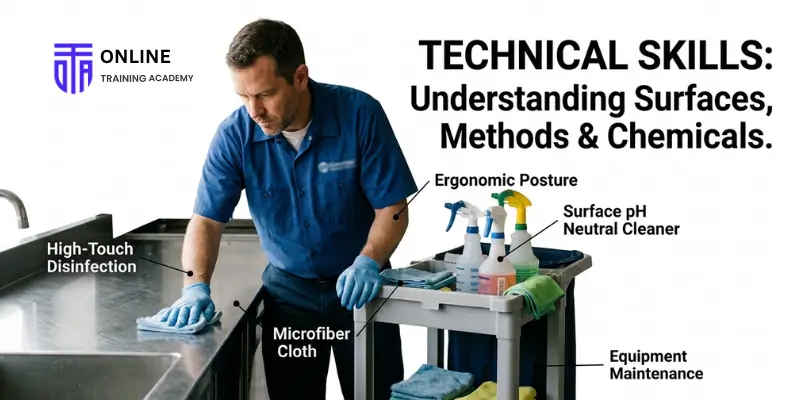
1. Technical Cleaning Expertise
Technical cleaning skills form the foundation of every successful cleaning career. Employers expect professionals to understand which cleaning methods, chemicals, and equipment are appropriate for different surfaces and environments.
For example, cleaning polished stone flooring requires different techniques than sanitising stainless steel equipment or maintaining carpeted office spaces. Using the wrong product or procedure can damage surfaces, shorten equipment lifespan, or compromise hygiene standards.
A Level 5 Certificate helps learners develop a deeper understanding of cleaning systems, equipment maintenance, and industry best practices, enabling them to make informed decisions in a wide range of workplace settings.
2. Cleaning, Sanitization, and Infection Control
Since the COVID-19 pandemic, infection prevention has become a priority across nearly every industry. Employers expect cleaning professionals to understand that cleaning alone does not always eliminate harmful microorganisms.
Professionals should know the differences between:
- Cleaning to remove dirt and debris
- Sanitizing to reduce bacteria to safe levels
- Disinfecting to destroy disease-causing microorganisms
- Sterilizing for environments requiring complete elimination of microbial life
Understanding these distinctions helps ensure that the correct procedures are used in healthcare facilities, food preparation areas, childcare settings, and other high-risk environments.
Level 5 learners also explore methods for preventing cross-contamination through proper workflow planning, colour-coded equipment systems, and safe handling practices.
3. Regulatory Compliance and Workplace Safety
Cleaning professionals frequently work with chemical products, specialised equipment, and potentially hazardous environments. Employers need staff who understand workplace safety obligations and follow established procedures.
Key areas include:
- Safe chemical handling
- Personal protective equipment (PPE)
- Hazard identification
- Risk assessments
- Emergency procedures
- Safe equipment operation
In Canadian workplaces, familiarity with WHMIS (Workplace Hazardous Materials Information System) principles is particularly valuable. Understanding chemical labels, Safety Data Sheets (SDS), and safe storage practices helps reduce workplace risks while supporting legal compliance.
Employers recognise that individuals with strong safety knowledge contribute to healthier workplaces and fewer preventable incidents.
4. Attention to Detail
Attention to detail is one of the most important qualities employers look for in cleaning professionals. Consistently noticing and addressing small details helps maintain high standards across every task.
Overlooking dust, high-touch surfaces, spills, or washroom hygiene can affect workplace safety, infection control, and customer satisfaction. Careful inspections help prevent these issues before they become larger problems.
A Level 5 Certificate in Cleaning reinforces the importance of quality checks and consistent performance, helping learners deliver reliable results and build trust with employers and clients.
5. Time Management
Cleaning professionals often work to tight schedules, whether preparing hotel rooms, sanitising healthcare facilities, or maintaining commercial spaces before business hours. Effective time management ensures tasks are completed efficiently without compromising quality.
Employers value professionals who can prioritise workloads, meet deadlines, manage multiple responsibilities, and adapt to unexpected requests while maintaining high standards.
A Level 5 Certificate in Cleaning develops workflow planning and resource management skills, helping learners improve productivity and coordinate cleaning operations more effectively.
6. Organization and Workflow Planning
Cleaning operations involve much more than completing individual tasks. Supplies need replenishing, equipment requires maintenance, schedules must be coordinated, and work must be completed in the correct sequence.
Organisational skills help professionals:
- Plan daily activities
- Manage inventory
- Prevent equipment shortages
- Reduce unnecessary travel between work areas
- Improve operational efficiency
Supervisors with strong organisational abilities are better equipped to coordinate staff, maintain service consistency, and minimise downtime.
These skills become increasingly valuable when managing larger commercial facilities or multiple cleaning teams.
7. Communication Skills
Cleaning professionals regularly interact with supervisors, coworkers, contractors, customers, and building occupants. Effective communication helps ensure work is completed safely, efficiently, and according to expectations.
Clear communication includes:
- Reporting maintenance concerns
- Explaining cleaning procedures
- Documenting completed work
- Sharing safety information
- Clarifying client expectations
- Coordinating with team members
Strong communication also supports better problem-solving. For example, reporting a leaking pipe immediately may prevent water damage, mould growth, or workplace accidents.
Employers value professionals who communicate confidently, professionally, and respectfully in a variety of workplace situations.
8. Customer Service and Professionalism
Cleaning professionals may work behind the scenes, but they represent their organisation every day. Whether interacting with office staff, hotel guests, healthcare workers, or customers, a professional attitude helps create a positive experience.
Employers value cleaners who are courteous, reliable, and respectful. Listening carefully, responding calmly to requests, respecting privacy, and following workplace policies all contribute to building trust and maintaining strong client relationships.
A Level 5 Certificate in Cleaning strengthens these qualities by combining customer service principles with technical expertise, preparing learners to meet the professional standards expected in modern workplaces.
9. Reliability, Accountability, and Integrity
One of the first qualities employers look for is reliability. Cleaning teams are often responsible for opening or closing buildings, accessing restricted areas, or handling expensive equipment. Employers need confidence that these responsibilities will be carried out consistently and ethically.
Reliable professionals:
- Arrive on time
- Complete assigned tasks thoroughly
- Follow workplace procedures
- Take responsibility for their work
- Report issues honestly
- Respect confidential environments
Integrity is especially important when working in locations such as hospitals, schools, offices, or private residences, where trust plays a significant role.
A dependable employee reduces the need for constant supervision and contributes to a more efficient workplace.
10. Teamwork and Collaboration
Cleaning operations rarely depend on one individual. Large commercial buildings, healthcare facilities, airports, hotels, and educational institutions often require multiple staff members working together to complete tasks efficiently.
Successful teamwork involves:
- Supporting colleagues during busy periods
- Sharing information clearly
- Coordinating cleaning schedules
- Respecting different roles
- Solving problems collaboratively
Strong collaboration improves productivity while helping teams maintain consistent service quality across multiple locations.
For supervisors, teamwork also means motivating staff, resolving disagreements, and encouraging a culture of cooperation.
11. Problem-Solving and Decision-Making
No two workdays are exactly the same. Equipment can malfunction, staffing levels may change unexpectedly, spills can create immediate hazards, or clients may request urgent cleaning outside the regular schedule.
Employers appreciate professionals who can assess situations calmly and choose appropriate solutions rather than waiting for instructions.
Examples include:
- Selecting suitable cleaning methods for unfamiliar surfaces
- Responding quickly to contamination incidents
- Adjusting schedules during emergencies
- Identifying the source of recurring cleanliness issues
- Deciding when maintenance concerns require escalation
Developing sound judgement allows cleaning professionals to minimise disruptions while maintaining high service standards.
12. Adaptability and Continuous Learning
The cleaning industry continues to evolve. New disinfectants, robotic equipment, environmentally friendly products, digital management systems, and updated health regulations are changing how cleaning services are delivered.
Professionals who embrace change remain valuable to employers because they adapt more easily to new workplace requirements.
Adaptability may involve:
- Learning to operate new equipment
- Following revised health and safety procedures
- Working across different industries
- Managing changing client expectations
- Adopting sustainable cleaning practices
A willingness to continue learning demonstrates initiative and prepares professionals for future leadership opportunities.
13. Physical Stamina and Safe Work Practices
Cleaning can be physically demanding. Daily responsibilities often involve standing for long periods, lifting equipment, bending, reaching, climbing stairs, and moving supplies throughout large facilities.
Physical stamina allows professionals to perform these tasks safely while maintaining productivity throughout an entire shift.
However, employers value more than physical strength alone. Safe work practices are equally important.
These include:
- Proper lifting techniques
- Correct posture when cleaning
- Safe operation of machinery
- Preventing slips, trips, and falls
- Using appropriate personal protective equipment
Maintaining physical wellbeing not only reduces injuries but also helps employees remain productive over the long term.
14. Quality Assurance and Inspection Skills
Employers increasingly measure cleaning performance through inspections, audits, and quality assessments rather than relying solely on visual appearance.
Quality assurance involves checking whether cleaning standards have been achieved consistently across different areas of a facility.
Professionals with inspection skills can:
- Identify missed cleaning tasks
- Evaluate completed work objectively
- Follow quality checklists
- Monitor service consistency
- Recommend improvements
Supervisors often conduct routine inspections to ensure cleaning teams meet organisational standards and contractual requirements.
Developing these skills helps maintain client confidence while supporting continuous improvement.
15. Leadership and Supervisory Skills
Leadership distinguishes experienced cleaning professionals from future managers.
As careers progress, responsibilities expand beyond personal performance to include managing people, resources, schedules, and operational outcomes.
Effective cleaning leaders know how to:
- Delegate responsibilities fairly
- Coach and mentor new employees
- Organise daily work schedules
- Monitor team performance
- Resolve workplace conflicts
- Encourage accountability
- Maintain motivation during demanding periods
Leadership also requires making informed decisions that balance service quality, workplace safety, and operational efficiency.
A Level 5 Certificate introduces many of these supervisory concepts, preparing learners for positions with greater responsibility.
Advanced Workplace Skills That Set Level 5 Graduates Apart
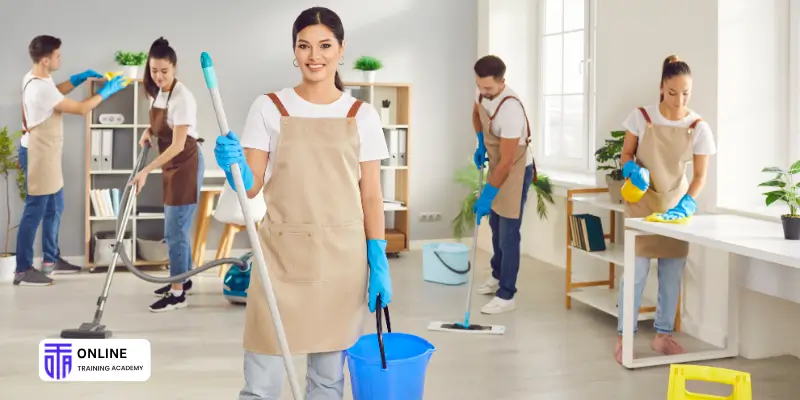
While technical cleaning abilities remain essential, advanced qualifications develop broader operational competencies that many employers actively seek for supervisory and management positions.
Risk Assessment and Hazard Identification
Every workplace presents different hazards. Healthcare facilities deal with infectious materials, manufacturing plants may involve chemicals or machinery, and office buildings require careful management of slips, trips, and electrical equipment.
Level 5 learners develop the ability to identify hazards before they become incidents.
This includes:
- Assessing workplace risks
- Implementing control measures
- Monitoring ongoing hazards
- Reviewing safety procedures regularly
These skills help organisations reduce workplace accidents while protecting employees, visitors, and property.
Infection Prevention Strategies
Modern cleaning relies on evidence-based infection prevention rather than assumptions.
Advanced training explores methods for reducing contamination risks through:
- Cleaning sequence planning
- Colour-coded equipment systems
- High-touch surface management
- Safe waste handling
- Appropriate disinfectant selection
- Correct dwell times for disinfectants
Understanding these principles is particularly valuable in healthcare, childcare, hospitality, and food service environments.
Commercial Cleaning Standards
Large organisations often operate according to detailed service agreements and quality standards.
Cleaning supervisors must understand how to:
- Maintain consistent service delivery
- Meet contractual cleaning specifications
- Complete inspection records
- Monitor performance indicators
- Respond to client feedback professionally
Meeting these expectations strengthens client relationships while protecting business reputation.
Sustainable Cleaning Practices
Environmental responsibility has become an important consideration for many employers.
Modern cleaning professionals increasingly support sustainability by:
- Reducing water consumption
- Selecting environmentally responsible cleaning products
- Minimising chemical waste
- Using reusable microfibre systems
- Maintaining equipment efficiently
- Supporting organisational sustainability goals
Employers appreciate staff who understand how environmentally responsible practices can improve efficiency while reducing operational costs.
Digital Reporting and Documentation
Technology now plays a central role in cleaning management.
Many organisations use digital systems to record inspections, schedule cleaning tasks, monitor inventory, and generate compliance reports.
Professionals with digital literacy can quickly adapt to:
- Electronic inspection checklists
- Maintenance reporting software
- Mobile workforce applications
- Inventory management systems
- Digital communication platforms
Accurate documentation improves accountability and helps organisations demonstrate compliance during audits.
Leadership Skills Employers Look for in Senior Cleaning Roles
As professionals move into supervisory positions, employers expect a broader range of management capabilities.
These include:
Supervising Cleaning Teams
Assigning duties based on workload, staff availability, and operational priorities while ensuring consistent service quality.
Training and Mentoring Employees
Supporting new staff through structured onboarding, demonstrating safe procedures, and encouraging continuous improvement.
Scheduling and Resource Allocation
Planning staffing levels, coordinating shift patterns, and ensuring equipment and supplies are available when needed.
Performance Monitoring
Conducting inspections, providing constructive feedback, recognising strong performance, and addressing quality concerns promptly.
Conflict Resolution
Managing workplace disagreements fairly while maintaining a respectful and productive working environment.
Client and Stakeholder Communication
Building positive relationships with clients, responding to service concerns professionally, and communicating operational updates clearly.
These leadership abilities often become the deciding factor when employers recruit for supervisory and management positions.
Common Skill Gaps That Hold Cleaning Professionals Back
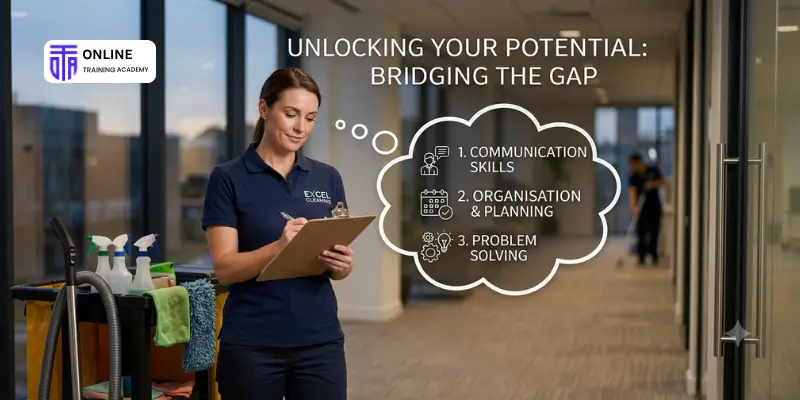
Many capable cleaners struggle to progress into senior positions because of skill gaps rather than a lack of experience.
Recognising these areas allows professionals to focus on continuous improvement.
Limited Communication Skills
Being technically capable is important, but supervisors also need to communicate clearly with clients, management, contractors, and team members.
Weak Time Management
Difficulty prioritising tasks or managing workloads can reduce productivity and affect service quality, particularly in larger facilities.
Inconsistent Attention to Detail
Even small oversights can affect inspections, customer satisfaction, and workplace hygiene standards.
Developing consistent habits is essential for long-term success.
Poor Safety Awareness
Ignoring workplace safety procedures increases the risk of injuries, property damage, and regulatory issues.
Employers value professionals who make safety part of every task.
Resistance to Learning
Cleaning technologies, environmental standards, and workplace regulations continue to evolve.
Professionals who embrace new methods often progress faster than those who rely solely on past experience.
Limited Leadership Experience
Many excellent cleaners hesitate to take on supervisory responsibilities because they lack confidence in leading others.
Leadership skills can be developed through training, mentoring, and practical workplace experience.
How to Continue Developing Your Cleaning Skills
Professional development doesn’t end after completing a qualification. The strongest cleaning professionals continue building their knowledge throughout their careers.
Consider the following strategies:
Gain Experience Across Different Industries
Working in healthcare, hospitality, commercial offices, education, or industrial facilities broadens your understanding of different cleaning requirements and regulations.
Stay Current with Industry Standards
Health and safety guidance, cleaning technologies, and sustainability practices continue to evolve. Regular learning helps ensure your knowledge remains relevant.
Strengthen Leadership Skills
Volunteer to mentor new staff, coordinate small teams, or assist supervisors with scheduling and inspections. Practical leadership experience builds confidence over time.
Learn New Technologies
Many organisations now use digital inspection systems, inventory software, mobile reporting applications, and automated cleaning equipment.
Developing digital skills improves efficiency and increases your value to employers.
Seek Ongoing Professional Development
Additional training in areas such as facilities management, workplace safety, infection prevention, or leadership can support long-term career progression.
Continuous learning demonstrates initiative and a commitment to maintaining high professional standards.
Conclusion
The cleaning industry demands far more than practical experience alone. Employers value professionals who combine technical expertise with leadership, safety awareness, compliance knowledge, and a commitment to high-quality standards.
A Level 5 Certificate in Cleaning helps develop these in-demand skills, preparing learners for supervisory, facilities management, and other senior roles while strengthening their career prospects.
By continuing to build your knowledge and staying current with industry best practices, you’ll be well positioned to meet employer expectations, support safer workplaces, and achieve long-term success in the cleaning industry.
FAQs
Employers typically look for technical cleaning knowledge, attention to detail, time management, communication, reliability, workplace safety awareness, infection prevention, teamwork, problem-solving, and leadership potential. A Level 5 Certificate in Cleaning helps develop these competencies in a structured way.
For individuals seeking supervisory or management roles, a Level 5 qualification can strengthen their knowledge, improve confidence, and demonstrate commitment to professional development. It may also make candidates more competitive when applying for senior cleaning positions.
Yes. While experience remains important, the qualification develops many of the skills employers expect from supervisors, including leadership, communication, quality assurance, risk management, and operational planning.
Qualified professionals work in healthcare, hospitality, education, commercial property management, government facilities, manufacturing, retail, transportation, and many other sectors where high cleaning standards are essential.
Entry requirements vary by training provider. Some programmes are suitable for experienced cleaners looking to advance, while others may also accept motivated learners with relevant workplace experience or transferable skills.
Completion times depend on the training provider, study format, and learning pace. Flexible online programmes often allow learners to study alongside work and personal commitments.
Learn More



Get a FREE Course
- Learn useful skills online free
- Get CPD accredited certificate
- Add it to your CV today!