
Introduction
The Growing Demand for Skilled Cleaning Professionals
Cleaning is no longer just about keeping buildings tidy. Across Canada, trained cleaning professionals help protect public health, maintain workplace safety, and ensure regulatory compliance. Employers now value individuals who understand risk assessments, chemical safety, infection prevention, and quality assurance, making advanced cleaning skills more important than ever.
Several factors are driving this demand:
- Increased workplace health and safety requirements
- Higher expectations for infection prevention and sanitation
- Stricter compliance and audit requirements
- Growth in commercial and healthcare facilities
- Greater focus on sustainable cleaning practices
- Rising demand for trained supervisors and managers
This shift has transformed cleaning into a career with genuine long-term growth, creating opportunities for professionals who are willing to build their expertise and take on leadership responsibilities.
How Cleaner Training Benefits Your Career
Experience remains valuable, but structured training often helps professionals progress much faster. A Level 5 Certificate in Cleaning develops the management, planning, and compliance skills that employers look for when filling supervisory and operational roles. Instead of focusing only on daily cleaning tasks, you’ll learn how to organize teams, improve quality standards, manage workplace risks, and support business objectives.
The knowledge gained through advanced training can help you become more confident when taking on additional responsibilities, whether you’re supervising colleagues, conducting inspections, or communicating with clients and senior management.
A Level 5 qualification can help you develop skills such as:
- Team leadership and staff supervision
- Operational planning and scheduling
- Quality inspections and performance monitoring
- Chemical safety and COSHH awareness
- Risk assessment and compliance management
- Customer service and client communication
- Budget awareness and resource management
- Workplace documentation and reporting
These capabilities not only make your day-to-day work more effective but also demonstrate that you’re prepared for positions with greater responsibility.
Career Advancement and Professional Development Opportunities in Cleaning
One of the biggest advantages of earning a Level 5 Certificate in Cleaning: Career Paths and Opportunities is that it opens doors beyond frontline cleaning roles. As organizations become more focused on compliance, efficiency, and service quality, they need professionals who can lead teams, manage operations, and implement best practices across multiple sites.
Rather than remaining in the same position for years, many certificate holders use their knowledge to pursue promotions into supervisory and management roles or even launch their own commercial cleaning businesses. The qualification provides a solid foundation for long-term career growth while helping professionals adapt to changing industry expectations.
Potential career progression may include:
- Cleaning Supervisor
- Housekeeping Supervisor
- Facilities Coordinator
- Environmental Services Supervisor
- Commercial Cleaning Manager
- Contract Manager
- Operations Manager
- Cleaning Business Owner
Regardless of where you are in your career today, continuing your education demonstrates initiative and a commitment to maintaining high professional standards—qualities that many employers actively seek when promoting staff.
Table of Contents
Level 5 Certificate in Cleaning
Level 5 Certificate in Cleaning teaches professional cleaning techniques, safe chemical handling, housekeeping, and effective cleaning of homes, kitchens, bathrooms, offices, and external areas using industry-standard equipment and practices.
What Is a Level 5 Certificate in Cleaning?
Understanding the Qualification
A Level 5 Certificate in Cleaning is an advanced qualification designed for individuals who want to move beyond routine cleaning duties and take on leadership responsibilities. Rather than concentrating solely on cleaning techniques, the programme explores how to manage people, maintain compliance, improve operational efficiency, and deliver consistent service across a range of commercial environments.
This qualification is suitable for experienced cleaners looking to advance their careers, supervisors who want to strengthen their management skills, and business owners aiming to improve service quality and operational standards.
Most Level 5 programmes cover topics such as:
- Advanced cleaning operations
- Leadership and team management
- Health and safety legislation
- COSHH and chemical safety
- Risk assessment procedures
- Quality assurance systems
- Environmental sustainability
- Workplace auditing and documentation
By combining technical knowledge with management principles, the qualification prepares learners for roles where strategic planning is just as important as practical cleaning expertise.
Core Curriculum Breakdown
A Level 5 Certificate in Cleaning goes beyond teaching practical cleaning techniques. It equips learners with the leadership, compliance, and operational skills needed to manage teams, maintain high standards, and improve workplace efficiency across a range of industries.
You’ll typically learn how to:
- Develop cleaning schedules for different facilities
- Conduct workplace risk assessments
- Interpret Safety Data Sheets (SDS)
- Apply COSHH principles when handling chemicals
- Carry out quality inspections and compliance audits
- Supervise and train cleaning teams
- Implement infection prevention procedures
- Reduce chemical waste and improve sustainability
- Maintain accurate documentation and inspection records
- Respond effectively to workplace incidents and customer concerns
By the end of the programme, you’ll have the knowledge to make informed decisions, improve cleaning operations, and help maintain safe, compliant, and efficient workplaces.
The HR & Hiring Manager Reality Check

Many people assume that earning a certificate automatically leads to a better job or higher salary, but hiring decisions are rarely that simple. A Level 5 Certificate in Cleaning can strengthen your professional profile, but employers also consider your experience, achievements, and ability to deliver measurable results.
From an HR perspective, certification demonstrates initiative and a commitment to professional development. For supervisory and management roles, however, hiring managers also look for evidence that you’ve successfully applied your skills by leading teams, improving operations, and maintaining compliance in the workplace.
What hiring managers typically look for
In addition to your qualification, employers may consider whether you have:
- Experience supervising cleaning staff
- Improved inspection or audit scores
- Reduced chemical or supply costs
- Maintained strong health and safety records
- Trained or mentored new employees
- Managed client relationships successfully
- Worked across multiple sites or departments
- Solved operational challenges efficiently
Where a Level 5 Certificate Carries the Most Value
A Level 5 qualification can be particularly valuable in situations where employers are looking for evidence of leadership potential and compliance knowledge.
It is commonly beneficial for:
- Applying for internal promotions
- Transitioning into supervisory roles
- Demonstrating knowledge during performance reviews
- Supporting applications for contract management positions
- Strengthening bids for commercial cleaning contracts
- Showing commitment to continuing professional development (CPD)
A qualification opens doors, but measurable workplace achievements help you walk through them. The strongest candidates combine advanced training with real-world results that demonstrate leadership, reliability, and operational excellence.
Core Career Paths After a Level 5 Certificate in Cleaning

Earning a Level 5 Certificate doesn’t limit you to one career path. Instead, it broadens your opportunities across leadership, operations, compliance, and specialist cleaning services. As organizations place greater emphasis on hygiene, safety, and quality assurance, professionals with advanced knowledge are increasingly trusted to oversee teams, improve standards, and manage complex cleaning operations.
Below are some of the most common and rewarding career paths available after completing this qualification.
1. Cleaning Supervisor
A Cleaning Supervisor is often the first step into leadership for experienced cleaning professionals. Instead of carrying out every cleaning task personally, supervisors coordinate daily operations, ensure quality standards are met, and support frontline staff throughout each shift.
They play a crucial role in keeping cleaning services organized while maintaining productivity, safety, and customer satisfaction.
Typical responsibilities include:
- Planning daily work schedules
- Allocating cleaning duties to team members
- Monitoring staff performance
- Inspecting completed work
- Ensuring health and safety procedures are followed
- Managing cleaning equipment and supply inventory
- Resolving customer concerns
- Preparing reports for management
Skills needed to succeed
Successful Cleaning Supervisors often possess:
- Strong communication skills
- Leadership and conflict-resolution abilities
- Time management
- Problem-solving skills
- Attention to detail
- Knowledge of cleaning regulations and safety standards
Career progression
Many professionals use this role as a stepping stone to positions such as:
- Senior Cleaning Supervisor
- Operations Supervisor
- Contract Manager
- Commercial Cleaning Manager
2. Housekeeping Supervisor
Housekeeping Supervisors ensure that hotels, resorts, serviced apartments, healthcare accommodation, and luxury residential properties consistently meet high cleanliness and presentation standards. Their responsibilities extend beyond cleanliness alone—they help protect the reputation of the organization by ensuring every room and public area meets guest expectations.
This role combines operational planning with people management, requiring professionals to balance quality, efficiency, and customer satisfaction every day.
Daily responsibilities may include:
- Coordinating housekeeping staff
- Inspecting guest rooms and public spaces
- Managing linen and inventory supplies
- Scheduling daily workloads
- Training new employees
- Responding to guest requests and service issues
- Monitoring cleaning quality standards
- Reporting maintenance concerns
Where Housekeeping Supervisors work
Employment opportunities can be found in:
- Hotels
- Resorts
- Conference centres
- Retirement communities
- Luxury residential buildings
- Student accommodation
- Healthcare facilities
Professionals who consistently deliver high service standards often progress into Executive Housekeeper, Accommodation Manager, or Hospitality Operations Manager roles.
3. Facilities Coordinator
Unlike traditional cleaning positions, a Facilities Coordinator oversees how cleaning operations fit into the wider management of a building or organization. They work closely with maintenance teams, contractors, security personnel, and senior management to ensure facilities remain safe, functional, and well maintained.
Cleaning knowledge becomes a valuable asset because hygiene directly affects workplace safety, employee wellbeing, and regulatory compliance.
Key responsibilities include:
- Coordinating cleaning and maintenance schedules
- Managing contractor relationships
- Monitoring workplace safety requirements
- Supporting compliance inspections
- Tracking maintenance requests
- Managing service documentation
- Assisting with operational budgets
- Ensuring facilities remain ready for daily operations
Why this role is appealing
Facilities Coordinators develop experience in several business functions rather than cleaning alone. This broader exposure creates opportunities to move into facilities management, property management, or operations leadership positions across many industries.
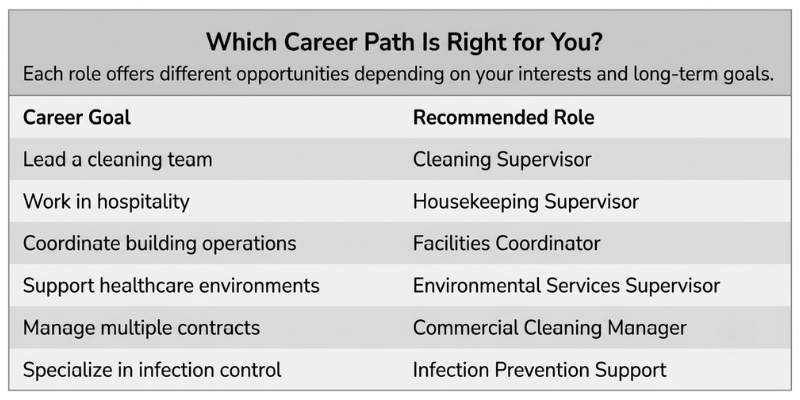
A Level 5 Certificate in Cleaning prepares you for much more than frontline cleaning work. As you build leadership, compliance, and operational management skills, you become eligible for positions that involve supervising teams, maintaining quality standards, and improving workplace efficiency. Whether you prefer managing people, coordinating facilities, or specializing in infection prevention, there are several rewarding career paths to explore.
4. Cleaning Supervisor
Cleaning Supervisors oversee day-to-day cleaning operations and ensure teams consistently meet quality and safety standards. They coordinate staff, inspect completed work, and act as the main point of contact between cleaners and management.
Typical responsibilities include:
- Assigning daily cleaning tasks
- Supervising frontline staff
- Performing quality inspections
- Monitoring stock and equipment
- Handling customer concerns
- Supporting staff training
Career progression: Senior Cleaning Supervisor, Operations Supervisor, Commercial Cleaning Manager.
5. Housekeeping Supervisor
Housekeeping Supervisors manage cleanliness across hotels, resorts, residential facilities, and healthcare accommodation. Their goal is to maintain high presentation standards while ensuring efficient staff scheduling and excellent customer experiences.
Key responsibilities:
- Inspect guest rooms and public areas
- Coordinate housekeeping schedules
- Manage linen and cleaning supplies
- Train new team members
- Address service quality issues
Career progression: Executive Housekeeper, Accommodation Manager, Hospitality Operations Manager.
6. Facilities Coordinator
Facilities Coordinators ensure buildings remain clean, safe, and operational by coordinating cleaning services with maintenance, security, and building management teams. This role suits professionals who enjoy planning and organization.
Typical duties include:
- Coordinating cleaning schedules
- Monitoring workplace safety
- Managing contractor relationships
- Tracking maintenance requests
- Maintaining compliance records
Career progression: Facilities Manager, Property Manager, Operations Manager.
7. Environmental Services Supervisor
Environmental Services Supervisors commonly work in hospitals, care homes, and other high-risk environments where infection prevention is essential. They oversee sanitation procedures, monitor compliance, and help maintain safe facilities.
Core responsibilities:
- Supervise environmental services staff
- Conduct sanitation inspections
- Support infection prevention initiatives
- Manage waste disposal procedures
- Maintain audit documentation
Career progression: Environmental Services Manager, Healthcare Facilities Manager, Infection Prevention Coordinator.
8. Commercial Cleaning Manager
Commercial Cleaning Managers oversee multiple contracts, clients, and cleaning teams. They focus on operational performance, budgeting, customer satisfaction, and long-term business growth.
Responsibilities include:
- Managing multi-site contracts
- Preparing budgets
- Recruiting and supervising staff
- Maintaining client relationships
- Monitoring contract performance
Career progression: Regional Operations Manager, Contract Director, Business Owner.
9. Infection Prevention Support Roles
Professionals in infection prevention support help organizations reduce contamination risks by implementing effective sanitation practices and monitoring compliance with established hygiene standards. These roles are particularly important in healthcare, laboratories, and pharmaceutical environments.
Common responsibilities:
- Monitoring hygiene procedures
- Supporting infection control audits
- Reviewing sanitation documentation
- Educating staff on best practices
- Assisting during outbreak responses
Common employers include:
- Hospitals
- Long-term care homes
- Medical laboratories
- Pharmaceutical manufacturers
- Public health organizations
High-Margin Specialized Niche Verticals
One advantage of earning a Level 5 Certificate in Cleaning is the opportunity to move into specialist sectors where technical expertise and compliance knowledge are highly valued. These roles often require additional training and experience, but they can offer stronger career progression and higher earning potential.
Explore Specialist Opportunities
➽ Data Center & Server Room Decontamination: Protect sensitive IT equipment using anti-static (ESD) cleaning methods and particulate control.
➽ Pharmaceutical & Cleanroom Hygiene: Maintain contamination-free environments while following strict cleaning protocols and regulatory standards.
➽ Biohazard, Forensic & Post-Construction Cleaning: Manage high-risk cleaning projects involving hazardous materials, site clearance, and detailed safety procedures.
Specializing in one of these fields can help you stand out in a competitive job market and open doors to premium contracts or leadership roles.
Industries That Hire Qualified Cleaning Professionals
A Level 5 qualification can prepare you for opportunities across a wide range of industries where cleanliness, compliance, and operational efficiency are essential.
Common employers include:
➽ Corporate Offices: Managing high-traffic workplaces and shared spaces.
➽ Healthcare Facilities & Care Homes: Supporting infection prevention and sanitation standards.
➽ Schools, Colleges & Universities: Maintaining safe and healthy learning environments.
➽ Hotels & Hospitality: Delivering consistent cleanliness that enhances the guest experience.
➽ Industrial & Manufacturing Facilities: Supporting workplace safety and production standards.
➽ Government & Public Buildings: Ensuring compliance with public health and safety requirements.
The broad demand for qualified professionals means your skills can be applied across multiple sectors, giving you flexibility as your career evolves.
Business Opportunities: Winning B2B Tenders
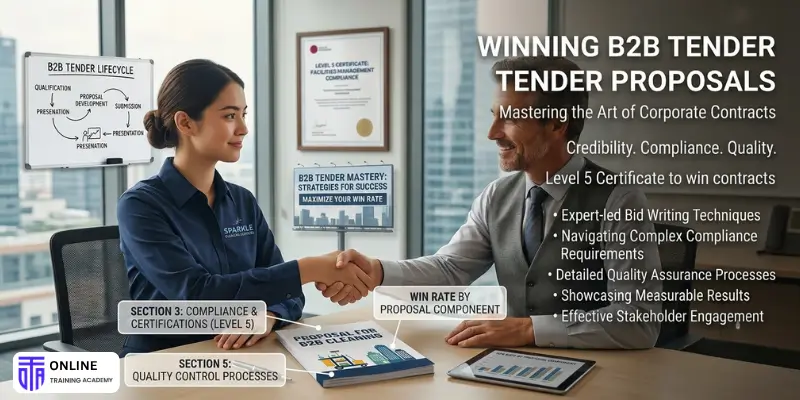
If your goal is to run your own cleaning business, a Level 5 Certificate can strengthen your credibility when approaching commercial clients. Many organizations prefer working with contractors who understand compliance, risk management, and quality assurance—not just cleaning techniques.
To improve your chances of winning contracts:
➽ Demonstrate your knowledge of health and safety procedures.
➽ Include clear quality control processes in your proposals.
➽ Highlight staff training and compliance practices.
➽ Showcase measurable results from previous projects.
➽ Explain how your services help clients reduce risks and maintain high standards.
While certification alone won’t guarantee contracts, combining it with experience and a well-prepared proposal can help your business stand out during competitive tender processes.
Salary Expectations in Canada
Salaries vary depending on your experience, location, employer, and industry. Professionals who combine technical expertise with leadership skills generally earn more than those in entry-level positions.
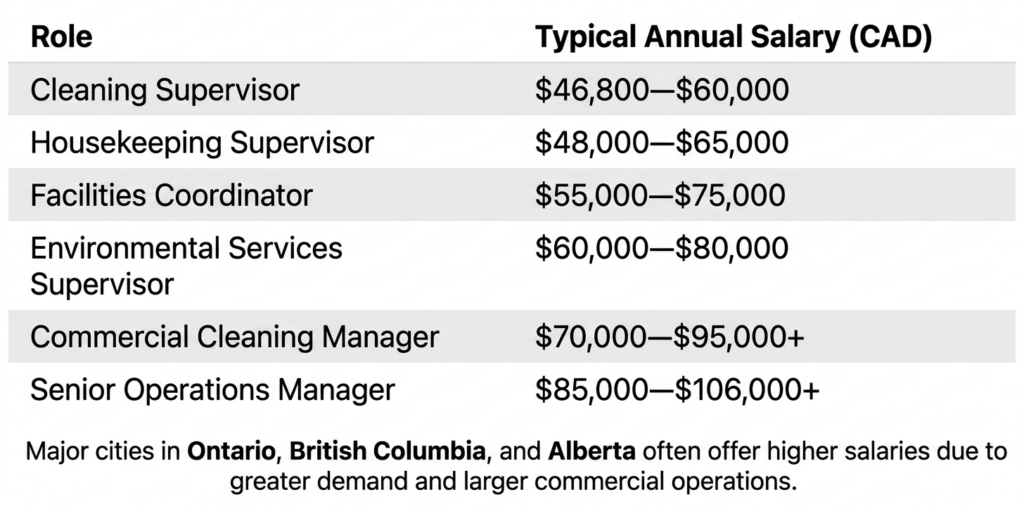
Major cities in Ontario, British Columbia, and Alberta often offer higher salaries due to greater demand and larger commercial operations.
Conclusion
The cleaning industry has evolved into a profession driven by leadership, compliance, and technical expertise. A Level 5 Certificate in Cleaning: Career Paths and Opportunities can help you build the knowledge needed to progress into supervisory, management, or specialist roles with greater responsibility and earning potential.
Whether you’re pursuing a promotion, entering a specialist sector, or growing your own cleaning business, your success depends on pairing your qualification with practical experience and measurable results. Together, they strengthen your credibility and create more career opportunities.
Ready to take the next step?
Explore our Level 5 Certificate in Cleaning course to build in-demand skills, study at your own pace, and gain the confidence to advance your career. Start your learning journey today and invest in a future with greater opportunities.
FAQs
Yes. It can help you develop leadership, compliance, and operational management skills that support career progression into supervisory and management positions.
Common roles include Cleaning Supervisor, Housekeeping Supervisor, Facilities Coordinator, Environmental Services Supervisor, Commercial Cleaning Manager, and Infection Prevention Support positions.
Yes. The knowledge gained in areas such as risk management, quality assurance, and operational planning can help you manage commercial clients and strengthen business proposals.
Experienced Commercial Cleaning Managers can earn approximately $70,000 to $95,000+ CAD annually, with senior operations roles exceeding $100,000 CAD depending on the organization and location.
Continue building practical experience, pursue additional industry-specific training if needed, and apply your knowledge by taking on leadership responsibilities, improving workplace processes, and documenting measurable achievements for future career advancement.
Learn More




Get a FREE Course
- Learn useful skills online free
- Get CPD accredited certificate
- Add it to your CV today!