

The Pattern Behind Every Preventable Fire
Fire investigations rarely uncover something unpredictable. The same sequence appears again and again. A minor fault goes unnoticed. A small risk is accepted. A routine task becomes slightly unsafe. Over time, these small decisions align—and the result is a fire that feels sudden, but was building long before it was visible.
This is where most fire safety content fails. It focuses on what to do during a fire, not what allows a fire to exist in the first place.
Fire safety is not reactive. It is a structured discipline built on risk control, system design, and human behaviour management. When done properly, it prevents ignition, limits growth, and creates controlled outcomes even under pressure.
Understanding fire safety at a deeper level is not optional for organisations or individuals. It is a requirement for survival, compliance, and operational continuity.
What Is Fire Safety?
Fire safety is the systematic control of fire risk through prevention, detection, containment, suppression, and safe evacuation, supported by human awareness and legal compliance.
This definition matters because it moves beyond basic ideas. Fire safety is not a checklist. It is a multi-layered control system, similar to risk management in finance or cybersecurity.
It operates across five integrated layers:
Prevention (Eliminating Ignition Sources)
This layer focuses on removing or controlling conditions that allow fire to start. It includes electrical safety, safe storage of flammable substances, and control of heat sources.
Detection (Identifying Fire Early)
Detection systems such as smoke and heat detectors identify fire at its earliest stage—often before visible flames appear.
Alert (Communicating Risk Immediately)
Alarm systems notify occupants instantly. Communication is critical because delayed awareness is one of the leading causes of fatalities.
Control and Suppression (Limiting Fire Growth)
Sprinklers, extinguishers, and suppression systems reduce fire intensity and prevent spread.
Evacuation and Life Safety (Protecting People)
Clear escape routes, emergency lighting, and signage guide occupants safely out of danger.
A failure in any one layer weakens the entire system. Effective fire safety depends on all layers working together.
Introduction to Fire Safety: Rules, Risks, and Real-World Protection
"This guide introduces the fundamentals of fire safety, including common fire risks, essential safety rules, and effective prevention measures. It explains how to identify hazards, respond to emergencies, and protect people, property, and workplaces from fire-related incidents through proper planning and safety practices.
"
Table of Contents
What Are the Basic Rules for Fire Safety?
Basic fire safety rules are often presented as simple instructions. In reality, they are grounded in how fire behaves and spreads.
Control Ignition Sources at the Root Level
Every fire requires an ignition source. Electrical faults, friction, open flames, and overheating equipment are common triggers.
Control measures include:
- Regular inspection of wiring and equipment
- Avoiding overloaded circuits
- Using certified appliances
- Monitoring heat-generating devices
The key principle is this: If ignition is controlled, fire cannot begin.
Manage Fuel Sources and Fire Load
Fire needs fuel. This includes both obvious and hidden materials such as paper, textiles, chemicals, and gases.
In professional fire safety, this is referred to as fire load—the total amount of combustible material in a space.
Reducing fire load involves:
- Proper storage of flammable materials
- Segregation of hazardous substances
- Minimising unnecessary combustible items
Higher fire load leads to faster spread and higher temperatures.
Maintain Oxygen Control Where Possible
Fire requires oxygen. While it is not always possible to control oxygen in open environments, certain systems (such as gas suppression systems) are designed to reduce oxygen levels in controlled spaces like server rooms.
Understanding the fire triangle (heat, fuel, oxygen) is fundamental to fire safety strategy.
Ensure Early Detection and Immediate Response
Detection systems must be active, tested, and correctly placed. The earlier a fire is detected, the more controllable it remains.
Immediate response includes:
- Activating alarms
- Initiating evacuation
- Using extinguishers where safe
Delays at this stage significantly increase risk.
Protect and Maintain Escape Routes
Escape routes are often compromised not by fire, but by poor management.
Common failures include:
- Blocked exits
- Locked emergency doors
- Poor signage
Escape routes must remain clear, accessible, and well-lit at all times.
What Are the Different Stages of a Fire?
Fire development follows a predictable progression. Understanding these stages allows for targeted intervention.
Stage 1 – Incipient (Ignition Phase)
This is the earliest stage. The fire is small and may not produce visible flames. Heat and smoke begin to develop at a low level.
At this stage:
- Fire can often be extinguished easily
- Detection systems are most effective
- Human intervention is still possible
Stage 2 – Growth Phase
The fire begins to spread as heat increases and nearby materials ignite. Oxygen supply plays a major role in accelerating this stage.
Key characteristics:
- Rapid increase in temperature
- Thick smoke production
- Reduced visibility
Flashover—a critical transition where all combustible materials ignite simultaneously—can occur during this phase.
Stage 3 – Fully Developed Fire
The fire reaches maximum intensity. All available fuel is burning, and temperatures are extremely high.
At this stage:
- Structural integrity is compromised
- Firefighting becomes complex
- Survival inside the environment is unlikely
Stage 4 – Decay Phase
The fire begins to decline due to reduced fuel or oxygen. However, this stage remains dangerous due to toxic gases and risk of re-ignition.
Understanding these stages allows organisations to design systems that intervene early, rather than reacting too late.
Fire Hazards to Look Out For
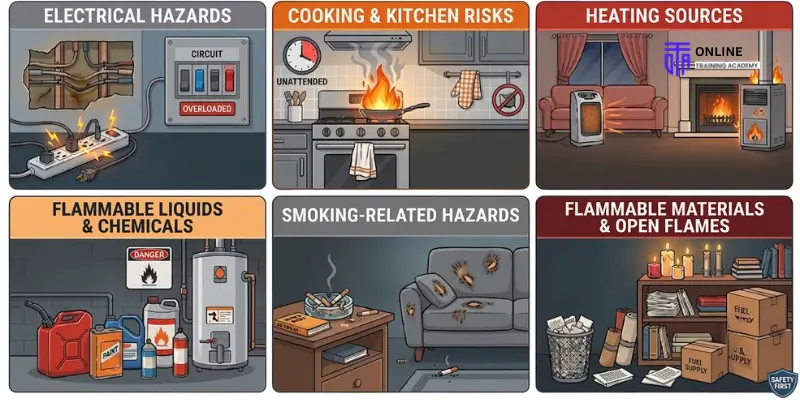
Recognising hazards is the foundation of prevention. Fire hazards are conditions that increase the likelihood of ignition or accelerate fire spread.
Electrical Hazards
Electrical systems are one of the leading causes of fire incidents.
Key risks include:
- Faulty or outdated wiring
- Overloaded circuits
- Damaged insulation
- Poor maintenance of equipment
Preventive control requires regular inspection and compliance with electrical standards.
Cooking-Related Hazards
Cooking environments, especially kitchens, present high fire risk.
Common issues:
- Grease accumulation
- Unattended cooking
- Improper use of appliances
Grease fires are particularly dangerous because they spread rapidly and cannot be extinguished with water.
Heating Sources
Improper use of heating devices can lead to ignition.
Examples include:
- Portable heaters placed near flammable materials
- Overheating equipment
- Poor ventilation
Safe usage requires proper placement and monitoring.
Flammable Liquids and Chemicals
Substances such as gasoline, solvents, and paint thinners ignite easily and burn intensely.
Risks increase when:
- Stored improperly
- Used in confined spaces
- Exposed to heat sources
Smoking-Related Hazards
Careless disposal of cigarettes remains a common cause of fire, especially in residential settings.
Open Flames
Candles, incense, and decorative flames can ignite nearby materials if left unattended.
Flammable Materials
Paper, cardboard, textiles, and gases contribute to fire spread.
The key concept here is fuel availability—the more fuel present, the faster the fire grows.
Fire Safety Strategies: From Reactive Measures to Risk Management Systems
Effective fire safety requires structured strategies, not isolated actions.
Risk Assessment as a Continuous Process
Fire risk assessment involves identifying hazards, evaluating risks, and implementing controls.
It must be:
- Regularly updated
- Context-specific
- Documented and reviewed
Layered Safety Systems
Fire safety systems should not rely on a single layer. Multiple layers provide redundancy.
Example:
- Detection system alerts
- Alarm system communicates
- Suppression system controls
- Evacuation system protects
If one layer fails, others compensate.
Training and Behavioural Readiness
Human response determines outcomes. Training reduces panic and improves coordination.
Effective programs include:
- Fire drills
- Equipment usage training
- Scenario-based exercises
Emergency Planning and Response Design
Emergency plans must be clear, practical, and tested.
They should include:
- Evacuation routes
- Assembly points
- Roles and responsibilities
Who Is Responsible for Fire Safety?
Employers and Organisations
They are legally required to:
- Conduct risk assessments
- Install safety systems
- Provide training
Building Owners and Managers
They must ensure:
- Structural fire protection
- System maintenance
- Compliance with regulations
Individuals and Occupants
Every person plays a role by:
- Following safety procedures
- Reporting hazards
- Responding correctly during emergencies
What Is Required for Effective Fire Safety?
Effective fire safety is not achieved by installing a few devices. It is built through a system of controls, behaviours, and continuous verification. Each component must not only exist but also function under real conditions—stress, smoke, confusion, and time pressure.
The difference between a compliant environment and a truly safe one lies in how these elements are designed, tested, and integrated.
Functional Detection and Alarm Systems
Detection systems are the first active barrier against fire escalation. Their purpose is not simply to exist but to identify fire at the earliest possible stage and trigger an immediate response.
A high-quality system considers:
- Detector type selection based on environment (smoke, heat, or multi-sensor detectors)
- Correct placement and coverage, ensuring no blind spots
- System integration, where detection automatically triggers alarms and suppression systems
Reliability depends on:
- Routine testing (weekly or monthly checks depending on environment)
- Calibration to avoid false alarms or delayed activation
- Backup power systems to ensure operation during outages
A poorly maintained detection system creates a false sense of security. In practice, early detection is the single most important factor in reducing fatalities.
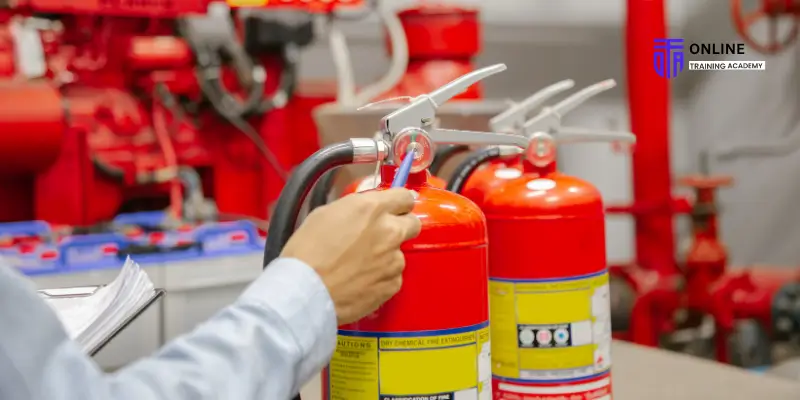
Accessible Firefighting Equipment
Firefighting equipment is designed to control incidents during the early stages, when intervention is still possible.
However, availability alone is not enough. Effectiveness depends on:
- Correct type selection (water, foam, CO₂, dry powder) based on fire class
- Strategic placement, ensuring equipment is within reach in high-risk areas
- Ease of access, with no obstructions or locked storage
Maintenance requirements include:
- Regular inspection for pressure, damage, and expiry
- Clear labelling and instructions
- Compliance with inspection schedules
A critical gap often overlooked is usability. Equipment must be:
- Simple enough to operate under stress
- Supported by training so users can act without hesitation
Without proper training, equipment becomes symbolic rather than functional.
Clear Evacuation Infrastructure
Evacuation systems are designed for one outcome: safe and rapid exit under compromised conditions.
This requires:
- Clearly marked escape routes that remain unobstructed at all times
- Emergency lighting that functions during power failure
- Exit signage visible even in smoke-filled environments
Advanced environments include:
- Zoned evacuation strategies, where different areas evacuate in sequence
- Refuge areas for individuals unable to evacuate immediately
- Wayfinding systems that reduce confusion and decision-making time
The key principle is predictability. During emergencies, people do not think clearly. Evacuation systems must remove the need for decision-making and guide movement automatically.
Regular Maintenance and Inspection
Fire safety systems degrade over time. Dust affects detectors. Batteries fail. Mechanical components wear out.
Maintenance is not optional—it is the process that ensures systems work when needed.
An effective maintenance framework includes:
- Scheduled inspections based on regulatory standards
- Documentation and record-keeping for accountability
- Third-party audits to verify compliance and performance
Common failures in real environments include:
- Disabled alarms due to nuisance triggers
- Expired extinguishers
- Blocked sprinkler heads
These failures are rarely technical. They are management failures.
Consistent maintenance transforms fire safety from a one-time installation into a reliable operational system.
Continuous Training and Awareness
Even the most advanced systems depend on human response. Training ensures that people:
- Recognise alarms instantly
- Understand evacuation procedures
- Use firefighting equipment correctly
Effective training goes beyond theory. It includes:
- Practical drills under realistic conditions
- Scenario-based learning to simulate decision-making under pressure
- Role-based training for designated fire wardens or safety officers
Awareness must also address behaviour:
- Reporting hazards early
- Avoiding unsafe practices
- Maintaining clear exits and safe environments
A critical insight is this:
Most fire safety failures occur not because systems are absent, but because people do not respond correctly.
Integrated Fire Safety Management
The elements above must not operate in isolation. True fire safety requires integration into a management system.
This includes:
- Clear assignment of responsibility
- Defined emergency procedures
- Alignment with legal and regulatory requirements
- Continuous improvement through review and feedback
Organisations that treat fire safety as a compliance task often meet minimum standards but fail under real conditions.
Organisations that treat it as a risk management discipline create environments where fire incidents are controlled, contained, or prevented entirely.
Fire Safety Is the Control of the Inevitable
Fire is not unpredictable. It follows rules—heat, fuel, oxygen, and progression through stages.
What makes the difference is control.
Fire safety is the discipline of controlling those variables before they align. It is not about reacting faster. It is about ensuring that when risk appears, it remains small, contained, and manageable.
Every fire that becomes catastrophic once started as something minor.
The real advantage lies in recognising that moment early—
and ensuring it never becomes something more.
You have not enough Humanizer words left. Upgrade your Surfer plan.
FAQs
Protecting life through early detection and safe evacuation.
It helps in identifying when intervention is possible and when evacuation is necessary.
The total amount of combustible material in a space, which influences fire intensity.
Regularly, and whenever there are changes in environment or operations.
Ignoring small risks until they combine into a larger problem.
No. Systems require informed human response to be effective.
Learn More





Get a FREE Course
- Learn useful skills online free
- Get CPD accredited certificate
- Add it to your CV today!