



Safeguarding is only effective when concerns are recognised early and reported promptly. In many cases of abuse, neglect, exploitation, or violence, warning signs were present long before the situation became critical. Unfortunately, these signs may have been overlooked, misunderstood, or never reported. Early intervention can make a significant difference in protecting vulnerable individuals and preventing further harm.
In Canada, safeguarding is not only an ethical responsibility but, in many situations, a legal obligation. Professionals working in healthcare, education, childcare, social services, long-term care, and community organisations are expected to recognise potential safeguarding concerns and respond appropriately. Members of the public also play an important role in helping to protect children, older adults, and vulnerable individuals within their communities.
Understanding how to identify safeguarding concerns and follow the correct reporting procedures helps ensure that individuals receive timely support while enabling organisations and authorities to take appropriate action.
This guide explains what safeguarding concerns are, the different types of abuse that may require intervention, how to recognise warning signs, and the step-by-step process for reporting concerns in Canada.
What Are Safeguarding Concerns?
A safeguarding concern exists when there is a reasonable belief, suspicion, disclosure, or evidence that a child, vulnerable adult, patient, or other individual may be experiencing abuse, neglect, exploitation, violence, or is at risk of harm.
One of the most important principles of safeguarding is that you do not need proof before reporting a concern. Safeguarding focuses on preventing harm, which means concerns should be raised whenever there is reasonable cause to believe someone may be at risk.
Safeguarding concerns may involve:
- Physical abuse
- Emotional or psychological abuse
- Sexual abuse or exploitation
- Financial abuse
- Neglect
- Domestic or family violence
- Human trafficking
- Online exploitation and cyber abuse
- Self-neglect in vulnerable adults
- Unsafe living or care environments
Safeguarding also includes situations where an individual’s wellbeing may be compromised due to illness, disability, dependency, or inability to protect themselves.
Recognising concerns early allows trained professionals to assess the situation and determine what support or intervention may be required.
Safeguarding, Abuse and Mental Health Awareness
Develop a clear understanding of safeguarding, abuse awareness, and mental health principles with this online course. Learn how to recognise different forms of abuse, understand safeguarding responsibilities, identify potential concerns, and promote wellbeing through practical, structured learning.
Table of Contents
Types of Safeguarding Issues in Canada
Safeguarding encompasses many different forms of abuse and neglect. Understanding these categories helps professionals and members of the public recognise concerns before harm escalates.
Physical Abuse
Physical abuse involves intentionally causing bodily harm through actions such as hitting, pushing, burning, shaking, inappropriate restraint, or misuse of medication.
Emotional or Psychological Abuse
This includes verbal abuse, intimidation, threats, humiliation, manipulation, coercive control, bullying, social isolation, and behaviours that damage an individual’s confidence or emotional wellbeing.
Neglect
Neglect occurs when a person’s essential needs are consistently not met. This may include inadequate food, shelter, hygiene, supervision, healthcare, emotional support, or protection from danger.
Sexual Abuse
Sexual abuse includes any non-consensual sexual activity, exploitation, harassment, inappropriate touching, online grooming, or exposure to sexual material without consent.
Financial Abuse
Often affecting older adults or individuals with disabilities, financial abuse may involve theft, fraud, coercion, misuse of bank accounts, identity theft, or improper use of someone else’s assets or benefits.
Digital and Online Abuse
Modern safeguarding increasingly addresses cyberbullying, online grooming, image-based abuse, financial scams, identity theft, and exploitation through digital platforms.
Domestic and Family Violence
Safeguarding also includes protecting individuals experiencing violence or coercive control within family relationships or intimate partnerships.
Understanding these different forms of abuse enables earlier intervention and helps ensure individuals receive appropriate protection and support.
Recognising the Signs of Abuse or Neglect
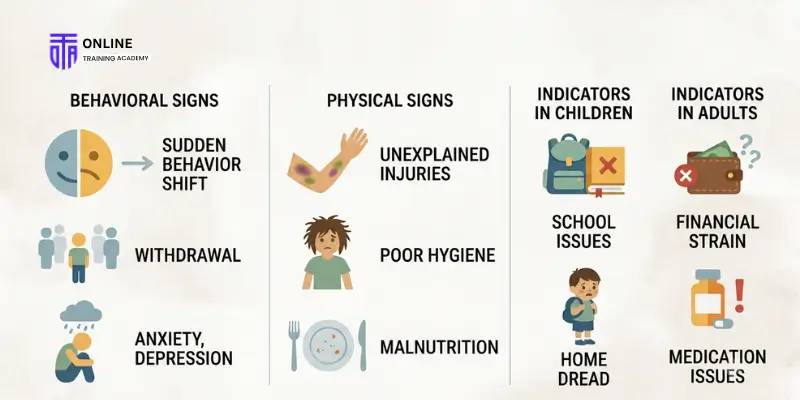
Identifying safeguarding concerns can be challenging because abuse often occurs behind closed doors. Victims may be frightened, dependent on the person causing harm, or unable to communicate what they are experiencing.
Although every situation is different, common warning signs include:
Behavioural Signs
- Sudden changes in personality or behaviour
- Withdrawal from family, friends, or activities
- Anxiety, fearfulness, or depression
- Aggressive or unusually quiet behaviour
- Fear of particular individuals or environments
- Reluctance to return home or receive care
Physical Signs
- Unexplained bruises, burns, cuts, or fractures
- Frequent injuries with inconsistent explanations
- Poor hygiene or inappropriate clothing
- Malnutrition or dehydration
- Untreated medical conditions
- Signs of physical restraint
Indicators in Children
Children experiencing abuse may demonstrate:
- Declining school attendance or academic performance
- Developmental regression
- Frequent absences
- Extreme compliance or aggression
- Poor personal hygiene
- Fear of going home
Indicators in Older Adults or Vulnerable Adults
Potential safeguarding concerns may include:
- Unexplained financial problems
- Missing possessions
- Sudden confusion or withdrawal
- Fear of caregivers
- Poor living conditions
- Lack of essential medication or medical care
Recognising these signs does not necessarily confirm abuse, but they should always be taken seriously and reported through the appropriate safeguarding procedures.
When Should Safeguarding Concerns Be Reported?
Safeguarding concerns should be reported as soon as possible whenever there is reason to believe someone may be at risk.
You should never wait for absolute proof before reporting concerns.
Immediate reporting is particularly important when:
- Someone is in immediate danger.
- A child may be experiencing abuse or neglect.
- A vulnerable adult cannot protect themselves.
- There is ongoing violence or exploitation.
- Serious injuries or medical emergencies are involved.
Even concerns that appear minor should be documented and reported appropriately. Multiple small concerns reported over time may reveal patterns that require intervention.
Prompt reporting allows professionals to assess risks early and provide appropriate support before harm becomes more serious.
How to Report Safeguarding Concerns in Canada (Step-by-Step Process)
Although reporting procedures vary slightly between provinces and organisations, safeguarding generally follows a structured process.
Step 1: Recognise the Concern
Pay attention to behavioural changes, disclosures, physical injuries, environmental concerns, or other indicators suggesting abuse, neglect, or exploitation.
Do not ignore your concerns simply because you are uncertain.
Step 2: Record Your Observations
Document exactly what you observed or what the individual disclosed.
Records should include:
- Dates and times
- Factual observations
- Exact words used where possible
- Visible injuries or behaviours
- Any immediate actions taken
Avoid assumptions, personal opinions, or speculation.

Step 3: Report the Concern Internally
Follow your organisation’s safeguarding policy by reporting concerns to the appropriate supervisor, manager, safeguarding lead, or designated child protection representative.
Healthcare organisations, schools, childcare providers, and community agencies all have established reporting procedures.
Step 4: Contact External Authorities if Required
Some safeguarding concerns require immediate reporting to external agencies, such as:
- Provincial or territorial child protection services
- Adult protection services (where applicable)
- Police
- Emergency medical services
Many provinces legally require professionals—and in some cases, members of the public—to report suspected child abuse without delay.
Step 5: Cooperate with the Investigation
Following a report, you may be asked to provide additional information while maintaining confidentiality and continuing to support the individual appropriately.
Safeguarding professionals determine the next steps based on the level of identified risk.
What Happens After a Safeguarding Report Is Made?
After a safeguarding concern is reported, trained professionals assess the available information to determine the seriousness of the situation.
Depending on the circumstances, this assessment may involve:
- Interviewing the individual involved
- Gathering information from healthcare providers, educators, social workers, or caregivers
- Reviewing medical or educational records where appropriate
- Conducting home visits or welfare checks
- Assessing immediate safety risks
Where concerns involve significant harm, a multi-agency response may be initiated.
This means organisations such as:
- Healthcare providers
- Child protection agencies
- Social services
- Police
- Schools
- Community organisations
work together to coordinate appropriate protection and support.
Possible outcomes include:
- Ongoing monitoring
- Family support services
- Counselling or mental health services
- Healthcare interventions
- Temporary protective measures
- Criminal investigations where offences are suspected
The primary goal is always to protect the individual’s safety while providing appropriate long-term support.
Can Safeguarding Information Be Shared?
Yes.
Safeguarding information may be shared when necessary to protect an individual from abuse, neglect, or serious harm.
Although confidentiality and privacy are important, Canadian privacy legislation recognises that protecting someone’s safety may require information sharing between authorised professionals.
Information may be shared with:
- Healthcare providers
- Child protection services
- Adult protection agencies
- Police
- Social workers
- Educational professionals
Only relevant information should be shared, and organisations must follow applicable privacy legislation and internal safeguarding policies.
The purpose of information sharing is always to improve protection—not to unnecessarily disclose personal information.
Barriers to Reporting Safeguarding Concerns

Despite clear safeguarding procedures, concerns sometimes go unreported.
Common barriers include:
- Fear of making the wrong decision
- Uncertainty about whether abuse has actually occurred
- Lack of safeguarding training
- Fear of damaging professional relationships
- Misunderstanding confidentiality requirements
- Belief that someone else will report the concern
- Concern about potential legal consequences
This last issue is often referred to as the bystander effect, where individuals assume another person will take responsibility.
Effective safeguarding depends on overcoming these barriers through education, organisational support, clear reporting procedures, and a workplace culture that encourages staff to raise concerns without fear of criticism.
Remember, safeguarding professionals are responsible for investigating concerns—not the person making the report. Reporting a genuine concern in good faith is always preferable to remaining silent when someone’s safety may be at risk.
Why Reporting Safeguarding Concerns Matters in Canada
Reporting safeguarding concerns is one of the most important actions anyone can take when they believe a child, older adult, or vulnerable person may be at risk of abuse, neglect, exploitation, or harm. In Canada, safeguarding is built on the principle of early intervention. Many cases of abuse do not occur suddenly they develop gradually over time, with warning signs often appearing long before the situation becomes critical. Reporting these concerns promptly allows professionals to assess the risk and provide support before harm escalates.
One of the primary reasons reporting is so important is prevention. Safeguarding is not only about responding after abuse has occurred but also about preventing harm whenever possible. Early reporting enables healthcare providers, child protection services, social workers, community agencies, and law enforcement to intervene quickly. Depending on the situation, this may involve connecting families with support services, arranging medical or mental health care, developing safety plans, or taking protective action when someone is in immediate danger.
Reporting is also essential because abuse is often hidden and ongoing. Many victims are unable or unwilling to speak out due to fear, shame, dependence on the abuser, communication difficulties, or concerns about the consequences of reporting. Children, older adults, and individuals with disabilities may be particularly vulnerable. As a result, professionals, caregivers, volunteers, and members of the public all play a crucial role in recognising warning signs and raising concerns when something does not seem right.
Another important reason for reporting is that it helps identify patterns of abuse or neglect. A single concern may not appear serious on its own, but when combined with information reported by teachers, healthcare professionals, social workers, family members, or community organisations, it may reveal a much larger safeguarding issue. Early reporting helps agencies work together to recognise repeated incidents of neglect, family violence, financial exploitation, online abuse, or other forms of ongoing harm.
Reporting safeguarding concerns also strengthens Canada’s broader protection system. When individuals act responsibly and report concerns, organisations are better able to investigate risks, improve safeguarding practices, and create safer environments for children, patients, older adults, and vulnerable members of the community. This collaborative approach helps build public trust in healthcare, education, social services, and community support systems.
Ultimately, safeguarding is most effective when people act on genuine concerns rather than waiting for certainty. You do not need proof that abuse has occurred before reporting a concern. Safeguarding professionals are responsible for assessing the information and determining the appropriate course of action. Reporting is not about making accusations—it is about helping protect someone’s safety, wellbeing, and rights.
Conclusion
Identifying and reporting safeguarding concerns is one of the most important ways to protect children, older adults, and vulnerable individuals across Canada. Effective safeguarding relies on awareness, early recognition, and timely action rather than waiting for absolute certainty that abuse or neglect has occurred.
By recognising warning signs, following organisational procedures, and reporting concerns promptly, individuals can help prevent harm, support early intervention, and ensure that those at risk receive the protection and assistance they need. Every report has the potential to make a meaningful difference.
Ultimately, safeguarding is a shared responsibility. Whether you work in healthcare, education, social services, childcare, or are simply a concerned member of the community, taking action when something feels wrong helps create safer environments and stronger, more supportive communities throughout Canada.
FAQs
A safeguarding concern is any reasonable suspicion, disclosure, or indication that a child, vulnerable adult, patient, or other individual may be experiencing abuse, neglect, exploitation, violence, or is at risk of harm. Concerns should be reported even if there is no definitive proof.
No. In Canada, safeguarding focuses on early identification and prevention. If you have reasonable grounds to believe someone may be at risk, you should report your concern according to your organisation’s procedures or provincial reporting requirements.
Report concerns to your organisation’s designated supervisor, manager, safeguarding lead, or child protection representative. Depending on the situation, concerns may also need to be reported to provincial child protection services, adult protection services, healthcare authorities, or the police.
Safeguarding professionals assess the information, determine the level of risk, and decide what action is required. This may involve further investigation, referrals to support services, collaboration between multiple agencies, ongoing monitoring, or emergency intervention if someone is in immediate danger.
In many situations, yes. Some provincial agencies and organisations accept anonymous reports. However, providing your contact information can help investigators obtain additional information if clarification is needed while maintaining appropriate confidentiality.
If you believe someone is in immediate danger or requires urgent medical assistance, contact 911 immediately. Do not delay by waiting to complete internal reporting procedures if there is an immediate risk to someone’s safety.
No. If you report a safeguarding concern honestly and in good faith, you are fulfilling an important legal, ethical, or professional responsibility. Safeguarding professionals are responsible for investigating concerns and determining the appropriate response.
Learn More





Get a FREE Course
- Learn useful skills online free
- Get CPD accredited certificate
- Add it to your CV today!