



The healthcare industry is one of the fastest-growing employment sectors in Canada, and nursing assistants play a vital role in supporting patients and healthcare teams every day. As Canada’s population continues to age and the demand for healthcare services increases, skilled nursing assistants are needed in hospitals, long-term care homes, rehabilitation centres, and community healthcare settings across the country.
For many people, becoming a nursing assistant is the first step toward a rewarding and stable healthcare career. One of the biggest advantages of this profession is that it does not usually require a university degree. Instead, you can gain practical skills through a recognised training programme and begin working much sooner than many other healthcare professionals.
Whether you are starting your first career, changing professions, or looking to enter the healthcare sector, this guide explains how to become a nursing assistant in Canada, the qualifications you’ll need, the essential skills employers value, and the career opportunities available after gaining experience.
What Does a Nursing Assistant Do?
A nursing assistant provides essential hands-on care to patients under the supervision of registered nurses, licensed practical nurses (LPNs), or other healthcare professionals. Their primary responsibility is to ensure patients receive the daily support they need while maintaining their dignity, comfort, and wellbeing.
Typical duties include:
- Assisting patients with bathing, dressing, grooming, and personal hygiene
- Helping with eating, drinking, and meal preparation
- Supporting mobility by assisting patients to walk, transfer, or reposition safely
- Taking and recording basic vital signs such as temperature, pulse, blood pressure, and respiration
- Observing patients and reporting changes in their physical or emotional condition
- Making beds and maintaining a clean, safe environment
- Providing companionship and emotional support to patients and their families
In many Canadian healthcare settings, nursing assistants spend more time with patients than any other member of the care team. Their close interaction allows them to notice important changes in a patient’s condition and communicate these observations promptly, making them an indispensable part of quality patient care.
Nursing Assistant Diploma (Online)
Learn the fundamental knowledge and practical principles of nursing assistance, including patient care, communication, infection prevention, and supporting health and wellbeing in a variety of care settings.
Explore the responsibilities of a nursing assistant and develop an understanding of safe, compassionate, and person-centred care practices.
Table of Contents
What Qualifications Do You Need to Become a Nursing Assistant in Canada?
One of the reasons this career is so accessible is that the entry requirements are relatively straightforward.
In most provinces, you’ll generally need:
- A secondary school diploma (Grade 12) or equivalent
- Completion of a recognised nursing assistant, health care assistant, or personal support worker (PSW) training programme, depending on provincial requirements
- Current CPR and First Aid certification (often required by employers)
- Up-to-date immunisation records and a criminal background check before working with patients
Training programmes usually combine classroom instruction with supervised clinical placements, allowing students to develop both theoretical knowledge and practical skills.
Course topics commonly include:
- Basic nursing care
- Infection prevention and control
- Patient safety
- Anatomy and physiology fundamentals
- Personal care techniques
- Communication in healthcare
- Documentation and record keeping
- Mobility assistance and safe patient handling
- Ethics and professionalism
Some healthcare employers also provide orientation and workplace-specific training once you’re hired, helping new nursing assistants adapt to their clinical environment.
Can You Become a Nursing Assistant in Canada Without a Degree?
Yes. Unlike many healthcare professions, becoming a nursing assistant in Canada typically does not require a university degree.
Most employers place greater emphasis on completing an approved training programme, demonstrating practical caregiving skills, and showing professionalism, reliability, and compassion.
This makes nursing assisting an excellent career option for individuals who:
- Want to enter healthcare quickly
- Prefer practical, hands-on work
- Are changing careers
- Plan to build experience before pursuing nursing or other healthcare qualifications
Completing a recognised healthcare assistant or nursing assistant course can significantly improve your employment prospects and prepare you for the responsibilities of patient care.
Essential Skills Required for Nursing Assistants
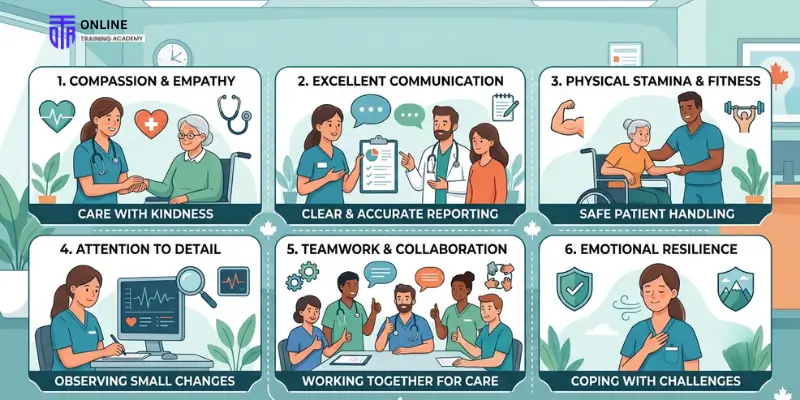
Success as a nursing assistant depends on far more than technical knowledge. While practical healthcare skills are essential, employers throughout Canada also look for strong personal qualities that help deliver safe, respectful, and compassionate care.
Compassion and Empathy
Patients may be elderly, recovering from surgery, living with chronic illnesses, or facing emotional challenges. Nursing assistants must treat every individual with kindness, patience, and dignity while understanding their physical and emotional needs.
Excellent Communication Skills
Clear communication is essential in healthcare. Nursing assistants regularly communicate with patients, family members, nurses, physicians, and other healthcare professionals. Accurate reporting of observations helps ensure patients receive appropriate treatment and timely interventions.
Physical Fitness and Stamina
The role can be physically demanding. Nursing assistants spend much of their shift standing, walking, lifting equipment, repositioning patients, and assisting with transfers. Good physical fitness helps reduce fatigue and supports safe patient handling.
Attention to Detail
Small changes in a patient’s appearance, behaviour, appetite, or vital signs may indicate significant health concerns. Being observant and reporting these changes promptly contributes to better patient outcomes and safer care.
Teamwork
Healthcare is highly collaborative. Nursing assistants work alongside nurses, physicians, therapists, and support staff to deliver coordinated care. Being a dependable team member helps improve communication, efficiency, and patient satisfaction.
Emotional Resilience
Working with individuals who are ill, injured, or nearing the end of life can be emotionally challenging. Nursing assistants need resilience, professionalism, and healthy coping strategies while continuing to provide compassionate care.
Time Management
Healthcare environments are often fast-paced. Nursing assistants must prioritise multiple responsibilities, complete tasks efficiently, and respond to changing patient needs throughout each shift.
Step-by-Step: How to Become a Nursing Assistant in Canada
Becoming a nursing assistant follows a clear pathway, making it one of the most accessible routes into the Canadian healthcare workforce.
Step 1: Complete Your Secondary School Education
Most training programmes require applicants to have completed high school or an equivalent qualification. Strong communication, science, and biology skills can provide a helpful foundation.
Step 2: Enrol in a Recognised Training Programme
Choose a nursing assistant, health care assistant, or personal support worker programme recognised within your province. These courses typically combine classroom learning with supervised clinical placements to prepare students for real healthcare environments.
During training, you’ll learn how to:
- Provide personal care safely
- Monitor and record vital signs
- Prevent infection
- Assist with mobility
- Support patients with daily living activities
- Maintain healthcare documentation
- Work effectively within multidisciplinary healthcare teams
Step 3: Complete Clinical Placement
Most Canadian programmes include practical placements in hospitals, long-term care homes, rehabilitation centres, or community healthcare facilities.
This supervised experience allows you to apply classroom knowledge, build confidence, and develop workplace-ready skills while working with real patients.

Step 4: Meet Employer Requirements
Before beginning employment, many healthcare organisations require applicants to provide:
- CPR and First Aid certification
- Criminal record and vulnerable sector checks
- Immunisation records
- Tuberculosis screening
- Proof of legal eligibility to work in Canada
Meeting these requirements helps ensure patient safety and compliance with healthcare regulations.
Step 5: Apply for Nursing Assistant Positions
Once you’ve completed your training and required documentation, you can begin applying for entry-level positions in:
- Hospitals
- Long-term care facilities
- Retirement homes
- Rehabilitation centres
- Community healthcare organisations
- Home care agencies
- Assisted living facilities
Many employers also provide structured orientation programmes and ongoing professional development to help new employees succeed.
Step 6: Continue Building Your Career
Working as a nursing assistant provides valuable clinical experience that can open doors to many other healthcare careers.
With additional education and experience, many professionals progress to roles such as:
- Certified Nursing Assistant (where applicable)
- Licensed Practical Nurse (LPN)
- Registered Practical Nurse (RPN) in provinces such as Ontario
- Registered Nurse (RN)
- Healthcare supervisor or care coordinator
- Specialised support roles in rehabilitation, dementia care, or palliative care
For many healthcare professionals in Canada, nursing assisting serves as an excellent foundation for long-term career growth, offering practical experience, transferable skills, and opportunities for continued education and advancement within the healthcare system.
Career Path and Growth Opportunities in Canada
A nursing assistant position is often the first step towards a long and rewarding healthcare career in Canada. Although it is considered an entry-level role, it provides invaluable hands-on experience that builds a strong foundation for future professional growth. By working directly with patients and healthcare teams, nursing assistants develop practical skills that are highly valued across the healthcare sector.
One of the greatest advantages of starting as a nursing assistant is the wide range of career progression opportunities available. Many professionals use the experience they gain to continue their education and qualify for higher-level healthcare roles. Depending on the province and career goals, common progression pathways include becoming a Personal Support Worker (PSW), Health Care Aide (HCA), Licensed Practical Nurse (LPN), Registered Practical Nurse (RPN) (in Ontario), or eventually a Registered Nurse (RN). These advanced roles typically offer greater responsibility, higher salaries, and increased opportunities for specialization.
Others choose to build expertise within the nursing assistant role by specialising in particular areas of patient care. Popular specialisations include:
- Long-term and elderly care, supporting seniors in nursing homes and residential care facilities.
- Rehabilitation services, helping patients recover after surgery, injury, or illness.
- Palliative and hospice care, providing compassionate support to individuals with life-limiting conditions.
- Dementia and Alzheimer's care, assisting patients with complex cognitive needs.
- Paediatric care, supporting children in hospitals or community healthcare settings.
- Home and community care, helping clients maintain independence while receiving care in their own homes.
Canada’s healthcare system also encourages continuous professional development. Many employers offer ongoing workplace training, mentorship programmes, and opportunities to develop new clinical skills. These learning opportunities not only improve patient care but also strengthen career prospects over time.
Perhaps the greatest benefit of working as a nursing assistant is the real-world clinical experience gained every day. Caring for patients, collaborating with multidisciplinary healthcare teams, and understanding how healthcare facilities operate provide invaluable knowledge that cannot be learned from textbooks alone. This practical experience becomes a significant advantage when applying for more advanced healthcare programmes or leadership positions.
Overall, becoming a nursing assistant is far more than an entry-level job—it is a gateway to long-term career development within Canada’s growing healthcare sector.
Is Nursing Assistant a Good Career Choice in Canada?

For individuals considering a career in healthcare, becoming a nursing assistant is a practical and rewarding option. It offers stable employment, opportunities for career progression, and the chance to make a genuine difference in people’s lives every day.
One of the biggest advantages is strong job demand. Canada’s ageing population and growing healthcare needs continue to increase demand for trained nursing assistants in hospitals, long-term care homes, retirement residences, rehabilitation centres, and home care services. This means qualified professionals often benefit from excellent employment opportunities across both urban and rural communities.
Another significant benefit is job security. Healthcare remains one of Canada’s most resilient industries, with ongoing investment in patient care and support services. As a result, nursing assistants enjoy relatively stable employment compared with many other entry-level occupations.
The profession also offers a deep sense of personal fulfilment. Nursing assistants build meaningful relationships with patients by providing daily care, emotional support, and encouragement during recovery or long-term treatment. For many professionals, knowing they have helped improve someone’s comfort, dignity, and quality of life is one of the most rewarding aspects of the role.
At the same time, it is important to recognise that the work can be physically and emotionally demanding. Shifts may include standing for long periods, assisting patients with mobility, responding to emergencies, and caring for individuals experiencing illness or end-of-life care. These challenges require resilience, compassion, and professionalism. However, many nursing assistants find that the personal satisfaction and career opportunities far outweigh the demands of the job.
Another major advantage is the role’s potential for long-term career growth. The experience gained as a nursing assistant provides an excellent foundation for pursuing further education and advancing into professions such as Licensed Practical Nurse (LPN), Registered Practical Nurse (RPN), or Registered Nurse (RN). Many healthcare leaders began their careers in patient support roles before progressing into more specialised clinical positions.
For individuals who enjoy helping others, working in a team environment, and making a positive impact every day, nursing assisting offers a meaningful, respected, and future-focused career path within Canada’s healthcare system.
Conclusion
Becoming a nursing assistant is one of the most accessible and rewarding ways to begin a healthcare career in Canada. With a secondary school education, recognised training, and the right combination of compassion, communication skills, and professionalism, you can enter a growing industry where your work has a direct and lasting impact on patients’ lives.
Although it is an entry-level position, the role offers far more than immediate employment. It provides valuable clinical experience, opportunities to develop practical healthcare skills, and a strong foundation for future career advancement. Many nursing assistants go on to become Licensed Practical Nurses (LPNs), Registered Practical Nurses (RPNs), Registered Nurses (RNs), or specialise in areas such as long-term care, rehabilitation, home care, or palliative support.
Most importantly, nursing assisting is about more than carrying out daily tasks—it’s about providing comfort, preserving dignity, and supporting people during some of the most important moments of their lives. If you’re looking for a career that combines stability, personal fulfilment, and excellent opportunities for professional growth, becoming a nursing assistant is an excellent place to start.
FAQs
To become a nursing assistant in Canada, you typically need a high school diploma or equivalent and must complete a recognised nursing assistant, health care aide, or personal support worker (PSW) training programme, depending on your province. Many employers also require CPR and First Aid certification, a criminal background check, and relevant clinical placement experience before hiring.
No. A university degree is not usually required to become a nursing assistant in Canada. Most employers look for candidates who have completed an approved training programme and possess the practical skills, compassion, and communication abilities needed to provide quality patient care.
Successful nursing assistants need a combination of technical and interpersonal skills, including compassion, empathy, communication, teamwork, attention to detail, physical stamina, time management, and the ability to work well under pressure. These skills help ensure patients receive safe, respectful, and effective care.
Nursing assistants can work in a wide variety of healthcare settings, including hospitals, long-term care homes, retirement residences, rehabilitation centres, home care agencies, assisted living facilities, hospices, and community healthcare organisations. Employment opportunities are available across all Canadian provinces and territories.
Yes. Nursing assisting is considered an excellent career choice because of the strong demand for healthcare workers, stable employment opportunities, competitive salaries, and clear pathways for career advancement. It is also a rewarding profession for individuals who enjoy helping others and making a positive impact on patients’ lives.
Yes. Many nursing assistants use their clinical experience as a stepping stone to further education. With the required qualifications and nursing education, they can progress to roles such as Licensed Practical Nurse (LPN), Registered Practical Nurse (RPN) in some provinces, or Registered Nurse (RN), expanding both their responsibilities and career opportunities.
Learn More





Get a FREE Course
- Learn useful skills online free
- Get CPD accredited certificate
- Add it to your CV today!