

Choosing Hairdressing as a career may seem straightforward: learn the techniques, find a salon and start working with clients. But building a lasting career takes more than knowing how to cut, colour or style hair. You also need to understand training options, provincial requirements, workplace expectations and the realities of salon work in Canada.
The field offers more variety than many beginners expect. Canadian hairstylists can build careers in salons, barber shops, vocational settings, healthcare environments, or even theatre, film and television. As your experience grows, you can also explore specialisms, independent work or salon ownership.
So, if you’re thinking about Hairdressing as a first career, a career change or a skilled trade, the right starting point is understanding what the pathway actually looks like—and what it takes to succeed once you enter the industry.
Table of Contents
Hairdressing
Develop practical hairdressing skills through training in hair cutting, styling, colouring, treatments, client care, and salon safety. Build essential knowledge and techniques to confidently perform common hairdressing services while developing professional standards for salon environments.
How Do You Start a Hairdressing Career in Canada?
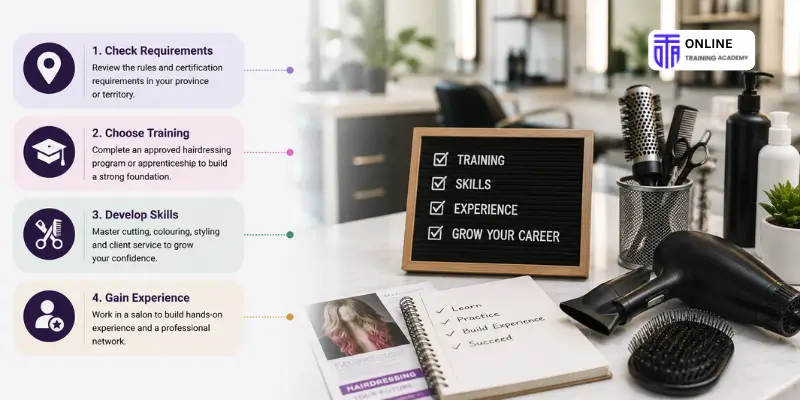
The usual starting point is to choose an appropriate training route, check the requirements that apply in your province or territory, develop core technical and client-service skills, gain workplace experience and then build your career through employment, specialisation or self-employment.
Canada does not have one identical Hairdressing pathway for everyone. The requirements can vary considerably between jurisdictions. Canada’s National Occupational Classification information states that a one- or two-year hairstyling apprenticeship, or a college/other hairstyling program combined with on-the-job training, is usually required. It also identifies provinces where trade certification is compulsory and others where certification is available but voluntary.
That means your first step should not be choosing the first course you find. Start by understanding the rules where you intend to work.
Step 1: Check Your Province or Territory's Requirements
Before paying for a program, check whether Hairdressing or hairstyling is a compulsory trade in your province and what certification, apprenticeship or training requirements apply.
For example, the federal occupational profile currently identifies compulsory hairstylist trade certification in Nova Scotia, Ontario, Manitoba, Saskatchewan and Alberta. Certification is listed as available but voluntary in several other jurisdictions. New Brunswick also has specific licensing requirements for using the titles “Hairstylist” or “hairdresser.”
Requirements can change, so always confirm current rules with the appropriate provincial or territorial authority.
Step 2: Choose the Right Training Route
There is more than one way to prepare for a Hairdressing career.
Depending on your location and circumstances, you may consider:
- A hairstyling college or vocational program
- An apprenticeship
- A hairstyling program combined with on-the-job training
- Recognised workplace experience where permitted
- Additional specialist courses after your foundational training
Canada’s Job Bank currently describes the occupation as typically requiring post-secondary or apprenticeship preparation, while noting that several years of experience may replace formal education and training in some circumstances.
The best route depends on how you learn, what your province requires and how quickly you want to combine classroom learning with salon experience.
Step 3: Develop Skills Before Chasing a Job Title
A certificate or completed training program gives you a foundation. It does not automatically make you an accomplished stylist.
You will need to develop technical abilities alongside communication, attention to detail, client service and safe working habits.
A beginner who can perform a technically sound haircut but cannot listen carefully to a client, manage expectations or work reliably in a busy salon still has important areas to develop.
Step 4: Gain Real Workplace Experience
Hairdressing is a hands-on occupation. Working around experienced stylists teaches things that are difficult to learn from theory alone: timing, workflow, client interaction, workstation organisation, product selection and how to respond when a service does not go exactly as planned.
Your early career may involve apprenticeship or junior responsibilities before you develop the confidence and speed expected of an established stylist.
Think of your first position as the next stage of your education, not the final exam.
What Do You Learn in Hairdressing Training?
If you’re wondering “What are some common topics covered in Hairdressing?”, expect much more than cutting and styling.
Canadian occupational information describes hairstylists as providing services such as cutting, styling, colouring and chemical treatments, while also assessing hair and scalp conditions, consulting with clients and maintaining clean and sanitised equipment.
Hair Cutting, Styling and Finishing
Training commonly introduces the fundamentals of:
- Hair cutting
- Blow-drying
- Styling and finishing
- Tool handling
- Shape and balance
- Adapting techniques to different hair characteristics
The goal isn’t simply to reproduce one hairstyle. A good stylist learns how to adjust technique according to the client’s hair, preferences and desired result.
Colouring, Chemical Services and Hair Care
Colour services require more than choosing a shade from a chart.
Learners may study colour theory, application techniques, lightening, chemical services, hair condition and product use. Understanding the condition of the hair helps a stylist make better decisions about which services may or may not be appropriate.
Hair and Scalp Knowledge
Understanding hair itself is a major part of Hairdressing.
You may learn about:
- Hair structure
- Growth and condition
- Texture and density
- Scalp considerations
- Product selection
- Hair-care recommendations
This knowledge becomes especially useful when working with clients whose hair behaves differently from what you may have encountered during training.
Salon Safety, Sanitation and Client Care
Safe working habits should become routine.
This includes cleaning and sanitising tools, handling products correctly, maintaining an organised workstation and paying attention to client comfort. Skills/Compétences Canada also highlights equipment sanitation and client consultation as normal parts of the occupation.
What Are the Five Essential Skills Every Hairstylist Needs?
Ask five stylists what makes someone good at Hairdressing and you may get five different answers. Creativity will probably come up. So will technical ability.
But a strong career depends on a wider skill set.
1. Communication and Active Listening
A client might say, “I want something easier to manage,” without knowing how to describe the cut they actually need.
The stylist has to ask questions, listen carefully and turn a vague request into a realistic service plan.
Communication also means explaining what is achievable, what may take several appointments and how a client can maintain the result at home.
2. Manual Dexterity and Technical Control
Hairdressing requires controlled hand movements and accurate tool use.
Whether you’re cutting, sectioning, colouring or styling, precision improves with repetition. Technical confidence doesn’t appear overnight; it develops through supervised practice, correction and experience.
3. Attention to Detail
Small differences can change the final result.
A stylist needs to notice:
- Uneven sections
- Hair condition
- Colour development
- Shape and balance
- Product application
- Finishing details
Attention to detail is particularly valuable when working on services where consistency matters.
4. Client Service and Reliability
Hairdressing is a personal service, so technical skills are only part of the experience.
Clients notice whether a stylist is respectful, organised, punctual and attentive. Employers also need people who can work well with colleagues and contribute to a salon’s day-to-day operation.
5. Adaptability and Continuous Learning
Hair trends don’t stand still.
Skills/Compétences Canada notes that hairstylists need to continue upgrading their skills as products, styles and techniques evolve. This may involve short courses, conventions, hair shows or other learning opportunities.
A willingness to keep learning can therefore be one of the most valuable long-term career skills you develop.
What Is the Most Important Skill for a Hairdresser?

If you had to choose one, communication is arguably the most important starting skill because it connects technical ability with what the client actually wants.
Imagine a client asks for a dramatic colour change. Their previous chemical treatments have left the hair fragile, but they expect the transformation to happen in one appointment.
A stylist needs technical knowledge to assess the situation, but also communication skills to explain the options honestly and set realistic expectations.
That is where good Hairdressing becomes more than a technical service.
Why Communication Can Make or Break an Appointment
A stylist needs to understand what the client means, not simply what they say.
Questions about previous colour, home care, desired maintenance, lifestyle and expectations can help establish a clearer picture before the service begins.
Technical Skills and Client Skills Work Together
Communication cannot compensate for poor technique, and technical ability cannot compensate for poor communication.
The strongest stylists develop both.
You need to know how to perform a service and when a particular approach makes sense for the person sitting in your chair.
The Skill That Gets Better With Experience
Don’t expect to feel completely confident on day one.
Judgement improves as you encounter more hair types, client requests, unexpected results and different working environments. The important thing is to remain open to feedback and keep practising.
What Is the Reality of Working as a Hairdresser in Canada?
Hairdressing can be creative and rewarding, but it is still physically demanding work.
Canada’s Job Bank describes hairstylists and barbers as generally working around 35 to 40 hours per week, although schedules vary by employer and workplace.
The Physical Demands of Hairdressing
A typical day can involve:
- Standing for extended periods
- Repetitive hand and arm movements
- Holding tools for long periods
- Bending or reaching
- Working with raised arms
- Moving between stations
- Remaining focused during busy appointment schedules
Over time, poor working habits can contribute to discomfort and strain.
Common Injuries Among Hairdressers
Hairdressers may experience problems associated with repetitive movements, prolonged standing and awkward working positions.
Common areas of concern can include the hands and wrists, shoulders, neck, back and feet.
This doesn’t mean you should avoid the occupation. It means ergonomics should be treated as part of your career development from the beginning.
Preventive Measures and Ergonomic Solutions
Small adjustments can make a difference.
Where possible:
- Set your workstation at a comfortable height.
- Avoid repeatedly working with your shoulders raised.
- Use tools that you can handle comfortably.
- Maintain a balanced stance rather than leaning unnecessarily.
- Alternate tasks when the workflow allows.
- Take appropriate opportunities to move and reset your posture.
Developing better habits early is easier than trying to correct years of poor positioning later.
The Less-Discussed Side of Salon Work
There is also an emotional and customer-service side to consider.
You may work through busy periods, manage clients with different expectations and need to remain calm when something doesn’t go according to plan.
If you enjoy people, problem-solving and creative work, those challenges can become part of what makes the occupation interesting. If you prefer quiet, predictable work with little customer interaction, Hairdressing may feel very different from what you expected.
How Can You Build a Hairdressing Career After Training?
Completing your initial training is a milestone, but it is not the end of your development.
Your First Hairdressing Job Is a Starting Point
Early employment can help you develop speed, confidence and consistency.
You may initially perform simpler services, assist senior stylists, manage basic salon responsibilities or work under supervision. Over time, your responsibilities can expand as your technical ability and confidence grow.
Canadian Job Bank identifies employment settings beyond traditional salons, including barber shops, vocational schools, healthcare establishments and theatre, film and television establishments.
Build a Portfolio That Shows What You Can Do
A portfolio can help a new stylist demonstrate ability before having a long employment history.
Include clear examples of:
- Haircuts
- Styling
- Blowouts
- Colour services
- Texture-focused work
- Before-and-after results
- Work completed during training
Quality matters more than quantity. A smaller portfolio showing clean, consistent work is more useful than dozens of poorly photographed examples.
Where Can Hairdressing Skills Take You?
A salon is only one possible destination.
With experience, you could explore:
- Salon-based Hairdressing
- Independent or mobile services
- Specialist styling
- Theatre
- Film and television
- Healthcare-related settings
- Education and training
- Salon management
- Business ownership
The direction you take will depend on your interests, skills, location and willingness to develop specialist knowledge.
How Can Hairdressers Earn Income?
Hairdressers can work under different business and employment arrangements, including employee roles, commission structures, chair rental and self-employment.
Each model has different responsibilities and financial considerations. For example, being self-employed may offer greater control over your schedule and business decisions, but it can also mean taking responsibility for expenses, marketing, bookings, taxes and client acquisition.
Don’t choose a model simply because it sounds more flexible. Understand what comes with it.
What Do Canadian Salons Look for in a New Hairstylist?
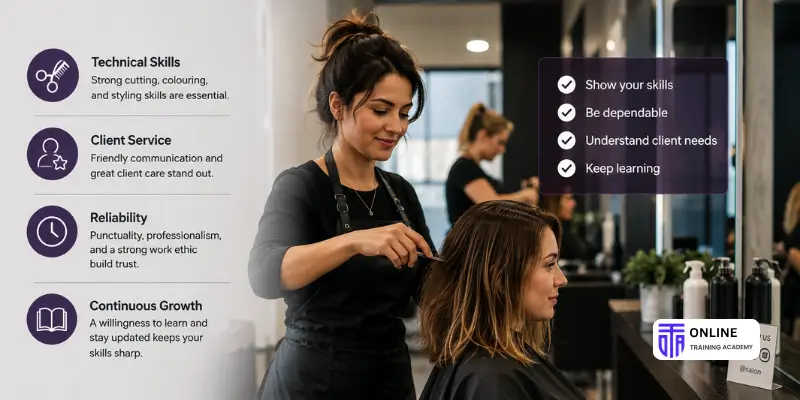
Having training on your resume is useful, but employers may also want evidence that you can contribute to the salon and provide a good client experience.
Job Bank notes that employers may require applicants to demonstrate their hairstyling ability during the hiring process.
Technical Foundations Matter, But So Does Client Service
Employers can teach you some aspects of their workflow, but they need a foundation to build on.
Show that you understand:
- Basic cutting and styling
- Safe product use
- Hair and scalp considerations
- Sanitation
- Client communication
- Time management
Reliability Can Matter as Much as Creativity
A creative stylist who is consistently late or disorganised can create problems for an entire salon.
Build habits around:
- Punctuality
- Clean work areas
- Organisation
- Respectful communication
- Teamwork
- Accepting feedback
- Completing responsibilities
These aren’t glamorous skills, but they can have a significant impact on whether a new stylist becomes someone a salon can rely on.
Learn to Work With Different Hair Textures and Client Needs
Modern Hairdressing requires an understanding that clients don’t all have the same hair characteristics.
Develop knowledge of straight, wavy, curly and coily hair, as well as differences in density, condition and styling needs.
Learning to work confidently with a broader range of hair textures can make you a more versatile stylist and help create a more inclusive client experience.
Keep Developing After You Get the Job
Once you have employment, resist the temptation to stop learning.
Consider continuing education in areas such as:
- Advanced cutting
- Colour
- Textured hair
- New styling techniques
- Product knowledge
- Client service
- Salon technology
- Business skills
The industry changes, and staying curious can help your career change with it.
Is Hairdressing a Good Career Choice in Canada?
For the right person, it can be.
But the better question isn’t simply, “Is Hairdressing a good career?”
It’s “Is Hairdressing a good career for me?”
Potential Benefits of a Hairdressing Career
You may enjoy:
- Creative work
- Regular interaction with people
- Visible results from your work
- Opportunities to specialise
- Different employment environments
- The possibility of self-employment
- Building a loyal clientele over time
Challenges to Consider Before Choosing Hairdressing
You should also be prepared for:
- Physical demands
- Repetitive work
- Customer-service pressure
- Variable income depending on your employment model
- The time needed to build a client base
- Ongoing education
- Differences in job opportunities between regions
Being realistic about these factors doesn’t make the career less attractive. It helps you prepare for it properly.
How Career Opportunities Differ Across Canada
There isn’t one national answer to the question of whether hairstylists are “in demand.”
Job Bank currently reports that prospects vary across Canada depending on the province or territory. Its national profile also shows a median wage of $19.88 per hour, but individual earnings can differ according to location, experience, employer and working arrangement.
That is why aspiring stylists should research the specific area where they plan to work rather than relying on a single national number.
A Practical Hairdressing Career Checklist for Beginners
If you’re seriously considering this career, use the following as your starting checklist.
Before Enrolling
- Check your provincial or territorial requirements.
- Compare training and apprenticeship options.
- Look at course content rather than choosing based only on the course title.
- Check the practical training included.
- Understand the cost and time commitment.
- Find out what certification or licensing may apply.
While Training
- Practise core techniques consistently.
- Ask for feedback.
- Develop communication skills.
- Learn about different hair textures.
- Build a portfolio.
- Learn safe workstation habits.
- Take sanitation seriously.
- Observe experienced stylists whenever possible.
Before Applying for Your First Role
- Prepare a clear resume.
- Organise your portfolio.
- Research local salons.
- Understand what each employer specialises in.
- Practise explaining your skills.
- Be ready for a practical demonstration if requested.
- Be honest about what you can and cannot yet do.
The goal isn’t to convince an employer that you’re already an expert. It’s to show that you have a solid foundation and are worth investing in.
Conclusion: Build the Career, Not Just the Qualification
Starting a Hairdressing career in Canada takes more than learning to cut and style hair. You need a strong mix of technical ability, communication, attention to detail, client service and workplace awareness. Begin by checking the requirements where you plan to work, then compare training and apprenticeship routes carefully.
Use your training to build a solid portfolio, develop safe working habits, understand different hair textures and strengthen your skills through practice. Pay attention to ergonomics and physical wellbeing, and remember that learning continues long after your initial qualification.
Don’t measure your progress by certificates alone. Today’s mannequin practice and supervised services can become tomorrow’s confident appointments, loyal clients and even your own business. A Hairdressing career grows one skill, one experience and one client at a time.
FAQs
The timeline depends on your province or territory and the route you choose. Canada’s Job Bank says the occupation typically requires a college program, an apprenticeship or qualifying on-the-job training, while the national occupational profile describes a one- or two-year hairstyling apprenticeship as a usual route.
Requirements vary by jurisdiction. Trade certification for hairstylists is compulsory in some provinces and available on a voluntary basis in others. Some employers may also ask applicants to demonstrate their hairstyling ability. Always check the current requirements where you plan to work.
It can be a good choice if you enjoy creative work, interacting with clients and learning hands-on skills. However, beginners should also understand the physical demands, customer-service responsibilities and need for continuous development.
Common areas include cutting, styling, colouring, chemical services, hair and scalp knowledge, product use, client consultation, sanitation, safety and salon operations. The exact curriculum depends on the training provider and jurisdiction.
Communication, active listening, technical control, attention to detail, client service and adaptability are all important. If one skill has to be highlighted, communication is particularly valuable because it helps connect the client’s expectations with the technical service you provide.
Yes. Apprenticeship is one of the recognised routes into the occupation. The exact structure and certification requirements depend on the province or territory. Job Bank currently lists apprenticeship training among the usual preparation routes for hairstylists.
Learn More





Get a FREE Course
- Learn useful skills online free
- Get CPD accredited certificate
- Add it to your CV today!