

Why Safeguarding is Critical
“A safe environment where every child can learn, play, and grow without fear. Safeguarding is what makes that possible—it turns awareness into protection and rules into real-life safety.”
Safeguarding is more than a legal requirement—it is a proactive approach to protect children from abuse, neglect, and exploitation, while ensuring their physical, emotional, and social development is nurtured. Globally recognized organizations such as Right To Play and Save the Children have developed robust safeguarding frameworks to protect children and vulnerable adults.
This blog explores how safeguarding protects children, practical strategies used by leading organizations, and actionable steps everyone can take to ensure child safety and well-being. Whether you’re a teacher, volunteer, program manager, or caregiver, this guide will equip you with the knowledge to turn awareness into protection.
How Can Safeguarding Protect Children? A Complete Guide
"Safeguarding plays a vital role in protecting children from abuse, neglect, exploitation, and other forms of harm. This blog provides a complete guide to safeguarding, explaining its importance, key principles, and how effective safeguarding practices help ensure children grow up in safe, supportive, and nurturing environments."
What is Safeguarding?
Safeguarding is the process of protecting children from harm, preventing impairment to their health and development, and ensuring they grow up in safe and nurturing environments.
Safeguarding vs Child Protection
- Safeguarding: Focuses on prevention. It includes creating safe environments, promoting well-being, and empowering children and families.
- Child Protection: Focuses on intervention. It involves taking immediate action when a child is at risk or experiencing harm.
Both are essential components of child safety. Safeguarding provides the framework, while child protection is the practical application in situations where a child is in immediate danger.
How Safeguarding Protects Children in Practice
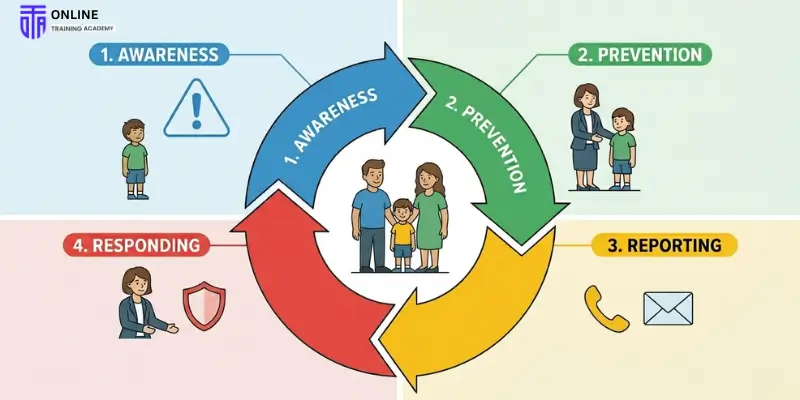
Organizations implement safeguarding through a structured framework that ensures awareness, prevention, reporting, and responsive action.
1. Awareness – Building a Culture of Vigilance
Awareness is the first line of defense in safeguarding. Staff, volunteers, partners, and stakeholders are trained to:
- Recognize physical, emotional, or behavioral signs of abuse.
- Understand the potential risks in their work environment.
- Integrate safeguarding into recruitment, onboarding, training, programming, and operations.
Example – Right To Play:
All staff, volunteers, and partners are trained to identify risks and act responsibly. Awareness extends beyond training: it is embedded in the culture of the organization. This ensures that anyone interacting with children can spot warning signs and take appropriate action before harm occurs.
Practical Tip: Encourage open communication and regular discussions on safeguarding during team meetings to reinforce awareness.
2. Prevention – Minimizing Risks Before They Happen
Prevention is about proactively reducing opportunities for abuse and harm. Strategies include:
- Conducting risk assessments for programs, activities, and operational procedures.
- Vetting staff, volunteers, and partners through criminal record checks, references, and background verification.
- Designing programs to reduce unsupervised contact between children and adults.
- Using child-safe spaces, policies, and procedures to minimize potential vulnerabilities.
Example – Save the Children:
- Activities are risk-assessed to ensure children are never left alone with a single adult.
- Safer programming steps are embedded at every stage of project design and implementation.
- Volunteers and staff are educated about potential risks and how to maintain safe interactions.
Case Study:
In one community program, a child exhibited signs of stress and anxiety during after-school activities. Because staff had received safeguarding training, they recognized these as potential warning signs, documented their observations, and escalated the concern. A multi-agency team intervened, offering support to the child and family before the situation escalated.
3. Reporting – Clear and Accessible Channels
Reporting ensures that suspected abuse or harm is addressed promptly. Effective reporting frameworks include:
- Clear procedures for staff, volunteers, and partners to escalate concerns.
- Anonymous channels for children and community members to safely report incidents.
- Defined timeframes—such as reporting within 24 hours—to ensure timely action.
Practical Tip: Train all staff in recognizing what constitutes a safeguarding concern, and provide step-by-step guidance on how to report it.
Example – Right To Play:
Right To Play has a global reporting process adapted to local contexts. Staff, volunteers, and community members know how to report concerns safely and confidentially, ensuring immediate protective action.
4. Responding – Acting Quickly and Appropriately
Once a concern is reported, organizations must act swiftly while maintaining a survivor-centered approach:
- Protect the child or vulnerable adult immediately.
- Ensure the reporter and survivor are safe from retaliation or harm.
- Conduct investigations promptly, involving relevant authorities and specialists.
- Review procedures and implement lessons learned to prevent recurrence.
Example – Save the Children:
- All concerns are taken seriously and addressed with urgency.
- Actions prioritize the safety and dignity of the child, alongside compliance with national and international legal obligations.
- Post-incident reviews ensure the organization learns and strengthens safeguarding procedures.
Accountability and Responsibilities
While safeguarding is everyone’s responsibility, roles and accountability differ:
- Global Safeguarding Specialist: Ensures organizational frameworks are robust and staff culture supports safeguarding.
- Safeguarding Focal Points: Provide guidance across headquarters, national, and country offices.
- Executive Leadership (Safeguarding Lead, Chief of P&C Officer): Ultimate accountability for safeguarding compliance and implementation.
Clearly defined roles make sure that:
- Staff understand their responsibilities.
- Concerns are escalated appropriately.
- Children’s protection is central to decision-making at every level.
Practical Steps Organizations Take to Protect Children

Organizations that prioritize safeguarding implement multiple layers of protection, ensuring children are safe at all times. These steps are not just policies—they are practical actions embedded in daily operations, staff behavior, and program design.
1. Listening to Children and Adults
Children and adults often notice risks or problems before adults in authority do. Incorporating their feedback into programming ensures their voices are valued and protective measures are effective.
Techniques include:
- Regular check-ins and surveys to understand children’s experiences.
- Feedback boxes or digital platforms for anonymous reporting of concerns or suggestions.
- Focus groups and participatory sessions where children and caregivers can share opinions about program safety and activities.
Example: In a community play program, children highlighted areas of the playground where they felt unsafe. The organization immediately adjusted supervision patterns and physical layout to address these concerns.
2. Clear Standards and Awareness
- Setting clear behavioral standards for staff, volunteers, and children helps prevent harm. Everyone should understand:
- What constitutes acceptable and unacceptable behavior.
- How to recognize signs of abuse or neglect.
- Their own responsibilities for reporting concerns.
- Organizations often use:
- Code of conduct agreements for staff and volunteers.
- Orientation sessions for families and community members.
- Visual reminders like posters, guidelines, or handbooks in program spaces.
- Example: Save the Children provides child-friendly materials explaining boundaries and reporting procedures, empowering children to speak up safely.
3. Training and Vetting
- Preventing harm begins before staff or volunteers interact with children. Effective measures include:
- Criminal record checks and reference verification during recruitment.
- Induction training covering safeguarding policies, procedures, and emergency protocols.
- Refresher courses at least every two years to reinforce knowledge and update staff on new guidance.
- Example: Right To Play requires all volunteers to undergo background checks and attend mandatory safeguarding training before participating in any activity with children.
4. Risk Assessment and Mitigation
- Identifying and addressing potential risks is a cornerstone of child protection.
- Organizations should evaluate:
- Physical spaces (e.g., playgrounds, classrooms, program sites) for hazards.
- Activities or events that might pose specific risks (e.g., overnight camps, excursions).
- Staff-child interactions and supervision patterns.
- Mitigation strategies include:
- Buddy systems or team supervision during activities.
- Clear policies on ratios of staff to children.
- Emergency plans in case a child is harmed or goes missing.
- Example: A summer camp identified an isolated area of the playground as a risk zone. They implemented increased supervision, installed open sightlines, and scheduled regular staff rotations to prevent unsupervised access.
5. Safer Programming Measures
- Even with careful planning, children can be at risk if policies are not implemented. Safer programming measures include:
- Never allowing children to be alone with a single staff member.
- Maintaining transparent communication channels between staff, volunteers, children, and families.
- Designing activities that minimize potential opportunities for abuse or exploitation.
- Example: During art workshops, staff are instructed to work in pairs when guiding individual children. Video or open-space supervision ensures both safety and accountability.
6. Reporting and Response
- Immediate and appropriate action is critical when a concern arises. Organizations should ensure:
- All staff know how to report concerns clearly and safely.
- Reports are treated seriously and addressed using survivor-focused protocols.
- Confidentiality is maintained to protect both the child and the reporter.
- Example: If a staff member notices signs of emotional or physical abuse, they document observations factually, notify the safeguarding lead, and follow internal procedures while keeping the child safe. Local authorities and multi-agency teams are engaged if necessary.
7. Learning from Incidents
- No system is perfect; continuous learning strengthens safeguarding practices. Steps include:
- Conducting post-incident reviews to understand what happened.
- Updating policies or procedures based on lessons learned.
- Sharing insights with staff and volunteers to prevent future incidents.
- Example Scenario:
- During a sports program, staff observed a child repeatedly arriving with unexplained bruises.
- Following safeguarding procedures:
- Observations were documented clearly.
- The safeguarding lead was informed.
- Local authorities were engaged, and the child received protection and support.
- Lessons from the incident were applied to:
- Update staff training on spotting abuse.
- Adjust supervision protocols during programs.
- Reinforce the importance of reporting even subtle warning signs.
This approach ensures that safeguarding is not just reactive, but continuously improving, creating a safer environment for children in the long term.
By combining listening, awareness, training, risk assessment, safer programming, reporting, and learning, organizations create a multi-layered safety net around children. These measures reduce opportunities for abuse, ensure timely interventions, and foster environments where children can grow, learn, and play confidently and safely.
Key Benefits of Effective Safeguarding
- Protects children from abuse, exploitation, and neglect.
- Promotes safe development physically, emotionally, and socially.
- Builds trust between families, communities, and organizations.
- Creates safe spaces for learning, play, and personal growth.
- Enhances organizational credibility and accountability.
- Reduces legal and reputational risks for organizations.
Safeguarding as Protection in Action
“A child’s safety is not accidental—it’s the result of clear policies, trained staff, and a culture that prioritizes well-being. Safeguarding turns awareness into action and ensures that every child has the opportunity to grow safely.”
Effective safeguarding protects children from harm, promotes healthy development, and empowers organizations and individuals to act responsibly. By implementing robust frameworks, promoting awareness, and responding quickly to concerns, we create environments where children can thrive safely, confidently, and without fear.
Call to Action: Whether you’re a teacher, volunteer, or program manager, understanding and applying safeguarding measures can make the difference between risk and safety. Learn, act, and protect—every child deserves a safe childhood.
FAQs
Safeguarding is the proactive process of protecting children from harm and ensuring their well-being.
Through awareness, risk assessment, reporting procedures, and responsive action.
Everyone interacting with children: staff, volunteers, partners, and leaders.
It equips individuals with knowledge to recognize risks, act appropriately, and protect children.
Through staff awareness, risk reduction, reporting channels, and survivor-centered responses.
Prioritizing the safety, dignity, and well-being of the child or adult affected by harm.
Yes. Transparent practices and safe reporting channels build confidence among children, families, and communities.
Regularly, at least annually, or whenever new guidance or incidents reveal areas for improvement.
Learn More


Get a FREE Course
- Learn useful skills online free
- Get CPD accredited certificate
- Add it to your CV today!