

Construction sites are among the highest-risk workplaces in Canada, where activities such as welding, electrical work, roofing, and heavy equipment operation often take place at the same time. Combined with temporary structures, flammable materials, and constantly changing site conditions, these activities can significantly increase the risk of fire if proper safety measures are not in place.
Effective fire safety goes beyond having fire extinguishers on site. It requires proactive planning, hazard identification, worker training, reliable fire detection systems, and well-practised emergency procedures. By preventing fires before they start and ensuring workers know how to respond if an emergency occurs, construction companies can protect lives, reduce property damage, and keep projects running safely.
This guide explains the most common fire hazards on Canadian construction sites and outlines the best practices for fire prevention, emergency preparedness, and safe evacuation.
Table of Contents
Fire Safety Training
Fire Safety Training teaches the essential knowledge and practical skills needed to prevent fires, respond to emergencies, and maintain a safe workplace. The course covers common fire hazards, fire prevention measures, emergency evacuation procedures, the safe use of fire extinguishers, and the legal responsibilities of employers and employees. It helps learners improve fire safety awareness, reduce risks, and respond confidently in the event of a fire.
Why Fire Safety Is Critical on Canadian Construction Sites
Construction differs from most other workplaces because the environment changes every day. New materials arrive, work areas move, temporary electrical systems are modified, and different trades work alongside one another. These constantly changing conditions make fire prevention far more challenging than in completed buildings.
A fire on a construction site can have devastating consequences. Beyond the immediate risk of injuries or fatalities, fires can destroy expensive machinery, damage partially completed structures, interrupt project schedules, and result in significant financial losses. Contractors may also face legal penalties, insurance claims, and reputational damage if investigations reveal that fire safety procedures were not properly followed.
Canadian weather also introduces additional challenges. During winter, portable heaters, temporary enclosures, and generators are commonly used to keep projects running despite freezing temperatures. If these systems are not properly maintained or positioned, they can increase the likelihood of fires. In summer, prolonged heat and dry conditions may increase the risk of fires involving fuels, vegetation, and combustible materials stored outdoors.
Because of these changing risks, fire safety should never be treated as a one-time checklist. It requires continuous planning, regular inspections, and active participation from everyone on site.
Understanding Fire Hazards in Construction Environments
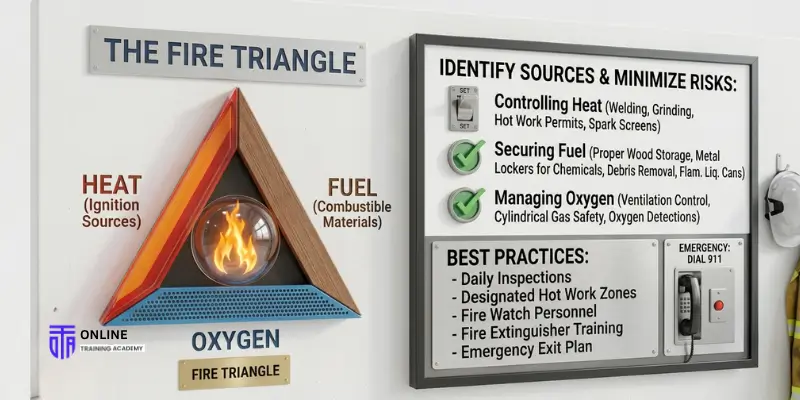
Effective fire prevention begins with understanding how fires start. Every fire requires three basic elements—heat, fuel, and oxygen—often referred to as the “fire triangle.” Removing or controlling any one of these elements can prevent a fire from starting or spreading.
Construction sites contain numerous potential ignition sources alongside a wide range of combustible materials, making careful hazard identification essential.
Hot Work Activities
One of the leading causes of construction fires is hot work, which includes welding, cutting, grinding, brazing, soldering, and torch-applied roofing. These activities produce sparks, molten metal, and high temperatures capable of igniting combustible materials nearby.
Sparks can travel several metres from the work area and may ignite hidden materials inside wall cavities, ceiling spaces, or under flooring. In some cases, fires do not become visible until hours after work has been completed, highlighting the importance of post-work monitoring.
Temporary Electrical Installations
Unlike permanent buildings, construction projects rely heavily on temporary electrical systems to power lighting, tools, equipment, and site offices. Damaged cables, overloaded extension cords, exposed wiring, and improperly installed temporary panels can overheat or short-circuit, creating serious fire hazards.
Electrical equipment exposed to rain, snow, mud, or physical damage presents an even greater risk. Regular inspections are essential to identify defects before they lead to fires or electrical incidents.
Flammable and Combustible Materials
Construction sites commonly store materials that can ignite easily or contribute to rapid fire spread. These include:
- Gasoline and diesel fuel
- Paints and coatings
- Solvents and thinners
- Adhesives
- Propane cylinders
- Insulation materials
- Timber and plywood
- Packaging materials
- Plastic sheeting
Improper storage of these materials significantly increases fire risk. Flammable substances should always be stored in designated, well-ventilated locations away from ignition sources.
Poor Housekeeping
Housekeeping is one of the simplest yet most overlooked aspects of fire prevention. Waste materials such as cardboard, plastic wrapping, sawdust, timber offcuts, and empty containers can quickly fuel a fire if they accumulate around work areas.
Maintaining clean and organized workspaces not only reduces fire risks but also improves overall site safety by minimizing trip hazards and improving access to emergency exits.
Conducting Fire Risk Assessments
Every effective fire safety program begins with a thorough fire risk assessment. Rather than waiting for an incident to occur, employers should proactively identify hazards before work begins and review them as site conditions change.
A fire risk assessment typically considers:
- Potential ignition sources
- Combustible materials on site
- Workers and visitors who may be at risk
- Existing fire prevention measures
- Emergency response procedures
- Access for emergency services
Because construction projects evolve throughout their lifecycle, fire risk assessments should be reviewed regularly. Activities such as demolition, roofing, interior finishing, or installing temporary heating systems may introduce new hazards that require additional controls.
In Canada, risk assessments are particularly important during seasonal transitions. Winter heating systems, enclosed workspaces, and temporary weather protection structures can create conditions that differ significantly from those encountered during warmer months.
Fire Prevention: The Most Effective Safety Strategy
The most successful fire safety programs focus on prevention rather than response. Preventing a fire from starting is always safer, less expensive, and more effective than attempting to control one after ignition.
Fire prevention begins with identifying and eliminating unnecessary ignition sources wherever possible. Where elimination is not practical, risks should be reduced through engineering controls, administrative procedures, and worker training.
Safe Hot Work Management
Before welding, cutting, grinding, or similar activities begin, employers should implement a formal hot work permit system. This process ensures that hazards are assessed, appropriate controls are in place, and workers understand the precautions required before work starts.
A hot work permit typically includes:
- Inspection of the work area
- Removal or protection of combustible materials
- Availability of suitable fire extinguishers
- Assignment of a trained fire watch
- Continuous monitoring during work
- Post-work inspections to detect hidden ignition
Many construction fires occur after workers have left the area because sparks continue to smoulder unnoticed. For this reason, the fire watch should remain in place for an appropriate period after hot work has been completed.
Safe Storage of Flammable Materials
Flammable liquids, compressed gases, and combustible chemicals should never be stored randomly around the site. Proper storage reduces the likelihood of accidental ignition and limits fire spread if an incident occurs.
Storage areas should be:
- Clearly labelled
- Well ventilated
- Protected from unauthorized access
- Located away from ignition sources
- Regularly inspected for leaks or damaged containers
Fuel storage should also be separated from high-traffic work areas wherever practical.
Good Housekeeping Practices
Effective housekeeping is one of the easiest and most cost-effective methods of reducing fire risks. Waste should be removed frequently, combustible debris should not be allowed to accumulate, and emergency exits must remain unobstructed at all times.
Simple housekeeping practices include:
- Removing rubbish at the end of each shift.
- Keeping access routes clear.
- Storing materials neatly.
- Cleaning fuel or chemical spills immediately.
- Disposing of oily rags and hazardous waste safely.
Good housekeeping also supports faster evacuations by ensuring workers can move safely toward exits without encountering unnecessary obstacles.
Electrical Fire Prevention
Electrical faults remain one of the most common causes of workplace fires. Construction sites rely heavily on temporary power supplies, making electrical safety an essential part of fire prevention.
Before equipment is used, workers should inspect extension cords, plugs, power tools, generators, and temporary electrical panels for signs of wear or damage. Damaged electrical equipment should be removed from service immediately until it has been repaired or replaced.
Portable heaters, temporary lighting, battery charging stations, and generators should be positioned away from combustible materials and operated according to manufacturer instructions. Electrical circuits should never be overloaded, and only qualified personnel should install or modify temporary electrical systems.
By combining proper inspections, preventive maintenance, and safe operating procedures, employers can significantly reduce the risk of electrical fires on construction projects.
Fire Detection Systems and Early Warning
Even the strongest fire prevention measures cannot eliminate every risk. Construction sites are constantly changing, and new hazards can emerge as projects progress. For this reason, reliable fire detection and early warning systems are essential for protecting workers and reducing property damage.
The purpose of a fire detection system is simple: identify a fire as early as possible so workers can stop work, begin evacuation, and alert emergency services before the situation escalates.
Depending on the size, complexity, and stage of a project, Canadian construction sites may use a combination of:
- Temporary fire alarm systems
- Smoke detectors
- Heat detectors
- Manual alarm call points
- Audible sirens
- Visual warning devices such as flashing beacons
- Two-way radios or emergency communication systems
On noisy construction sites where power tools and heavy equipment can make alarms difficult to hear, visual warning devices provide an additional layer of protection. Site managers should also ensure that alarm signals are clearly understood by all workers, subcontractors, and visitors.
Fire detection equipment should never be treated as a “set it and forget it” system. Routine inspections, testing, and maintenance are essential to ensure alarms remain fully operational throughout the project. Any damaged detectors, faulty alarms, or communication failures should be repaired immediately.
Fire-Fighting Equipment and Safe Initial Response
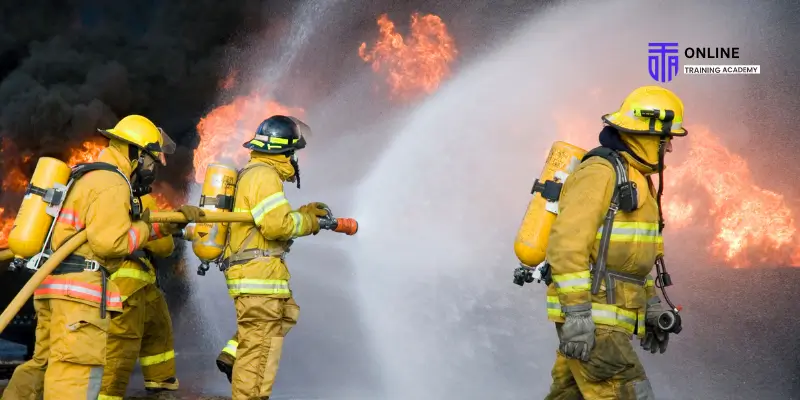
Every Canadian construction site should have appropriate fire-fighting equipment that matches the hazards present. The location of fire extinguishers should be clearly marked, easily accessible, and known to everyone on site.
Different fires require different extinguishing methods. Workers should understand the purpose of each type of extinguisher before attempting to fight a fire.
Common extinguisher classifications include:
- Class A: Ordinary combustible materials such as wood, paper, cardboard, and textiles.
- Class B: Flammable liquids including gasoline, diesel fuel, paint, solvents, and oils.
- Class C: Energized electrical equipment such as temporary power panels, wiring, and electrical tools.
Using the wrong extinguisher may be ineffective or even make a fire worse. Regular fire safety training helps workers recognize different fire types and respond appropriately.
However, worker safety must always come first. Fire extinguishers are intended only for small, manageable fires during the early stages of an incident. If flames are spreading rapidly, smoke is increasing, or escape routes are becoming blocked, workers should evacuate immediately rather than attempting to control the fire themselves.
Emergency Evacuation Planning
A well-developed evacuation plan can save lives during a fire emergency. Construction sites are busy, noisy environments where confusion can develop quickly if workers are unsure where to go or what actions to take.
Every project should have a written emergency response plan that reflects the site’s layout, workforce, and construction activities. As projects progress and work areas change, evacuation procedures should be reviewed and updated accordingly.
An effective evacuation plan should identify:
- Emergency escape routes
- Alternative exit routes
- Assembly points
- Emergency contact numbers
- Roles and responsibilities during evacuation
- Procedures for contacting emergency services
- Worker accountability processes
Emergency plans should be communicated during worker orientations and reinforced through regular toolbox talks.
Maintaining Safe Escape Routes
Escape routes are only effective if they remain accessible throughout the project.
Emergency exits should always:
- Remain free from stored materials.
- Be clearly marked with visible signage.
- Be wide enough for rapid evacuation.
- Remain illuminated where necessary.
- Be protected from obstruction by vehicles or equipment.
Temporary site changes can unintentionally block exits if proper planning is not maintained. Supervisors should routinely inspect escape routes to ensure they remain usable at all times.
Assembly Points and Worker Accountability
Evacuation does not end when workers leave the building or work area. Everyone must report to a designated assembly point where supervisors can confirm that all personnel have exited safely.
Assembly points should be:
- Located away from the danger zone.
- Easy to access.
- Large enough to accommodate the workforce.
- Clearly identified with signage.
Worker accountability is particularly important on large Canadian construction projects involving multiple contractors and subcontractors. Accurate attendance records help emergency responders determine whether anyone may still be inside the affected area.
No worker should re-enter the site until emergency responders or the designated site authority confirms it is safe to do so.
Fire Drills and Emergency Preparedness
Emergency procedures become far more effective when workers have practised them before an actual incident occurs.
Regular fire drills allow workers to:
- Recognize alarm signals quickly.
- Practise evacuation routes.
- Locate assembly points.
- Understand their emergency responsibilities.
- Identify weaknesses in evacuation procedures.
Following each drill, supervisors should review performance and discuss opportunities for improvement. Lessons learned from drills can be used to strengthen emergency response plans before a real emergency occurs.
Emergency preparedness should also include coordination with local fire departments where appropriate, particularly for large or complex construction projects. Sharing information about site access, hazardous materials, and temporary structures can improve emergency response times.
Winter Fire Safety Challenges in Canada
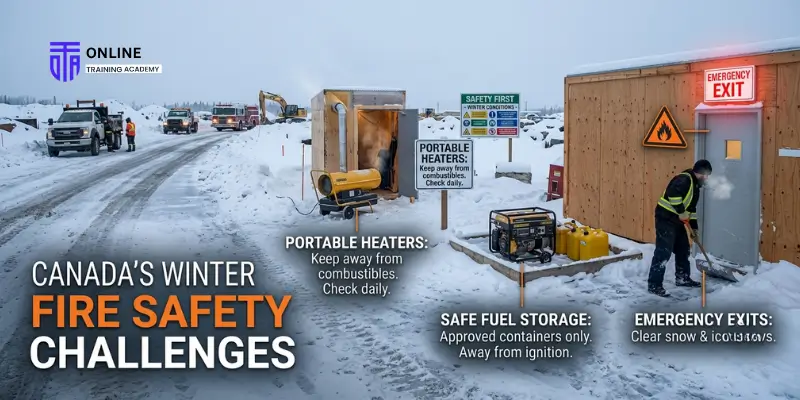
Canada’s climate creates seasonal fire hazards that are less common in many other countries. Cold weather often requires temporary heating equipment, enclosed workspaces, and portable generators to keep projects operational throughout the winter.
These measures introduce additional fire risks if they are not properly managed.
Portable heaters should always be positioned away from combustible materials and operated according to manufacturer instructions. Temporary heating systems should be inspected regularly to ensure they remain in safe working condition.
Fuel for generators and heaters should be stored safely in approved containers and away from ignition sources.
Snow and ice can also create unexpected challenges during emergencies by blocking exits, restricting emergency vehicle access, or making evacuation routes slippery. Site managers should ensure that emergency exits, access roads, and assembly areas remain clear throughout the winter months.
Roles and Responsibilities for Fire Safety
Fire safety is a shared responsibility that involves everyone on the construction site.
Employers
Employers are responsible for providing a safe workplace by:
- Conducting fire risk assessments.
- Developing emergency response plans.
- Providing fire safety training.
- Maintaining fire protection equipment.
- Ensuring legal compliance.
Supervisors
Supervisors play a key role by:
- Monitoring daily work activities.
- Enforcing fire safety procedures.
- Conducting inspections.
- Correcting unsafe practices.
- Leading emergency evacuations.
Workers
Workers contribute to fire safety by:
- Following site procedures.
- Reporting hazards immediately.
- Keeping work areas clean.
- Using equipment safely.
- Participating in training and emergency drills.
- Never bypassing safety controls.
When every worker understands their responsibilities, fire prevention becomes far more effective.
Fire Safety Inspections and Continuous Improvement
Fire safety management is an ongoing process rather than a one-time task.
Routine inspections should examine:
- Temporary electrical systems.
- Hot work locations.
- Fire extinguishers.
- Fuel storage areas.
- Emergency exits.
- Escape routes.
- Fire alarm systems.
- Housekeeping standards.
Any hazards identified during inspections should be corrected promptly.
Near misses should also be investigated because they often reveal weaknesses before a serious incident occurs. Learning from minor events allows organizations to improve procedures and strengthen future fire prevention efforts.
Common Fire Safety Mistakes on Construction Sites
Many construction fires result from preventable mistakes rather than unavoidable accidents.
Some of the most common errors include:
- Blocking emergency exits with materials or equipment.
- Leaving combustible waste to accumulate.
- Using damaged electrical cords.
- Storing fuel near ignition sources.
- Performing hot work without a permit.
- Failing to inspect fire extinguishers.
- Ignoring faulty alarms.
- Inadequate worker training.
- Poor communication between contractors.
- Skipping regular fire drills.
Avoiding these mistakes significantly improves overall site safety.
Conclusion
Fire safety is a fundamental part of construction health and safety in Canada. Because construction sites are constantly changing, fire risks must be managed through continuous planning, hazard assessments, worker training, and regular inspections rather than relying on reactive measures after an incident occurs.
An effective fire safety program combines prevention, early detection, emergency preparedness, and continuous improvement. By implementing safe hot work procedures, maintaining temporary electrical systems, storing flammable materials correctly, conducting regular fire drills, and ensuring clear evacuation routes, construction employers can significantly reduce the likelihood of serious fire incidents.
Most importantly, creating a strong fire safety culture requires commitment from everyone on site. When employers provide the right systems, supervisors actively enforce safe practices, and workers remain alert to potential hazards, construction projects become safer, more productive, and better prepared to respond to emergencies.
Ultimately, fire safety is not just about meeting legal requirements—it is about protecting lives, safeguarding valuable projects, and ensuring that every worker returns home safely at the end of the day.
FAQs
Hot work activities, faulty temporary electrical systems, improper storage of flammable materials, fuel handling, smoking in prohibited areas, and poor housekeeping are among the leading causes of construction site fires.
Preventing a fire eliminates the risk before lives and property are threatened. While emergency response is essential, preventing ignition is always the safest and most cost-effective approach.
A hot work permit is a formal authorization process used before activities such as welding, cutting, or grinding. It confirms that hazards have been assessed, combustible materials have been removed or protected, and fire prevention measures are in place.
Fire extinguishers should be visually checked regularly and inspected according to applicable regulations and manufacturer recommendations to ensure they remain fully operational.
Cold weather often requires temporary heating equipment and enclosed workspaces, which can increase fire risks. Snow and ice may also obstruct emergency exits or delay emergency response if not properly managed.
Fire safety is a shared responsibility. Employers, supervisors, workers, contractors, and subcontractors all play important roles in preventing fires and responding safely during emergencies.
Learn More





Get a FREE Course
- Learn useful skills online free
- Get CPD accredited certificate
- Add it to your CV today!