


A customer buys a product online. The website is easy to use, the checkout is smooth, and delivery is fast. Everything works perfectly. A week later, they contact support with a simple issue and receive slow, unclear responses. The product experience was strong. The service experience was not.
This difference highlights a common misunderstanding. Many businesses focus on improving customer service without fully understanding how it connects to the broader customer experience. Others invest in experience design but overlook the quality of direct interactions.
Customer service and customer experience are closely related, but they are not the same. Understanding how they differ and how they work together is essential for building a business that customers trust and return to.
What Is the Difference Between Customer Service and Customer Experience?
Customer service and customer experience operate at different levels, even though they are often used interchangeably. Customer service refers to direct interactions between a business and its customers. It includes answering questions, resolving issues, and providing support.
Customer experience, often referred to as CX, represents the overall perception a customer forms based on every interaction with a business.
Customer Service as a Touchpoint
Customer service is one part of the broader journey. It is most visible when customers need help, clarification, or problem resolution. These interactions are often short but highly influential.
Customer Experience as the Full Journey
Customer experience includes every stage of interaction, from first awareness to post-purchase engagement. It combines product quality, branding, usability, communication, and service into a single perception.
Key Difference in Scope and Impact
Customer service is specific and interaction-based. Customer experience is continuous and perception-based. Improving service can enhance experience, but improving experience requires a broader, system-level approach.
Customer Service vs Customer Experience: Key Differences, Benefits and Business Impact
"Customer service and customer experience both influence how people interact with a business, but they serve different roles. This blog explains the key differences between the two, their benefits, and how they impact customer satisfaction, loyalty, and overall business performance in today's competitive marketplace.
"
Table of Contents
How Customer Service Shapes Customer Experience
Customer service plays a critical role in shaping how the overall experience is perceived. While customer experience is built across multiple touchpoints, service interactions often carry the strongest emotional weight. These moments influence whether a customer feels confident, frustrated, or valued.
Moments That Matter Most
Customers are more likely to remember interactions that involve help, problems, or uncertainty. These moments often occur when expectations are not fully met or when guidance is needed. A delayed response, unclear answer, or helpful interaction during these situations can define how the entire experience is judged. Even a single interaction can outweigh several smooth but unnoticed ones.
Service as a Trust Builder
Effective service builds confidence over time. When customers know they can rely on quick, clear, and helpful support, they feel more comfortable engaging with the business. This trust reduces hesitation during future purchases and strengthens long-term relationships. Consistent service reinforces the idea that the business is dependable.
Handling Problems as Experience Drivers
Problems are unavoidable in any customer journey. What determines the outcome is how those problems are handled. A well-managed issue, with clear communication and timely resolution, can improve the overall experience and increase loyalty. On the other hand, poor handling can amplify frustration and lead to negative perceptions that extend beyond the original issue.
Emotional Impact of Service Interactions
Customer service is one of the few areas where businesses directly influence customer emotions. A respectful tone, patience, and understanding can reduce stress and create a positive impression, even in difficult situations. These emotional responses often shape how customers remember the entire experience.
Consistency as a Reinforcing Factor
Consistent service across different interactions and channels strengthens the overall experience. When customers receive the same level of clarity and support every time, it builds reliability. Inconsistent service, however, creates uncertainty and weakens trust, even if some interactions are positive.
Business Value: Why Both Customer Service and Experience Matter
Customer service and customer experience are not just operational functions. They have direct and measurable business impact. Together, they influence how customers behave, how they perceive a brand, and how a business grows over time.
Impact on Customer Retention
Customers are more likely to stay with businesses that provide consistent and reliable experiences. Retention is not built through a single interaction but through repeated positive experiences over time. Service quality plays a key role in maintaining this consistency, especially during moments when customers need support or reassurance. When customers know they will be treated well, they are less likely to switch to competitors.
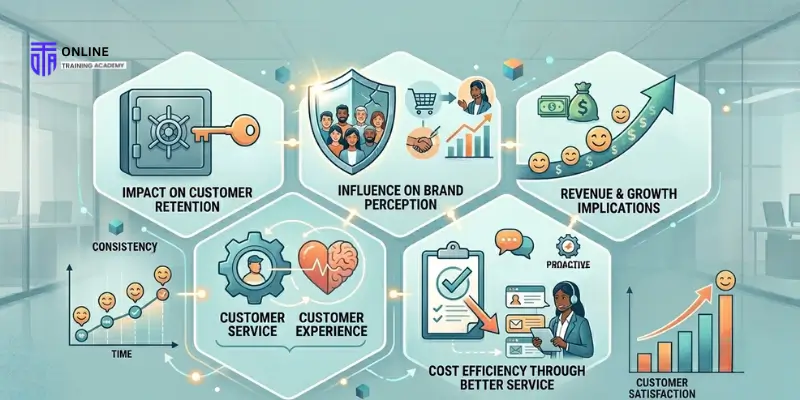
Influence on Brand Perception
Customer experience shapes how a brand is viewed in the market. Every interaction contributes to this perception, whether it is a smooth purchase process or a well-handled complaint. Service interactions often reinforce or challenge that perception. A strong brand image can be weakened by poor service, while consistent and thoughtful service can strengthen trust and credibility.
Revenue and Growth Implications
Strong service and experience strategies contribute directly to business growth. Customers who have positive experiences are more likely to return, spend more, and recommend the business to others. This creates a cycle of organic growth that reduces reliance on constant customer acquisition.
Businesses that invest in both service and experience often see:
- Increased repeat purchases, as satisfied customers return with confidence
- Higher customer lifetime value, driven by long-term relationships
- Positive referrals and reviews, which influence new customer decisions
Cost Efficiency Through Better Service
Effective customer service also reduces operational costs. Clear communication, faster resolution, and proactive support minimise repeated contacts and escalations. This improves efficiency while maintaining a higher level of customer satisfaction.
Competitive Advantage in Saturated Markets
In markets where products and pricing are similar, service and experience become key differentiators. Businesses that deliver consistent, high-quality interactions stand out and build stronger customer loyalty, even in highly competitive environments.
Customer Service Channels and Their Role in Experience Design
Different service channels contribute to the overall experience in different ways.
Multi-Channel vs Omnichannel Approach
A multi-channel approach offers several ways to contact a business, but these channels often operate independently. An omnichannel approach connects these channels, allowing customers to move between them without losing context.
Consistency Across Channels
Customers expect the same level of service regardless of the channel they use. Inconsistency can weaken the overall experience.
Channel Selection Based on Customer Needs
Different situations require different channels. Simple queries may be handled through self-service, while complex issues may require direct interaction.
Customer Support vs Customer Experience Roles in Organisations
Understanding how these roles function inside an organisation helps explain why some businesses deliver consistent experiences while others struggle. Customer support and customer experience operate at different levels, but both are essential for delivering value.
Customer Support Teams
Customer support teams focus on resolving issues and responding to customer queries. Their work is reactive and centred around direct interactions. They handle complaints, answer questions, and guide customers through problems in real time.
Support teams often deal with high volumes of requests, which means efficiency and clarity are critical. However, they also sit closest to the customer. This gives them first-hand insight into recurring issues, common frustrations, and gaps in processes that may not be visible elsewhere in the organisation.
Customer Experience Teams
Customer experience teams focus on the overall journey rather than individual interactions. Their role is to design, measure, and improve how customers move through each stage, from initial contact to long-term engagement.
They analyse data from multiple sources, including customer feedback, behaviour patterns, and support interactions. This allows them to identify pain points, inefficiencies, and opportunities for improvement across systems, processes, and touchpoints.
Collaboration Between Teams
Effective organisations do not treat these teams as separate functions. They create a feedback loop where insights from support teams inform experience improvements.
For example, if support teams repeatedly handle the same issue, CX teams can redesign the process to prevent it from occurring. This reduces workload, improves efficiency, and enhances the overall customer experience. Alignment between these teams ensures that problems are not just solved but reduced over time.
Real-World Examples: Service vs Experience in Practice
Examples help illustrate how these concepts differ and interact.
Example of Strong Experience but Weak Service
A business offers a well-designed website and fast delivery, but poor customer support. The result is a mixed perception, where convenience is offset by frustration.
Example of Strong Service Enhancing Experience
A customer faces an issue but receives quick, clear, and respectful support. The service interaction improves the overall experience and increases trust.
Key Insight from These Examples
Customer experience is shaped by multiple factors, but customer service often has the strongest emotional impact.
Common Mistakes Businesses Make

Many businesses struggle to balance service and experience effectively.
Focusing Only on One Area
Improving service without considering the full experience leads to limited results. The same applies when focusing only on experience design.
Ignoring Customer Feedback
Feedback provides insight into both service quality and overall experience. Ignoring it creates blind spots.
Lack of Integration Between Channels
Disconnected systems lead to repeated information and inconsistent interactions.
How to Align Customer Service with Customer Experience
Alignment between customer service and customer experience does not happen by default. It requires a structured approach that connects daily interactions with long-term experience design. When aligned, service becomes a tool for improving the overall journey, not just resolving issues.
Mapping the Customer Journey
Understanding each stage of the customer journey helps identify where service interactions occur and how they influence perception. This includes pre-purchase research, the buying process, post-purchase support, and long-term engagement.
By mapping these stages, businesses can see where friction exists and where service plays a critical role. It also highlights gaps where customers may struggle without support.
Using Data to Identify Pain Points
Customer service data is one of the most valuable sources of insight. Repeated complaints, common questions, and escalation patterns reveal where the experience is breaking down.
Analysing this data allows businesses to move beyond reactive support and address root causes. This reduces the volume of issues over time and improves the overall experience.
Creating Consistent Standards Across Touchpoints
Defining clear service standards ensures that customers receive the same level of support regardless of how they interact with the business. This includes tone of communication, response times, and resolution quality.
Consistency across touchpoints strengthens trust and reduces uncertainty, which is essential for a strong customer experience.
Closing the Feedback Loop
Alignment improves when feedback does not stop at resolution. Insights gathered from customer interactions should be shared across teams to inform product, process, and experience improvements.
This creates a continuous improvement cycle where service interactions actively shape the customer experience rather than simply responding to it.
Balancing Efficiency with Experience Quality
While efficiency is important, focusing only on speed can reduce the quality of interactions. Alignment requires balancing quick responses with meaningful support.
Customers value both timely and effective service, and achieving this balance is key to delivering a consistent and positive experience.
Conclusion
Customer service and customer experience are not competing ideas. They are interconnected layers of the same system. Customer experience sets the expectation. Customer service confirms whether that expectation is met.
Businesses that understand this connection move beyond isolated improvements. They create systems where every interaction supports a consistent and reliable experience. The result is not just satisfied customers, but customers who choose to return.
FAQs
Customer service focuses on direct interactions, while customer experience represents the overall perception of a brand.
It influences customer satisfaction, loyalty, and long-term business success.
Yes. Strong service cannot fully compensate for weak systems or poor overall design.
It is an integrated approach where all service channels are connected and consistent.
Both are important and should work together to deliver value.
Learn More





Get a FREE Course
- Learn useful skills online free
- Get CPD accredited certificate
- Add it to your CV today!