
Introduction
Cryotherapy is often associated with muscle recovery and wellness, but every safe treatment begins long before the cold is applied. From assessing a client’s medical history to monitoring their response during treatment, practitioners make a series of decisions that help reduce risks and support positive outcomes. This is why safety is one of the most important aspects of cryotherapy training.
A quality training program teaches more than how to perform a procedure. It helps practitioners understand when cryotherapy is appropriate, how to identify potential risks, and how to communicate clearly with clients throughout the treatment process. These skills are essential for delivering safe, responsible, and evidence-informed care.
In this guide, we’ll explore the key safety standards every cryotherapy practitioner should follow, how professional training prepares learners to meet those standards, and why a safety-first approach benefits both practitioners and clients.
Table of Contents
Cryotherapy Training
Cryotherapy Training provides practical knowledge of cryotherapy principles, safety procedures, treatment applications, client assessment, contraindications, and aftercare. Learn how cold therapy supports recovery, pain management, and overall wellbeing while developing the confidence to deliver treatments safely and professionally.
What Safety Standards Should Every Cryotherapy Practitioner Follow?
Safety is the foundation of effective cryotherapy practice. While treatment techniques are important, they must always be supported by careful planning, client assessment, and professional judgement. A well-trained practitioner understands that every client is different and that safe treatment starts with informed decision-making.
Rather than relying on a standard routine, cryotherapy training teaches practitioners to evaluate each situation individually and follow established safety procedures throughout the client journey.
The Short Answer
Cryotherapy training helps practitioners maintain high safety standards by teaching them to:
- Assess clients before treatment.
- Identify contraindications and potential risks.
- Explain procedures and obtain informed consent.
- Monitor clients throughout treatment.
- Provide appropriate aftercare.
- Document treatments accurately.
Together, these steps help reduce avoidable risks while improving the overall quality of care.
A Step-by-Step Safety Workflow
One of the biggest advantages of structured cryotherapy training is learning a clear and consistent safety workflow. Rather than focusing only on the treatment itself, practitioners are taught to consider every stage of the client experience.
A typical safety process includes:
- Reviewing the client's health history and recovery goals.
- Identifying any contraindications or concerns.
- Explaining the procedure and answering questions.
- Preparing the treatment area and equipment.
- Monitoring the client throughout the session.
- Providing aftercare advice.
- Recording treatment details and observations.
Following this structured approach helps practitioners remain organized while promoting safe and consistent care.
Why Safety Builds Client Trust
Clients are more likely to feel comfortable when they know their wellbeing is the practitioner’s priority.
Simple actions—such as asking detailed health questions, explaining what to expect, and encouraging clients to communicate during treatment—demonstrate professionalism and build confidence.
Over time, these practices strengthen trust and contribute to a positive client experience, which is just as important as the treatment itself.
How Does Cryotherapy Training Prepare Practitioners for Safe Practice?
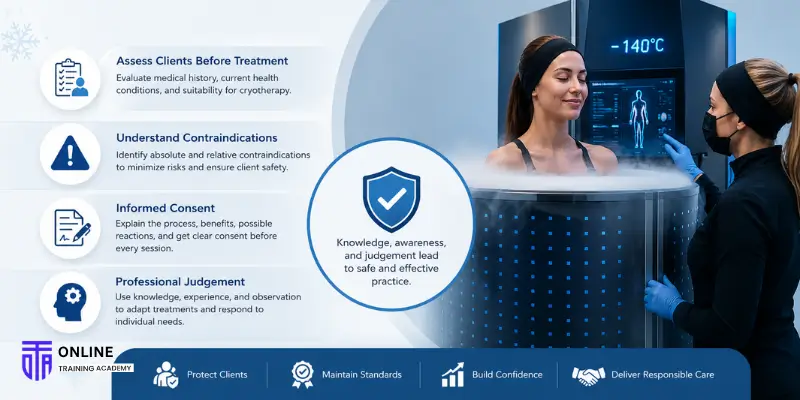
Quality cryotherapy training goes beyond teaching how cold therapy works. It prepares practitioners to recognize potential risks, make informed decisions, and adapt treatments to each client’s individual circumstances.
These skills help practitioners move beyond following instructions and develop the confidence to deliver responsible care.
Learning to Assess Clients Before Treatment
Every client has unique health needs and recovery goals, making assessment one of the most important safety skills taught during training.
Practitioners learn how to review:
- Medical history
- Current symptoms
- Previous injuries
- Recovery objectives
- Lifestyle and activity level
- Factors that may affect treatment suitability
This information helps determine whether cryotherapy is appropriate or whether additional medical advice should be recommended before proceeding.
Understanding Absolute and Relative Contraindications
Another essential part of cryotherapy training is understanding when treatment should be avoided or approached with extra caution.
Some conditions may make cryotherapy unsuitable, while others require careful assessment before treatment is considered.
Training helps practitioners recognize common contraindications, such as:
- Certain cold sensitivity disorders
- Severe reactions to cold exposure
- Specific cardiovascular conditions
- Open wounds or skin conditions affecting the treatment area
- Other medical concerns that may require healthcare guidance
Recognizing these situations protects both the client and the practitioner while supporting informed decision-making.
The Importance of Informed Consent
Safe practice also depends on clear communication.
Before treatment begins, clients should understand:
- What cryotherapy involves
- Why it has been recommended
- Possible benefits
- Potential risks and limitations
- What they may experience during treatment
Cryotherapy training emphasizes informed consent because it encourages open discussion and helps clients make confident decisions about their care.
Why Professional Judgement Matters
No two clients are exactly alike, and no checklist can replace professional judgement.
Throughout their training, practitioners learn to evaluate each situation carefully rather than applying the same approach to everyone. Sometimes, the safest decision is to delay treatment, recommend an alternative approach, or advise the client to seek further medical assessment.
This ability to make thoughtful decisions is one of the most valuable outcomes of quality cryotherapy training. It demonstrates that safe practice is about understanding the individual—not simply following a procedure.
What Happens Before, During, and After a Safe Cryotherapy Session?
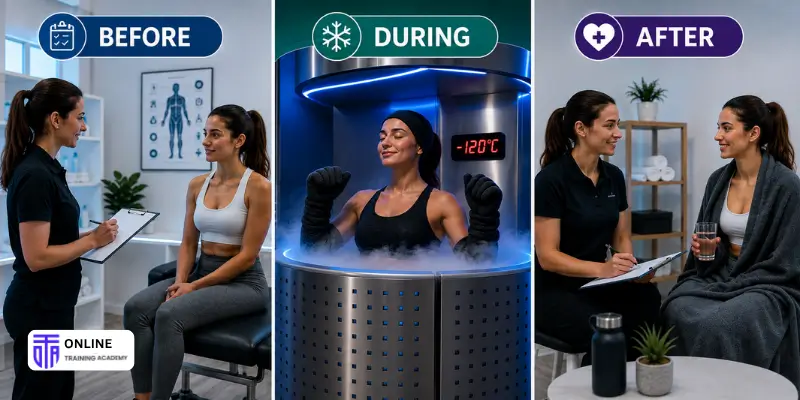
A safe cryotherapy session involves much more than applying cold therapy. Every stage of the process—from preparation to follow-up—helps reduce risks and improve the client experience. Cryotherapy training teaches practitioners to follow a structured approach so that safety remains the priority throughout the session.
Preparing Clients for Treatment
Preparation begins with a conversation. Before treatment starts, practitioners gather relevant information, explain the procedure, and answer any questions the client may have.
Training teaches practitioners to:
- Review the client's health history and current symptoms.
- Discuss recovery or treatment goals.
- Explain what the session involves.
- Identify any contraindications or concerns.
- Ensure the client understands what to expect.
This preparation helps clients feel informed while allowing practitioners to determine whether cryotherapy is appropriate.
Monitoring During Cryotherapy
Client care continues throughout the treatment. Rather than leaving clients unattended, trained practitioners monitor their comfort and observe how they respond to cold exposure.
During the session, practitioners may monitor:
- Client comfort and communication
- Skin appearance
- Treatment duration
- Equipment performance
- Any signs of unexpected discomfort
Regular communication during treatment allows practitioners to respond quickly if adjustments are needed.
Post-Treatment Care
A cryotherapy session doesn’t end when the treatment is complete. Aftercare is another important part of safe practice.
Practitioners learn to:
- Ask clients how they feel following treatment.
- Check for any unusual skin reactions.
- Provide aftercare recommendations.
- Explain when additional advice or medical attention may be appropriate.
- Schedule follow-up if needed.
These steps help support recovery while encouraging clients to remain aware of their body’s response after treatment.
What Risks Do Practitioners Learn to Prevent?
Like any wellness or recovery technique, cryotherapy has potential risks if it’s used incorrectly or without proper assessment. That’s why safety education is a central part of cryotherapy training.
Rather than focusing only on the benefits, quality training helps practitioners recognize situations where extra care—or avoiding treatment altogether—is the safest option.
Common Risks Associated with Cryotherapy
Training introduces practitioners to risks that may occur if cryotherapy isn’t used appropriately.
These may include:
- Cold-related skin injuries
- Discomfort from excessive cold exposure
- Incorrect treatment duration
- Equipment misuse
- Treating clients with unsuitable medical conditions
Understanding these risks helps practitioners make informed decisions that prioritize client safety.
Common Beginner Mistakes
Many avoidable problems are linked to inexperience rather than the treatment itself.
Cryotherapy training helps beginners avoid mistakes such as:
- Skipping a detailed client consultation
- Ignoring contraindications
- Failing to explain realistic expectations
- Rushing through treatment procedures
- Neglecting proper documentation
Learning from these common mistakes early helps practitioners build safer habits from the beginning of their careers.
Balancing Benefits with Safety
Cryotherapy may support muscle recovery and temporary pain management, but responsible practitioners understand that these potential benefits should always be balanced with individual client needs.
Training encourages practitioners to avoid overstating what cryotherapy can achieve. Instead, they learn to provide balanced, evidence-informed information while recognizing that cryotherapy is only one part of a broader health and recovery plan.
Why Equipment, Hygiene, and Documentation Matter
Safe cryotherapy isn’t determined by treatment technique alone. Equipment maintenance, hygiene practices, and accurate documentation all contribute to consistent, high-quality client care.
These areas are often overlooked by beginners, but they play an important role in professional practice.
Equipment Safety
Before providing treatment, practitioners should ensure equipment is suitable for use and operated according to recommended procedures.
Cryotherapy training highlights the importance of:
- Inspecting equipment before use.
- Following manufacturer guidance.
- Recognizing signs of equipment problems.
- Using equipment only as intended.
- Maintaining a safe treatment environment.
Good equipment practices help reduce avoidable risks and support consistent treatment quality.
Hygiene and Infection Prevention
Maintaining a clean treatment environment protects both practitioners and clients.
Training commonly includes guidance on:
- Hand hygiene before and after treatments.
- Cleaning treatment areas.
- Sanitizing reusable equipment where applicable.
- Preventing cross-contamination.
- Following workplace hygiene policies.
Simple hygiene practices help create a safer and more professional environment.
Accurate Documentation
Keeping detailed treatment records is another important safety standard.
Documentation may include:
- Client assessment findings.
- Relevant medical information.
- Treatment details.
- Client responses.
- Aftercare advice provided.
- Follow-up recommendations.
Clear records support continuity of care and demonstrate professional accountability.
A Real-World Example
Imagine a client visits a wellness clinic after experiencing muscle soreness from a weekend cycling event.
Rather than immediately beginning treatment, the practitioner reviews the client’s medical history, discusses their symptoms, and checks for any contraindications. After explaining the procedure and obtaining informed consent, the practitioner carefully monitors the client throughout the session and provides aftercare advice before documenting the treatment.
This example illustrates an important principle taught in cryotherapy training: safe practice isn’t defined by the treatment itself but by the thoughtful decisions made before, during, and after every session.
How Can Practitioners Maintain High Safety Standards Over Time?
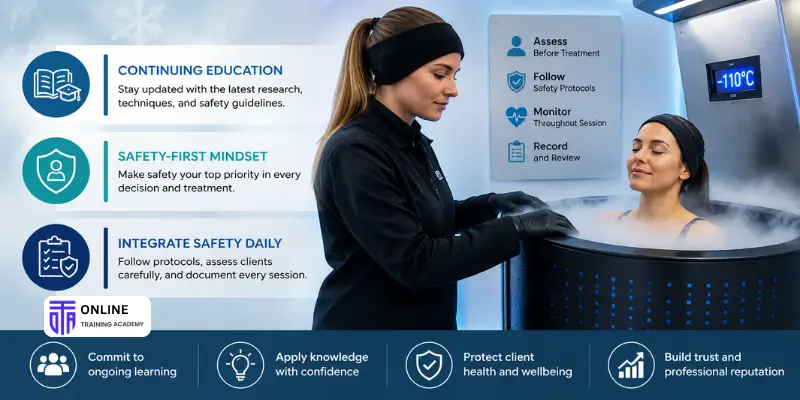
Completing a cryotherapy training course is an important first step, but maintaining high safety standards requires an ongoing commitment to learning and professional responsibility. As research, equipment, and best practices continue to evolve, practitioners should regularly update their knowledge to provide safe and effective care.
The Role of Continuing Education
Continuing education helps practitioners stay informed about new developments in cryotherapy and reinforces the importance of evidence-informed practice.
It can help practitioners:
- Keep up with current research.
- Refresh their understanding of safety procedures.
- Learn about updated equipment and techniques.
- Improve client communication and assessment skills.
- Strengthen confidence in professional practice.
Ongoing learning supports both practitioner development and client safety.
Building a Safety-First Mindset
Safety isn’t something practitioners think about only during training—it should influence every decision they make.
Developing a safety-first mindset means:
- Assessing every client individually.
- Following consistent treatment procedures.
- Communicating honestly about benefits and limitations.
- Recognizing when treatment should be postponed or avoided.
- Prioritizing client well-being over convenience.
These habits help create a professional environment where clients feel informed, respected, and supported.
Integrating Safety into Everyday Practice
The safest practitioners don’t rely on memory or assumptions. Instead, they make safety part of every session by following a consistent process.
Simple habits include:
- Completing a client assessment before every treatment.
- Checking equipment before use.
- Monitoring clients throughout the session.
- Recording accurate treatment notes.
- Reviewing aftercare instructions before the client leaves.
When these steps become routine, practitioners are better prepared to provide consistent and responsible care.
Conclusion
Safe cryotherapy begins with knowledge, careful assessment, and a commitment to professional responsibility. While treatment techniques are important, they’re only one part of delivering effective client care.
Quality cryotherapy training equips practitioners with the skills to assess clients, recognize potential risks, communicate clearly, and apply cryotherapy safely within a structured treatment process. These standards not only help reduce risks but also build trust and confidence in every client interaction.
If you’re planning to offer cryotherapy as part of your practice, choose a training program that places safety, evidence-based learning, and client care at its core. Building strong safety habits today can help you provide responsible, high-quality care throughout your career.
FAQs
Cryotherapy training teaches practitioners how to assess clients, identify contraindications, communicate effectively, and follow safe treatment procedures. It helps reduce avoidable risks while promoting evidence-informed practice.
Before treatment, practitioners should review the client’s medical history, current symptoms, recovery goals, and any conditions that may affect treatment suitability. This assessment helps determine whether cryotherapy is appropriate.
Cryotherapy may not be suitable for everyone. Individuals with certain medical conditions or cold-related sensitivities may require additional medical advice before treatment. Proper screening is an essential part of safe practice.
A safe session includes monitoring the client’s comfort, observing their response to treatment, maintaining communication, and following recommended treatment times. The practitioner remains attentive throughout the procedure.
Some common mistakes include skipping client assessments, overlooking contraindications, rushing treatment, failing to explain procedures clearly, and keeping incomplete treatment records. Quality training helps practitioners recognize and avoid these issues.
Accurate documentation creates a record of assessments, treatments, and client responses. It supports continuity of care, helps monitor progress, and demonstrates professional accountability.
Practitioners can continue learning through refresher courses, industry publications, professional development opportunities, and by following evidence-informed guidance as new research becomes available.
Learn More
Get a FREE Course
- Learn useful skills online free
- Get CPD accredited certificate
- Add it to your CV today!