


A child may speak confidently yet struggle to understand a story, while another may read words accurately but find it difficult to explain what they have read. These challenges can be confusing for parents and educators because they are not always obvious. In many cases, they stem from underlying speech and language difficulties that also affect literacy development.
Speech, language, and literacy are closely connected. When children experience difficulties with communication, they may also find it harder to develop reading, writing, and comprehension skills. Recognising these challenges early is important because the right support can strengthen the foundation children need for learning.
This article explores the most common challenges in Speech and Language Therapy (Literacy and Language Development), why they occur, and how targeted intervention can help children build stronger communication and literacy skills.
Table of Contents
Speech and Language Therapy (Literacy and Language Development)
Speech and Language Therapy (Literacy and Language Development) explores essential strategies for supporting communication, language, reading, and writing skills, helping learners understand language development and promote effective literacy and communication outcomes.
What Are the Most Common Challenges in Speech and Language Therapy (Literacy and Language Development)?
Speech and language therapy supports children with a wide range of communication challenges that can affect literacy development. These challenges may involve producing speech sounds, understanding language, expressing ideas, or developing the skills needed for reading and writing. Because every child develops differently, therapy focuses on identifying each child’s individual strengths and areas for support.
While some children experience only one area of difficulty, others may face challenges across several aspects of communication. Understanding these differences is the first step towards providing effective support.
Speech, Language, Communication, and Literacy: What's the Difference?
Although these terms are often used interchangeably, they refer to different but closely related skills.
➽ Speech is how children produce sounds and pronounce words clearly.
➽ Language involves understanding and using words, sentences, and grammar to communicate ideas.
➽ Communication includes listening, speaking, understanding, and interacting with others in everyday situations.
➽ Literacy refers to the ability to read, write, understand, and use written language effectively.
These skills develop together throughout childhood. A child who struggles with language may find it more difficult to understand stories, learn new vocabulary, or develop reading comprehension, even if their speech is clear.
Why These Challenges Affect More Than Reading
Communication challenges rarely affect reading alone. Because language is used across every subject, difficulties can influence many areas of a child’s education and daily life.
Children may experience challenges with:
- Following classroom instructions
- Learning new vocabulary
- Participating in discussions
- Understanding stories and information
- Organising their thoughts when speaking or writing
- Building confidence in social situations
For example, a child who has difficulty understanding complex sentences may also struggle to follow multi-step instructions in the classroom or explain their ideas during group activities. Over time, these difficulties can affect both learning and self-confidence if appropriate support is not provided.
Why Early Identification Matters
Not every communication difficulty requires speech and language therapy, and children naturally develop at different rates. However, persistent challenges with speech, language, or communication should not be ignored.
Early identification allows families and educators to understand a child’s needs before difficulties begin affecting literacy, academic progress, or social participation. It also provides an opportunity to develop strategies that build communication skills during the years when children are most responsive to language learning.
Rather than waiting until reading becomes a struggle, early support focuses on strengthening the foundations of literacy from the start. With timely intervention, many children can improve their communication skills, participate more confidently in learning, and develop stronger reading and writing abilities as they progress through school.
Why Do Some Children Experience Speech and Language Challenges?
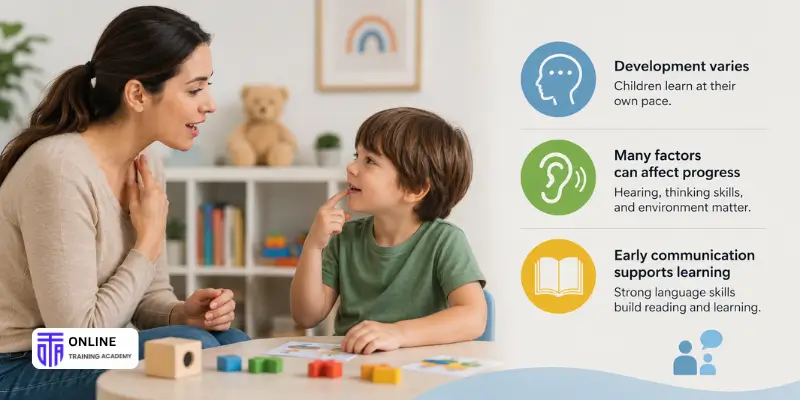
Children develop speech and language skills at their own pace, so occasional mistakes or slight delays are often a normal part of learning. However, when communication difficulties persist or begin to affect everyday activities and learning, they may require additional support. Understanding the possible reasons behind these challenges can help families and educators respond early and appropriately.
Developmental Differences and Individual Learning Pace
Every child follows a unique developmental journey. Some begin speaking in full sentences at an early age, while others take more time to build vocabulary or communicate confidently. These differences do not always indicate a speech or language disorder, but ongoing difficulties should be monitored, particularly if they begin affecting literacy or classroom learning.
Regular interaction, reading, and opportunities for conversation can support language development, while early assessment can help identify children who may benefit from additional intervention.
Hearing, Cognitive, and Environmental Factors
Speech and language development can be influenced by a range of factors, and there is rarely a single cause. Some children may experience challenges related to hearing difficulties, developmental conditions, learning differences, or limited opportunities for rich language interactions during early childhood.
Environmental factors also play a role. Children learn language through everyday conversations, storytelling, songs, and play. Frequent opportunities to listen, ask questions, and express ideas help strengthen the communication skills that later support literacy.
How Early Communication Shapes Literacy Development
Children learn to communicate before they learn to read. As they build vocabulary, recognise speech sounds, understand sentence structures, and engage in conversations, they develop the skills needed to decode words and understand written text.
When these early language skills are delayed, learning to read may become more challenging. Children may struggle with recognising sound patterns, understanding new vocabulary, or following the meaning of stories, all of which can affect literacy development.
Why Every Child's Journey Is Different
No two children experience speech and language challenges in exactly the same way. Some may only need short-term support, while others benefit from ongoing intervention that addresses multiple areas of communication.
Speech and language therapists assess each child’s individual strengths and needs before developing a personalised support plan. This tailored approach helps ensure that therapy focuses on the skills most likely to improve communication, literacy, and overall learning outcomes.
Which Speech and Language Challenges Can Affect Literacy Development?
Speech and language difficulties can influence many of the skills children need to become successful readers and writers. While every child is different, certain challenges are more closely linked to literacy development because they affect how children process, understand, and use language.
Recognising these challenges early allows parents, educators, and therapists to provide support before they begin affecting academic progress.
Difficulty Recognising and Manipulating Speech Sounds
One of the most common literacy-related challenges involves phonological awareness—the ability to recognise and work with the sounds in spoken words.
Children may have difficulty:
- Recognising rhyming words
- Identifying beginning or ending sounds
- Blending individual sounds into words
- Breaking words into smaller sound units
These skills are essential for learning phonics and decoding unfamiliar words. When children struggle with sound awareness, reading often becomes more difficult because they find it harder to connect letters with the sounds they represent.
Limited Vocabulary and Language Comprehension
A strong vocabulary helps children understand what they read, follow classroom discussions, and learn new concepts across different subjects.
Children with limited vocabulary may:
- Find unfamiliar words confusing
- Struggle to understand stories
- Have difficulty following instructions
- Need extra time to process information
Speech and language therapy supports vocabulary development through meaningful conversations, storytelling, and activities that encourage children to understand and use new words in different contexts.
Challenges with Grammar, Sentence Structure, and Storytelling
Reading comprehension depends on more than recognising individual words. Children also need to understand how words fit together to create meaning.
Difficulties with grammar or sentence structure can make it harder to:
- Understand longer sentences
- Organise ideas logically
- Retell stories in sequence
- Express thoughts clearly in speech and writing
Therapy helps strengthen these skills by encouraging children to build sentences, describe events, and organise information more effectively.
Reading Comprehension and Written Expression Difficulties
Some children can read words accurately but still struggle to understand what they have read or explain it in their own words. Others may understand a story when it is read aloud but find it difficult to express their ideas in writing.
Speech and language therapy helps address these challenges by improving listening comprehension, vocabulary, reasoning, and expressive language. As these communication skills develop, children are often better able to understand texts, organise their thoughts, and communicate their ideas with greater confidence—both in the classroom and beyond.
What Are the Signs That a Child May Need Extra Support?

Every child develops communication skills at their own pace, and occasional mistakes are a natural part of learning. However, if difficulties persist or begin to affect reading, learning, or everyday communication, it may be time to seek additional support. Recognising these signs early can help children receive the guidance they need before small challenges become bigger obstacles.
Early Signs in Toddlers and Preschool Children
Communication difficulties often become noticeable during the early years as children begin learning new words and interacting with others.
Some common signs include:
- Delayed speech or limited vocabulary
- Difficulty following simple instructions
- Trouble combining words into sentences
- Limited interest in books or storytelling
- Difficulty understanding questions
- Challenges interacting with other children
While these signs do not always indicate a speech or language disorder, ongoing concerns should be discussed with an appropriate healthcare or education professional.
Signs During the Early School Years
As children start school, communication demands increase. Difficulties that were less noticeable during preschool may become more apparent as literacy skills develop.
Children may:
- Struggle to recognise letter sounds or rhyming words
- Have difficulty understanding stories or classroom instructions
- Find it challenging to learn new vocabulary
- Avoid reading aloud or participating in discussions
- Experience difficulties organising their ideas when speaking or writing
Identifying these challenges early can help prevent them from affecting long-term learning and confidence.
When Challenges Begin Affecting Reading and Learning
Communication difficulties can influence much more than literacy. Children may become frustrated during classroom activities, lose confidence when completing reading tasks, or avoid situations where they need to speak or read aloud.
Parents and educators should pay attention if a child consistently:
- Falls behind classmates in language or reading development
- Becomes anxious during literacy activities
- Frequently misunderstands instructions
- Has difficulty expressing ideas clearly
- Shows little progress despite regular support
Recognising these patterns early allows appropriate strategies to be introduced before academic demands become more complex.
When to Seek Advice from a Speech and Language Therapist
If communication or literacy difficulties continue over time or begin affecting everyday learning, seeking advice from a speech and language therapist can be beneficial.
An assessment helps identify the child’s strengths, areas for development, and the most appropriate support strategies. Early intervention does not simply focus on addressing current challenges—it also helps build the communication skills children need for future learning, confidence, and literacy success.
How Does Speech and Language Therapy Help Children Overcome These Challenges?
Speech and language therapy is designed to help children develop the communication skills they need to succeed both in school and in everyday life. Rather than using a one-size-fits-all approach, therapy is tailored to each child’s individual needs, helping them build the skills that support language, literacy, and learning.
Assessment and Individualised Support
The first step is understanding each child’s communication profile. A speech and language therapist assesses areas such as speech sounds, vocabulary, language comprehension, expressive language, and early literacy skills before creating an individualised support plan.
This personalised approach ensures therapy focuses on the skills that will have the greatest impact on the child’s communication and academic development.
Building Communication Skills Through Everyday Activities
Therapy sessions often include engaging, play-based or age-appropriate activities that encourage children to practise communication in meaningful ways.
Depending on the child’s needs, activities may focus on:
- Expanding vocabulary
- Improving speech sound awareness
- Developing sentence structure
- Strengthening listening skills
- Encouraging storytelling and conversation
Many of these strategies can also be continued at home and in the classroom, helping children practise their skills in everyday situations.
Strengthening Literacy Skills Alongside Language Development
Because speech and language form the foundation of literacy, therapy often supports reading and writing alongside communication.
By improving phonological awareness, vocabulary, comprehension, and expressive language, children become better equipped to recognise words, understand texts, and communicate their ideas both verbally and in writing. These improvements can also increase confidence during classroom learning.
Why Progress Looks Different for Every Child
One of the most common misconceptions is that every child progresses at the same pace. In reality, improvement depends on factors such as the child’s individual needs, the type of communication difficulty, the consistency of practice, and the support they receive at home and school.
Rather than focusing only on how quickly progress happens, it is more helpful to recognise each step forward—whether that is learning new words, following more complex instructions, participating confidently in conversations, or enjoying books more independently. These small achievements often become the foundation for long-term literacy success.
How Parents and Educators Can Support Literacy Development at Home and School
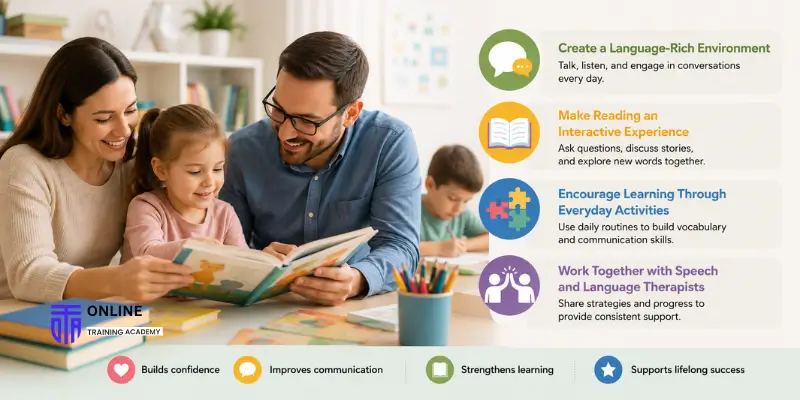
Speech and language therapy is most effective when children receive consistent support beyond therapy sessions. Parents, caregivers, and educators all play an important role in creating everyday opportunities for children to develop communication and literacy skills. Small, regular activities can have a lasting impact on a child’s confidence and learning.
Create a Language-Rich Environment
Children develop language through everyday interactions. Talking during meals, shopping trips, playtime, or bedtime helps them hear new vocabulary and practise expressing their thoughts.
Simple ways to encourage communication include:
- Asking open-ended questions
- Introducing new words naturally
- Encouraging children to describe what they see or do
- Giving them time to respond during conversations
These everyday interactions strengthen the language skills that support reading and writing.
Make Reading an Interactive Experience
Reading together is about more than finishing a book. Discussing the story helps children build comprehension, vocabulary, and critical thinking skills.
Try asking questions such as:
- What do you think will happen next?
- Why did the character make that choice?
- Can you tell the story in your own words?
- What was your favourite part?
These conversations help children connect spoken language with written text while making reading more enjoyable.
Encourage Learning Through Everyday Activities
Many communication skills develop through play and daily routines rather than formal lessons.
Activities that support literacy include:
- Singing songs and nursery rhymes
- Playing rhyming or word games
- Reading signs and labels together
- Encouraging storytelling during play
- Introducing new vocabulary during everyday conversations
These simple activities help reinforce speech, language, and literacy skills in a natural way.
Work Together with Speech and Language Therapists
Children often make the greatest progress when parents, teachers, and speech and language therapists work together. Sharing observations, reinforcing therapy goals at home and school, and maintaining consistent communication creates a supportive learning environment.
This collaborative approach helps children practise their skills across different settings, making it easier to apply what they learn in everyday situations.
Conclusion
Speech, language, and literacy develop together, and challenges in one area can influence success in another. Recognising communication difficulties early gives children the opportunity to build the skills they need for reading, writing, and learning before challenges become more significant.
Speech and Language Therapy (Literacy and Language Development) provides targeted support that helps children strengthen communication, improve literacy, and participate more confidently at home, in school, and in everyday life. Combined with encouragement from parents and educators, therapy can help children reach their full potential.
Every child learns differently, and progress may look different for each individual. What matters most is recognising each step forward—whether it’s saying a new word, understanding a story, or reading with greater confidence. Those small achievements lay the foundation for lifelong learning and a positive relationship with literacy.
FAQs
Yes. speech and language difficulties with vocabulary, phonological awareness, listening comprehension, or expressive language can make learning to read and understand written text more challenging.
A speech delay affects how sounds are produced, while a language delay affects a child’s ability to understand or use words and sentences. Some children experience one, while others may experience both.
If your child has persistent difficulties with speaking, understanding language, following instructions, or developing early literacy skills, it is worth discussing your concerns with a qualified professional.
Yes. Reading together, encouraging conversations, introducing new vocabulary, and playing language-based games are simple ways to support communication and literacy every day.
The length of therapy varies depending on each child’s individual needs, goals, and progress. Some children require short-term support, while others may benefit from ongoing intervention.
No. However, persistent speech or language difficulties can increase the likelihood of literacy challenges, which is why early identification and appropriate support are important.
Learn More





Get a FREE Course
- Learn useful skills online free
- Get CPD accredited certificate
- Add it to your CV today!