
Introduction
A CCTV camera can record an incident—but it can’t decide whether that incident is a genuine threat. That’s where a skilled CCTV operator makes the difference. Beyond monitoring screens, today’s operators are expected to assess situations, recognise suspicious behaviour, and respond appropriately when every second counts.
A CCTV Operator Course is designed to build these essential security skills. Through structured learning, you’ll develop observation, communication, incident reporting, and decision-making abilities that support effective surveillance and help prepare you for real workplace responsibilities.
If you’re thinking about a career in security, understanding what you’ll actually gain from a CCTV Operator Course is just as important as the qualification itself. This guide explores how the course helps build the skills employers value and lays the foundation for long-term success in the security industry.
Table of Contents
CCTV Operator Course
Gain practical knowledge of CCTV operations, surveillance techniques, security procedures, incident reporting, and legal responsibilities. This CCTV Operator Course helps learners develop the essential skills needed to monitor, record, and support effective security operations confidently.
How Can a CCTV Operator Course Help You Build Security Skills?
A CCTV Operator Course does much more than teach you how to operate surveillance equipment. It provides a foundation in both technical knowledge and workplace skills that security professionals rely on every day. From learning how to identify suspicious behaviour to communicating clearly during an incident, the course helps prepare you for situations that require attention, judgement, and professionalism.
Rather than memorizing information, you’ll develop practical skills through realistic examples, security procedures, and scenario-based learning. This approach helps you understand not only what to do, but also why each action matters in maintaining a safe environment.
Why Security Skills Matter Beyond Operating CCTV Cameras
Modern CCTV systems are equipped with advanced features such as motion detection, automated alerts, and video recording. However, technology alone cannot decide whether a situation requires action. Human judgement remains essential.
For example, an automated alert may detect movement near a restricted area, but it’s the CCTV operator who determines whether it’s routine activity, a maintenance worker carrying out scheduled tasks, or a potential security concern that needs immediate attention.
This is why employers value skills such as:
- Observation and attention to detail
- Situational awareness
- Communication
- Critical thinking
- Accurate documentation
- Decision-making under pressure
These skills allow operators to support effective security operations rather than simply monitor camera feeds.
How Training Builds Workplace Confidence
One of the biggest advantages of completing a CCTV Operator Course is the confidence that comes from understanding established procedures before entering the workplace.
Instead of wondering how to respond during an incident, you’ll learn structured approaches to:
- Monitor surveillance effectively
- Record important information accurately
- Follow reporting procedures
- Communicate with security personnel
- Respond calmly in changing situations
This preparation helps reduce uncertainty and allows new operators to approach their responsibilities with greater confidence.
A Foundation for Long-Term Career Growth
The skills developed during a CCTV Operator Course don’t only benefit those working in surveillance control rooms. Many of these abilities are transferable across the wider security industry.
For example, improving your observation, communication, and decision-making skills can also support roles in access control, loss prevention, concierge security, and other security-related positions.
Rather than viewing the course as the finish line, it’s helpful to see it as the beginning of your professional development. As you gain workplace experience, these core skills continue to grow, creating opportunities for increased responsibility and career progression.
Why Work as a CCTV Operator?
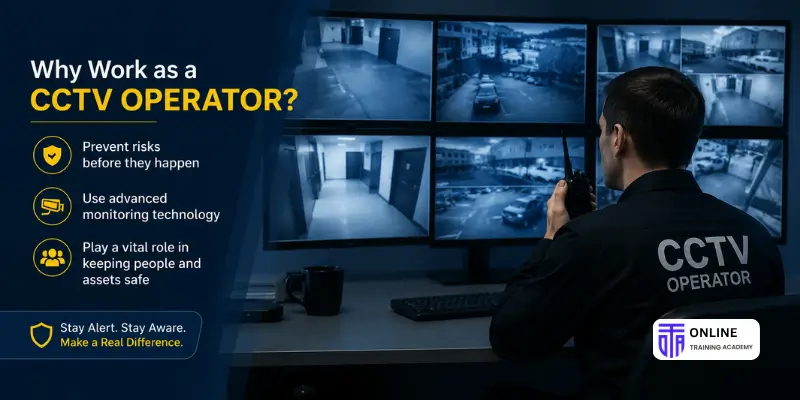
For people interested in security, a CCTV operator role offers the opportunity to combine technology, critical thinking, and problem-solving in a practical work environment. Every shift presents different situations, making the role both engaging and meaningful.
Unlike jobs that focus solely on physical security, CCTV operators play a key role in identifying potential risks before they escalate. Their observations and decisions help security teams respond more quickly, protect valuable assets, and contribute to safer workplaces.
The Growing Demand for Skilled CCTV Operators
As organisations continue to invest in surveillance technology, the need for trained CCTV operators has also increased across many industries. Shopping centres, hospitals, office buildings, educational institutions, transportation hubs, warehouses, and residential communities all rely on surveillance systems to help protect people and property.
While technology continues to evolve, employers still depend on skilled operators who can interpret information accurately and respond appropriately when unusual situations occur.
A Career That Combines Technology and Critical Thinking
Many people are attracted to this role because it offers more than simply monitoring cameras. Operators constantly analyse situations, assess potential risks, and make decisions based on what they observe.
For example, noticing someone repeatedly entering restricted areas or behaving unusually may require closer monitoring, documentation, or communication with on-site security personnel. These decisions rely on careful observation and sound judgement rather than technology alone.
For individuals who enjoy solving problems, paying attention to detail, and working in structured environments, this can be a rewarding career path.
Who Is This Career Best Suited For?
A CCTV operator role may be a good fit if you enjoy staying focused, observing details that others might overlook, and following established procedures. While technical knowledge is helpful, many of the most important qualities are personal habits that can be strengthened through training and experience.
Successful CCTV operators often demonstrate:
- Strong observation skills
- Good communication
- Patience and concentration
- Calm decision-making under pressure
- Attention to detail
- Professional judgement
These qualities, combined with the knowledge gained through a CCTV Operator Course, provide a solid foundation for building a successful career in the security industry.
Understanding CCTV Control Rooms and Modern Surveillance Systems
A CCTV control room is the centre of any surveillance operation. It’s where operators monitor live camera feeds, review recorded footage, respond to alerts, and communicate with security teams. Understanding how this environment functions helps you see how the skills learned during a CCTV Operator Course are applied in real workplaces.
Why CCTV Control Rooms Are Important
Control rooms allow organisations to monitor multiple locations from one central point. Whether it’s a shopping centre, hospital, warehouse, or office building, operators can identify potential risks early and coordinate an appropriate response before a situation escalates.
By combining technology with human judgement, CCTV control rooms help improve safety, protect assets, and support efficient security operations.
How CCTV Monitoring Rooms Support Security Operations
A CCTV monitoring room does much more than display live camera footage. Operators continuously monitor activity, verify alarms, record incidents, and communicate important information to on-site security personnel.
For example, if an emergency exit is opened outside normal operating hours, the operator can quickly review nearby cameras, confirm whether the alert is genuine, and notify the appropriate team if action is required.
This combination of observation, communication, and decision-making is what makes a skilled CCTV operator so valuable.
The Psychology Behind Effective Surveillance
One of the most overlooked aspects of CCTV work is learning how to observe effectively. Experienced operators don’t try to watch every camera equally. Instead, they learn to recognise behaviour that stands out from normal activity.
A CCTV Operator Course helps develop this mindset by teaching learners to:
- Identify unusual behaviour instead of reacting to every movement
- Recognise patterns that may indicate potential security risks
- Stay focused during long monitoring periods
- Make objective decisions without jumping to conclusions
These skills improve with practice and often become one of the biggest differences between new and experienced operators.
7 Essential Components of a Modern CCTV Control Room
Understanding the technology behind a CCTV control room helps operators work more confidently and efficiently. While they may not be responsible for installing equipment, knowing the purpose of each component supports better decision-making during daily operations.
Displays and Monitors
High-quality monitors allow operators to observe multiple camera feeds simultaneously, making it easier to identify unusual activity across different areas.
Video Storage Systems
Recorded footage provides valuable evidence during investigations. Operators need to understand how video is stored and retrieved when reviewing incidents.
Network Equipment
Cameras, recording systems, and monitoring software rely on secure network connections to transmit live video and recorded footage without interruption.
Alerts and Notification Systems
Modern surveillance systems can generate alerts when unusual activity is detected. Operators assess these notifications and determine whether further action is required.
Reliable Power Supply
Continuous surveillance depends on stable power systems. Backup power helps ensure cameras and recording equipment remain operational during outages.
Communication Systems
Control rooms rely on radios, telephones, and digital communication tools to coordinate with security personnel, supervisors, and emergency responders.
AI Tools and Smart Video Analytics
Many modern CCTV systems now include AI-powered features such as motion detection, object tracking, and intelligent alerts. While these technologies improve efficiency, they don’t replace human judgement. Operators still evaluate each situation and decide the most appropriate response.
Benefits and Challenges of CCTV Monitoring
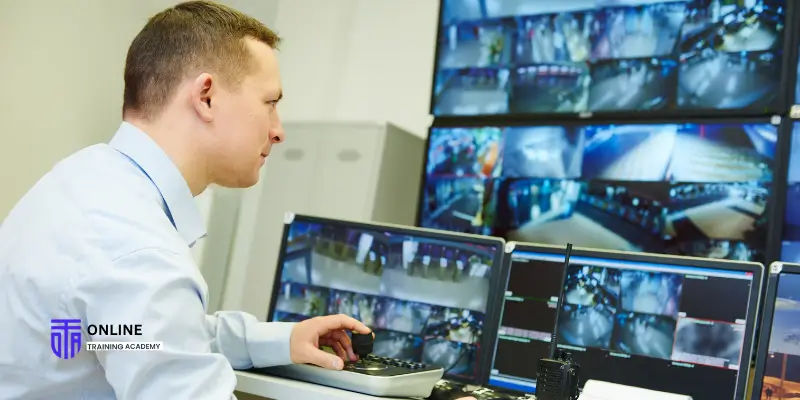
Working as a CCTV operator can be both rewarding and demanding. Understanding the advantages and challenges of the role helps learners develop realistic expectations before entering the workplace.
Benefits of Working in CCTV Surveillance
A CCTV Operator Course prepares you for a role that combines technology with practical problem-solving. As you gain experience, you’ll continue strengthening skills that are valuable across the wider security industry.
Some of the key benefits include:
- Developing highly transferable security skills
- Contributing to safer workplaces and communities
- Building confidence in observation and decision-making
- Working with modern surveillance technology
- Creating opportunities for career growth within the security sector
Common Challenges Operators Face
Like any security role, CCTV monitoring comes with responsibilities that require focus and professionalism.
Some common challenges include:
- Maintaining concentration during long monitoring periods
- Managing multiple camera feeds at once
- Responding calmly during unexpected situations
- Distinguishing genuine risks from routine activity
- Producing accurate reports under time pressure
Recognising these challenges early helps learners prepare for the realities of the job.
How a CCTV Operator Course Helps You Prepare
A quality CCTV Operator Course doesn’t simply explain surveillance systems—it helps you develop the skills needed to use them effectively. Through structured learning and practical scenarios, you’ll gain a better understanding of security procedures, incident response, and professional communication.
Rather than trying to prepare for every possible situation, the course equips you with a solid foundation that allows you to respond confidently, think critically, and continue developing your skills throughout your career.
How to Start a Career in the Security Sector After Your Course
Completing a CCTV Operator Course gives you a solid foundation, but it’s only the beginning of your career journey. The next step is applying what you’ve learned, gaining practical experience, and continuing to develop the skills employers value.
Build Experience and Confidence
After completing your training, look for opportunities to apply your knowledge in real workplace settings. Entry-level security roles, supervised CCTV positions, or related security environments can help you strengthen your observation, communication, and decision-making skills.
As you gain experience, you’ll become more confident in handling incidents, following security procedures, and working as part of a professional security team.
Your Skills Can Transfer to Other Security Roles
One of the biggest advantages of a CCTV Operator Course is that the skills you develop aren’t limited to surveillance. Many employers value these abilities across different areas of the security industry.
Your training can support roles such as:
- Security Guard
- Loss Prevention Officer
- Access Control Officer
- Concierge Security
- Control Room Operator
- Security Operations Support
Because these roles share many of the same core skills, a strong foundation in CCTV operations can open the door to a wider range of career opportunities.
Keep Learning as the Industry Evolves
Security technology continues to change, and successful CCTV operators continue learning throughout their careers. Staying familiar with new surveillance systems, reporting procedures, and workplace practices helps you remain effective and adaptable.
Think of your CCTV Operator Course as the starting point. The knowledge and habits you develop during training become the foundation for long-term professional growth.
Career Opportunities After Completing a CCTV Operator Course
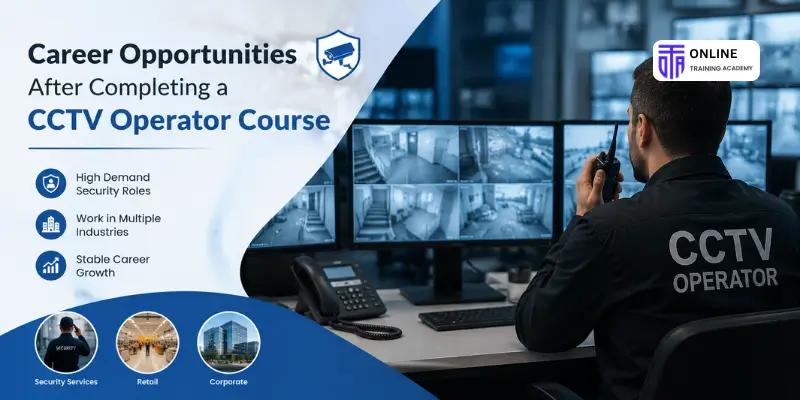
The skills gained through a CCTV Operator Course are valuable across many industries that rely on surveillance and security. As organisations continue investing in CCTV systems, trained operators remain an important part of protecting people, property, and business operations.
Industries That Employ CCTV Operators
Depending on your experience and local job market, CCTV operators may find opportunities in sectors such as:
- Retail and shopping centres
- Hospitals and healthcare facilities
- Corporate offices
- Warehouses and distribution centres
- Educational institutions
- Residential communities
- Transport hubs
- Manufacturing facilities
Each environment presents different responsibilities, but all rely on strong observation, communication, and incident management skills.
Roles That Benefit From CCTV Training
Completing a CCTV Operator Course can also strengthen your qualifications for positions where surveillance knowledge is an advantage.
Examples include:
- CCTV Operator
- Security Control Room Operator
- Surveillance Operator
- Loss Prevention Officer
- Security Guard
- Access Control Officer
While each role has different responsibilities, the core skills developed during your training remain highly relevant.
Building a Long-Term Career
A successful career in security isn’t built around a single qualification. It’s built by combining training, workplace experience, and a commitment to continuous improvement.
As your confidence and experience grow, you may have opportunities to take on greater responsibilities, mentor new team members, or move into more specialised security roles. The skills you develop during your CCTV Operator Course provide a strong foundation for that progression.
Conclusion
A CCTV Operator Course is about far more than learning how to operate surveillance equipment. It helps you develop observation, communication, decision-making, and incident reporting skills that are essential for supporting effective security operations.
The knowledge you gain during training provides a strong foundation, but your skills continue to grow through workplace experience and continuous learning. By understanding how surveillance works, thinking critically, and responding professionally, you’ll be better prepared for the responsibilities of a modern CCTV operator.
Every experienced CCTV operator started with the fundamentals. Invest in building the right skills today, and you’ll be laying the groundwork for a confident, capable, and rewarding career in the security industry.
FAQs
A CCTV Operator Course helps develop observation, situational awareness, incident reporting, communication, decision-making, and an understanding of surveillance procedures. These skills are essential for working effectively in modern security environments.
The course introduces security procedures, surveillance principles, and practical scenarios that help learners understand how to respond to incidents, communicate with security teams, and document events accurately.
Yes. Many CCTV Operator Courses are designed for beginners and provide a structured introduction to surveillance systems, workplace responsibilities, and the core skills required for entry-level security roles.
A CCTV operator monitors surveillance systems, identifies potential risks, and reports incidents from a control room. A security guard typically patrols premises, responds directly to incidents, and interacts with the public. Although they often work together, their day-to-day responsibilities differ.
Yes. Skills such as observation, communication, report writing, and decision-making are transferable to many security positions, including loss prevention, access control, and security operations.
A course provides the foundation, but becoming a confident CCTV operator takes continued practice and workplace experience. The more you apply your skills, the more naturally they develop over time.
No. Completing a course gives you the knowledge and practical foundation to begin your career. Experience, ongoing learning, and exposure to real workplace situations are what help you grow into an experienced operator.
Learn More


Get a FREE Course
- Learn useful skills online free
- Get CPD accredited certificate
- Add it to your CV today!