


For the discerning Canadian pet parent, the well-being of a canine companion is often equated to that of a family member. As urban density increases across hubs like Toronto, Vancouver, Montreal, and Calgary, the demand for professional pet care services has skyrocketed. However, a significant gap remains between the consumer’s understanding of pet care and the reality of industry standards. Many owners use the terms “dog walker” and “pet sitter” interchangeably, a misconception that can lead to inadequate care, unmet physiological needs, and, in severe cases, the exacerbation of medical or behavioral conditions.
This guide serves as a deep dive into the professional pet care industry, helping you navigate the nuanced differences, regulatory realities, and strategic considerations required to build a support system that ensures the safety, longevity, and happiness of your dog within the unique Canadian environment.
1. The Operational Philosophy: Exercise vs. Holistic Stewardship
To understand the difference, one must first understand the fundamental operational philosophies of these two distinct roles.
The Professional Dog Walker: The Specialist in Kinetic Wellness
A professional dog walker is a technician of canine physical and cognitive health. In the Canadian context, where high-energy working breeds (such as Border Collies, Shepherds, and Retrievers) are popular, the walker is not merely a “leash-holder”; they are an exercise interventionist.
The primary objective of a walker is to mitigate the “occupational hazards” of a domestic dog: boredom, obesity, and pent-up kinetic energy. A professional walker understands the “threshold of fatigue” for different breeds. They realize that a 20-minute trot around a block is sufficient for a French Bulldog but an insult to a Husky. They incorporate environmental enrichment—utilizing the “sniffari” method where the dog is permitted to engage in sensory tracking—which burns more calories and provides more cognitive stimulation than high-intensity, aimless running.
Furthermore, a professional walker maintains a “line of sight” to behavioral health. They observe changes in gait, appetite, or social interaction, acting as an early-warning system for physical ailments like arthritis or hip dysplasia that owners might miss during a rushed morning routine.
The Professional Pet Sitter: The Steward of Environmental Stability
Pet sitting is the apex of personalized care. Unlike a walker, whose engagement is often limited to a specific block of time (typically 30 to 60 minutes), the pet sitter is a steward of the pet’s entire environment.
The sitters’ philosophy is rooted in minimizing environmental disruption. For a dog, the home is a repository of scent, comfort, and security. Boarding a dog in a kennel—even a luxury one—is a traumatic, high-stress event for many animals. They are forced to adapt to strange sounds, smells, and the presence of other dogs who may be territorial or ill. A pet sitter negates this. They preserve the dog’s internal clock, ensuring that feeding, medication, and sleep cycles remain identical to the owner’s presence.
When you hire a pet sitter, you are hiring someone to manage the dog’s entire day. This includes the “invisible” work: checking for signs of bloat after meals, ensuring the house is at an appropriate temperature during a heatwave, and providing deep-tissue companionship that a 30-minute visitor simply cannot offer.
Advanced Pet Sitting and Dog Walking
Learn the essential knowledge and practical techniques for professional pet sitting and dog walking, including animal behaviour, safe handling, routine care, and responsible pet management. This course helps learners build confidence in providing safe and effective care for pets."
Table of Contents
2. Regulatory Realities: Navigating the "Wild West" of Canadian Pet Care
It is a common point of confusion for Canadians to assume that because these businesses deal with the safety of living creatures, they are heavily regulated by the government. This is a dangerous misconception.
In Canada, there is no federal or provincial licensing body that regulates pet sitters or dog walkers in the same way it would a veterinarian or a daycare center. This creates a “Buyer Beware” marketplace. Because the barrier to entry is low, the variance in quality is immense.
The Pillars of a Legitimate Provider
When vetting a provider, you are looking for evidence of professionalization. If a provider cannot produce these four pillars, you are exposing your pet to unnecessary risk:
1. Bonding and Liability Insurance: This is the absolute baseline. If your dog gets into a fight with another dog, causes a traffic accident, or destroys an item in your home, insurance protects your assets. Ask to see a physical copy of their certificate. A business that operates without it is effectively gambling with your finances.
2.Emergency Contingency Protocols: Professionalism is measured by how a provider handles a crisis. Ask the following: “What is your backup plan if you have a medical emergency and cannot reach my home?” or “What is your specific protocol for a dog that escapes on a walk?” A professional will have a document or a clearly outlined plan; a hobbyist will stutter.
3.Pet First Aid Certification: The Canadian Red Cross and various specialized organizations offer Pet First Aid. This is not a “nice-to-have”; it is a survival requirement. Knowing how to perform the Heimlich maneuver on a dog, how to stabilize a fracture, or how to identify the signs of a torsion (bloat) can be the difference between life and death.
4.Data Transparency: Modern professionals use apps (such as Time To Pet or Precise Petcare). These provide GPS breadcrumbs of the walk, time-stamped arrival/departure, and direct photo/video updates. Transparency is the antidote to anxiety.
3. The Lifecycle and Breed-Specific Matrix
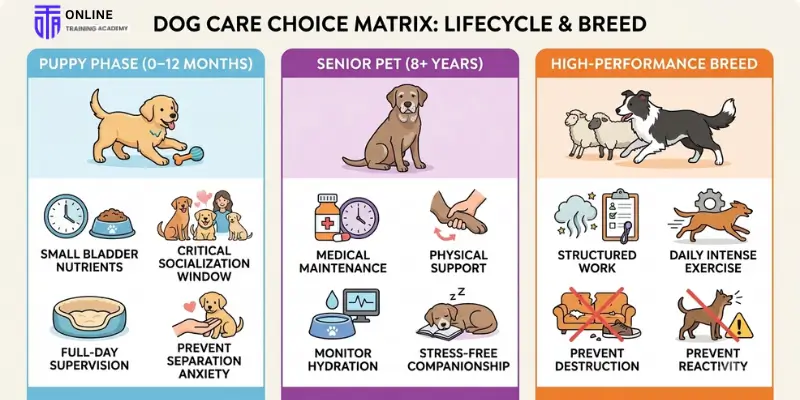
The choice between a walker and a sitter is rarely static; it should shift based on your dog’s age and health requirements.
The Puppy Phase (0–12 Months)
Puppies are in a critical “socialization window.” They require consistent, positive exposure to new environments. A Pet Sitter is the superior choice for puppies. Puppies have small bladders and specific nutritional needs that cannot be satisfied by a single midday walker visit. A sitter can provide the “full-day” supervision needed to reinforce house training and prevent the development of separation anxiety, which is the most common cause of behavioral issues in later life.
The Senior Pet (8+ Years)
Senior dogs require “Medical Maintenance.” They may need medication at precise intervals (e.g., pain management for arthritis or heart medication). A dog walker may inadvertently miss a medication window or fail to notice that a senior dog is having difficulty navigating stairs. A Pet Sitter provides the slow, steady, and meticulous oversight required for senior pets. They can assist with physical support, monitor hydration levels, and provide the quiet, stress-free companionship that senior dogs crave.
The High-Performance Breed
Working breeds (Collies, Pointers, Working Terriers) thrive on Structured Work. For these dogs, a dog walker is not an option; it is a vital tool. These dogs were bred to move. Without a daily walker providing intense, scent-based exercise, these dogs will often turn to destruction (chewing drywall, shredding furniture) or “reactivity” (barking at everything that moves) as a way to burn off the trapped energy.
4. Seasonal Strategy: The Canadian Environment Factor
Canada is a unique environment. Our weather patterns dictate specific safety requirements that are not applicable in most other parts of the world.
The Winter Hazard
During the Canadian winter, the primary concerns are hypothermia and salt burn.
➽ The Walker’s Duty: A professional walker in a snowy city must check paw pads for ice balls and ensure that the dog is protected from caustic road salt, which can cause severe chemical burns. If the temperature is below a safe threshold (e.g., -20°C), they should pivot from a long, outdoor walk to indoor cognitive training.
➽ The Sitter’s Duty: A winter-ready sitter will manage the indoor environment, ensuring that a dog with a thin coat doesn’t spend too much time near cold drafts and that their bedding is kept warm.
The Summer Heat-Stroke Reality
Heat stroke is the #1 preventable death for dogs in Canada.
➽ The Walker’s Duty: A professional walker must understand the “Seven-Second Rule”—if the sidewalk is too hot for the back of your hand for seven seconds, it is too hot for your dog’s paws. In summer, they should modify routes to take place in shaded, grassy areas, and prioritize “hydro-breaks” (water breaks) every 10–15 minutes.
➽ The Sitter’s Duty: A sitter will monitor for signs of heat exhaustion in the home, ensuring the dog has constant access to cool water and that curtains are drawn to keep the home’s internal temperature stable during heatwaves.
5. The Economic Reality: The Cost of Quality
There is a prevalent myth that hiring a professional is “too expensive.” This is a miscalculation of risk.
If you hire a low-cost, unvetted individual and your dog suffers a medical emergency, who is paying the bill? If your dog manages to break away from an inexperienced walker and causes an accident on the road, who is legally liable?
When you pay a premium for a high-end professional service, you are essentially buying a risk-transfer instrument. You are transferring the liability, the emergency stress, and the operational responsibility from your shoulders to theirs. You are paying for their professional equipment (such as medical-grade first aid kits), their comprehensive business insurance, and their ongoing training.
Furthermore, consider the “Long-term ROI.” A dog that receives professional exercise and behavioral reinforcement is a dog that develops fewer health issues and fewer expensive behavioral problems. The money you “save” on an amateur walker today is often paid back tenfold in vet bills or furniture replacement tomorrow.
6. The Hybrid Model: The "Best-In-Class" Strategy
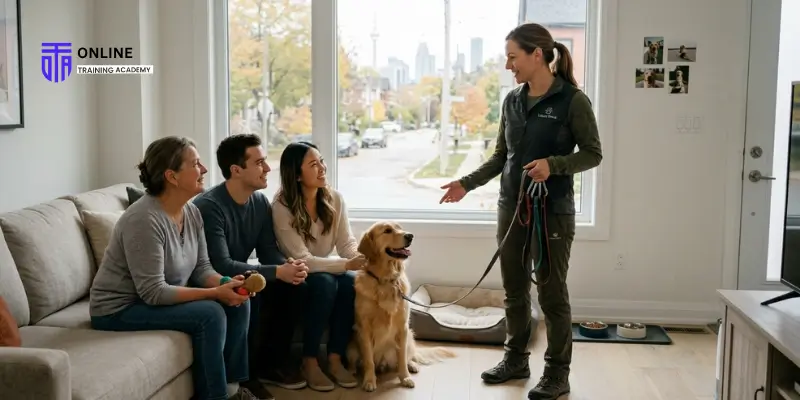
For many successful pet parents in Canada’s major urban centers, the answer is not choosing one or the other. It is the integration of both.
The "Week-to-Weekend" Strategy
➽ Monday through Friday: A Professional Dog Walker visits daily. This provides the dog with a consistent, reliable mid-day release that keeps their metabolism high and their behavioral health stable while you are at your office or commuting.
➽ Vacations and Holidays: A Pet Sitter manages the home while you are away. Because the sitter is already familiar with the dog’s personality (and often the walker has briefed them on the dog’s leash habits), the transition is seamless.
This hybrid approach creates a “circle of care” where the dog has a network of professional observers. If the walker notices a slight limp on Tuesday, they alert the sitter. If the sitter notices a change in appetite on Friday, they alert the owner. This multi-layered approach to monitoring is the gold standard of care.
7. Advanced Vetting: The "Deep-Dive" Questionnaire
When you perform your in-home interview with a prospective service provider, move beyond the pleasantries. Use this professional-grade interview template to determine if they are truly as competent as they claim:
1.The “Crisis Scenario”: “If my dog were to stop breathing or become unresponsive during your shift, walk me through the exact steps you would take.” (Look for a structured answer: clearing the airway, checking for pulse, calling the designated emergency vet immediately, alerting the owner).
2.The “Correction Policy”: “What is your policy on leash corrections and behavior management?” (A professional should advocate for positive reinforcement. Avoid any provider who uses shock collars, prong collars, or physical intimidation).
3.The “Safety Protocols”: “How do you secure my dog while in transit, and do you ever let my dog off-leash in public spaces?” (A professional should never let a client’s dog off-leash unless explicitly contracted and in a safe, fenced area. In-transit safety requires a crash-tested harness or secure carrier).
4.The “Conflict Management”: “How do you handle a situation where a reactive dog approaches us on the street?” (Look for tactical answers: stepping off the path, creating distance, using the dog’s body language to de-escalate).
Conclusion: A New Standard of Guardianship
In Canada, our dogs have become our lifestyle companions. We bring them to our offices, our breweries, our hiking trails, and our homes. This level of integration requires a higher standard of care.
Choosing between a dog walker and a pet sitter is a decision that dictates the quality of your dog’s waking life. If you treat it as a task to be checked off a list, you remain vulnerable. If you treat it as a strategic recruitment of a professional partner, you provide your dog with the best possible life.
It is time to move beyond the convenience of “who is nearby” and toward the standard of “who is qualified.” By prioritizing insurance, professional certification, environmental awareness, and specific life-stage support, you are doing more than just hiring help—you are building a fortress of care around your companion. That is not just a service; that is a responsibility well-met.
FAQs
Yes. Look for members of the Canadian Association of Professional Pet Dog Trainers (CAPPDT) or local chapters of Pet Sitters International. Membership in these organizations often requires adherence to a strict code of ethics and ongoing professional development.
Yes, but only with an explicit, signed “Access Agreement.” Most professional businesses use lockboxes or secure key-tracking systems. Never provide a spare key to a provider who does not have a formal protocol for key security.
Liability insurance covers the provider if they cause damage or injury to others. Bonding provides coverage if the provider (or their staff) steals from your home. A “bonded and insured” business is the highest level of trust you can achieve.
Rural pet owners often face a “provider scarcity.” In these cases, you may need to look for pet-sitting collectives or mobile groomers who provide expanded care. The vetting process remains identical: even in rural areas, the requirement for insurance and emergency preparedness does not diminish.
You must be transparent. A professional pet sitter or walker may still accept your dog, but they will likely implement a “muzzle-training requirement” or a “no-contact policy” with other dogs. Never hide a history of aggression, as this puts both the dog and the provider at extreme legal and physical risk.
It is essential. The report card is your “Audit Trail.” It proves that the provider was there at the designated time, provided the services promised, and followed the protocols (like water and food) that you set. If a provider avoids using tracking technology, they are avoiding accountability.
Learn More





Get a FREE Course
- Learn useful skills online free
- Get CPD accredited certificate
- Add it to your CV today!