

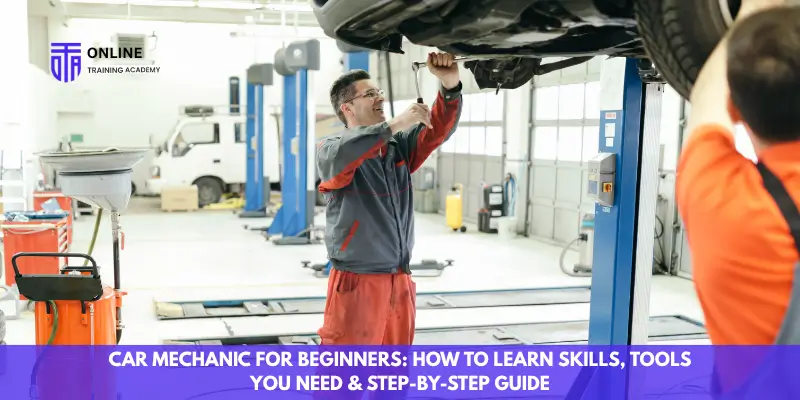
You’re driving along, everything feels normal—and then suddenly, something doesn’t. A strange noise, a warning light, or worse, the car just stops.
For most people, that moment brings frustration and a costly trip to the garage. But for someone who understands the basics of car mechanics, it’s often a manageable problem—not a disaster.
Learning car mechanics isn’t reserved for professionals in overalls. It’s a practical skill that can save you money, give you confidence, and even open the door to a rewarding career. The best part? You don’t need to know everything to get started—you just need to start smart.
This guide walks you through exactly how to begin, what to learn first, and how to build real, usable skills step by step.
Table of Contents
Car Mechanic Training
A Car Mechanic Training course provides the knowledge and practical skills needed to inspect, maintain, diagnose, and repair vehicles safely and efficiently. It covers essential topics such as engine systems, brakes, suspension, steering, electrical components, diagnostics, routine servicing, and the correct use of workshop tools. The course also emphasises workplace safety, problem-solving, and industry best practices, helping learners build the confidence required for a career as a professional car mechanic or automotive technician.
How Do You Start Learning Car Mechanics as a Beginner?
Getting started can feel overwhelming because cars are complex machines. But the key is not to learn everything at once—it’s to understand the basics and build from there.
Understanding the Basics Before Touching a Car
Before picking up a tool, it helps to know what you’re looking at. A car isn’t just one system—it’s a combination of several key parts working together. As a beginner, focus on understanding:
- The engine (how power is generated)
- The braking system (how the car stops safely)
- The battery and electrical basics
- Fluids (oil, coolant, brake fluid)
You don’t need deep technical knowledge at this stage—just a clear idea of what each system does.
Step-by-Step Path to Get Started
A structured approach makes learning much easier:
1.Start with theory. Watch beginner-friendly videos, read guides, or take an introductory online course. This builds your confidence before doing anything practical.
2.Then move to observation. If possible, watch someone repair a car—whether that’s a professional mechanic, a friend, or even detailed video demonstrations.
3.Finally, practise simple tasks. Begin with basic maintenance like checking oil levels or changing a tyre. These small wins build real confidence quickly.
Learning at Home vs Formal Training
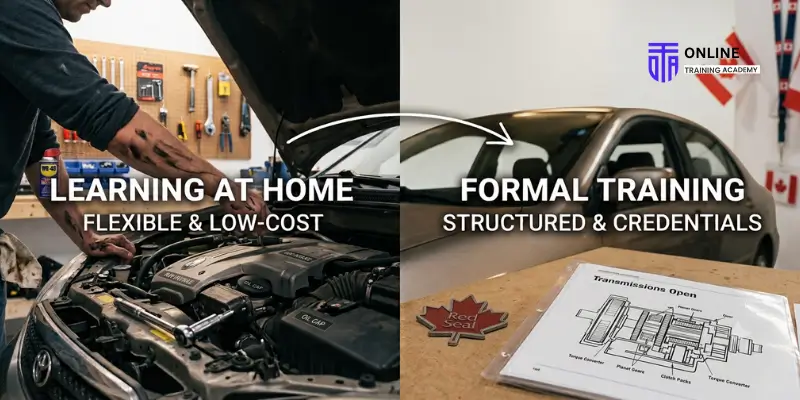
In Canada, you can learn car mechanics either independently or through formal routes like community college automotive service technician programs or provincial apprenticeship programs.
Learning at home is flexible and low-cost, making it ideal for beginners or hobbyists. However, formal training provides structured knowledge, hands-on experience, and recognized credentials, such as the Red Seal Program, which is the gold standard for trades in Canada. For many people, the best approach is a mix of both—start at home, then consider formal training if you want to take it further.
What Skills Do You Need to Become a Car Mechanic?
Being a mechanic isn’t just about tools—it’s about how you think and approach problems.
Core Technical Skills
At the heart of car mechanics is problem-solving. You’ll need to learn how to identify issues, understand symptoms, and connect them to possible faults. You’ll also develop a working knowledge of mechanical systems—how parts interact and what happens when something goes wrong.
Practical Hands-On Abilities
This is where theory turns into real skill. You’ll learn how to safely handle tools, remove and replace parts, and decide whether something can be repaired or needs replacing. Over time, tasks that once felt complicated—like brake inspections or part replacements—become routine.
Soft Skills That Matter More Than You Think
Many beginners overlook this, but soft skills are just as important. Patience is essential. Not every repair goes smoothly. Attention to detail prevents costly mistakes. And if you ever work in a garage, communication becomes crucial—explaining issues clearly to customers or colleagues in both official languages, depending on your region.
What Tools Do Beginner Mechanics Really Need?

One of the biggest misconceptions is that you need a garage full of expensive tools to get started. You don’t.
Essential Starter Tool Kit
A basic car mechanic kit is enough for most beginner tasks. This usually includes:
- A socket set
- Spanners (wrenches)
- Screwdrivers
- Pliers
- A car jack and axle stands
These tools allow you to handle a wide range of basic repairs and maintenance.
Must-Have Additions for Efficiency
As you progress, a few additional tools make life much easier. A car mechanic working light is incredibly useful, especially when working in low-light areas under the bonnet or beneath the vehicle. Basic diagnostic tools (OBD-II scanners) can also help you identify issues more quickly, especially in modern cars common on Canadian roads.
The 7 Basic Mechanical Tools Explained
Getting comfortable with these tools is what separates guessing from actually fixing things. Each one has a specific purpose, and once you understand when and how to use them, even complex repairs start to feel manageable.
1. Spanners (Wrenches)
Spanners are one of the most frequently used tools in car repair. They’re designed to grip and turn nuts and bolts, especially in areas where sockets might not fit. There are different types—open-end, ring (box-end), and combination spanners—but as a beginner, a standard set will cover most tasks. You’ll use them for everything from loosening battery terminals to working on engine components. The key here is fit. Always use the correct size. A loose spanner can round off a bolt, turning a simple job into a frustrating one.
2. Screwdrivers
Screwdrivers might seem basic, but they’re essential for accessing panels, removing covers, and working with smaller components. The two main types are flathead and Phillips. Most cars use a mix of both, so having a set is important. They’re also often used in creative ways—like gently prying clips or aligning parts—but be careful. Using a screwdriver for the wrong purpose can damage both the tool and the car.
3. Pliers
Pliers give you grip where your hands can’t. They’re especially useful for holding, bending, or pulling components. Needle-nose pliers help you reach tight spaces, while locking pliers (vice grips) can clamp onto stubborn parts that won’t move. You’ll often use pliers when dealing with clips, wires, or hoses—jobs that require precision rather than force.
4. Ratchet and Socket Set
This is where things start to feel professional. A ratchet and socket set allows you to quickly tighten or loosen bolts without constantly repositioning your tool. It’s faster, more efficient, and essential for most mechanical work. Sockets come in different sizes, and they attach to the ratchet head. Once you get used to switching sizes and using extensions, you’ll be able to reach bolts in tight engine spaces with ease.
5. Socket Set (Why It Matters Separately)
While sockets are used with a ratchet, they deserve special attention. Having a complete set means you’re prepared for different bolt sizes across various parts of the car. Using the wrong size socket can strip bolts, making them extremely difficult to remove. That’s why mechanics always keep a well-organized set within reach. Over time, you’ll learn which sizes you use most often—but in the beginning, having variety is key.
6. Car Jack and Axle Stands
If you plan to work underneath a car, this isn’t optional—it’s essential. A car jack lifts the vehicle, but it should never be the only support. Axle stands are used to hold the car securely in place while you work. This is one area where safety matters more than anything else. Always position the stands correctly and make sure the car is stable before going underneath. In the Canadian climate, ensure you are working on a level, hard surface—never on ice or uneven ground.
7. Torque Wrench
A torque wrench is what takes you from “tight enough” to “exactly right.” Some parts of a car—especially wheels and engine components—need to be tightened to a specific level. Too loose, and they can come undone. Too tight, and you risk damaging the part. A torque wrench lets you apply the correct amount of force, usually measured in Nm (Newton-metres) or ft-lbs. It’s especially important when working on critical components like wheel nuts, particularly when swapping between winter and summer tyres.
Why These Tools Matter
Individually, each tool solves a specific problem. But together, they form the foundation of almost every repair you’ll ever do. You don’t need to master everything at once. Start by getting comfortable with these tools, learn how they feel in your hands, and understand when to use each one. That’s how real mechanical confidence begins—not with complex repairs, but with knowing your tools inside out.
How Can You Practise Car Mechanic Skills in Real Life?
Learning by doing is where real progress happens.
Safe Beginner Projects to Start With
Start small and safe. Some ideal beginner tasks include:
- Changing engine oil
- Replacing a car battery
- Inspecting or changing brake pads
- Replacing air filters
These tasks are manageable and give you a strong sense of achievement.
Learning Through Observation
Watching experienced mechanics—whether in person or online—can accelerate your learning. You start to notice patterns, techniques, and shortcuts that aren’t obvious in theory. However, don’t rely only on watching. Real understanding comes from doing the work yourself.
Common Mistakes Beginners Should Avoid
Many beginners make the same errors early on. Skipping safety steps is one of the biggest risks. Always ensure the car is properly supported before working underneath it. Using the wrong tool can damage parts or cause injury. And perhaps most importantly, avoid overconfidence. Take your time and double-check your work.
Do You Need Qualifications to Become a Car Mechanic in Canada?
The answer depends on your goals.
Formal Qualifications Explained
In Canada, the trade is regulated provincially. Most mechanics follow an apprenticeship path that includes on-the-job training and technical schooling at a college. Achieving your Certificate of Qualification (often with a Red Seal endorsement) provides structured learning and recognized credentials, which are highly valuable if you want a professional career across all provinces.
Can You Become a Mechanic Without Qualifications?
Yes, especially at the entry level. Many people start by working in garages as a shop assistant or lube technician, learning on the job, and gradually building experience toward an apprenticeship. However, formal qualifications drastically improve your job prospects and help you progress to higher wages faster.
Career Opportunities After Learning
Once you’ve developed your skills, there are several paths you can take. You could work in a local dealership, a specialized independent garage, or even become a mobile mechanic offering services directly to customers. The demand for skilled mechanics remains strong across Canada, particularly as vehicles become more advanced with complex hybrid and electric systems.
How Long Does It Take to Learn Car Mechanics?
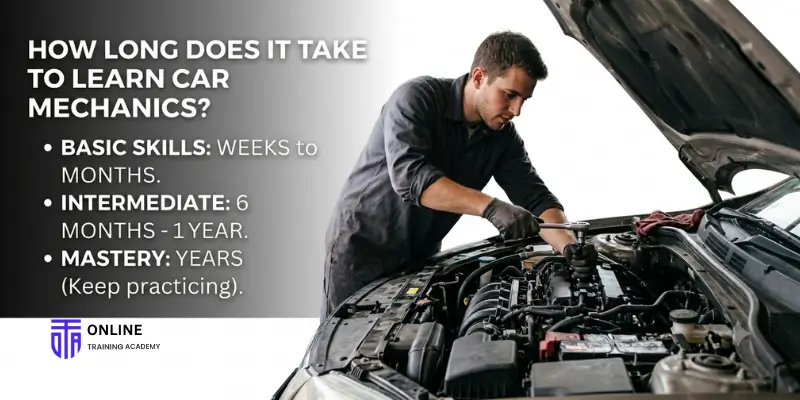
There’s no single timeline—it depends on how you learn and how often you practise.
Learning Timeline for Beginners
Basic skills can be picked up within a few weeks or months if you practise regularly. Intermediate skills, such as diagnosing issues or handling more complex repairs, typically take six months to a year. Mastery takes longer—but you don’t need to be an expert to be capable.
Factors That Affect Learning Speed
Your progress depends on how often you practise, whether you have access to tools and a vehicle, and how actively you engage with learning. Someone practising weekly will progress much faster than someone only reading occasionally.
Fast-Track Learning Strategies
Focus on high-impact skills first—things you’ll use often. Learn by doing whenever possible, not just watching or reading. And don’t be afraid to make mistakes. They’re often the fastest way to learn.
Conclusion
Becoming confident with car mechanics doesn’t happen overnight—but it also doesn’t take years to start seeing results. It begins with curiosity, grows through practice, and builds into a skill that stays with you for life.
The next time something feels off with your car, you won’t have to rely entirely on someone else. You’ll understand what’s happening, what to check, and maybe even how to fix it. And that shift—from uncertainty to confidence—is where it all starts.
FAQs
Yes, many basic skills can be learned at home with the right tools and proper safety precautions, especially in a home garage or driveway during the warmer months.
Simple tasks like oil changes, battery replacement, and air filter changes are great starting points.
No, a basic tool kit is enough for beginners. You can expand your tools over time as you take on more challenging repairs.
Yes, car mechanic offers steady demand, competitive pay, and opportunities for national certification through the Red Seal Program.
Online learning is useful for theory, but hands-on practice is essential for real skill development. Many Canadian colleges offer hybrid learning options.
While the terms are often used interchangeably, “technicians” in modern Canadian shops usually specialize in advanced diagnostics, computerized engine management, and electrical systems, while “mechanics” often focus on mechanical components and general maintenance.
Learn More





Get a FREE Course
- Learn useful skills online free
- Get CPD accredited certificate
- Add it to your CV today!