
A single sick worker can contaminate dozens of meals in one shift. Not because of carelessness—but because they didn’t realize the risk.
Food safety is often misunderstood as a set of basic rules. Wash hands. Wear gloves. Keep things clean. But real food safety goes deeper. It is about understanding when you are a risk, how contamination spreads, and what actions prevent it.
For food handlers, safety is not just part of the job—it is the job. This guide breaks down the rules, health risks, and decisions that define safe food handling in real-world situations.
Can You Work as a Food Handler When You Are Sick?
Food handlers must not work when they are experiencing certain illnesses. Conditions like diarrhea, vomiting, and fever are high-risk because they can spread harmful pathogens quickly.
These illnesses often carry bacteria or viruses that transfer easily through hands, surfaces, and food. Even if symptoms seem mild, the risk remains high. Working while sick does not just affect one person. It can lead to multiple cases of foodborne illness, especially in environments where food is prepared in large quantities.m The correct action is simple: stay away from food handling duties until fully recovered.
Food Handlers Certificate - Also Known as Food Hygiene and Safety Level 3
Food safety is essential for preventing contamination, protecting public health, and maintaining high hygiene standards in food handling environments. This guide explains the key food safety rules, common health risks, personal hygiene practices, contamination prevention, and how to identify and manage food handling mistakes to support safer food preparation and service.
Table of Contents
Can You Work Around Food with a Chest Infection?
Respiratory illnesses introduce a different type of risk. Coughing and sneezing can spread droplets that carry bacteria or viruses.
If symptoms are mild and controlled, some limited duties may be allowed, depending on workplace policies. However, if coughing or sneezing is frequent, the risk increases significantly.
In these cases, food handlers should avoid direct contact with food. The safest option is to step away from food-related tasks until symptoms improve. Food safety is not just about what you touch—it is also about what you release into the environment.
When Should a Food Handler Stay Away from Work?
There are clear situations where food handlers must not work:
- Diarrhea or vomiting
- Fever
- Open or infected wounds
- Severe coughing or sneezing
These conditions increase the risk of contamination and must be taken seriously.
Ignoring these rules can lead to outbreaks that affect customers, coworkers, and the business itself. Staying home in these situations is not optional. It is a critical part of food safety responsibility.
Understanding Foodborne Illness Risks (What Actually Happens)
Foodborne illness occurs when harmful substances enter food and are consumed. These risks fall into three main categories.
Biological hazards are the most common. These include bacteria like salmonella and viruses that cause infections. They often come from raw food, unclean surfaces, or poor hygiene.
Chemical hazards involve substances like cleaning agents or pesticides entering food. This can happen if chemicals are stored improperly or used incorrectly.
Physical hazards include foreign objects such as glass, metal, or plastic. These can enter food during preparation or from damaged equipment. These risks are often invisible. Food may look and smell normal, but still be unsafe.
Personal Hygiene Rules That Protect Food Safety
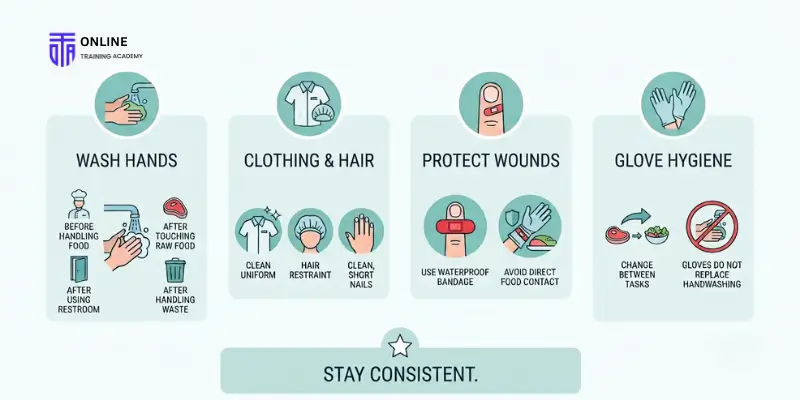
Personal hygiene is one of the most effective ways to prevent food contamination. It depends entirely on daily habits, not equipment or systems.
Wash Hands at the Right Time
Handwashing must be done regularly, not occasionally. Always wash hands:
- Before handling food
- After touching raw food
- After using the restroom
- After handling waste or dirty items
Clean hands are the first step in safe food handling.
Wear Clean and Proper Clothing
Clothing can carry dirt and bacteria. Food handlers should:
- Wear clean uniforms
- Use hair restraints
- Keep nails short and clean
This reduces the chance of contamination reaching food.
Protect Wounds and Injuries
Cuts and wounds must be covered properly. Use waterproof bandages and avoid direct contact with food when injured.
Use Gloves Correctly
Gloves are helpful, but only when used the right way. They must be changed between tasks and after contamination risks. Gloves do not replace handwashing. Dirty gloves can spread bacteria just like unwashed hands.
Stay Consistent Throughout the Day
Hygiene is not a one-time action. It must be maintained from the start of the shift to the end.
Safety Rules Every Food Handler Must Follow
Food safety rules exist to control risk at every stage of food handling. Each rule targets a specific problem, but real safety comes from applying all of them together, every time.
Maintain Proper Temperature
Food must be kept at safe temperatures to stop bacteria from growing. Cold food should stay cold, and hot food should stay hot. Temperature checks should be done regularly, not guessed.
Prevent Cross-Contamination
Keep raw and cooked foods separate at all times. Use different tools and surfaces when needed. Clean hands and equipment between tasks.
Follow Cleaning and Sanitizing Procedures
Cleaning removes dirt. Sanitizing kills harmful bacteria. Both steps must be done in the correct order and at the right time.
Keep Records and Follow Documentation
Many workplaces require logs for:
- Temperature checks
- Cleaning schedules
- Staff health status
These records help track safety and ensure rules are followed consistently.
Stay Consistent With Every Step
Food safety is not about doing things right once.
How to Manage Mistakes in Food Safety (Advanced Response Approach)
Mistakes can happen, even in well-managed environments. What matters is how they are handled.
The first step is to stop the process immediately. Any food that may be contaminated should be isolated to prevent further risk.
Next, the issue must be reported. Transparency is critical. Delaying or hiding mistakes increases the chance of harm. Corrective action follows. This may involve cleaning equipment, discarding food, or adjusting procedures.
The final step is understanding the cause. Identifying why the mistake happened allows the team to prevent it in the future. This approach turns mistakes into improvements rather than repeated risks.
Emergency Response in Food Safety Situations
Food safety problems sometimes happen without warning. When they do, the response must be fast and controlled.
Step 1: Stop Food Service
If there is any sign of contamination, stop serving food immediately. This prevents the problem from spreading to more customers.
Step 2: Identify and Remove Risk
Find the food that may be unsafe and remove it. Do not take chances—if in doubt, throw it out.
Step 3: Control the Situation
Clean and sanitize all affected areas. Check equipment, storage, and handling processes to find the cause.
Step 4: Report if Necessary
If the issue is serious, inform the appropriate authority or supervisor. Follow local rules for reporting food safety incidents.
Step 5: Document What Happened
Write down:
- What went wrong
- What actions were taken
- How the issue was fixed
This helps prevent the same mistake in the future.
Legal Consequences of Ignoring Food Safety Rules
Food safety is not just a best practice—it is enforced by law in most countries. Regulations exist to protect public health, and food handlers are expected to follow them at all times. These rules are not guidelines. They are legal standards that must be met in every food operation.
When food safety rules are ignored, the consequences can be immediate and serious. Health inspectors have the authority to issue fines, shut down operations, or suspend licenses if violations are found. Even small issues, if repeated or ignored, can lead to larger penalties over time.
In more severe cases, where unsafe practices cause illness or harm, legal action may follow. This can include lawsuits from affected customers or penalties imposed by regulatory authorities. For businesses, this can result in financial loss, damage to reputation, and long-term closure.
The impact is not limited to the business. Food handlers themselves may face consequences, including job loss or being held accountable for negligence, depending on the situation and local laws.
Beyond legal penalties, there is also the issue of trust. Once a food safety violation becomes public, it can damage customer confidence. Rebuilding that trust is difficult and often takes much longer than the mistake itself.
For food handlers, this reinforces a key point: food safety is not optional. It is a professional and legal responsibility. Every action taken in a food environment must meet required standards, because the cost of failure goes far beyond a single mistake.
Conclusion
Food safety is not about reacting to problems—it is about preventing them before they happen.
Every rule, every guideline, and every restriction exists for one reason: to reduce risk. When these rules are followed consistently, food handling becomes a controlled and safe process. But when they are ignored, even small risks can grow quickly.
A food handler’s responsibility goes beyond following instructions. It requires awareness of health, discipline in daily actions, and the ability to make the right decision even under pressure.
Because in food safety, the biggest risks are often the ones you cannot see—and the only way to control them is through consistent, informed action.
FAQs
No. Even mild symptoms can pose a risk, especially in food handling environments.
Biological contamination, such as bacteria and viruses, is the most common risk.
No. Gloves must be used properly and changed regularly to be effective.
Because they can spread harmful pathogens that cause illness.
Stop work, isolate the food, report the issue, and take corrective action.
Yes. Violations can result in penalties or business closure.
Yes. Many contaminants are invisible and do not affect appearance or smell.
Learn More




Get a FREE Course
- Learn useful skills online free
- Get CPD accredited certificate
- Add it to your CV today!