

Most administrative professionals don’t fall behind because they lack effort. They fall behind because the role has changed—and they’re still working to an outdated definition of it.
In the UK today, administrative work is no longer about managing paperwork and calendars. It has become a hybrid role that blends communication, technology, coordination, and decision support. Employers are no longer hiring “assistants.” They are hiring operational contributors.
This shift changes everything: the skills you need, the tools you use, and how fast you can grow.
From Typewriters to Technology: How the Role Has Evolved
Administrative work was once defined by routine. Tasks were predictable, systems were manual, and success depended on accuracy and consistency. That model no longer exists.
The transition to digital systems has replaced manual processes with software-driven workflows. Documents are stored in the cloud, meetings are scheduled across time zones, and communication happens across multiple platforms simultaneously. Administrative professionals are now expected to operate within this digital infrastructure without friction.
This evolution has not just added tools—it has increased responsibility. When systems fail, deadlines slip, or communication breaks down, the administrative function is often where the issue surfaces first. The role has moved from supporting work to enabling work.
Modern Administrative Professionals: Essential Skills, Tools & Career Growth Guide (2026)
Modern administrative professionals play a vital role in today's workplace by combining organisational, digital, communication, and problem-solving skills. This guide explores the essential tools, key competencies, career growth opportunities, and practical strategies needed to stay competitive and succeed in the evolving administrative profession.
Table of Contents
The Rise of Multi-Functional Administrative Roles
Modern UK workplaces no longer treat administrative roles as fixed or narrowly defined. Instead, they expect administrative professionals to operate across multiple functions, stepping in wherever coordination, structure, or support is needed. This shift is driven by leaner teams, faster business cycles, and the increasing reliance on digital systems that connect every part of an organisation.
An administrative professional today is rarely confined to a single department. In a typical week, they may coordinate internal projects by tracking timelines and ensuring stakeholders stay aligned, then shift to organising events such as client meetings or company-wide sessions. They may also manage onboarding processes for new hires, ensuring documentation, system access, and communication are handled without delays. At the same time, they often act as a point of contact for clients, maintaining professional communication and ensuring queries are resolved efficiently. Alongside this, they are expected to maintain internal systems, update data, and ensure information flows accurately across platforms.
In smaller UK businesses, this multi-functional nature becomes even more pronounced. One administrative professional may support operations by managing workflows, assist HR with recruitment and onboarding, and handle basic finance tasks such as invoicing or expense tracking. This level of involvement is not an exception—it is increasingly the norm.
The reason behind this shift is practical. Organisations are reducing silos and expecting roles to contribute more directly to overall efficiency. Administrative professionals are well-positioned to do this because they sit at the centre of communication, systems, and daily operations. They see how different parts of the business connect, which allows them to identify gaps, prevent delays, and keep processes moving.
This evolution changes how performance is measured. Success is no longer based on how well tasks are completed, but on how effectively problems are prevented and workflows are improved. An administrative professional who can spot inefficiencies, streamline communication, and support multiple functions adds significantly more value than someone who only follows instructions.
As a result, the role now demands a broader mindset. It requires the ability to switch contexts quickly, understand different business functions, and maintain control even when priorities overlap. Those who develop this adaptability position themselves for faster progression, often moving into roles such as Office Manager, Operations Coordinator, or Executive Assistant.
The rise of multi-functional responsibilities is not a temporary trend. It reflects a permanent shift in how UK organisations operate. Administrative professionals who embrace this change move beyond support roles and become central to how businesses run.
The Core Skill Set of a Modern Administrative Professional
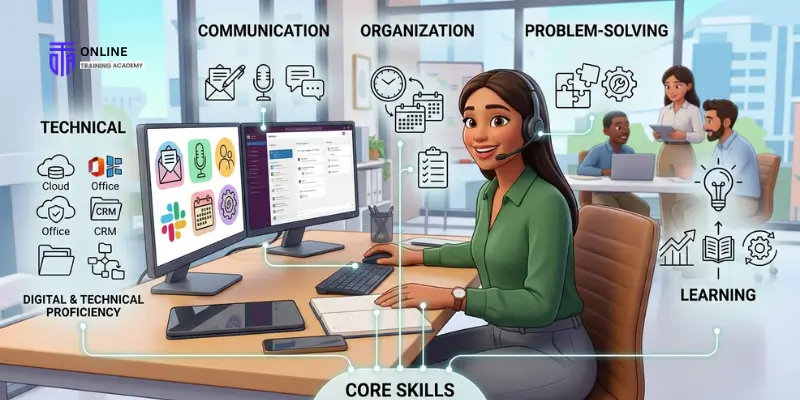
To succeed in this environment, administrative professionals need a balanced combination of technical, organisational, and interpersonal skills. The most valuable individuals are not specialists in one area—they are reliable across multiple domains.
1. Digital and Technical Proficiency
Technology is now the backbone of administrative work. Without it, efficiency drops immediately.
At a minimum, professionals are expected to work confidently with:
- Office suites (Microsoft 365, Google Workspace)
- Calendar and scheduling systems
- Cloud storage platforms
- Communication tools such as Slack or Teams
Beyond that, higher-value roles require familiarity with project management tools, CRM systems, and automation workflows.
The key is not just knowing how to use tools, but understanding when and why to use them to improve efficiency.
2. Communication Skills (Written and Verbal)
Administrative professionals often act as the link between executives, teams, clients, and external partners. This makes communication one of the most critical skills in the role.
This includes:
- Writing clear, professional emails
- Managing tone and context across different audiences
- Handling sensitive or confidential information
- Communicating decisions and updates accurately
Strong communication reduces errors, prevents misunderstandings, and improves overall workflow.
3. Organisation and Time Management
This is still a core requirement, but the context has changed. Instead of managing a single schedule or task list, administrative professionals now handle overlapping priorities across multiple systems.
Effective organisation means:
- Prioritising tasks based on impact
- Managing deadlines across teams
- Keeping systems updated and accurate
- Anticipating scheduling conflicts before they happen
This is where many professionals struggle—not due to lack of effort, but due to lack of structured systems.
4. Problem-Solving and Critical Thinking
Routine tasks are increasingly automated. What remains are the exceptions—the situations that require judgement.
Administrative professionals are now expected to:
- Identify inefficiencies in workflows
- Resolve scheduling or communication conflicts
- Handle unexpected changes calmly
- Make small decisions without constant supervision
This shift toward problem-solving is what separates high-performing professionals from average ones.
5. Adaptability and Continuous Learning
The tools and systems used today will not be the same in five years. This makes adaptability a core skill, not a secondary one. Professionals who grow in this field actively update their skills. They learn new software, improve their communication approach, and stay aware of industry trends.
In the UK, this often involves short courses, internal training programmes, or certifications focused on business administration, project coordination, or digital tools.
Essential Software Tools for Administrative Professionals
The modern administrative role is tightly connected to software. The right tools can reduce workload, improve accuracy, and increase output without increasing effort.
Office and Document Management
Platforms like Microsoft 365 and Google Workspace are standard across most UK organisations. These tools handle document creation, data management, and collaboration.
Proficiency in Excel or Google Sheets is particularly valuable, as data handling is now part of many administrative roles.
Communication Platforms
Email remains central, but it is no longer the only channel. Tools like Slack and Microsoft Teams are widely used for internal communication.
Administrative professionals must manage multiple communication streams without losing clarity or missing important information.
Project Management Tools
Project coordination is increasingly part of administrative work. Tools such as Trello, Asana, and Monday.com help track tasks, deadlines, and team responsibilities.
Even basic familiarity with these platforms can significantly increase efficiency and visibility across projects.
Scheduling and Calendar Tools
Calendar management has become more complex, especially with remote and hybrid work environments. Tools like Outlook Calendar and Calendly help manage availability, reduce scheduling conflicts, and automate meeting bookings.
Email Automation: A Practical Efficiency Upgrade
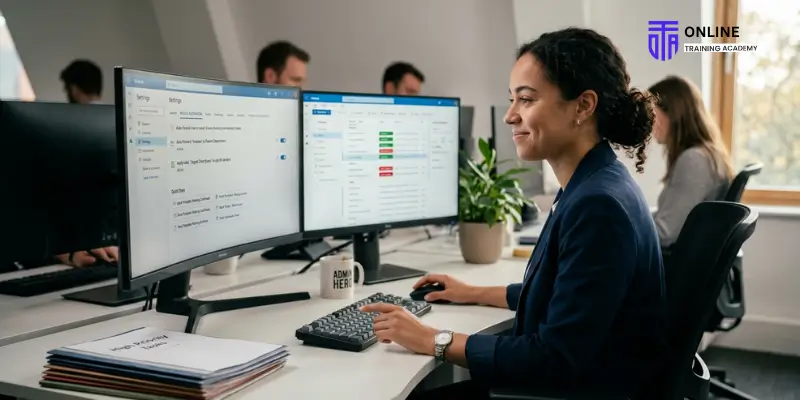
One of the most overlooked opportunities in administrative work is email automation. Many professionals still manage inboxes manually, even though most modern email platforms offer built-in tools that can handle a large portion of routine tasks.
Instead of sorting and responding to every message individually, administrators can use rules, filters, and templates to streamline repetitive work. Filters can automatically categorise incoming emails by sender, subject, or priority, keeping the inbox organised without constant attention. Templates allow for consistent, professional responses to common queries, reducing the need to rewrite similar messages. Auto-replies can manage routine communication during high-volume periods, ensuring nothing is left unanswered.
Used properly, these features do more than save time. They reduce mental load, minimise errors, and allow administrative professionals to focus on higher-value tasks that require judgement rather than repetition.
Upskilling for Career Growth in the UK
The difference between a static career and a progressing one often comes down to skill development.
In the UK job market, employers increasingly look for administrative professionals who can contribute beyond basic tasks. This includes project coordination, data handling, and system management. Upskilling can take several forms:
- Learning advanced Excel functions
- Gaining familiarity with project management tools
- Improving business communication skills
- Completing short professional courses or certifications
The goal is not to become an expert in everything, but to become reliable in multiple areas.
What Employers in the UK Actually Look For
Job descriptions often list many requirements, but in practice, employers prioritise a smaller set of qualities.
They look for individuals who:
- Can manage their workload without constant supervision
- Communicate clearly and professionally
- Adapt quickly to new tools and systems
- Handle pressure without losing organisation
Technical skills can be taught. Consistency and reliability are harder to replace.
The Real Career Path: Where This Role Leads
Administrative roles are often underestimated, but they offer strong progression opportunities.
A typical path in the UK might look like:
- Entry-level Secretary or Admin Assistant
- Administrator or Office Coordinator
- Personal Assistant or Executive Assistant
- Office Manager or Operations Manager
Each step involves moving closer to decision-making and business operations.
Those who combine administrative skills with business awareness often transition into roles with higher responsibility and pay.
How to Stay Competitive in 2026
The administrative profession is no longer static. It rewards those who adapt quickly and leaves behind those who rely on outdated methods or narrow skill sets. As roles continue to expand across functions, staying competitive is less about experience alone and more about how well you evolve with the demands of the workplace.
To remain relevant, administrative professionals need to build strong digital capability. This means more than basic familiarity with tools—it requires confidence in using platforms that manage data, communication, scheduling, and collaboration. As workplaces adopt new systems, the ability to learn and apply them quickly becomes a clear advantage.
Communication also plays a central role. Clear, structured writing and professional verbal communication reduce confusion, improve workflow, and strengthen relationships across teams and stakeholders. In many cases, the administrative professional sets the tone for how information flows within an organisation.
Another key shift is moving from task execution to problem-solving. Instead of waiting for instructions, high-performing professionals identify gaps, anticipate issues, and take initiative to resolve them. This ability to think ahead and act independently is what separates routine support from real operational value.
Continuous learning ties all of this together. The most competitive professionals treat skill development as an ongoing process, not something tied to a single role or stage in their career. Whether through short courses, on-the-job learning, or exposure to new systems, staying updated is essential.
The role itself has expanded, but so has the opportunity. Administrative professionals who adapt to these changes move beyond traditional support functions and become integral to how organisations operate and grow.
Conclusion
The administrative profession has transformed into a dynamic career that extends far beyond traditional office support. Modern administrative professionals are expected to combine organisational ability with digital skills, effective communication, and problem-solving to keep businesses running efficiently. As technology and workplace practices continue to evolve, adaptability has become one of the most valuable qualities in the profession.
Furthermore, continuous learning and a willingness to embrace new tools and responsibilities are essential for long-term success. By strengthening technical knowledge, improving communication, and developing a proactive approach, administrative professionals can enhance their contribution to any organisation while, ultimately, opening the door to a wide range of future career opportunities.
Learn More



Get a FREE Course
- Learn useful skills online free
- Get CPD accredited certificate
- Add it to your CV today!