


In 2018, a 10-year-old boy in Manchester was regularly absent from school and began withdrawing from friends. His teacher noticed unexplained bruises and a sudden drop in confidence. This discovery prompted immediate action, ultimately safeguarding the child from ongoing harm.
This incident highlights a crucial point: protecting children in the UK is not only about responding to abuse—it is about recognising risks early, supporting wellbeing, and taking the right steps to intervene.
Two terms are central to child safety: safeguarding and child protection. While they are often used interchangeably, they are not the same. Safeguarding focuses on prevention and creating safe environments, whereas child protection deals with responding to children who are already at risk or suffering harm.
Understanding the distinction is vital for anyone working with children, including teachers, social workers, and healthcare professionals. This guide explains:
- What child safeguarding means and its responsibilities
- How child protection differs and fits within safeguarding
- How the two concepts overlap
- The UK child protection framework
- Practical steps professionals take to keep children safe
By knowing how safeguarding and child protection work together, UK professionals can take informed, confident action to ensure children are safe and supported.
Table of Contents
Child Safeguarding vs Child Protection – Understanding the Difference and How They Work Together
Child safeguarding focuses on preventing harm and creating safe environments for children, while child protection involves responding to situations where a child is at risk or has experienced abuse or neglect. Together, they play a vital role in promoting children's safety, well-being, and development, ensuring every child is protected and supported.
What Child Safeguarding Means
Child safeguarding refers to all measures taken to protect children from harm, abuse, and neglect, while promoting their health, wellbeing, and development. In the UK, safeguarding is a legal and professional duty for anyone who works with children.
Safeguarding is broad and proactive. Its responsibilities include:
- Preventing harm – taking action to stop abuse, neglect, or exploitation before it occurs.
- Creating safe environments – ensuring schools, care settings, homes, and public spaces are secure for children.
- Addressing concerns – acting promptly if there are signs of risk.
- Supporting wellbeing – promoting physical, emotional, and mental health, helping children reach their potential.
For example, a school might implement online safety policies, train staff to spot signs of neglect or abuse, and monitor attendance to identify children at risk. Safeguarding is about building a culture of safety across all areas of a child’s life, not just reacting to incidents.
What Child Protection Is
Child protection is a subset of safeguarding focused specifically on children who are experiencing, or at risk of, significant harm. While safeguarding takes a preventative approach, child protection involves immediate intervention to keep children safe.
Key aspects of child protection include:
- Assessing risks – identifying whether a child is at risk of abuse, neglect, or exploitation.
- Interventions – implementing protective measures, such as family support or temporary accommodation.
- Legal procedures – involving police, courts, or social services when necessary.
In practice, child protection processes in UK schools or local authorities can involve referring a child to social services, developing a child protection plan, and coordinating multi-agency efforts to monitor the child’s safety.
While safeguarding aims to prevent harm, child protection ensures children already at risk receive immediate protection.
How Safeguarding and Child Protection Work Together
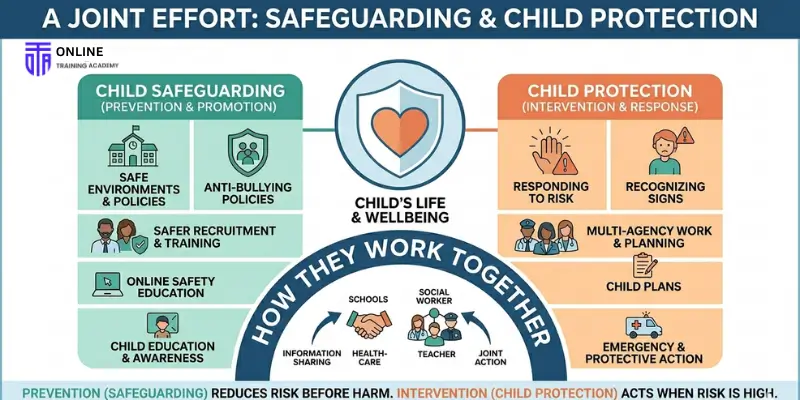
Safeguarding and child protection are closely related, yet distinct, elements of child welfare. While safeguarding focuses on preventing harm and promoting wellbeing, child protection is concerned with responding to children who are already at risk of, or experiencing, significant harm. Together, they form a comprehensive framework designed to protect children at every stage of risk.
A Holistic Perspective
Both safeguarding and child protection require a holistic approach, looking beyond immediate incidents to understand the broader context of a child’s life. This includes:
- Family environment – understanding home dynamics, parental support, or risk factors such as domestic abuse or neglect.
- School environment – ensuring children are safe, supported, and have access to resources like counselling or mentoring.
- Community environment – assessing risks in local areas, including public spaces, transport, or online interactions.
By considering the child’s overall circumstances, professionals can identify underlying issues that may contribute to risk, and address them proactively. For example, irregular attendance at school may signal neglect, bullying, or unsafe conditions at home—issues that require both safeguarding and, if risk is high, child protection intervention.
Collaboration Between Agencies
No single professional can fully safeguard a child alone. Both safeguarding and child protection rely on multi-agency collaboration. In the UK, this often involves:
- Schools and educational staff – first to notice behavioural or physical signs of concern.
- Social services – assess risk and provide family support, interventions, or emergency care.
- Healthcare providers – identify medical signs of abuse or neglect.
- Police – investigate criminal activity, such as sexual exploitation or trafficking.
By sharing information and expertise, professionals create a coordinated response that ensures children receive timely support and protection. This collaborative approach is central to UK safeguarding frameworks, guided by statutory guidance such as Working Together to Safeguard Children.
Prevention and Intervention
Safeguarding focuses on prevention, implementing policies and strategies that reduce risk before harm occurs. Examples include:
- Education programs on online safety or personal boundaries.
- Safer recruitment practices to ensure adults working with children are vetted.
- School policies on bullying, attendance, and mental health support.
Child protection, on the other hand, is intervention-focused, acting when there is clear evidence or suspicion of harm. Intervention may include:
- Developing a child protection plan through social services.
- Arranging temporary or emergency care if a child cannot safely remain at home.
- Police involvement in cases of exploitation, assault, or trafficking.
Together, prevention and intervention form a continuous safety net, addressing both potential and immediate risks. This ensures children are not only protected from harm but also supported in their growth, wellbeing, and education.
Example: Protecting a Child at Risk of Exploitation
Consider a child showing signs of online exploitation:
- Safeguarding measures may involve educating the child about online safety, providing mentoring support, ensuring safe travel to and from school, and monitoring internet usage. These measures aim to prevent harm from occurring or escalating.
- Child protection measures would be triggered if there is evidence that the child is already being exploited. This could involve referral to social services, collaboration with law enforcement, and implementing a child protection plan to remove the immediate risk.
By combining proactive safeguarding with reactive child protection, professionals create a comprehensive framework where children are supported before, during, and after incidents of risk or harm.
The Continuous Safety Net
Ultimately, safeguarding and child protection are mutually reinforcing. Safeguarding creates the conditions for children to thrive safely, while child protection ensures that when harm is present or imminent, effective measures are in place to respond. Together, they allow UK professionals to:
- Identify risk early
- Act decisively when harm is suspected or confirmed
- Support children’s long-term wellbeing
- Foster environments where children feel safe, valued, and empowered
In this way, safeguarding and child protection are not separate tasks but part of a single, continuous effort to ensure the safety and development of every child.
The Child Protection System in the UK
Each UK nation—England, Scotland, Wales, and Northern Ireland—has its own framework of laws, guidance, and practices to protect children. Despite differences, the principles remain consistent: identify children at risk, take action, and prevent further harm.
Key legislation and guidance include:
- Children Act 1989 & 2004 – establishes the legal duty to safeguard children.
- Working Together to Safeguard Children (England) – multi-agency guidance for professionals.
- Keeping Children Safe in Education – statutory guidance for schools and colleges.
The child protection system ensures that professionals act in a child’s best interests, share information responsibly, and coordinate responses effectively.
Practical Steps for Professionals

Ensuring the safety and wellbeing of children requires clear, structured action. In the UK, professionals such as teachers, social workers, healthcare staff, and youth workers follow specific steps to implement safeguarding and child protection effectively. These steps are designed to protect children from immediate harm, prevent future risk, and create safe environments where they can thrive.
Identifying Concerns
The first step is recognising potential safeguarding issues. Professionals must be vigilant and attentive to subtle signs of abuse or neglect. This can include:
- Observing behaviour – sudden changes in mood, withdrawal from peers, aggression, or excessive fearfulness.
- Listening to disclosures – children may confide in a trusted adult about worrying experiences. Staff should listen carefully, avoid leading questions, and provide reassurance.
- Noting patterns – repeated absenteeism, unexplained injuries, poor hygiene, or changes in academic performance may indicate risk.
Early identification is critical. By noticing these warning signs, professionals can intervene before situations escalate, improving outcomes for children.
Reporting Concerns
Once a concern is identified, it must be reported promptly and appropriately. In most UK organisations, this involves:
- Escalating serious cases to the local authority children’s social care or, in urgent situations, the police.
- Escalating serious cases to the local authority children’s social care or, in urgent situations, the police.
- Keeping accurate, factual records of observations, disclosures, and actions taken.
Timely reporting ensures that children receive the protection they need and that professionals act within legal and organisational requirements.
Multi-Agency Collaboration
Safeguarding and child protection are rarely the responsibility of a single professional. UK guidance emphasises multi-agency working, which brings together:
- Schools and educational staff to monitor attendance and wellbeing.
- Social services to assess risk and provide family support.
- Healthcare providers to identify medical or psychological indicators of abuse.
- Police to investigate criminal behaviour, including sexual exploitation or trafficking.
This collaborative approach ensures that children benefit from coordinated, informed, and consistent protection across all areas of their lives.
Preventative Measures
Prevention is at the heart of safeguarding. Professionals implement strategies to reduce risk before harm occurs, such as:
- Safer recruitment practices – vetting staff and volunteers to ensure only suitable adults work with children.
- Risk assessments – for school trips, online learning, and other activities to identify potential hazards.
- Training – equipping staff to recognise signs of abuse, respond appropriately, and stay updated on safeguarding policies.
Preventative measures complement reactive child protection interventions, creating a comprehensive safety framework for children.
Creating a Culture of Safety
Beyond individual steps, effective safeguarding requires fostering a culture of safety. This means:
- Ensuring children feel comfortable speaking up if they have concerns.
- Encouraging staff to raise concerns without fear of reprisal.
- Maintaining open communication between all professionals involved in a child’s care.
By combining vigilance, reporting, collaboration, prevention, and a culture of safety, UK professionals ensure that children are not only protected from immediate harm but also supported in safe, nurturing environments that promote their long-term wellbeing and development.
Conclusion
In the UK, safeguarding and child protection are essentially two sides of the same coin. Safeguarding provides the preventative framework, ensuring children grow up safe, supported, and empowered. Child protection responds when children are already at risk, ensuring immediate safety and long-term support.
A recent case review in London highlighted that early recognition of safeguarding concerns, combined with prompt child protection action, significantly reduces harm and improves outcomes for children.
By understanding the distinction and the connection between safeguarding and child protection, professionals can create environments where children not only survive but thrive, growing with confidence and safety. In the UK, effective safeguarding and child protection are the foundation for a society that values, protects, and empowers every child.
FAQs
Safeguarding is the broader preventative approach, while child protection focuses on children already at risk or suffering harm.
All professionals working with children, including teachers, healthcare workers, social workers, and school staff.
A trained individual in an organisation responsible for managing safeguarding concerns and liaising with external agencies.
Key legislation includes the Children Act 1989 & 2004, Working Together to Safeguard Children, and Keeping Children Safe in Education.
When a child is suspected or known to be at risk of significant harm.
No. They are relevant in all settings where children are present, including healthcare, sports clubs, community centres, and online environments.
Learn More


Get a FREE Course
- Learn useful skills online free
- Get CPD accredited certificate
- Add it to your CV today!