214 Students
Quality Assurance (QA) Management plays a critical role in ensuring products, services, and processes meet consistent standards of excellence across industries in Canada. This course introduces the core principles of quality systems, continuous improvement, and performance evaluation used in modern organisations. Learners gain insight into how businesses maintain reliability, reduce errors, and improve customer satisfaction. Ideal for individuals entering business …
Quality Assurance (QA) Management plays a critical role in ensuring products, services, and processes meet consistent standards of excellence across industries in Canada. This course introduces the core principles of quality systems, continuous improvement, and performance evaluation used in modern organisations. Learners gain insight into how businesses maintain reliability, reduce errors, and improve customer satisfaction.
Ideal for individuals entering business operations or those already working in administrative, manufacturing, logistics, or service environments, this course builds a strong foundation in quality control systems, auditing practices, and process improvement techniques. The skills developed can be applied across Canadian industries such as healthcare services, manufacturing, retail, logistics, and corporate operations.
With flexible online learning, this course allows you to study at your own pace while gaining a recognised certification that supports your professional development in quality-focused roles.
Please note: This Quality Assurance (QA) Management Course only gives you the theoretical knowledge that you need to excel in this field. This Course doesn’t entitle you to practise as a professional in this specific field.
By the end of the Mental Health First Aid Course, learners will be able to:
These outcomes are focused on real-life application in environments such as Canadian hospitals, schools, long-term care homes, and workplace settings.
This course is ideal for:
No previous experience is required. The content is designed to guide learners step-by-step, making it suitable for those entering health and social care fields in Canada or expanding their awareness of mental wellbeing.
All of our courses, including this Quality Assurance (QA) Management, are fully accredited, providing you with up-to-date skills and knowledge and helping you to become more competent and effective in your chosen field.
All of our courses are accredited by the CPD Certification Service as conforming to universally accepted Continuing Professional Development (CPD) guidelines.
The Quality Licence Scheme (QLS) is a trusted endorsement framework that certifies high-quality, non-regulated training programmes across various sectors.
The Association of Healthcare Trainers (AoHT) promotes high-quality healthcare training, supporting providers to deliver relevant, industry-aligned education and improve professional standards.
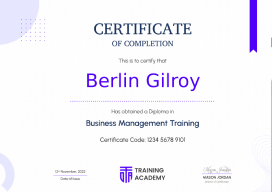
Once you’ve successfully completed your course, you will immediately be sent a digital certificate. Also, you can have your printed certificate delivered by post (shipping cost CA$9.99). All of our courses are fully accredited, providing you with up-to-date skills and knowledge and helping you to become more competent and effective in your chosen field.
The detailed curriculum outline of our Quality Assurance (QA) Management is as follows:
This module introduces the core concept of quality management and its importance in modern organisations. Learn how quality standards are defined, maintained, and applied to improve operational performance and customer satisfaction.
Explore Total Quality Management (TQM) as a company-wide approach to continuous improvement. The module focuses on teamwork, process efficiency, and long-term quality culture within organisations.
Understand how organisations measure performance using key quality indicators. Learn techniques for identifying gaps, analysing data, and implementing improvements that enhance overall efficiency.
This module focuses on how organisations actively monitor products and services to ensure they meet required standards. You will explore inspection techniques, error detection methods, and process checks used to maintain consistency. It also highlights how early identification of issues helps reduce waste, improve reliability, and maintain customer trust in Canadian workplaces.
Here, you will learn how customer expectations directly influence quality standards in modern businesses. The module explains how organisations collect feedback through surveys, reviews, and data analysis. It also covers how this information is used to refine services, improve customer satisfaction, and build long-term loyalty in competitive markets.
This section introduces Six Sigma as a structured approach to improving processes and reducing defects. You will learn the basics of data-driven decision-making, performance measurement, and problem-solving techniques. The module also explains how organisations use Six Sigma tools to increase efficiency and maintain consistent quality across operations.
In this module, you will explore how quality assurance extends across the entire supply chain, from sourcing raw materials to delivering final products. It highlights how coordination between suppliers, manufacturers, and distributors helps maintain quality standards. You will also understand how disruptions and inefficiencies can impact overall product quality and customer satisfaction.
This module explains the purpose and structure of quality audits within organisations. You will learn how audits are planned, conducted, and reported to ensure compliance with internal and external standards. It also covers corrective actions and continuous improvement strategies used to strengthen organisational performance and accountability.
This course is ideal for beginners, students, job seekers, and professionals working in manufacturing, business operations, logistics, retail, or service industries who want to understand quality systems.
You will learn quality control, Six Sigma basics, supply chain quality systems, customer expectations, auditing processes, and methods used to improve organisational performance.
Yes. QA is essential in Canada’s manufacturing, healthcare, logistics, and service sectors to ensure safety, compliance, efficiency, and customer satisfaction.
Quality Control focuses on identifying and fixing defects in products or services, while Quality Assurance focuses on improving processes to prevent errors from occurring.
Yes. The course introduces Six Sigma principles, including process improvement, defect reduction, and data-driven decision-making used in modern organisations.
Career options may include Quality Assurance Analyst, Quality
| Module 01: Introduction to Quality Management | |||
| Introduction to Quality Management | 00:26:00 | ||
| Module 02: Total Quality Management | |||
| Total Quality Management | 00:17:00 | ||
| Module 03: Quality Measurement and Improvement | |||
| Quality Measurement and Improvement | 00:25:00 | ||
| Module 04: Quality Control | |||
| Quality Control | 00:13:00 | ||
| Module 05: Understanding Customer Expectations and Needs | |||
| Understanding Customer Expectations and Needs | 00:16:00 | ||
| Module 06: Six Sigma | |||
| Six Sigma | 00:21:00 | ||
| Module 07: Supply Chain Management | |||
| Supply Chain Management | 00:25:00 | ||
| Module 08: Quality Audits | |||
| Quality Audits | 00:16:00 | ||
$125 Original price was: $125.$20Current price is: $20. ex VAT
SAVE 84% - OFFER ENDS SOON
![]() |
01 Year of full Course access
Level 3
Endorsed Certificate of Compleiton