240 Students
Psychotherapy and Counselling is designed for individuals in Canada who want to understand how mental health challenges affect people across different stages of life. This course introduces core psychological concepts and explores how counselling support is delivered within community services, clinics, and healthcare environments across Canada. Whether you are starting fresh or exploring a shift into the mental health field, …
Psychotherapy and Counselling is designed for individuals in Canada who want to understand how mental health challenges affect people across different stages of life. This course introduces core psychological concepts and explores how counselling support is delivered within community services, clinics, and healthcare environments across Canada.
Whether you are starting fresh or exploring a shift into the mental health field, this course builds your understanding of emotional wellbeing, behavioural patterns, and therapeutic communication. It connects theory with real-life situations commonly seen in Canadian schools, support centres, and care organisations.
With flexible online learning and structured certification, learners can study at their own pace while building meaningful knowledge for mental health-related roles. Begin your journey toward contributing to Canada’s growing demand for mental health awareness and support services.
Please note: This Psychotherapy and Counselling Course only gives you the theoretical knowledge that you need to excel in this field. This Course doesn’t entitle you to practise as a professional in this specific field.
By the end of the Psychotherapy and Counselling Course, learners will be able to:
All of our courses, including this Psychotherapy and Counselling Course , are fully accredited, providing you with up-to-date skills and knowledge and helping you to become more competent and effective in your chosen field.
All of our courses are accredited by the CPD Quality Standards as conforming to universally accepted Continuing Professional Development (CPD) guidelines.
The Quality Licence Scheme (QLS) is a trusted endorsement framework that certifies high-quality, non-regulated training programmes across various sectors.
The Association of Healthcare Trainers (AoHT) promotes high-quality healthcare training, supporting providers to deliver relevant, industry-aligned education and improve professional standards.
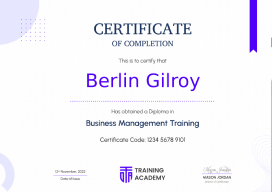
Once you’ve successfully completed your course, you will immediately be sent a digital certificate. Also, you can have your printed certificate delivered by post (shipping cost CA$9.99). All of our courses are fully accredited, providing you with up-to-date skills and knowledge and helping you to become more competent and effective in your chosen field.
The detailed curriculum outline of our Psychotherapy and Counselling course is as follows:
This module opens the door to understanding mental wellbeing and why it matters in everyday life. Learners explore how mental health affects thoughts, emotions, and behaviour.
Focus shifts to early development stages, highlighting common psychological challenges in children and teenagers. It also explains how early intervention can shape long-term wellbeing.
Here, learners look at how stress builds up and transforms into anxiety-related conditions. Real-life triggers and coping responses are explored in simple terms.
This section introduces schizophrenia and its impact on perception, thinking, and behaviour. It also covers how support systems help individuals manage daily life.
Different patterns of long-term behaviour and emotional responses are discussed here. The module explains how personality traits can sometimes become disruptive.
Learners examine emotional fluctuations such as depression and bipolar conditions. It highlights how mood changes influence motivation and daily functioning.
This module explores how eating habits and sleep cycles can become disrupted. It also explains how these conditions affect both mental and physical health.
Sensitive topics are addressed with care, focusing on warning signs and emotional distress. The importance of early support and intervention is highlighted.
This module explains what psychotherapy is and how it supports emotional healing. It introduces different approaches used in therapeutic settings.
Learners are introduced to various therapy models used in mental health care. Each approach is explained in terms of its purpose and application.
This section focuses on building trust and understanding client needs. It explains how professionals gather information during initial interactions.
A simplified version of cognitive behavioural techniques is introduced here. The module shows how thoughts and behaviours are gently reshaped.
Different structured psychotherapy methods are explored in detail. Learners understand how each form supports different mental health needs.
This module focuses on supporting individuals during emotional breakdowns. It highlights calm communication and immediate response strategies.
Final module teaches structured approaches to handling urgent mental health situations. It emphasises safety, stability, and timely action.
Yes, the course is designed for beginners with no prior experience in mental health or counselling. It starts with foundational concepts and gradually progresses to advanced topics like psychotherapy approaches and crisis intervention.
Graduates can explore entry-level roles in Canada’s mental health and social care sector, such as Mental Health Support Worker, Community Support Worker, Youth Support Worker, Counselling Assistant, and Crisis Support Worker.
The course builds awareness of mental health challenges commonly seen in Canadian communities. It helps learners understand how support services operate in schools, clinics, rehabilitation centres, and community organisations.
No formal qualifications are required. This course is open to beginners. Basic English skills, computer access, and an interest in mental health and counselling are enough to start learning.
Yes, the course is available in a flexible online format. Learners can study at their own pace from anywhere in Canada, making it suitable for students, job seekers, and working professionals.
You will develop knowledge of mental health conditions, counselling communication, patient assessment, and crisis response techniques. It also builds confidence in understanding human behaviour and emotional support strategies.
| Module 01: Introduction to Mental Health | |||
| Introduction to Mental Health | 00:20:00 | ||
| Module 02: Childhood and Adolescent Psychiatric Disorders | |||
| Childhood and Adolescent Psychiatric Disorders | 00:25:00 | ||
| Module 03: Stress and Anxiety Disorders | |||
| Stress and Anxiety Disorders | 00:32:00 | ||
| Module 04: Schizophrenia | |||
| Schizophrenia | 00:26:00 | ||
| Module 05: Personality Disorders | |||
| Personality Disorders | 00:42:00 | ||
| Module 06: Mood Disorders | |||
| Mood Disorders | 00:22:00 | ||
| Module 07: Eating & Sleeping Disorders | |||
| Eating & Sleeping Disorders | 00:44:00 | ||
| Module 08: Self-Harm and Suicide | |||
| Self-Harm and Suicide | 00:20:00 | ||
| Module 09: Introduction to Psychotherapy | |||
| Introduction to Psychotherapy | 00:15:00 | ||
| Module 10: Types of Therapies | |||
| Types of Therapies | 00:15:00 | ||
| Module 11: Engaging and Assessing the Patients | |||
| Engaging and Assessing the Patients | 00:18:00 | ||
| Module 12: Low-Intensity CBT Treatment | |||
| Low-Intensity CBT Treatment | 00:15:00 | ||
| Module 13: Forms of Psychotherapy | |||
| Forms of Psychotherapy | 00:16:00 | ||
| Module 14: Helping the Client in Crisis | |||
| Helping the Client in Crisis | 00:15:00 | ||
| Module 15: Crisis Intervention | |||
| Crisis Intervention | 00:13:00 | ||
| Google Review | |||
| Google Review | 00:00:00 | ||
$125 Original price was: $125.$20Current price is: $20. ex VAT
SAVE 84% - OFFER ENDS SOON
![]() |
01 Year of full Course access
Level 2
Endorsed Certificate of Compleiton