
624 Students
Prevent Duty Training – Level 2 develops awareness of vulnerability, radicalisation, extremism, and safeguarding concerns that may affect individuals in workplace and community settings. Learners explore social and cultural influences, online radicalisation, identity, peer pressure, warning signs, grooming patterns, and changes that may indicate increasing vulnerability. The training develops knowledge of recognising concerns, professional curiosity, managing uncertainty, recording observations, and …

Prevent Duty Training – Level 2 develops awareness of vulnerability, radicalisation, extremism, and safeguarding concerns that may affect individuals in workplace and community settings. Learners explore social and cultural influences, online radicalisation, identity, peer pressure, warning signs, grooming patterns, and changes that may indicate increasing vulnerability.
The training develops knowledge of recognising concerns, professional curiosity, managing uncertainty, recording observations, and sharing information appropriately. Learners also explore safeguarding responsibilities, referral processes, information sharing, and balancing individual rights with safeguarding duties.
Online, self-paced learning allows learners to study around work, education, or other commitments. An assessment checks understanding, while successful completion can provide a certificate as a record of training. UK-specific Prevent and Channel terminology should be understood within its original context, while Canadian learners should follow applicable safeguarding and referral requirements in their province, territory, or workplace.
This course helps learners develop a stronger understanding of vulnerability, radicalisation awareness, and appropriate safeguarding responses.
The course is designed for workers who may encounter vulnerable individuals or safeguarding concerns through their professional responsibilities.
Once you’ve successfully completed your course, you will immediately be sent a digital certificate. Also, you can have your printed certificate delivered by post (shipping cost £3.99). All of our courses are fully accredited, providing you with up-to-date skills and knowledge and helping you to become more competent and effective in your chosen field. Our certifications have no expiry dates, although we do recommend that you renew them every 12 months.
Understanding vulnerability and safeguarding concerns can help workers respond thoughtfully when behaviour or circumstances raise concerns.
This training can complement roles involving safeguarding, education, healthcare, community support, and public-facing responsibilities. Salary varies by province, employer, experience, qualifications, and role.
The course is designed to provide accessible safeguarding awareness for beginners and existing workers.
All of our courses, including this Prevent Duty Training – Level 2 Course, are fully accredited, providing you with up-to-date skills and knowledge and helping you to become more competent and effective in your chosen field.
All of our courses are accredited by the CPD Quality Standards as conforming to universally accepted Continuing Professional Development (CPD) guidelines.

The Quality Licence Scheme (QLS) is a trusted endorsement framework that certifies high-quality, non-regulated training programmes across various sectors.

The Association of Healthcare Trainers (AoHT) promotes high-quality healthcare training, supporting providers to deliver relevant, industry-aligned education and improve professional standards.

The course contains five focused modules that develop understanding from complex vulnerabilities and behavioural indicators through response procedures, safeguarding responsibilities, and legal and ethical considerations.
The introduction outlines the purpose of the training and introduces key concepts surrounding vulnerability, radicalisation, extremism, safeguarding, and appropriate professional responses. Learners gain context for the topics explored throughout the course.
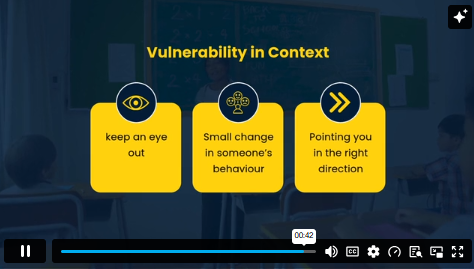
This module explores vulnerability in different social and personal contexts, including cultural influences, identity, belonging, and peer pressure. Learners also examine online radicalisation pathways and factors that may make individuals more susceptible to harmful influences.
Learners explore behavioural patterns that may indicate increasing vulnerability or concern, including withdrawal, escalation, ideological fixation, sudden changes, and grooming behaviours. The focus is on recognising patterns without making assumptions based on a single behaviour or characteristic.
This module develops approaches for responding to concerns through observation, professional curiosity, and structured decision-making. Learners explore the Notice, Check, Share framework, managing uncertainty, and recording and sharing concerns clearly and appropriately.
Learners examine safeguarding duties, referral processes, information sharing, and the balance between individual rights and responsibilities. UK-specific Prevent and Channel concepts are considered within their original context, while learners are encouraged to follow the safeguarding, privacy, and referral requirements applicable to their own Canadian jurisdiction and workplace.
The conclusion brings together the key principles covered throughout the course, including recognising vulnerability, interpreting behavioural concerns, responding appropriately, and working within safeguarding boundaries. Learners consolidate their understanding of responsible and proportionate safeguarding practice.
No. The Prevent Duty is part of the UK safeguarding and counter-terrorism framework. Canadian organisations follow their own applicable provincial, territorial, federal, and organisational safeguarding requirements.
It can be relevant to people working in education, healthcare, social care, youth services, community support, public services, and other roles involving vulnerable individuals.
The course covers vulnerability, social influences, online radicalisation, behavioural indicators, grooming, professional curiosity, recording concerns, information sharing, safeguarding, and referral procedures.
Possible concerns can include significant behavioural changes, increasing social withdrawal, fixation on particular ideological material, or changes in relationships and online activity. A single behaviour does not establish radicalisation, so concerns should be considered in context.
Yes. Online delivery allows learners to study the course materials remotely and work through the content at a flexible pace.
No. The course provides awareness and knowledge but does not automatically qualify a learner for a regulated safeguarding occupation or specialist role.
| Introduction | |||
| Introduction | 00:01:00 | ||
| Module 1. Recognising Complex Vulnerabilities | |||
| 1.1. Recognising Complex Vulnerabilities | 00:01:00 | ||
| 1.1.1 Vulnerability in Context | 00:01:00 | ||
| 1.1.2 Social and Cultural Influences | 00:01:00 | ||
| 1.1.3 Online Radicalisation Pathways | 00:01:00 | ||
| 1.1.4. Identity, Belonging, and Peer Pressure | 00:01:00 | ||
| Reading Materials | |||
| Section 1. Recognising Complex Vulnerabilities | 00:00:00 | ||
| Module 2. Interpreting Behaviours and Signals | |||
| 2.1 Interpreting Behaviours and Signals | 00:01:00 | ||
| 2.1.1 Identifying Warning Patterns | 00:01:00 | ||
| 2.1.2 Escalation and Withdrawal | 00:01:00 | ||
| 2.1.3 Ideological Fixation | 00:01:00 | ||
| 2.1.4 Sudden Behavioural Shifts | 00:01:00 | ||
| 2.1.5 Patterns of Grooming | 00:01:00 | ||
| Reading Materials | |||
| Section 2: Interpreting Behaviours and Signals | 00:00:00 | ||
| Module 3. Strengthening Response Procedures | |||
| 3.1 Strengthening Response Procedures | 00:01:00 | ||
| 3.1.1 Deepening the Notice, Check, Share Framework | 00:01:00 | ||
| 3.1.2 Improving Observation Techniques | 00:01:00 | ||
| 3.1.3 Professional Curiosity | 00:01:00 | ||
| 3.1.4 Managing Uncertainty | 00:01:00 | ||
| 3.1.5 Recording and Sharing Concerns Confidently | 00:01:00 | ||
| Reading Materials | |||
| Section 3: Strengthening Response Procedures | 00:00:00 | ||
| Module 4. Working Within Legal and Ethical Boundaries | |||
| 4.1. Working Within Legal and Ethical Boundaries | 00:01:00 | ||
| 4.1.1 Safeguarding and Duty of Care | 00:01:00 | ||
| 4.1.2 Referring to Channel | 00:01:00 | ||
| 4.1.3 Information Sharing Protocols | 00:01:00 | ||
| 4.1.4 Balancing Rights and Responsibilities | 00:01:00 | ||
| Reading Materials | |||
| Section 4: Working Within Legal and Ethical Boundaries | 00:00:00 | ||
| Conclusion | |||
| Conclusion | 00:01:00 | ||
$125 Original price was: $125.$20Current price is: $20. ex VAT
SAVE 84% - OFFER ENDS SOON
![]() |
01 Year of full Course access
Level 2
Endorsed Certificate of Compleiton