718 Students
Infection Prevention and Control Training Level 3 develops advanced knowledge for managing infection risks in Canadian healthcare and care settings. Learners explore healthcare-associated infections, emerging infectious diseases, microbiology, antimicrobial resistance, surgical infection prevention, sterilisation, disinfection, and outbreak management. It is suitable for healthcare workers, IPC leads, clinical supervisors, care managers, and others involved in infection prevention. The training helps learners …
Infection Prevention and Control Training Level 3 develops advanced knowledge for managing infection risks in Canadian healthcare and care settings. Learners explore healthcare-associated infections, emerging infectious diseases, microbiology, antimicrobial resistance, surgical infection prevention, sterilisation, disinfection, and outbreak management. It is suitable for healthcare workers, IPC leads, clinical supervisors, care managers, and others involved in infection prevention.
The training helps learners recognise complex transmission risks, strengthen infection control measures, and contribute to safer healthcare environments. It can support career development in healthcare, infection prevention, clinical support, care management, public health, and health and safety roles across Canada.
Online, self-paced study allows learners to fit training around work and other commitments. Structured course materials and certification after successful completion provide a flexible way to strengthen infection prevention knowledge and support continuing professional development.
The course develops deeper knowledge of infection risks and the measures used to manage them.
This training is designed for learners with responsibilities related to infection prevention, healthcare safety, or clinical practice.
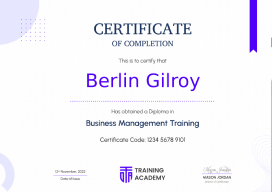
Once you’ve successfully completed your course, you will immediately be sent a digital certificate. Also, you can have your printed certificate delivered by post (shipping cost £3.99). All of our courses are fully accredited, providing you with up-to-date skills and knowledge and helping you to become more competent and effective in your chosen field. Our certifications have no expiry dates, although we do recommend that you renew them every 12 months.
Strong infection prevention practices are essential across Canada’s healthcare and care environments, particularly where people may be vulnerable to infection.
Salary ranges vary by province, employer, experience, qualifications, and specific responsibilities.
All of our courses, including this Infection Prevention and Control Training Level 3 Course, are fully accredited, providing you with up-to-date skills and knowledge and helping you to become more competent and effective in your chosen field.
All of our courses are accredited by the CPD Quality Standards as conforming to universally accepted Continuing Professional Development (CPD) guidelines.
The Quality Licence Scheme (QLS) is a trusted endorsement framework that certifies high-quality, non-regulated training programmes across various sectors.

The Association of Healthcare Trainers (AoHT) promotes high-quality healthcare training, supporting providers to deliver relevant, industry-aligned education and improve professional standards.
This module examines how infections spread within healthcare and other high-risk environments. Learners explore healthcare-associated infections, evidence-based prevention measures, risk management, and the development of effective infection control programmes.
Emerging infections can create new challenges for healthcare systems and communities. Learners consider global disease trends, early detection, rapid response, vaccination, and lessons that can be drawn from significant infectious disease events.
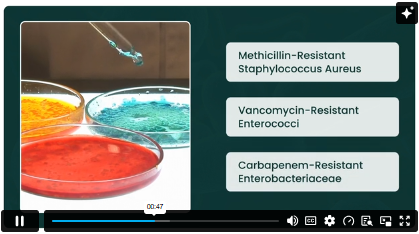
A stronger understanding of microorganisms can help explain why certain infections are difficult to control. Topics include MDROs, microbial pathogenesis, disease transmission, antimicrobial resistance, and precautions for high-risk pathogens.
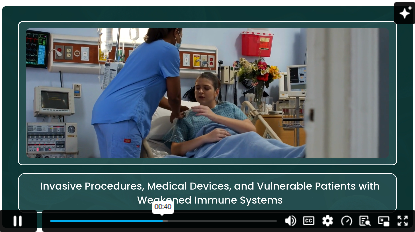
Invasive procedures require careful infection prevention at every stage. The module covers sterilisation, disinfection, safe instrument handling, infection prevention during diagnostic procedures, and monitoring for infections following treatment.
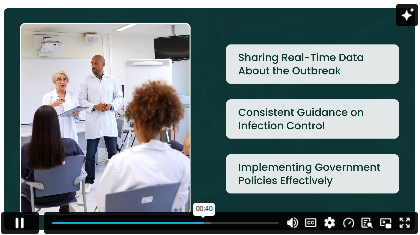
When an outbreak occurs, timely action and effective coordination become particularly important. Learners explore outbreak investigation, control measures, epidemic and pandemic response, environmental considerations, and collaboration with public health authorities.
The course is suitable for healthcare workers, infection prevention and control staff, clinical supervisors, care managers, health and safety personnel, and others involved in infection prevention in Canadian healthcare or care environments.
The course covers complex infection transmission, emerging infectious diseases, microbiology, multidrug-resistant organisms, antimicrobial resistance, surgical infection prevention, sterilisation, disinfection, outbreak investigation, and public health collaboration.
Healthcare-associated infections are infections that can develop during or following healthcare delivery. They can occur in hospitals, long-term care facilities, clinics, and other healthcare environments.
Yes. Learners examine how infections can spread, factors that increase transmission risks, and approaches used to strengthen infection prevention in higher-risk environments.
The course is advanced in scope, so some previous healthcare or infection prevention awareness can be useful. However, learners should review the entry requirements of their workplace or intended role separately.
It can strengthen knowledge relevant to infection prevention, healthcare safety, clinical support, quality, and health and safety roles. However, specific Canadian roles may require additional education, professional registration, experience, or employer-specific requirements.
| Introduction | |||
| Introduction | 00:01:00 | ||
| Module 1. Understanding Complex Infection Transmission | |||
| 1.1. Understanding Complex Infection Transmission | 00:01:00 | ||
| 1.1.1. Nosocomial and Healthcare-Associated Infections | 00:01:00 | ||
| 1.1.2. Managing Infection Risks in High-Risk Environments | 00:01:00 | ||
| 1.1.3. Applying Evidence-Based Infection Control | 00:01:00 | ||
| 1.1.4. Implementing Infection Control Programmes | 00:01:00 | ||
| Reading Materials | |||
| Section 1: Understanding Complex Infection Transmission | 00:00:00 | ||
| Module 2. Identifying Emerging Infectious Diseases | |||
| 2.1. Identifying Emerging Infectious Diseases | 00:01:00 | ||
| 2.1.1. Global Trends in Infectious Diseases | 00:01:00 | ||
| 2.1.2. Early Detection and Rapid Response Mechanisms | 00:01:00 | ||
| 2.1.3. The Role of Vaccines in Infection Prevention | 00:01:00 | ||
| 2.1.4. Case Studies of Emerging Infections in the UK | 00:01:00 | ||
| Reading Materials | |||
| Section 2: Identifying Emerging Infectious Diseases | 00:00:00 | ||
| Module 3. Microbiological Knowledge for Infection Control | |||
| 3.1. Microbiological Knowledge for Infection Control | 00:01:00 | ||
| 3.1.1. Multi-Drug Resistant Organisms (MDRO) | 00:02:00 | ||
| 3.1.2. Microbial Pathogenesis and Disease Transmission | 00:06:00 | ||
| 3.1.3. Control Measures for Antimicrobial Resistance | 00:01:00 | ||
| 3.1.4. Handling High-Risk Pathogens in Clinical Environments | 00:01:00 | ||
| Reading Materials | |||
| Section 3: Microbiological Knowledge for Infection Control | 00:00:00 | ||
| Module 4. Infection Control in Surgical and Invasive Procedures | |||
| 4.1. Infection Control in Surgical and Invasive Procedures | 00:01:00 | ||
| 4.1.1. Sterilisation and Disinfection Techniques in Surgery | 00:01:00 | ||
| 4.1.2. Preventing Infections in Invasive Diagnostic Procedures | 00:01:00 | ||
| 4.1.3. Protocols for Safe Handling of Surgical Instruments | 00:01:00 | ||
| 4.1.4. Post-Procedure Infection Monitoring and Management | 00:01:00 | ||
| Reading Materials | |||
| Section 4: Infection Control in Surgical and Invasive Procedures | 00:00:00 | ||
| Module 5. Managing Infection Control During Outbreaks | |||
| 5.1. Managing Infection Control During Outbreaks | 00:01:00 | ||
| 5.1.1. Outbreak Investigation and Control Measures | 00:01:00 | ||
| 5.1.2. Role of Infection Control in Epidemic and Pandemic Response | 00:01:00 | ||
| 5.1.3. Environmental and Institutional Impact During Outbreaks | 00:01:00 | ||
| 5.1.4. Collaboration with Public Health Authorities in Emergencies | 00:01:00 | ||
| Reading Materials | |||
| Section 5: Managing Infection Control During Outbreaks | 00:00:00 | ||
| Conclusion | |||
| Conclusion | 00:01:00 | ||
$125 Original price was: $125.$20Current price is: $20. ex VAT
SAVE 84% - OFFER ENDS SOON
![]() |
01 Year of full Course access
Level 3
Endorsed Certificate of Compleiton