131 Students
The Diploma in Business Analysis introduces the methods and knowledge used to understand business needs, examine processes, manage requirements, and evaluate potential solutions. It helps learners develop a structured approach to analysing business challenges and supporting informed decisions within Canadian organisations. Learners explore business processes, analysis planning, strategic analysis, product scope, solution evaluation, investigation techniques, ratio analysis, and requirements management. …
The Diploma in Business Analysis introduces the methods and knowledge used to understand business needs, examine processes, manage requirements, and evaluate potential solutions. It helps learners develop a structured approach to analysing business challenges and supporting informed decisions within Canadian organisations.
Learners explore business processes, analysis planning, strategic analysis, product scope, solution evaluation, investigation techniques, ratio analysis, and requirements management. The course is suitable for beginners, business professionals, project staff, IT employees, career changers, and learners interested in business analysis roles across Canada.
Online learning provides flexibility for learners balancing work, education, or other commitments. Structured course materials allow learners to review business analysis concepts at a suitable pace while building knowledge relevant to modern workplace environments. Successful completion provides a certificate that can support continuing learning and career development.
This course suits learners interested in analysing business needs, improving processes, and supporting organisational decision-making.
Business analysts help organisations understand problems, clarify requirements, examine processes, and identify suitable solutions. These skills can be useful across technology, finance, healthcare, government, and other Canadian sectors.
Business analysis knowledge can support several roles across Canadian organisations. Salary levels vary by province, industry, employer, experience, and level of responsibility.
The course is designed to provide an accessible introduction to business analysis for learners from different educational and professional backgrounds.
All of our courses, including this Diploma in Business Analysis Course, are fully accredited, providing you with up-to-date skills and knowledge and helping you to become more competent and effective in your chosen field.
All of our courses are accredited by the CPD Quality Standards as conforming to universally accepted Continuing Professional Development (CPD) guidelines.
The Quality Licence Scheme (QLS) is a trusted endorsement framework that certifies high-quality, non-regulated training programmes across various sectors.

The Association of Healthcare Trainers (AoHT) promotes high-quality healthcare training, supporting providers to deliver relevant, industry-aligned education and improve professional standards.

Once you’ve successfully completed your course, you will immediately be sent a digital certificate. Also, you can have your printed certificate delivered by post (shipping cost CA$9.99). All of our courses are fully accredited, providing you with up-to-date skills and knowledge and helping you to become more competent and effective in your chosen field.
The detailed curriculum outline of our Diploma in Business Analysis course is as follows:
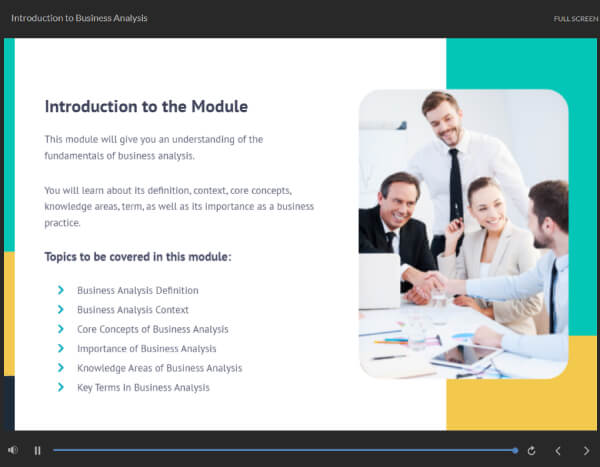
Start with the purpose and role of business analysis within organisations. Learners explore how analysis can help identify business needs, understand problems, and support better decisions.
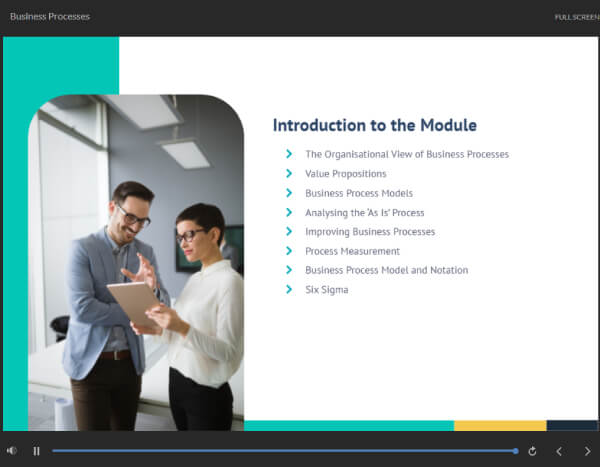
Examine how business processes operate and how they can be reviewed for improvement. Learners develop awareness of process structures, activities, and opportunities for greater efficiency.
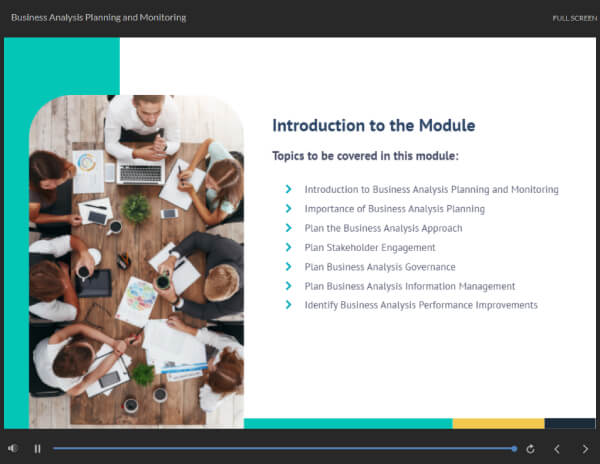
Explore how business analysis activities can be planned, organised, and monitored. Learners consider objectives, stakeholders, activities, and ways of keeping analysis work aligned with business needs.
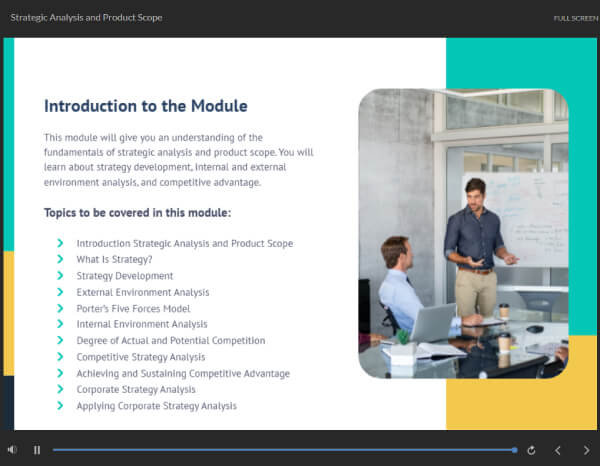
Learn how strategic considerations influence business analysis and product decisions. The section explores organisational needs, priorities, objectives, and defining an appropriate product scope.
Focus on assessing proposed or existing solutions against business needs and expected outcomes. Learners consider how analysis can help determine whether a solution delivers appropriate value.
Explore techniques used to gather information and understand business problems. Learners examine approaches for investigating processes, stakeholder needs, and areas requiring change.
Develop an understanding of financial ratio analysis and how key figures can provide insight into business performance. Learners explore how financial information can contribute to wider business assessment.
Learn how business requirements can be captured, documented, organised, and managed throughout an analysis process. Learners consider the importance of clear requirements when supporting business and solution decisions.
Explore career pathways available to business analysts across Canadian industries. Learners consider relevant roles, workplace applications, transferable skills, and factors that can support continued career development.
You will study business analysis fundamentals, business processes, planning and monitoring, strategic analysis, product scope, solution evaluation, investigation techniques, ratio analysis, and requirements documentation.
Yes. The course starts with introductory business analysis concepts and progresses into more focused areas such as requirements management, investigation, financial analysis, and solution evaluation.
Yes. Business Processes is included as a dedicated module, along with strategic analysis, investigation techniques, and solution evaluation.
Yes. The course includes a module on ratio analysis, introducing learners to the use of financial ratios when examining business performance.
Business systems specialist roles are not regulated occupations in Canada according to Job Bank. However, individual employers may set their own education, experience, or certification expectations.
It can provide foundational knowledge that learners may use when considering further study or certification. Professional organisations such as IIBA offer different business analysis certification pathways, including entry-level and more advanced credentials.
| Module 01: Introduction to Business Analysis | |||
| Introduction to Business Analysis | 00:16:00 | ||
| Module 02: Business Processes | |||
| Business Processes | 00:46:00 | ||
| Module 03: Business Analysis Planning and Monitoring | |||
| Business Analysis Planning and Monitoring | 00:29:00 | ||
| Module 04: Strategic Analysis and Product Scope | |||
| Strategic Analysis and Product Scope | 00:30:00 | ||
| Module 05: Solution Evaluation | |||
| Solution Evaluation | 00:26:00 | ||
| Module 06: Investigation Techniques | |||
| Investigation Techniques | 00:47:00 | ||
| Module 07: Ratio Analysis | |||
| Ratio Analysis | 00:28:00 | ||
| Module 08: Documenting and Managing Requirements | |||
| Documenting and Managing Requirements | 00:28:00 | ||
| Module 09: Career Prospect as a Business Analyst in the UK | |||
| Career Prospect as a Business Analyst in the UK | 00:15:00 | ||
| Mock Exam | |||
| Mock Exam – Diploma in Business Analysis | 00:20:00 | ||
| Final Exam | |||
| Final Exam – Diploma in Business Analysis | 00:20:00 | ||
$199 Original price was: $199.$20Current price is: $20. ex VAT
SAVE 90% - OFFER ENDS SOON
![]() |
01 Year of full Course access
Intermediate
Endorsed Certificate of Compleiton