151 Students
Safe medication management is a vital part of delivering high-quality care in healthcare and community settings. This Control and Administration of Medication Diploma Level 3 provides a comprehensive introduction to medicine management, safe medication handling, infection prevention, and person-centred care. Designed for a Canadian audience, the course reflects the standards and responsibilities commonly expected within Canada’s healthcare and continuing care …
Safe medication management is a vital part of delivering high-quality care in healthcare and community settings. This Control and Administration of Medication Diploma Level 3 provides a comprehensive introduction to medicine management, safe medication handling, infection prevention, and person-centred care. Designed for a Canadian audience, the course reflects the standards and responsibilities commonly expected within Canada’s healthcare and continuing care sectors.
Whether you’re an aspiring healthcare support worker, personal support worker (PSW), healthcare assistant, caregiver, or an experienced care professional looking to expand your knowledge, this course covers medication management, medicine optimisation, palliative care, safe handling procedures, infection prevention, and relevant Canadian legislation. The knowledge gained can support safe practice in long-term care homes, retirement residences, hospitals, home care, and community healthcare services across Canada.
Study online at your own pace and learn around your schedule. Earn a recognised certificate upon completion and strengthen your understanding of safe medication practices in healthcare environments.
Please note: This Control and Administration of Medication Diploma Level 3 Course only gives you the theoretical knowledge that you need to excel in this field. This Course doesn’t entitle you to practise as a professional in this specific field.
This course is ideal for:
All of our courses, including this Control and Administration of Medication Diploma Level 3 Course, are fully accredited, providing you with up-to-date skills and knowledge and helping you to become more competent and effective in your chosen field.
All of our courses are accredited by the CPD Quality Standards as conforming to universally accepted Continuing Professional Development (CPD) guidelines.
The Quality Licence Scheme (QLS) is a trusted endorsement framework that certifies high-quality, non-regulated training programmes across various sectors.
The Association of Healthcare Trainers (AoHT) promotes high-quality healthcare training, supporting providers to deliver relevant, industry-aligned education and improve professional standards.
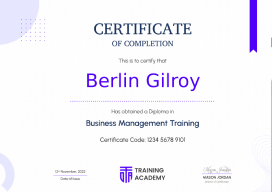
Once you’ve successfully completed your course, you will immediately be sent a digital certificate. Also, you can have your printed certificate delivered by post (shipping cost CA$9.99). All of our courses are fully accredited, providing you with up-to-date skills and knowledge and helping you to become more competent and effective in your chosen field.
Begin by exploring the principles of medicine management and the role it plays in delivering safe, effective, and person-centred care. You’ll gain an overview of medication processes used across Canadian healthcare settings.
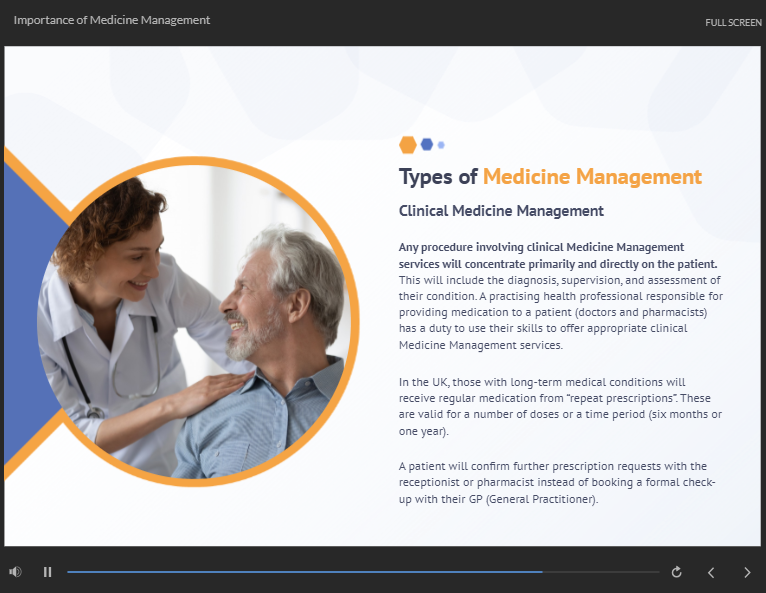
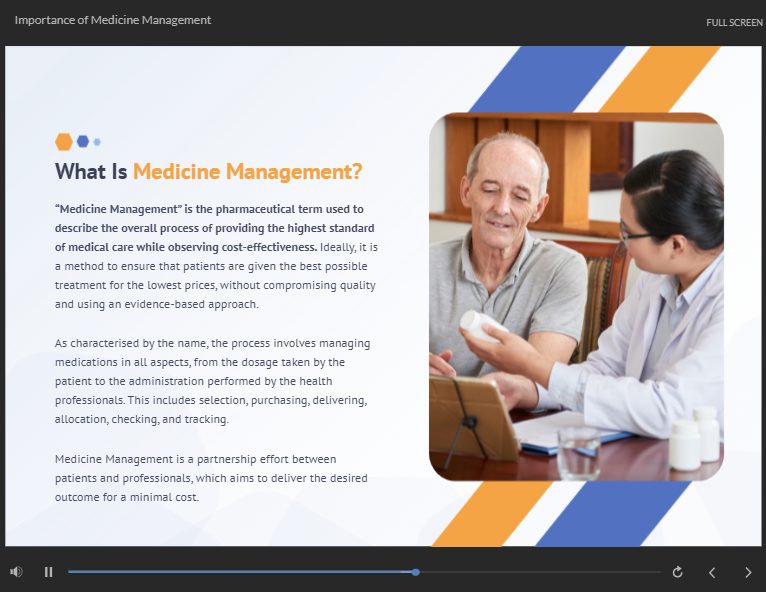
Good medication management helps improve treatment outcomes while reducing medication-related risks. This module explains why accurate documentation, communication, and safe administration are essential in healthcare practice.
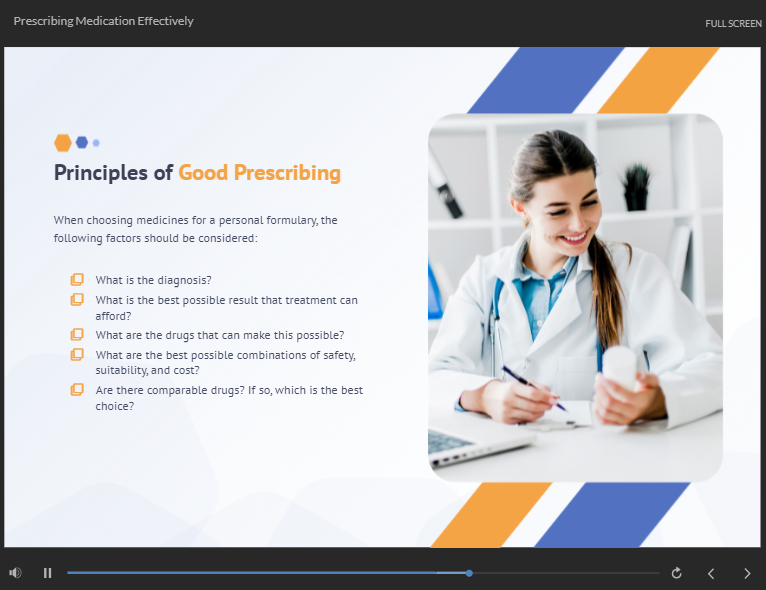
Discover how medicines are prescribed within healthcare systems and the responsibilities of authorised prescribers. You’ll also explore how healthcare teams work together to support safe medication use while respecting professional scopes of practice.
Many health conditions require ongoing medication therapy. Explore common pharmacological approaches to managing acute and chronic conditions while understanding the importance of monitoring effectiveness and recognising potential adverse effects.
Build your understanding of commonly prescribed medication groups, their intended uses, general actions, and important safety considerations. The module also highlights the importance of following organisational policies and authorised instructions.
Medication plays an important role in improving comfort and quality of life during palliative care. Learn about symptom management, compassionate communication, person-centred care, and supporting individuals and families with dignity.
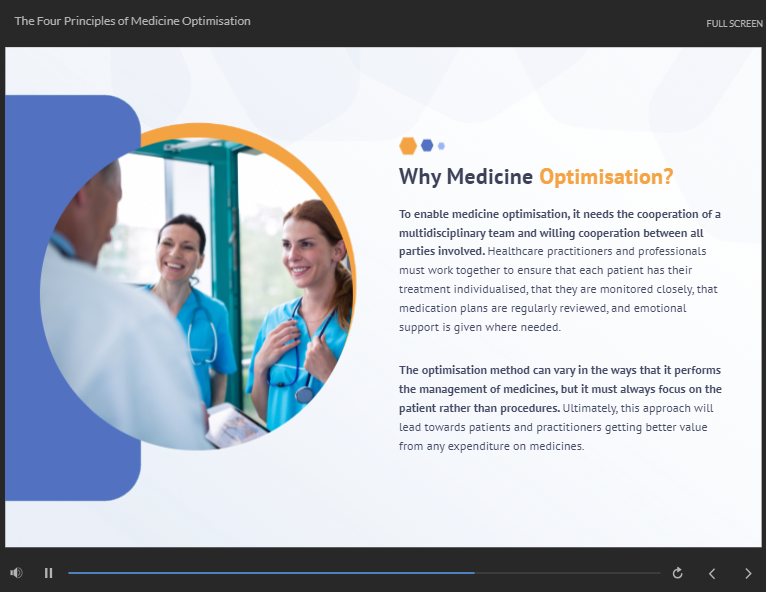
Medicine optimisation focuses on achieving the best possible outcomes for individuals. This module explores person-centred decision-making, safe medicine use, monitoring treatment effectiveness, and collaborative healthcare planning.
Residential care environments require structured medication systems to promote safety. Learn about medication storage, documentation, administration procedures, communication, and reducing medication errors in long-term care and assisted living settings across Canada.
Healthcare professionals must understand the legal responsibilities surrounding medication management. This module explores Canadian healthcare legislation, privacy obligations, professional accountability, informed consent, documentation, and provincial regulatory considerations.
Proper medicine handling helps maintain medication quality and patient safety. Explore safe storage, transportation, labelling, inventory control, disposal procedures, and medication security within healthcare environments.
Safe medication handling requires careful attention to detail. This module explains checking procedures, reducing medication errors, reporting incidents, and following organisational policies that support safe practice.
Preventing contamination is essential when handling medications and medical equipment. Learn the principles of aseptic technique, workplace health and safety, and strategies for reducing infection risks during care delivery.
Understanding the human body supports safe medication administration. This module introduces major body systems and explains how anatomy and physiology influence medication absorption, distribution, metabolism, and elimination.
Clean healthcare environments contribute to patient safety. Explore hygiene practices, environmental cleanliness, personal hygiene responsibilities, and their role in preventing healthcare-associated infections.
Complete the course by examining standard infection prevention precautions used in Canadian healthcare settings. Learn about hand hygiene, personal protective equipment (PPE), respiratory etiquette, safe waste management, and routine infection control practices that protect both patients and healthcare workers.
You’ll learn about medicine management, medication optimisation, common medicines, palliative care, safe medication handling, aseptic technique, infection prevention, anatomy and physiology, and relevant Canadian healthcare legislation.
No. This course provides foundational knowledge but does not authorise independent medication administration. Medication administration responsibilities depend on provincial regulations, employer policies, and your professional scope of practice.
The course is ideal for Personal Support Workers (PSWs), healthcare assistants, home care workers, continuing care assistants, residential care staff, caregivers, and anyone interested in medication safety.
Yes. Dedicated modules cover aseptic technique, hygiene, cleanliness, and standard infection prevention precautions used in healthcare settings.
Yes. The course is fully online and self-paced, allowing you to study from anywhere in Canada at a time that suits your schedule.
Yes. Upon successful completion, you’ll receive a recognised certificate demonstrating your knowledge of medication management and safe medicine handling.
| Module 01: Medicine Management Fundamentals | |||
| Medicine Management Fundamentals | 00:37:00 | ||
| Module 02: Importance of Medicine Management | |||
| Importance of Medicine Management | 00:25:00 | ||
| Module 03: Prescribing Medication Effectively | |||
| Prescribing Medication Effectively | 00:27:00 | ||
| Module 04: Common Problems – Pharmacological Management | |||
| Common Problems – Pharmacological Management | 01:05:00 | ||
| Module 05: Common Medicines to Use | |||
| Common Medicines to Use aa | 00:18:00 | ||
| Module 06: Palliative Care | |||
| Palliative Care | 00:24:00 | ||
| Module 07: The Four Principles of Medicine Optimisation | |||
| The Four Principles of Medicine Optimisation | 00:24:00 | ||
| Module 08: Managing Medication in Residential Aged Care Facilities (RACFs) | |||
| Managing Medication in Residential Aged Care Facilities (RACFs) | 00:35:00 | ||
| Module 09: Law and Legislation | |||
| Law and Legislation | 00:19:00 | ||
| Module 10: Basics of Medicine Handling | |||
| Basics of Medicine Handling | 00:15:00 | ||
| Module 11: Safe Handling of Medications | |||
| Safe Handling of Medications | 00:15:00 | ||
| Module 12: Aseptic Technique and Health & Safety Management | |||
| Aseptic Technique and Health & Safety Management | 00:17:00 | ||
| Module 13: Anatomy and physiology of Body Parts | |||
| Anatomy and physiology of Body Parts | 00:16:00 | ||
| Module 14: Importance Hygiene & Cleanliness | |||
| Importance Hygiene & Cleanliness | 00:15:00 | ||
| Module 15: Standard Precautions for Infection Control | |||
| Standard Precautions for Infection Control | 00:17:00 | ||
| Mock Exam | |||
| Mock Exam – Control and Administration of Medication Diploma Level 3 | 00:20:00 | ||
| Final Exam | |||
| Final Exam – Control and Administration of Medication Diploma Level 3 | 00:20:00 | ||
| Assignment | |||
| Assignment – Control and Administration of Medication Diploma Level 3 | 5 days | ||
$125 Original price was: $125.$20Current price is: $20. ex VAT
SAVE 84% - OFFER ENDS SOON
![]() |
01 Year of full Course access
Level 3
Endorsed Certificate of Compleiton