19 Students
Overview Anti-Money Laundering (AML) – Level 3 is designed to build strong awareness of financial crime prevention within regulated industries in Canada. The course introduces how illegal funds are detected, reported, and managed through structured compliance systems used across financial institutions and related sectors. It is suitable for learners entering compliance roles as well as those working in banking, finance, …
Anti-Money Laundering (AML) – Level 3 is designed to build strong awareness of financial crime prevention within regulated industries in Canada. The course introduces how illegal funds are detected, reported, and managed through structured compliance systems used across financial institutions and related sectors.
It is suitable for learners entering compliance roles as well as those working in banking, finance, accounting, or administrative positions who need a clearer understanding of financial crime controls. The course develops knowledge of AML frameworks, reporting obligations, and customer verification processes used in Canadian organisations.
With flexible online study, learners can progress at their own pace while gaining a recognised qualification that supports career growth in Canada’s financial and regulatory environment. This course helps you prepare for roles in compliance support, risk monitoring, and financial oversight.
By the end of the Anti-Money Laundering Course, learners will be able to:
All of our courses, including this 120 hours TEFL (TESOL), are fully accredited, providing you with up-to-date skills and knowledge and helping you to become more competent and effective in your chosen field.
All of our courses are accredited by the CPD Certification Service as conforming to universally accepted Continuing Professional Development (CPD) guidelines.
The Quality Licence Scheme (QLS) is a trusted endorsement framework that certifies high-quality, non-regulated training programmes across various sectors.

The Association of Healthcare Trainers (AoHT) promotes high-quality healthcare training, supporting providers to deliver relevant, industry-aligned education and improve professional standards.
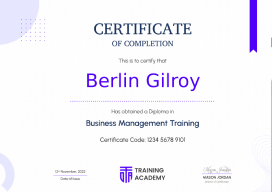
Once you’ve successfully completed your Anti-Money Laundering Training Course, you will immediately be sent a digital certificate. Also, you can have your printed certificate delivered by post (shipping cost $9.99). All of our courses are fully accredited, providing you with up-to-date skills and knowledge and helping you to become more competent and effective in your chosen field.
At the end of the Anti-Money Laundering Course, there will be an online assessment, which you will need to pass to complete the course. Answers are marked instantly and automatically, allowing you to know straight away whether you have passed. If you haven’t, there’s no limit on the number of times you can take the final exam. All this is included in the one-time fee you paid for the course itself.
Introduces the concept of money laundering and how illicit funds are disguised within the financial system. Explains the three main stages—placement, layering, and integration—and how they are used in practice. Highlights the impact of financial crime on institutions, economies, and regulatory trust.
Explores key legal provisions used to combat financial crime and the handling of criminal proceeds. Explains how law enforcement and regulatory bodies work together to investigate and prevent illegal financial activity. Emphasises the importance of legal compliance within organisations operating in regulated sectors.
Covers the historical development of AML rules and why they became essential globally. Explains how international standards and national regulations have strengthened financial security systems. Highlights the continuous evolution of compliance frameworks in response to new risks.
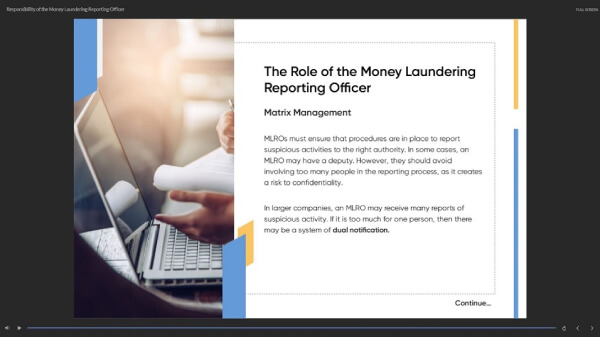
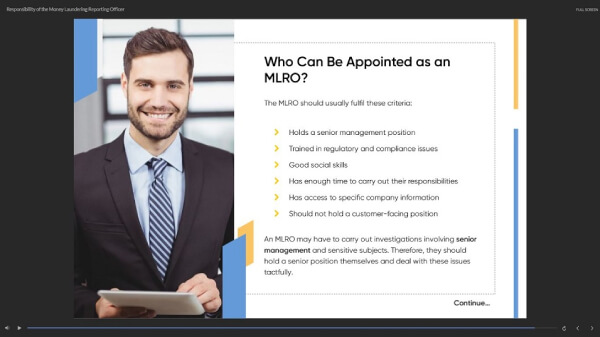
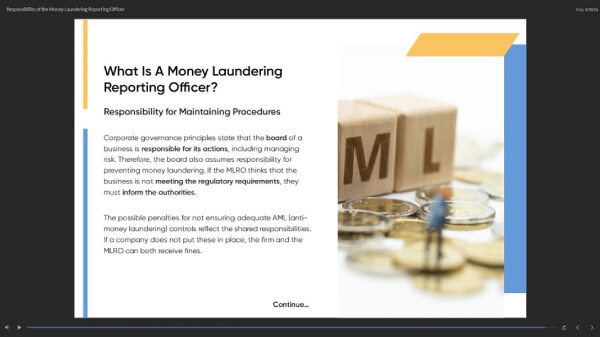
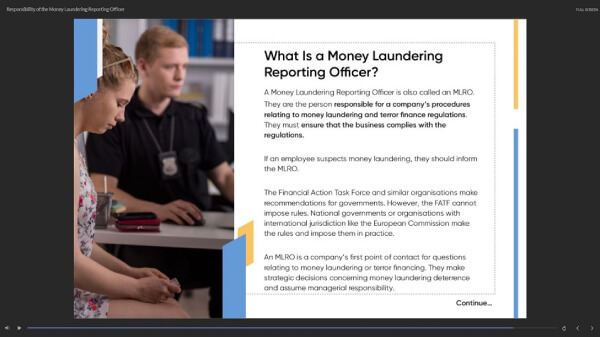
Focuses on the role of the reporting officer in ensuring AML compliance within organisations. Explains responsibilities such as monitoring internal processes, reviewing suspicious activity, and ensuring proper reporting channels. Highlights accountability and decision-making within compliance structures.
Explains how organisations assess and categorise risk based on customer behaviour and transaction patterns. Covers how higher-risk cases receive closer monitoring and stricter controls. Demonstrates how risk evaluation improves efficiency in preventing financial crime.
Details the process of verifying customer identity and assessing their financial background. Explains ongoing monitoring requirements to ensure accounts remain compliant over time. Highlights its role in reducing exposure to fraud and illegal activity.
Covers the importance of maintaining accurate and secure financial and compliance records. Explains how documentation supports audits, investigations, and regulatory reporting. Emphasises structured record management as a core compliance requirement.
Focuses on identifying unusual or inconsistent financial activity that may indicate risk. Explains key warning signs and behavioural indicators of suspicious transactions. Describes the process of escalating concerns through proper reporting channels.
Highlights the importance of ongoing AML awareness across all staff levels. Explains how regular training supports consistent compliance and reduces organisational risk. Emphasises building a culture of vigilance and regulatory responsibility.
The three stages of money laundering (AML) are placement, layering, and integration, representing the process of disguising illicit funds as legitimate income. These stages involve introducing “dirty” money into the financial system, obscuring the audit trail through complex transactions, and returning the funds to the criminal as a clean asset.
AML officers handle varied and complex tasks each day. They build and run compliance programs that must adapt as regulations change. For instance, they establish processes for knowing their customers (KYC) and watch for suspicious transactions. The role requires staying current on new financial crime trends.
AML risk scoring is a model used by financial and other institutions to assess the level of money laundering risk associated with a particular customer. By assessing the different factors, companies can identify high-risk customers and take appropriate measures to prevent fraudulent activities.
Yes, Anti-Money Laundering (AML) is generally considered a good, stable, and lucrative career, particularly for those interested in finance, investigations, and law. Demand for AML professionals is high due to increasing regulatory pressures and digital financial crimes, offering strong career growth and high salary potential ($52,500–$125,000+ in some areas).
The Certified Anti-Money Laundering Specialist (CAMS) Certification is the global standard of competency for AML expertise, recognized by institutions, regulators, and the broader financial services industry. CAMS empowers professionals to combat financial crime while advancing their careers.
A degree in a relevant field provides a solid foundation in financial concepts, risk management, and regulatory compliance. While not always a requirement, certifications specific to the AML field can enhance the qualifications of an AML investigator and demonstrate their expertise.
| Module 01: Introduction to Money Laundering | |||
| Introduction to Money Laundering | 00:15:00 | ||
| Module 02: Proceeds of Crime Act 2002 | |||
| Proceeds of Crime Act 2002 | 00:19:00 | ||
| Module 03: Development of Anti-Money Laundering Regulation | |||
| Development of Anti-Money Laundering Regulations | 00:25:00 | ||
| Module 04: Responsibility of the Money Laundering Reporting Officer | |||
| Responsibility of the Money Laundering Reporting Officer | 00:19:00 | ||
| Module 05: Risk-based Approach | |||
| Risk-based Approach | 00:20:00 | ||
| Module 06: Customer Due Diligence | |||
| Customer Due Diligence | 00:22:00 | ||
| Module 07: Record Keeping | |||
| Record Keeping | 00:14:00 | ||
| Module 08: Suspicious Conduct and Transactions | |||
| Suspicious Conduct and Transactions | 00:20:00 | ||
| Module 09: Awareness and Training | |||
| Awareness and Training | 00:18:00 | ||
| Mock Exam | |||
| Mock Exam – Anti-Money Laundering (AML) Training | 00:20:00 | ||
| Final Exam | |||
| Final Exam – Anti-Money Laundering (AML) Training | 00:20:00 | ||
| Trust Pilot Review | |||
| Trust Pilot Review | 00:00:00 | ||
$125 Original price was: $125.$20Current price is: $20. ex VAT
SAVE 84% - OFFER ENDS SOON
![]() |