874 Students
The 120 Hours TEFL (TESOL) course introduces learners to the knowledge and teaching approaches used to teach English to speakers of other languages. It covers linguistics, pronunciation, grammar, vocabulary, teaching methodologies, reading, writing, listening, speaking, lesson planning, classroom management, and technology. It suits aspiring English teachers, tutors, and language instructors. Learners build a foundation for planning and delivering lessons for …
The 120 Hours TEFL (TESOL) course introduces learners to the knowledge and teaching approaches used to teach English to speakers of other languages. It covers linguistics, pronunciation, grammar, vocabulary, teaching methodologies, reading, writing, listening, speaking, lesson planning, classroom management, and technology. It suits aspiring English teachers, tutors, and language instructors.
Learners build a foundation for planning and delivering lessons for different learner needs. Topics include teaching methods, language skills, classroom activities, educational technology, situational teaching, learning materials, student motivation, and professional development.
The 120-hour online format offers flexibility, allowing learners to study at a convenient pace and revisit topics when needed. Structured modules progress from language fundamentals to teaching practice and career development. Completing the course can strengthen your teaching knowledge, support your professional development, and prepare you for further opportunities in English language education in Canada or internationally.
The course builds a foundation in English language teaching while introducing learners to classroom methods, planning, and language-development techniques.
The 120-hour programme is designed for learners interested in developing a foundation for teaching English to speakers of other languages.
A strong understanding of language teaching can help learners approach English instruction with greater structure, confidence, and awareness of different learner needs.
TEFL/TESOL training can complement teaching and tutoring opportunities, although specific positions may have additional education, experience, or employer requirements. Earnings vary by province, employer, setting, experience, and teaching qualifications.
The course is designed to provide an accessible introduction to TEFL/TESOL and does not require previous teaching experience.
All of our courses, including this 120 Hours TEFL (TESOL), are fully accredited, providing you with up-to-date skills and knowledge and helping you to become more competent and effective in your chosen field.
All of our courses are accredited by the CPD Certification Service as conforming to universally accepted Continuing Professional Development (CPD) guidelines.

The Quality Licence Scheme (QLS) is a trusted endorsement framework that certifies high-quality, non-regulated training programmes across various sectors.

The Association of Healthcare Trainers (AoHT) promotes high-quality healthcare training, supporting providers to deliver relevant, industry-aligned education and improve professional standards.
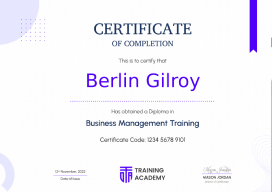
Once you’ve successfully completed your course, you will immediately be sent a digital certificate. Also, you can have your printed certificate delivered by post (shipping cost CA$9.99). All of our courses are fully accredited, providing you with up-to-date skills and knowledge and helping you to become more competent and effective in your chosen field.
The detailed curriculum outline of our 120 Hours TEFL (TESOL) is as follows:
Start by exploring what English language teaching involves and how people learn a second or additional language. This foundation introduces key ideas that will support the teaching approaches covered throughout the course.
Develop an understanding of how language is structured and used. The module introduces linguistic concepts that can help teachers better understand the challenges learners may face when developing English skills.
Clear pronunciation can make a significant difference to communication. Learners examine pronunciation concepts and approaches that can help English learners develop clearer and more understandable speech.
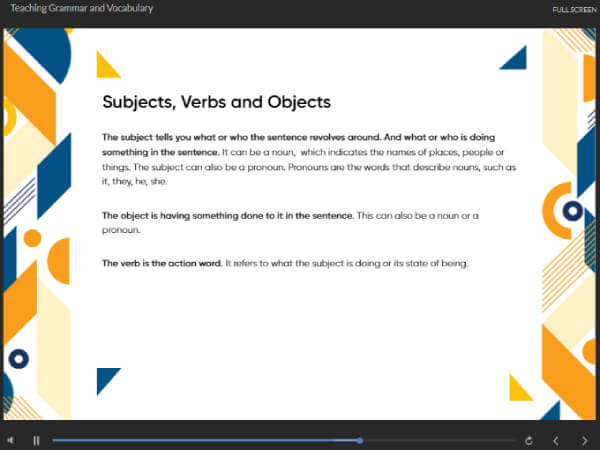
Explore ways to introduce grammar and vocabulary in a meaningful teaching context. The focus is on helping learners understand and use language rather than simply memorising rules and word lists.
Different learners and teaching environments can call for different approaches. This section examines established language-teaching methodologies and considers how teachers can select suitable approaches for their lessons.
Reading involves more than recognising individual words. Learners explore approaches for helping students understand written English, develop reading strategies, and work with different types of texts.
Effective writing instruction helps learners communicate ideas clearly and appropriately. This module considers ways to support writing development through structured activities and suitable teaching techniques.
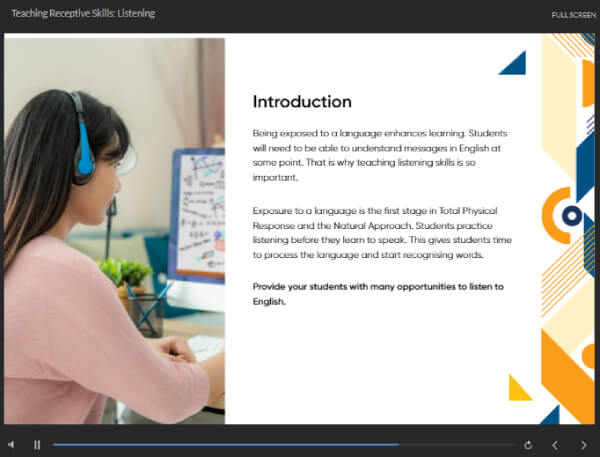
Listening can be challenging for English learners because natural speech varies in speed, pronunciation, and vocabulary. You will explore approaches for developing listening comprehension through purposeful classroom activities.
Speaking activities give learners opportunities to practise English in meaningful situations. The section explores ways to encourage spoken communication, build confidence, and support students as they develop fluency.
A well-planned lesson gives teachers a clearer structure and helps keep learning activities focused. Learners explore lesson planning and the creation or selection of materials that match teaching objectives and learner needs.
Games and classroom activities can create opportunities for learners to practise language in engaging ways. This section looks at how activities can be selected and adapted to reinforce language learning objectives.
Digital tools have expanded the ways English can be taught and practised. Learners explore how technology can support language instruction, classroom activities, resources, and learner engagement.
Managing a classroom involves creating an environment where learners can participate, practise, and stay focused. The module explores classroom management techniques alongside approaches for encouraging student motivation.
Language is often learned more effectively when connected to realistic situations. Learners explore how everyday contexts can be used to present and practise English in ways that reflect communication outside the classroom.
The final module turns attention towards developing as an English language teacher. It explores professional development and employment considerations, helping learners think about how TEFL/TESOL training can fit into their longer-term career plans.
The course covers linguistics, English pronunciation, grammar, vocabulary, teaching methodologies, reading, writing, listening, speaking, lesson planning, classroom activities, educational technology, classroom management, student motivation, situational teaching, and professional development.
Yes. The course is designed to introduce learners to key English language teaching concepts and does not require previous TEFL or TESOL teaching experience. It can be a suitable starting point for people exploring English language teaching.
TEFL generally refers to Teaching English as a Foreign Language, while TESOL stands for Teaching English to Speakers of Other Languages. The terms can overlap, although they may be used differently depending on the teaching context, country, or training provider.
A 120-hour TEFL/TESOL certificate can demonstrate training in English language teaching, but it does not automatically qualify someone for every English teaching position in Canada. Employers may have additional requirements involving education, teaching experience, language proficiency, or other credentials.
It can support applications for some online English teaching opportunities. However, individual online teaching platforms and employers set their own requirements, so learners should check the qualifications and experience required for each position.
You will explore approaches to teaching grammar and vocabulary, along with language structures and concepts introduced through the linguistics and English language teaching modules. The focus is on understanding how grammar can be presented to language learners.
| 120 hours TEFL (TESOL) | |||
| Module 01: Introduction to English Language Teaching & Learning | 00:13:00 | ||
| Module 02: Linguistics | 00:42:00 | ||
| Module 03: English Pronunciation | 00:28:00 | ||
| Module 04: Teaching Grammar and Vocabulary | 00:33:00 | ||
| Module 05: Language Teaching Methodologies | 00:22:00 | ||
| Module 06: Teaching Receptive Skills: Reading | 00:17:00 | ||
| Module 07: Teaching Productive Skills: Writing | 00:15:00 | ||
| Module 08: Teaching Receptive Skills: Listening | 00:16:00 | ||
| Module 09: Teaching Productive Skills: Speaking | 00:14:00 | ||
| Module 10: Lesson Planning and Creating Materials | 00:27:00 | ||
| Module 11: Use of Games and Activities | 00:13:00 | ||
| Module 12: Technology in Second Language Teaching & Learning | 00:20:00 | ||
| Module 13: Classroom Management and Student Motivation | 00:31:00 | ||
| Module 14: Teaching English: Situational Approach | 00:34:00 | ||
| Module 15: Professional Development and Employment | 00:27:00 | ||
| Assignment | |||
| Assignment – 120 hours TEFL (TESOL) | 4 days, 19 hours | ||
| Order Your Certificate | |||
| Order Your Certificate Now. | 00:00:00 | ||
| Trust Pilot Review | |||
| Trust Pilot Review | 00:00:00 | ||
$125 Original price was: $125.$20Current price is: $20. ex VAT
SAVE 84% - OFFER ENDS SOON
![]() |
Endorsed Certificate of Compleiton