1020 Students
16 others bought this course in the last 24 hours! Understanding Autism Level 3 is a professional development course designed for learners in Canada who want a deeper, structured understanding of Autism Spectrum Disorder (ASD). It is suitable for beginners as well as those already working in healthcare, education, or social care who want to strengthen their specialist knowledge in …
16 others bought this course in the last 24 hours!
Understanding Autism Level 3 is a professional development course designed for learners in Canada who want a deeper, structured understanding of Autism Spectrum Disorder (ASD). It is suitable for beginners as well as those already working in healthcare, education, or social care who want to strengthen their specialist knowledge in autism support and inclusive practice.
The course builds advanced understanding of autism, including learning difficulties, sensory sensitivities, communication challenges, cognitive approaches, diagnosis processes, and effective support strategies. Learners also explore how to work confidently with autistic individuals in different situations. These skills are highly applicable in Canadian settings such as schools, special education units, childcare services, community support organisations, and healthcare facilities, supporting roles like teaching assistant, support worker, or care aide.
Delivered fully online and self-paced, the course offers flexibility for learners to study around work or personal commitments. Upon completion, learners receive certification that enhances career prospects and demonstrates professional competence in autism awareness and support. Enrol today to develop practical skills that make a meaningful difference in autism care and inclusion.
Key Features of Understanding Autism Training Course
Our trusted, high quality, and affordable online courses are designed to train individuals to become experts in their field.
By the end of the course, learners will be able to:
All of our courses, including this 120 hours TEFL (TESOL), are fully accredited, providing you with up-to-date skills and knowledge and helping you to become more competent and effective in your chosen field.
All of our courses are accredited by the CPD Certification Service as conforming to universally accepted Continuing Professional Development (CPD) guidelines.
The Quality Licence Scheme (QLS) is a trusted endorsement framework that certifies high-quality, non-regulated training programmes across various sectors.

The Association of Healthcare Trainers (AoHT) promotes high-quality healthcare training, supporting providers to deliver relevant, industry-aligned education and improve professional standards.
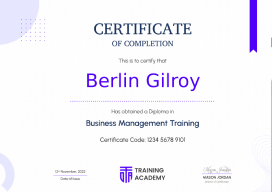
Once you’ve successfully completed your Understanding Autism Level 3 Course, you will immediately be sent a digital certificate. Also, you can have your printed certificate delivered by post (shipping cost $9.99).
At the end of the Understanding Autism Training Course, there will be an online assessment, which you will need to pass to complete the course. Answers are marked instantly and automatically, allowing you to know straight away whether you have passed. If you haven’t, there’s no limit on the number of times you can take the final exam. All this is included in the one-time fee you paid for the course itself.
All of our courses are fully accredited. The content of the Autism Awareness course is certified by the CPD Certification Service as conforming to the continuous professional development principles. This course provides you with up-to-date skills and knowledge and helps you to become more competent and effective in your chosen field.
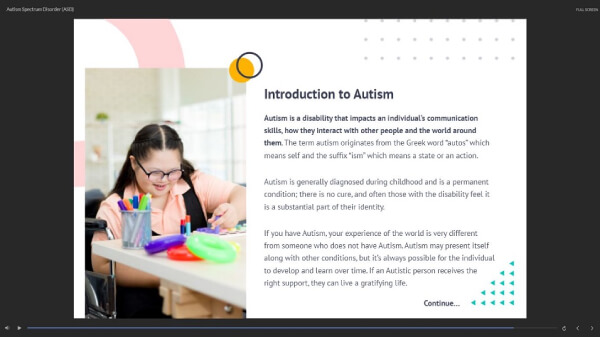
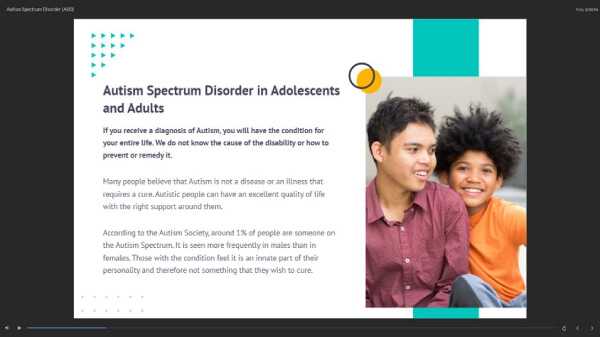
This module introduces Autism Spectrum Disorder, explaining its core traits and how it impacts communication, behaviour, and social interaction. Learners gain a clear foundation of the autism spectrum, including its varying levels and how individuals may experience it differently.
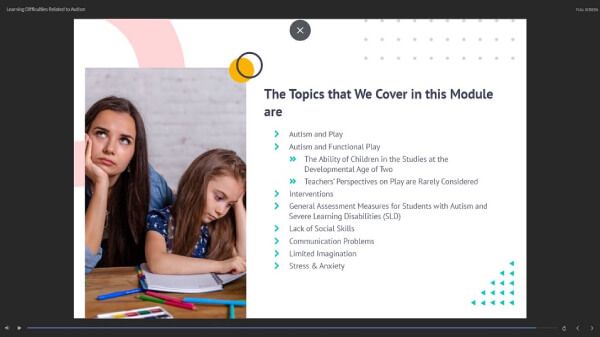
Focuses on the specific learning challenges faced by autistic individuals, such as processing information, attention differences, and communication barriers. It helps learners understand how these difficulties affect education and daily functioning, along with basic support considerations.
Examines how autism influences thinking patterns, memory, perception, and learning styles. It introduces cognitive-based approaches and strategies that support skill development, problem-solving, and adaptive learning in autistic individuals.
Provides practical guidance on effective communication and interaction techniques. Learners explore respectful, patient, and person-centred approaches to support daily engagement and build trust with autistic individuals.
Covers additional important factors such as sensory sensitivities, emotional regulation, behaviour triggers, and environmental adjustments. It encourages a holistic understanding to provide more effective and supportive care.
Focuses on promoting inclusion, awareness, and acceptance of autism in society. Learners explore ways to reduce stigma, support advocacy, and encourage positive understanding in communities and workplaces.
Restricted social communication skills: Social interactions are often limited, and understanding social cues can be extremely difficult. Sensory processing issues: Sensory overload is common, with individuals experiencing heightened sensitivity to light, sound, touch, taste, or smell.
Social interaction is extremely limited. Some individuals may appear unresponsive to others or uninterested in social engagement. Others may want to connect but are unable to do so effectively due to cognitive, sensory, or communication barriers.
Insights for Parents & CaregiversIn Canada, autism is diagnosed using DSM-5 criteria, which classifies severity into three levels based on required support: Level 1 (requiring support), Level 2 (substantial support), and Level 3 (very substantial support). Roughly 1 in 50 children and youth (2%) in Canada are diagnosed with autism, with higher rates observed in males.
To become an autism specialist in Canada, you generally need a degree in psychology, education, or social services, followed by specialized training in Applied Behaviour Analysis (ABA) or a Certified Autism Specialist (CAS) designation. Key pathways include one-year postgraduate certificates (e.g., George Brown College or Conestoga College), obtaining a BCBA certification, or earning specialized certification through IBCCES.
| Module 1: Autism Spectrum Disorder (ASD) | |||
| Autism Spectrum Disorder (ASD) | 00:25:00 | ||
| Module 2: Learning Difficulties Related to Autism | |||
| Learning Difficulties Related to Autism | 00:23:00 | ||
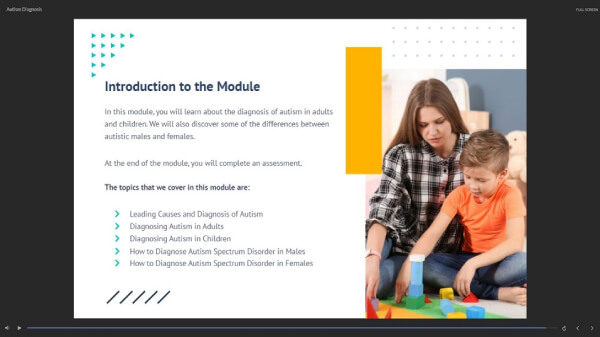
| Module 3. Autism Diagnosis | |||
| Autism Diagnosis | 00:16:00 | ||
| Module 4. Cognitive Approaches in Autism | |||
| Cognitive Approaches in Autism | 00:12:00 | ||
| Module 5. Dealing with Autistic Individuals | |||
| Dealing with Autistic Individuals | 00:17:00 | ||
| Module 6. Other Considerations for Dealing with Autistic Individuals | |||
| Other Considerations for Dealing with Autistic Individuals | 00:14:00 | ||
| Module 7. Engagement in Autism Awareness | |||
| Engagement in Autism Awareness | 00:08:00 | ||
| Mock Exam | |||
| Mock Exam – Understanding Autism Level 3 | 00:20:00 | ||
| Final Exam | |||
| Final Exam – Understanding Autism Level 3 | 00:20:00 | ||
| Trust Pilot Review | |||
| Trust Pilot Review | 00:00:00 | ||
$125 Original price was: $125.$20Current price is: $20. ex VAT
SAVE 84% - OFFER ENDS SOON
![]() |