264 Students
The Product Management course introduces the principles involved in planning, developing, pricing, marketing, and managing products throughout their market journey. It helps learners understand how product decisions connect customer needs, business goals, marketing, and financial considerations. Learners explore product classification, product planning, new product development, product life cycles, pricing strategies, portfolio analysis, channels management, product marketing, and financial analysis. The …
The Product Management course introduces the principles involved in planning, developing, pricing, marketing, and managing products throughout their market journey. It helps learners understand how product decisions connect customer needs, business goals, marketing, and financial considerations.
Learners explore product classification, product planning, new product development, product life cycles, pricing strategies, portfolio analysis, channels management, product marketing, and financial analysis. The course suits beginners, aspiring product managers, business learners, marketing staff, entrepreneurs, and professionals interested in product-focused roles in Canada.
Online learning provides flexibility for learners balancing work, education, or other commitments. Structured materials allow learners to review product management topics at a suitable pace while developing business and product knowledge. Successful completion provides a certificate that can support continuing learning and career development.
Please note: This Product Management Course only gives you the theoretical knowledge that you need to excel in this field. This Course doesn’t entitle you to practise as a professional in this specific field.
This course suits learners interested in product strategy, business development, marketing, and managing products across different stages of their market journey.
All of our courses, including this Product Management Course, are fully accredited, providing you with up-to-date skills and knowledge and helping you to become more competent and effective in your chosen field.
All of our courses are accredited by the CPD Quality Standards as conforming to universally accepted Continuing Professional Development (CPD) guidelines.
The Quality Licence Scheme (QLS) is a trusted endorsement framework that certifies high-quality, non-regulated training programmes across various sectors.

The Association of Healthcare Trainers (AoHT) promotes high-quality healthcare training, supporting providers to deliver relevant, industry-aligned education and improve professional standards.
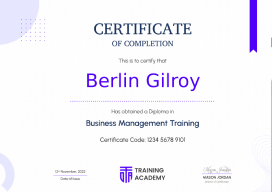
Once you’ve successfully completed your course, you will immediately be sent a digital certificate. Also, you can have your printed certificate delivered by post (shipping cost CA$9.99). All of our courses are fully accredited, providing you with up-to-date skills and knowledge and helping you to become more competent and effective in your chosen field.
The curriculum covers the main stages of product management, from understanding product types and planning development to pricing, marketing, distribution, portfolio analysis, and financial evaluation.
Begin with the role and purpose of product management within a business. Learners explore how product decisions can connect customer needs, business objectives, marketing, and product development.
Explore different ways products can be classified and how their characteristics can influence management decisions. The section provides a foundation for understanding products across different markets and customer groups.
Learn how product plans are developed around business objectives, market needs, and product opportunities. Learners explore the considerations involved in organising product activities and priorities.
Examine the process of bringing a new product from an initial idea towards market introduction. The section considers development stages and factors that can influence the success of a new product.
Explore the different levels of a product and how products can change throughout their life cycle. Learners consider how product decisions may need to evolve as market conditions and customer demand change.
Pricing can influence demand, positioning, revenue, and competitiveness. Learners explore the factors involved in developing suitable product pricing strategies and making informed pricing decisions.
Learn how businesses can assess products and brands within a wider portfolio. The section introduces approaches for comparing products, understanding their contribution, and supporting portfolio decisions.
Explore how products reach customers through different distribution and sales channels. Learners consider channel selection, coordination, and the role of distribution in supporting product performance.
Develop an understanding of the marketing activities used to position and promote products. Learners explore how customer needs, product value, communication, and market awareness influence product marketing.
Examine the financial side of product decisions and the importance of analysing costs, revenue, profitability, and other financial factors. Learners develop awareness of how financial information can support product management decisions.
You will learn about product classification, product planning, new product development, product life cycles, pricing strategies, portfolio analysis, channels management, product marketing, and financial analysis.
Yes. The course is suitable for beginners who want to understand product management without requiring previous product management experience. It can also benefit business, marketing, and sales professionals.
Product management can involve communication, research, strategic thinking, organisation, decision-making, market analysis, prioritisation, and financial awareness. The specific skills required vary by role and industry.
Yes. Online learning provides a flexible way to study product management around work, education, or other commitments. Learners can review course materials at a suitable pace.
Depending on your experience and other qualifications, product management knowledge can support roles such as Product Manager, Associate Product Manager, Product Analyst, Product Coordinator, Product Marketing Manager, and Brand Manager.
A certificate can demonstrate knowledge of product management concepts, but it does not guarantee employment as a Product Manager. Employers may also look for relevant experience, business knowledge, communication skills, analytical ability, and experience working with cross-functional teams.
| Module 01: Introduction to Product Management | |||
| Introduction to Product Management | 00:19:00 | ||
| Module 02: Product Classification | |||
| Product Classification | 00:28:00 | ||
| Module 03: Developing the Product Plan | |||
| Developing the Product Plan | 00:24:00 | ||
| Module 04: New Product Development | |||
| New Product Development | 00:24:00 | ||
| Module 05: Levels of a Product and Product Life Cycle | |||
| Levels of a Product and Product Life Cycle | 00:19:00 | ||
| Module 06: Product Pricing Strategy | |||
| Product Pricing Strategy | 00:25:00 | ||
| Module 07: Product and Brand Portfolio Analysis | |||
| Product and Brand Portfolio Analysis | 00:30:00 | ||
| Module 08: Channels Management | |||
| Channels Management | 00:27:00 | ||
| Module 09: Basics of Marketing for Products | |||
| Basics of Marketing for Products | 00:23:00 | ||
| Module 10: Financial Analysis for Product Management | |||
| Financial Analysis for Product Management | 00:27:00 | ||
$125 Original price was: $125.$20Current price is: $20. ex VAT
SAVE 84% - OFFER ENDS SOON
![]() |
01 Year of full Course access
Level 3
Endorsed Certificate of Compleiton