142 Students
Behind every missing person case, insurance fraud claim, corporate dispute, or surveillance operation lies a careful investigation built on facts, evidence, and observation. The Private Investigator course introduces the core principles of private investigation and helps learners understand how investigative techniques are used across Canada’s security, legal, insurance, and corporate sectors. Suitable for both newcomers and those already working in …
Behind every missing person case, insurance fraud claim, corporate dispute, or surveillance operation lies a careful investigation built on facts, evidence, and observation. The Private Investigator course introduces the core principles of private investigation and helps learners understand how investigative techniques are used across Canada’s security, legal, insurance, and corporate sectors.
Suitable for both newcomers and those already working in security-related roles, this course explores evidence collection, surveillance methods, crime scene procedures, interviewing techniques, fingerprint analysis, and case reporting. These skills can support work in investigation agencies, insurance companies, legal services, risk management, and corporate security environments throughout Canada.
Study online at your own pace and build valuable investigative knowledge around your schedule. Upon completion, you’ll receive a recognised certificate that can strengthen your credentials and support your career development. Enrol today and take the first step towards understanding the world of professional investigation.
Please note: This Private Investigator Course only gives you the theoretical knowledge that you need to excel in this field. This Course doesn’t entitle you to practise as a professional in this specific field.
This course is ideal for:
All of our courses, including this Private Investigator, are fully accredited, providing you with up-to-date skills and knowledge and helping you to become more competent and effective in your chosen field.
All of our courses are accredited by the CPD Quality Standards as conforming to universally accepted Continuing Professional Development (CPD) guidelines.
The Quality Licence Scheme (QLS) is a trusted endorsement framework that certifies high-quality, non-regulated training programmes across various sectors.

The Association of Healthcare Trainers (AoHT) promotes high-quality healthcare training, supporting providers to deliver relevant, industry-aligned education and improve professional standards.
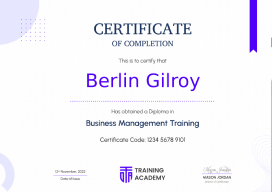
Once you’ve successfully completed your course, you will immediately be sent a digital certificate. Also, you can have your printed certificate delivered by post (shipping cost CA$9.99). All of our courses are fully accredited, providing you with up-to-date skills and knowledge and helping you to become more competent and effective in your chosen field.
The detailed curriculum outline of our Private Investigator is as follows:
Begin by exploring the role of a private investigator and the responsibilities involved in conducting investigations. This module examines career pathways, required attributes, and the scope of investigative work.
Discover how investigations progress from initial enquiries to final conclusions. You’ll learn about planning, evidence gathering, documentation, and case management procedures.
Different crimes require different investigative approaches. This module examines major crime categories and their relevance within investigative practice.
Before any investigation begins, clear objectives and strategies must be established. Learn how investigators assess cases, gather preliminary information, and create action plans.
Step into the fundamentals of crime scene examination and evidence preservation. The module also introduces photographic techniques used to document scenes accurately.
Building on previous learning, you’ll explore advanced crime scene documentation methods and procedures for recording critical observations and evidence.
Evidence forms the foundation of any investigation. Learn key methods for identifying, collecting, handling, and preserving physical and documentary evidence.
Finding missing individuals often requires structured investigative strategies. This module explores tracing techniques, information sources, and search methodologies.
Effective questioning can reveal valuable information. Examine communication strategies, interviewing methods, and approaches used during investigative discussions.
Information can come from many places. Explore identification techniques and discover how investigators use records, databases, and public sources during enquiries.
Fingerprints remain one of the most recognised forms of identification. This module introduces fingerprint analysis principles and verification procedures.
Learn how handwriting characteristics can be assessed during investigations. The module explores document analysis and common handwriting comparison techniques.
Surveillance plays a key role in many investigations. Discover observation methods, suspect monitoring techniques, and approaches used to establish connections between individuals and events.
Investigators must also understand how to detect surveillance activities. This module examines counter-surveillance methods and strategies for protecting sensitive information.
Domestic investigations often involve unique personal and legal considerations. Explore different types of domestic cases and the challenges associated with them.
Gain an introductory understanding of firearm-related concepts, terminology, and safety considerations that investigators may encounter during certain cases.
Accurate documentation is essential for investigative work. Learn how to structure, organise, and prepare detailed case reports that communicate findings clearly.
Integrity is central to successful investigations. Examine ethical principles, confidentiality requirements, and professional conduct standards expected within the field.
Conclude by exploring the business side of private investigation. Topics include client management, operational planning, business considerations, and service delivery.
Yes, this course is designed for beginners and does not require previous investigative experience. It introduces the foundations of private investigation, evidence collection, surveillance, and case reporting in a structured and accessible format.
You will learn about the private investigation process, crime scene investigation, evidence collection, missing person investigations, surveillance techniques, interviewing methods, fingerprint verification, handwriting examination, ethics, and case report preparation.
This course provides valuable knowledge of investigative procedures and industry practices that can support individuals interested in private investigation, security services, insurance investigations, corporate security, and related fields in Canada.
As the course is delivered online, learners can study at their own pace. Completion time will vary depending on individual schedules and learning preferences.
Yes. The curriculum includes surveillance methods, suspect observation techniques, linking individuals to investigations, and an introduction to counter-surveillance strategies used in investigative work.
Absolutely. The course explores crime scene investigation procedures, forensic photography principles, evidence handling, preservation methods, and documentation practices used during investigations.
| Module 01: An Introduction to the Concept of Being a Private Detective | |||
| An Introduction to the Concept of Being a Private Detective | 00:18:00 | ||
| Module 02: Private Investigation Process | |||
| Private Investigation Process | 00:28:00 | ||
| Module 03: Classification of Crime | |||
| Classification of Crime | 00:27:00 | ||
| Module 04: Starting an Investigation | |||
| Starting an Investigation | 00:18:00 | ||
| Module 05: Crime Scene Investigation and Photography (Part 1) | |||
| Crime Scene Investigation and Photography (Part 1) | 00:24:00 | ||
| Module 06: Crime Scene Investigation and Photography (Part 2) | |||
| Crime Scene Investigation and Photography (Part 2) | 00:32:00 | ||
| Module 07: Evidence Collection | |||
| Evidence Collection | 00:35:00 | ||
| Module 08: Locating Missing People | |||
| Locating Missing People | 00:22:00 | ||
| Module 09: Interview and Interrogation Techniques | |||
| Interview and Interrogation Techniques | 00:33:00 | ||
| Module 10: Methods of identification and Sources of information | |||
| Methods of Identification and Sources of Information | 00:28:00 | ||
| Module 11: Fingerprint Verification | |||
| Fingerprint Verification | 00:29:00 | ||
| Module 12: Handwriting Examination | |||
| Handwriting Examination | 00:34:00 | ||
| Module 13: Linking and Surveillance of Suspect | |||
| Linking and Surveillance of Suspect | 00:31:00 | ||
| Module 14: Counter-Espionage & Counter-Surveillance | |||
| Counter-Espionage and Counter-Surveillance | 00:25:00 | ||
| Module 15: Domestic Investigation and Types | |||
| Domestic Investigation and Types | 00:19:00 | ||
| Module 16: Basic Operations of Firearms | |||
| Basic Operations of Firearms | 00:31:00 | ||
| Module 17: Preparing Case Report | |||
| Preparing Case Report | 00:27:00 | ||
| Module 18: Code of Ethics | |||
| Code of Ethics | 00:20:00 | ||
| Module 19: Operating a Private Investigation Business | |||
| Operating a Private Investigation Business | 00:21:00 | ||
$125 Original price was: $125.$20Current price is: $20. ex VAT
SAVE 84% - OFFER ENDS SOON
![]() |
01 Year of full Course access
Intermediate
Endorsed Certificate of Compleiton