462 Students
Learning to read is one of the most important milestones in a child’s education, and phonics plays a central role in developing early literacy skills. As schools across Canada continue to focus on evidence-based reading instruction, there is growing value in understanding how phonics supports language development, reading fluency, and learner confidence. This Phonics Teaching Assistant course provides a comprehensive …
Learning to read is one of the most important milestones in a child’s education, and phonics plays a central role in developing early literacy skills. As schools across Canada continue to focus on evidence-based reading instruction, there is growing value in understanding how phonics supports language development, reading fluency, and learner confidence. This Phonics Teaching Assistant course provides a comprehensive introduction to phonics education and the role of teaching assistants in supporting literacy development.
Suitable for aspiring teaching assistants, education support workers, parents, caregivers, and individuals interested in primary education, this course explores phonics instruction, phonological awareness, classroom support strategies, school policies, parent engagement, and approaches to meeting diverse learning needs. The knowledge gained can be applied in schools, early years settings, literacy support programmes, tutoring environments, and community education initiatives across Canada.
Study online at your own pace and strengthen your understanding of early literacy education. Complete the course to earn a recognised certificate and enhance your knowledge of phonics-based learning support.
Please note: This Phonics Teaching Assistant Course only gives you the theoretical knowledge that you need to excel in this field. This Course doesn’t entitle you to practise as a professional in this specific field.
By the end of the Phonics Teaching Assistant Course, learners will be able to:
All of our courses, including this Phonics Teaching Assistant Course Course, are fully accredited, providing you with up-to-date skills and knowledge and helping you to become more competent and effective in your chosen field.
All of our courses are accredited by the CPD Quality Standards as conforming to universally accepted Continuing Professional Development (CPD) guidelines.
The Quality Licence Scheme (QLS) is a trusted endorsement framework that certifies high-quality, non-regulated training programmes across various sectors.
The Association of Healthcare Trainers (AoHT) promotes high-quality healthcare training, supporting providers to deliver relevant, industry-aligned education and improve professional standards.
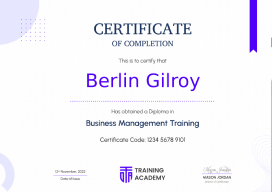
Once you’ve successfully completed your course, you will immediately be sent a digital certificate. Also, you can have your printed certificate delivered by post (shipping cost CA$9.99). All of our courses are fully accredited, providing you with up-to-date skills and knowledge and helping you to become more competent and effective in your chosen field.
The detailed curriculum outline of our Phonics Teaching Assistant Course is as follows:
Begin by exploring the purpose and principles of phonics education. This module introduces the relationship between sounds and letters, the role of phonics in reading development, and how phonics-based approaches support children’s literacy journeys.
Early phonics instruction lays the groundwork for reading and writing success. In this module, you’ll examine how phonics is introduced during the early years, the benefits of systematic phonics teaching, and the ways educators support literacy development from an early age.
Teaching assistants play an important role within educational settings. This module explores professional responsibilities, communication skills, continuing development opportunities, ethical practice, and the qualities that contribute to effective learner support.
Gain insight into how schools operate and the policies that guide educational practice. Topics include safeguarding, inclusion, behaviour management, confidentiality, health and safety, and the importance of working within established school procedures.
Explore practical approaches used to teach phonics effectively. This module examines lesson support techniques, phonics activities, sound recognition exercises, blending and segmenting skills, and methods used to encourage learner engagement.
Discover one of the most widely recognised phonics programmes used in early education. You’ll learn about the principles behind Jolly Phonics, its teaching methods, multi-sensory learning techniques, and how it supports children’s reading and spelling development.
Strong partnerships between schools and families can significantly enhance literacy outcomes. This module explores communication strategies, parental involvement techniques, home-learning support, and ways to encourage positive engagement with phonics learning.
Before children become confident readers, they must develop strong listening and speaking skills. This module examines phonological awareness, sound discrimination, oral language development, rhyme recognition, and activities that strengthen early literacy foundations.
Every learner develops at their own pace. Conclude the course by exploring approaches to supporting children with varying abilities, learning preferences, and educational needs. You’ll examine inclusive practices and strategies that help create positive learning experiences for all learners.
Yes. The course is designed for individuals with little or no previous experience in education and provides a clear introduction to phonics teaching and literacy support.
Teaching assistants often benefit from strong communication, patience, organisation, teamwork, adaptability, and an understanding of child development and learning support strategies.
Phonics helps children decode words by connecting sounds with letters and letter patterns, enabling them to read unfamiliar words more confidently and accurately.
Yes. Phonics remains a widely used approach to early reading instruction and forms an important part of literacy education in many schools.
Yes. The course provides foundational knowledge that may support individuals interested in teaching assistant, educational support, early years, or literacy-focused roles.
Phonics courses offer specialized professional development or micro-credentials, but they do not automatically grant you a provincial teaching license. To work as a certified teacher or official EA, you must follow the certification guidelines of the specific province or territory you plan to work in.
| Module 01: Introduction to Phonics Education | |||
| Introduction to Phonics Education | 00:12:00 | ||
| Module 02: Role of Early Phonics Teaching | |||
| Role of Early Phonics Teaching | 00:17:00 | ||
| Module 03: Professional Developments for a TA | |||
| Professional Developments for a TA | 00:27:00 | ||
| Module 04: Working with the School and Its Policies | |||
| Working with the School and Its Policies | 00:23:00 | ||
| Module 05: Teaching Phonics | |||
| Teaching Phonics | 00:19:00 | ||
| Module 06: Jolly Phonics | |||
| Jolly Phonics | 00:17:00 | ||
| Module 07: Involving Parents and Carers | |||
| Involving Parents and Carers | 00:15:00 | ||
| Module 08: Speaking and Phonological Awareness | |||
| Speaking and Phonological Awareness | 00:24:00 | ||
| Module 09: Meeting Individual Needs | |||
| Meeting Individual Needs | 00:30:00 | ||
| Module 10: Cognitive Approaches in Dyslexia | |||
| Cognitive Approaches in Dyslexia | 00:15:00 | ||
| Module 11: Phonics for Deaf Children | |||
| Phonics for Deaf Children | 00:22:00 | ||
| Module 12: Teaching Higher Level of Phonics | |||
| Teaching Higher Level of Phonics | 00:26:00 | ||
| Mock Exam | |||
| Mock Exam – Phonics Teaching Assistant | 00:20:00 | ||
| Final Exam | |||
| Final Exam – Phonics Teaching Assistant | 00:20:00 | ||
| Google Review | |||
| Google Review | 00:00:00 | ||
$199 Original price was: $199.$20Current price is: $20. ex VAT
SAVE 90% - OFFER ENDS SOON
![]() |
01 Year of full Course access
Intermediate
Endorsed Certificate of Compleiton