127 Students
What if a nurse could do more than assist—what if they could confidently influence treatment decisions through safe prescribing knowledge? The Nursing & Prescribing course is designed for learners in Canada who want to understand how medication management and prescribing principles work within modern healthcare systems. It explores how nurses contribute to patient care by supporting safe prescribing practices, understanding …
What if a nurse could do more than assist—what if they could confidently influence treatment decisions through safe prescribing knowledge? The Nursing & Prescribing course is designed for learners in Canada who want to understand how medication management and prescribing principles work within modern healthcare systems. It explores how nurses contribute to patient care by supporting safe prescribing practices, understanding medicines, and applying clinical judgment in real healthcare settings.
This course is ideal for beginners in healthcare, nursing assistants, and individuals aiming to build a foundation in clinical practice within Canada’s hospitals, clinics, long-term care homes, and community health services. It connects theoretical understanding with real-world medical scenarios such as chronic disease management, mental health conditions, and patient safety.
With flexible online learning, learners can study at their own pace while building essential knowledge of pharmacology, ethical practice, and patient-focused care. This course opens the door to one of Canada’s most respected and high-responsibility healthcare pathways.
Please note: This Nursing & Prescribing Course only gives you the theoretical knowledge that you need to excel in this field. This Course doesn’t entitle you to practise as a professional in this specific field.
By the end of the Nursing & Prescribing Course, learners will be able to:
All of our courses, including this Nursing & Prescribing Course, are fully accredited, providing you with up-to-date skills and knowledge and helping you to become more competent and effective in your chosen field.
All of our courses are accredited by the CPD Quality Standards as conforming to universally accepted Continuing Professional Development (CPD) guidelines.
The Quality Licence Scheme (QLS) is a trusted endorsement framework that certifies high-quality, non-regulated training programmes across various sectors.
The Association of Healthcare Trainers (AoHT) promotes high-quality healthcare training, supporting providers to deliver relevant, industry-aligned education and improve professional standards.

Once you’ve successfully completed your course, you will immediately be sent a digital certificate. Also, you can have your printed certificate delivered by post (shipping cost CA$9.99). All of our courses are fully accredited, providing you with up-to-date skills and knowledge and helping you to become more competent and effective in your chosen field.
This opening section introduces how nurse prescribing fits into modern healthcare systems and patient care pathways. It helps learners understand the expanding role of nurses in supporting safe and effective treatment decisions across clinical settings.
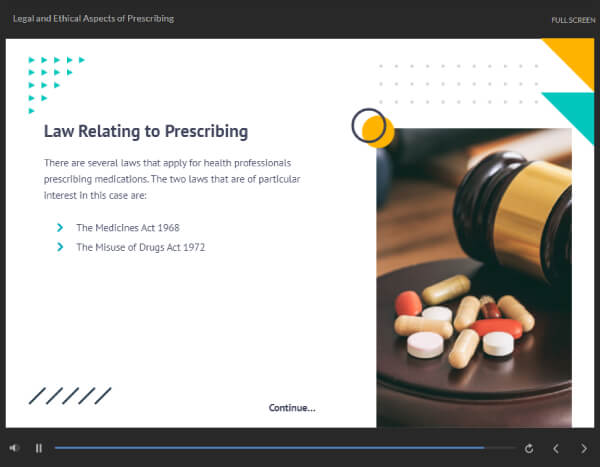
Healthcare decisions carry responsibility, and this section explores the legal boundaries and ethical principles guiding medication use. It highlights accountability, patient safety, and professional standards that shape prescribing practice.
Safe medication handling is at the core of patient care. This section focuses on how medicines are selected, stored, administered, and monitored to ensure they are used correctly and effectively in clinical environments.
Common anxiety conditions are explored here, along with how treatment plans may include medication support. It also helps learners understand how anxiety affects daily functioning and overall wellbeing.
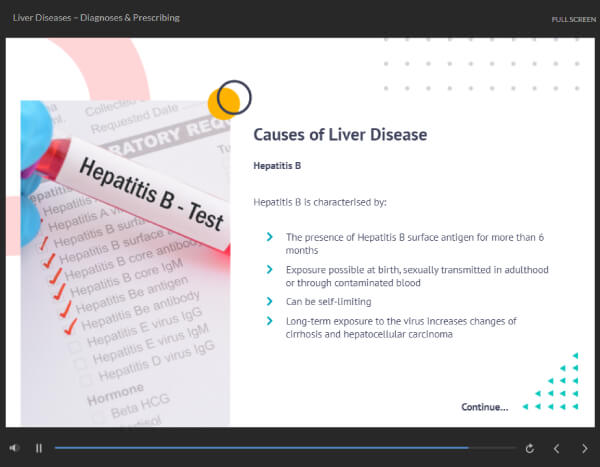
This section looks at how liver conditions are identified and how they influence prescribing decisions. It explains why medication choices often need adjustment based on liver function and patient condition.
Everyday health issues such as pain, infection, and inflammation are discussed here. The focus is on how medications are used to manage symptoms and improve patient comfort and recovery.
This section explores the use of antibiotics and other antimicrobial treatments in fighting infections. It also highlights the importance of responsible prescribing to reduce resistance and protect public health.
Heart-related conditions are examined along with how medications support cardiovascular health. Learners gain awareness of treatment approaches used for managing blood pressure, heart failure, and related conditions.
This section covers conditions affecting the brain and nervous system. It explains how medication helps manage symptoms such as seizures, pain, and neurological disorders.
End-of-life care is approached with sensitivity, focusing on comfort, dignity, and quality of life. It explains how medication is used to manage pain and support patients and families during difficult times.
Medication use during pregnancy and breastfeeding requires extra caution. This section explains how treatment decisions are made to ensure safety for both mother and child.
Ageing brings changes in how the body responds to medication. This section focuses on dosage adjustments, multiple health conditions, and safer prescribing for older patients.
Children require special attention when it comes to medication. This section explains how age, weight, and development influence prescribing decisions in paediatric care.
This section introduces frequently used medications in healthcare settings. It helps learners understand how these medicines work and why they are commonly prescribed for various conditions.
Healthcare is constantly evolving, and so is nurse prescribing. This final section explores current challenges such as workload and regulation, along with future trends like digital prescribing and expanded clinical roles.
Eligibility typically requires an active, unrestricted nursing license (e.g., RN in the general class), a minimum amount of clinical experience, and often current employment in a healthcare setting where prescribing is permitted. Nurse Practitioners usually have broader prescribing scopes than RNs.
The scope of prescription authority is defined by provincial/territorial legislation and employer policies. While Nurse Practitioners can often prescribe most medications, RN prescribers are usually restricted to specific clinical areas—such as travel health, diabetes management, or sexual health. Generally, RNs cannot prescribe controlled substances or medical cannabis.
Course duration varies by institution, but many programs are offered part-time or online, taking between 3 to 12 months to complete.
Yes. Most prescribing courses require students to complete a supervised clinical practicum (e.g., under the mentorship of a physician or a Nurse Practitioner). Students usually need to arrange a clinical placement site before enrolling.
Salary increases are not automatically guaranteed and typically depend on your specific employer, collective bargaining agreements, and whether your new credentials change your official job title (e.g., advancing from an RN to an NP).
| Module 1: Introduction to Nurse Prescribing | |||
| Introduction to Nurse Prescribing | 00:16:00 | ||
| Module 2: Legal and Ethical Aspects of Prescribing | |||
| Legal and Ethical Aspects of Prescribing | 00:32:00 | ||
| Module 3: Medicine Management | |||
| Medicine Management | 00:36:00 | ||
| Module 4: Anxiety Disorders in Adults | |||
| Anxiety Disorders in Adults | 00:15:00 | ||
| Module 5: Liver Diseases: Diagnosis & Prescribing | |||
| Liver Diseases Diagnoses Prescribing | 00:46:00 | ||
| Module 6: Common Problems: Pharmacological Management | |||
| Common Problems Pharmacological Management | 01:06:00 | ||
| Module 7: Anti-Microbial Prescribing | |||
| Anti Microbial Prescribing | 00:28:00 | ||
| Module 8: Cardiac Problems and Prescribing | |||
| Cardiac Problems and Prescribing | 00:21:00 | ||
| Module 9: Neurological Problems and Prescribing | |||
| Neurological Problems and Prescribing | 00:16:00 | ||
| Module 10: Palliative Cares | |||
| Palliative Care | 00:09:00 | ||
| Module 11: Prescribing in Pregnancy and Lactation | |||
| Prescribing in Pregnancy and Lactation | 00:31:00 | ||
| Module 12: Prescribing for Older People | |||
| Prescribing for Older People | 00:12:00 | ||
| Module 13: Prescribing Children’s | |||
| Prescribing for Children | 00:17:00 | ||
| Module 14: Common Medicines in Use | |||
| Common Medicines in Use | 00:19:00 | ||
| Module 15: Challenges and Future of Nurse Prescribing | |||
| Challenges and Future of Nurse Prescribing | 00:14:00 | ||
| Google Review | |||
| Google Review | 00:00:00 | ||
$40 Original price was: $40.$20Current price is: $20. ex VAT
SAVE 50% - OFFER ENDS SOON
![]() |
01 Year of full Course access
Intermediate
Endorsed Certificate of Compleiton