380 Students
The Medical Jargon course is designed to help learners understand the language used in healthcare settings, including medical terminology, abbreviations, acronyms, body systems, diagnostic procedures, and professional communication practices. It provides a practical foundation for interpreting and using medical language confidently in clinical and administrative environments. Medical terminology plays a crucial role in effective healthcare communication. Whether you are working …
The Medical Jargon course is designed to help learners understand the language used in healthcare settings, including medical terminology, abbreviations, acronyms, body systems, diagnostic procedures, and professional communication practices. It provides a practical foundation for interpreting and using medical language confidently in clinical and administrative environments.
Medical terminology plays a crucial role in effective healthcare communication. Whether you are working in a hospital, clinic, care facility, medical office, or preparing for a healthcare career, understanding medical jargon can improve accuracy, reduce misunderstandings, and enhance patient interactions. This course simplifies complex terminology and presents it in an easy-to-understand format suitable for learners of all backgrounds.
This CPD-accredited Medical Jargon course is delivered entirely online and is ideal for beginners, healthcare support staff, students, and internationally educated professionals. With tutor support, interactive modules, lifetime access, and an instant free CPD certificate, learners can build essential workplace communication skills while studying at their own pace from anywhere in Canada.
Please note: This Medical Jargon Course only gives you the theoretical knowledge that you need to excel in this field. This Course doesn’t entitle you to practise as a professional in this specific field.
By the end of the Medical Jargon Course, learners will be able to:
All of our courses, including this Medical Jargon Course, are fully accredited, providing you with up-to-date skills and knowledge and helping you to become more competent and effective in your chosen field.
All of our courses are accredited by the CPD Quality Standards as conforming to universally accepted Continuing Professional Development (CPD) guidelines.
The Quality Licence Scheme (QLS) is a trusted endorsement framework that certifies high-quality, non-regulated training programmes across various sectors.
The Association of Healthcare Trainers (AoHT) promotes high-quality healthcare training, supporting providers to deliver relevant, industry-aligned education and improve professional standards.
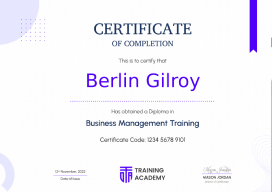
Once you’ve successfully completed your course, you will immediately be sent a digital certificate. Also, you can have your printed certificate delivered by post (shipping cost CA$9.99). All of our courses are fully accredited, providing you with up-to-date skills and knowledge and helping you to become more competent and effective in your chosen field.
The detailed curriculum outline of our Medical Jargon is as follows:
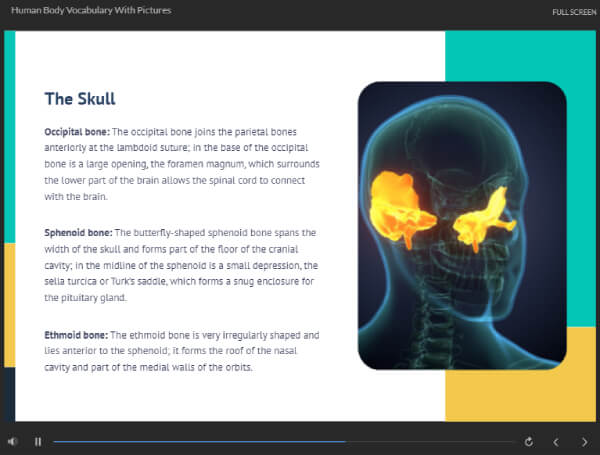
Develop a strong understanding of human anatomy terminology through visual learning and clear explanations. This module introduces essential body-related vocabulary commonly used in healthcare settings.
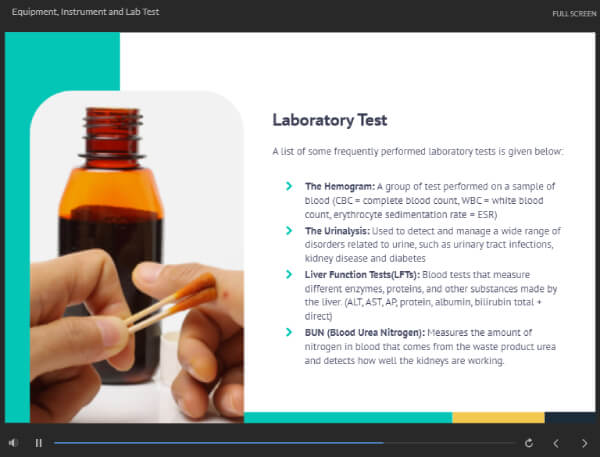
Learn the names and functions of common medical equipment, instruments, and laboratory tests. This module helps learners become familiar with healthcare workplace terminology.
Explore frequently used medical acronyms and abbreviations found in patient records, clinical documentation, and healthcare communication. Understanding these terms improves efficiency and accuracy.
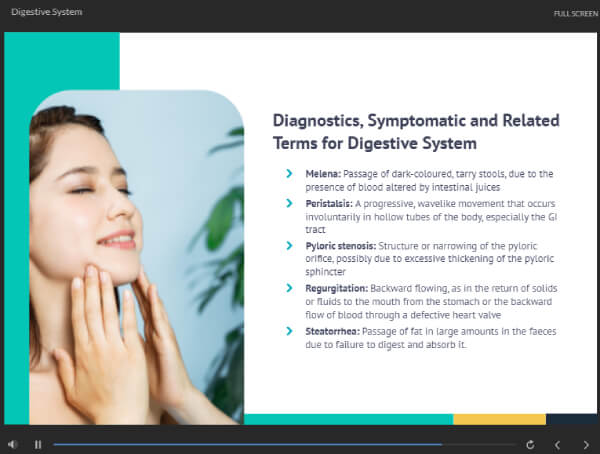
Gain knowledge of the terminology associated with the digestive system. This module explains key organs, conditions, procedures, and medical terms related to digestive health.
Learn the language of the cardiovascular system, including heart-related conditions, diagnostic tests, and treatment terminology commonly used in healthcare.
Understand terminology related to blood, immunity, infections, and immune system functions. This module introduces important concepts used in medical practice and patient care.
Explore medical terms associated with breathing, lung function, respiratory disorders, and related diagnostic procedures. This module provides practical knowledge for healthcare communication.
Learn terminology relating to bones, muscles, joints, and movement. This module covers common musculoskeletal conditions and healthcare terminology used in diagnosis and treatment.
Develop an understanding of neurological terminology associated with the brain, spinal cord, and nervous system. Learn commonly used terms in neurological healthcare settings.
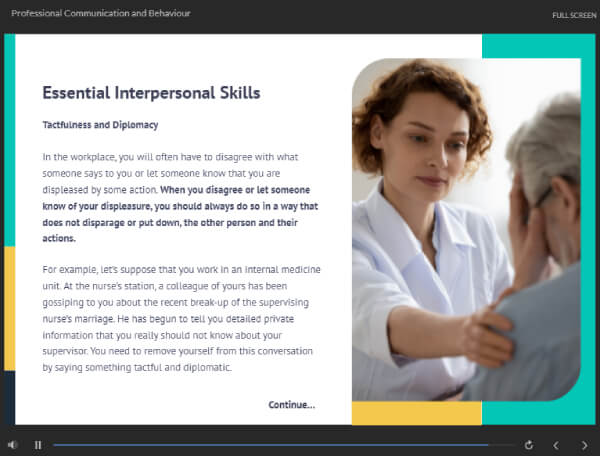
Discover the importance of professional conduct and effective communication in healthcare environments. This module focuses on workplace etiquette, professionalism, and patient-centred interactions.
Learn practical interviewing and questioning techniques used when gathering patient information. This module emphasises active listening, clarity, and professionalism.
Understand how to communicate complex medical information in a clear and accessible manner. This module focuses on improving patient understanding and supporting effective healthcare outcomes.
Medical jargon refers to specialised words, terms, abbreviations, and expressions used by healthcare professionals to communicate efficiently about medical conditions, treatments, and procedures.
Terms such as “hypertension” for high blood pressure or abbreviations like “BP” for blood pressure are common examples of healthcare jargon.
Doctors use medical jargon to communicate accurately and efficiently with other healthcare professionals while documenting patient information and treatment plans.
Common examples include diagnosis, prognosis, hypertension, ECG, MRI, CBC, and various medical abbreviations used in clinical settings.
Medical jargon can be learned through structured training, studying medical terminology, understanding body systems, practising healthcare communication, and reviewing common abbreviations.
Excessive medical jargon can confuse patients and create communication barriers. Using clear language helps improve patient understanding, engagement, and healthcare outcomes.
| Part 01- Basic Vocabulary | |||
| Module 01: Human Body Vocabulary with Pictures | 00:47:00 | ||
| Module 02: Equipment, Instruments and Lab Tests | 00:19:00 | ||
| Module 03: Acronyms and Abbreviation | 00:36:00 | ||
| Part 02- Medical Terminology | |||
| Module 04: Digestive System | 00:25:00 | ||
| Module 05: Cardiovascular System | 00:20:00 | ||
| Module 06: Blood and Immunity System | 00:15:00 | ||
| Module 07: Respiratory System | 00:17:00 | ||
| Module 08: Musculoskeletal System | 00:17:00 | ||
| Module 09: Central Nervous System | 00:14:00 | ||
| Part 03- Medical Communication Skills and Strategies | |||
| Module 10: Professional Communication and Behaviour | 00:19:00 | ||
| Module 11: Interviewing Techniques | 00:32:00 | ||
| Module 12: Adapting Communication to a Patient’s Ability to Understand | 00:19:00 | ||
$125 Original price was: $125.$20Current price is: $20. ex VAT
SAVE 84% - OFFER ENDS SOON
![]() |
01 Year of full Course access
Intermediate
Endorsed Certificate of Compleiton