372 Students
Why do some brands become household names while others struggle to attract customers? The answer often lies in a well-executed marketing strategy. This Marketing Strategy course explores how organisations identify market opportunities, understand customer needs, and create campaigns that drive growth in Canada’s competitive business landscape. Whether you’re launching a business, working in marketing, or looking to strengthen your commercial …
Why do some brands become household names while others struggle to attract customers? The answer often lies in a well-executed marketing strategy. This Marketing Strategy course explores how organisations identify market opportunities, understand customer needs, and create campaigns that drive growth in Canada’s competitive business landscape.
Whether you’re launching a business, working in marketing, or looking to strengthen your commercial awareness, this course develops expertise in market research, consumer behaviour, branding, pricing, digital marketing, strategic planning, and competitive analysis. These highly transferable skills can be applied across retail, technology, healthcare, finance, hospitality, non-profit organisations, and many other industries throughout Canada.
Study online at your own pace and gain the knowledge needed to make informed marketing decisions in today’s fast-changing marketplace. Build confidence in developing effective marketing strategies and take the next step towards advancing your career or growing a successful business.
Please note: This Marketing Strategy Course only gives you the theoretical knowledge that you need to excel in this field. This Course doesn’t entitle you to practise as a professional in this specific field.
By the end of the Marketing Strategy Course, learners will be able to:
All of our courses, including this Marketing Strategy Course, are fully accredited, providing you with up-to-date skills and knowledge and helping you to become more competent and effective in your chosen field.
All of our courses are accredited by the CPD Quality Standards as conforming to universally accepted Continuing Professional Development (CPD) guidelines.
The Quality Licence Scheme (QLS) is a trusted endorsement framework that certifies high-quality, non-regulated training programmes across various sectors.

The Association of Healthcare Trainers (AoHT) promotes high-quality healthcare training, supporting providers to deliver relevant, industry-aligned education and improve professional standards.
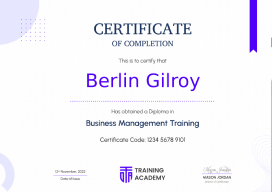
Once you’ve successfully completed your course, you will immediately be sent a digital certificate. Also, you can have your printed certificate delivered by post (shipping cost CA$9.99). All of our courses are fully accredited, providing you with up-to-date skills and knowledge and helping you to become more competent and effective in your chosen field.
The detailed curriculum outline of our Marketing Strategy Course is as follows:
Begin with the foundations of marketing and explore its role in creating value for customers and organisations. Learn key concepts, terminology, and the functions that drive successful marketing activities.
Discover the step-by-step process organisations use to identify customer needs, develop solutions, deliver value, and build long-term customer relationships.
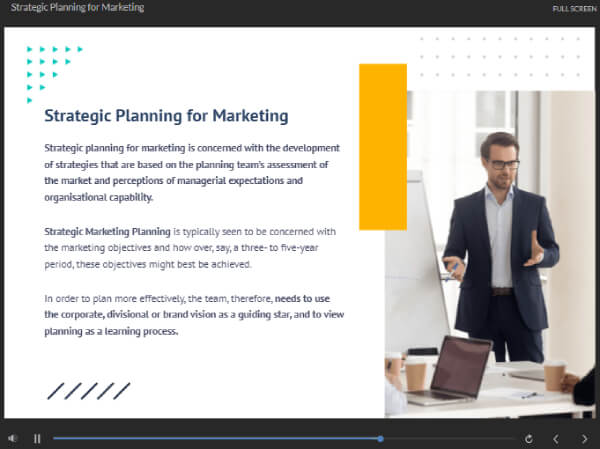
Explore how businesses align marketing activities with organisational objectives. This module introduces strategic thinking, planning frameworks, and long-term growth approaches.
Every marketing decision is influenced by factors both inside and outside an organisation. This module explores economic trends, technological advancements, competitive pressures, legal considerations, and changing consumer expectations that shape marketing strategies.
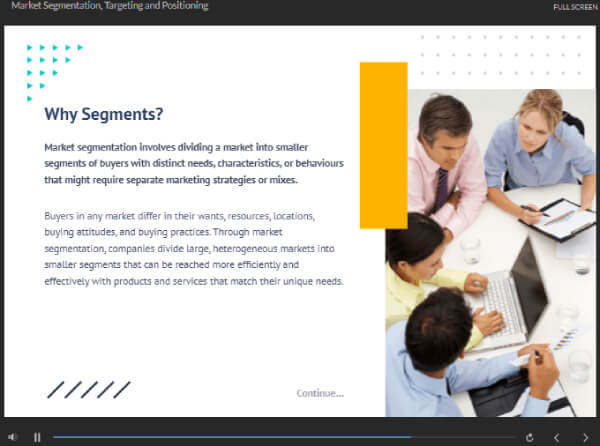
Not all customers have the same needs or preferences. Learn how businesses divide broader markets into smaller, more manageable segments to create targeted marketing campaigns and improve customer engagement.
Why do customers choose one product over another? This module examines the psychological, cultural, social, and personal factors that influence purchasing decisions and brand loyalty.
Business purchasing differs significantly from consumer buying. Explore organisational purchasing processes, decision-making structures, supplier relationships, and the factors that influence business buying behaviour.
Successful marketing strategies are built on reliable data and insights. Learn how organisations gather, analyse, and interpret information to understand customer needs, monitor market trends, and support strategic decisions.
Products play a central role in delivering value to customers. This module explores product development, positioning, differentiation, and management strategies that help businesses remain competitive in evolving markets.
A strong brand can influence customer perceptions and purchasing decisions. Discover how businesses build brand identity, strengthen brand equity, establish market positioning, and manage long-term brand reputation.
Every product progresses through a series of stages throughout its market journey. Learn how businesses adapt marketing activities during the introduction, growth, maturity, and decline phases to maximise success.
Pricing affects profitability, customer perception, and market competitiveness. This module examines pricing methods, influencing factors, pricing objectives, and strategies used to support business goals.
Products and services must reach customers efficiently to create value. Explore distribution strategies, channel management, intermediaries, and methods used to improve accessibility and customer satisfaction.
Consistency across communication channels strengthens brand recognition and trust. Learn how organisations coordinate advertising, public relations, digital marketing, and promotional activities to deliver unified messages.
Promotional activities help businesses attract attention and stimulate customer action. This module examines advertising techniques, promotional campaigns, and sales incentives used to increase market visibility and sales performance.
Building strong relationships is essential for long-term business success. Explore the role of personal selling, customer interaction, media relations, and reputation management in strengthening organisational credibility.
Digital technologies have transformed how businesses connect with customers. Learn about email marketing, social media strategies, online advertising, content marketing, and customer engagement techniques in the digital environment.
Marketing extends beyond selling products and services. This module provides a broader understanding of marketing’s role in creating customer value, supporting business objectives, and building lasting relationships.
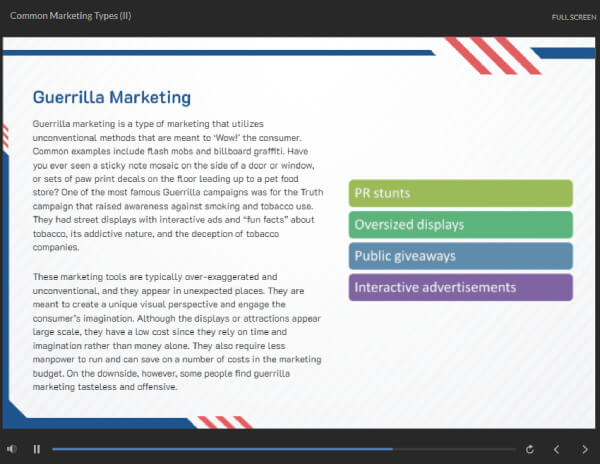
Different situations require different marketing approaches. Explore a range of traditional and modern marketing methods and understand how organisations use them to achieve specific business objectives.
Continue examining specialised marketing techniques and emerging approaches. Learn how businesses tailor marketing strategies to different industries, audiences, and market conditions.
The marketing mix provides a framework for creating effective marketing strategies. This module explores how product, price, place, and promotion work together to influence customer decisions and market success.
Clear communication can significantly impact customer engagement and brand perception. Learn techniques for developing persuasive, audience-focused messages that support marketing objectives.
Maintaining strong customer relationships requires effective communication throughout the customer journey. Explore strategies for improving engagement, enhancing satisfaction, and encouraging customer loyalty.
Well-defined goals provide direction and measurable outcomes for marketing activities. This module examines how organisations establish realistic objectives and align them with broader business strategies.
Customers move through several stages before making a purchasing decision. Learn how awareness, interest, consideration, and conversion stages influence marketing planning and campaign development.
Even well-planned campaigns can encounter challenges. This module highlights common marketing errors, poor strategic decisions, and avoidable pitfalls that may reduce effectiveness and return on investment.
Building on the previous module, explore additional mistakes organisations make when developing marketing strategies. Learn how to identify weaknesses and implement improvements for stronger outcomes.
Long-term success requires careful planning and direction. This module introduces strategic planning principles and explains how organisations create frameworks for sustainable growth and competitive advantage.
Creating a successful strategy involves multiple stages and informed decision-making. Learn how goals are established, opportunities assessed, resources allocated, and plans implemented effectively.
Marketing activities are most effective when aligned with organisational priorities. Explore how strategic planning tools and frameworks support marketing objectives and business growth initiatives.
Data-driven decision-making plays a critical role in modern marketing. This module examines analytical tools and techniques used to evaluate performance, identify opportunities, and improve strategic outcomes.
Understanding internal capabilities helps organisations build effective strategies. Learn how to assess resources, strengths, operational performance, and organisational competencies that influence marketing success.
Businesses operate within constantly changing environments. Explore how economic conditions, customer behaviour, competitor actions, regulations, and market trends impact strategic planning and marketing decisions.
Successful marketing depends on reaching the right audience with the right message. This module examines segmentation, targeting, and positioning strategies that help organisations create stronger market relevance.
Customers are at the centre of every marketing strategy. Learn techniques for analysing customer needs, preferences, expectations, behaviours, and purchasing motivations to support better decision-making.
Understanding competitors helps organisations identify opportunities and strengthen market position. Conclude the course by exploring competitor assessment methods, benchmarking techniques, and strategic evaluation frameworks.
This course covers marketing fundamentals, market research, consumer behaviour, branding, pricing strategies, digital marketing, customer communication, competitor analysis, strategic planning, and market positioning.
The course is ideal for entrepreneurs, marketing professionals, business owners, students, sales personnel, and anyone interested in developing marketing and business growth skills.
No. The course is designed for beginners while also providing valuable insights for individuals looking to expand their existing marketing knowledge.
A strong marketing strategy helps businesses understand customer needs, improve brand visibility, increase customer engagement, and support long-term growth objectives.
Market segmentation is the process of dividing a broad audience into smaller groups based on characteristics such as demographics, behaviours, interests, or purchasing habits to improve marketing effectiveness.
Marketing strategy focuses on long-term goals and overall direction, while marketing tactics are the specific actions and campaigns used to implement the strategy.
| Marketing Strategy | |||
| Module 01: Basics of Marketing | 00:46:00 | ||
| Module 02: The Marketing Process | 00:49:00 | ||
| Module 03: Strategic Marketing | 01:11:00 | ||
| Module 04: Marketing Environment | 00:29:00 | ||
| Module 05: Market Segmentations | 00:52:00 | ||
| Module 06: Consumer Buying Behaviour | 01:12:00 | ||
| Module 07: Business Markets and Buying Behaviour | 00:52:00 | ||
| Module 08: Marketing Research | 00:48:00 | ||
| Module 09: Product Strategy | 00:55:00 | ||
| Module 10: Branding Strategy | 00:39:00 | ||
| Module 11: Product Life Cycle | 00:33:00 | ||
| Module 12: Pricing Strategy | 01:15:00 | ||
| Module 13: Marketing Channels | 01:12:00 | ||
| Module 14: Integrated Marketing Communications | 01:00:00 | ||
| Module 15: Advertising and Sales Promotion | 01:00:00 | ||
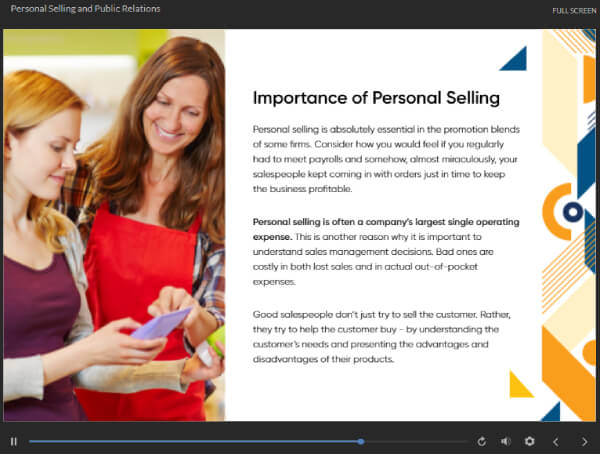
| Module 16: Personal Selling and Public Relations | 01:14:00 | ||
| Module 17: Direct and Digital Marketing | 00:54:00 | ||
| Module 18: What is Marketing? | 00:10:00 | ||
| Module 19: Common Marketing Types (I) | 00:07:00 | ||
| Module 20: Common Marketing Types (II) | 00:09:00 | ||
| Module 21: The Marketing Mix | 00:07:00 | ||
| Module 22: Communicating the Right Way | 00:07:00 | ||
| Module 23: Customer Communications | 00:07:00 | ||
| Module 24: Marketing Goals | 00:07:00 | ||
| Module 25: The Marketing Funnel | 00:07:00 | ||
| Module 26: Marketing Mistakes (I) | 00:08:00 | ||
| Module 27: Marketing Mistakes (II) | 00:07:00 | ||
| Module 28: An Introduction to Strategic Planning | 00:17:00 | ||
| Module 29: Development of a Strategic Plan | 00:24:00 | ||
| Module 30: Strategic Planning for Marketing | 00:12:00 | ||
| Module 31: Strategic and Marketing Analysis | 00:14:00 | ||
| Module 32: Internal Analysis | 00:14:00 | ||
| Module 33: External Analysis | 00:24:00 | ||
| Module 34: Market Segmentation, Targeting and Positioning | 00:16:00 | ||
| Module 35: Approaches to Customer Analysis | 00:23:00 | ||
| Module 36: Approaches to Competitor Analysis | 00:25:00 | ||
$125 Original price was: $125.$20Current price is: $20. ex VAT
SAVE 84% - OFFER ENDS SOON
![]() |
01 Year of full Course access
Intermediate
Endorsed Certificate of Compleiton